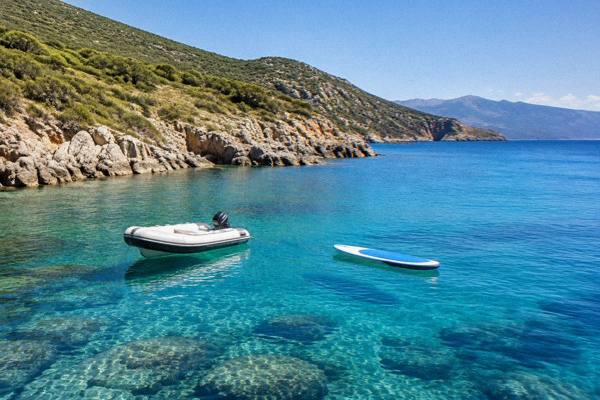
Saint Florent
Saint Florent sits on the north coast of Corsica at the gate of the Désert des Agriates, with the Patrimonio vineyards at the base of Cap Corse behind it. This guide covers what the area offers, how the Agriates beaches are reached, and the planning figures that matter.
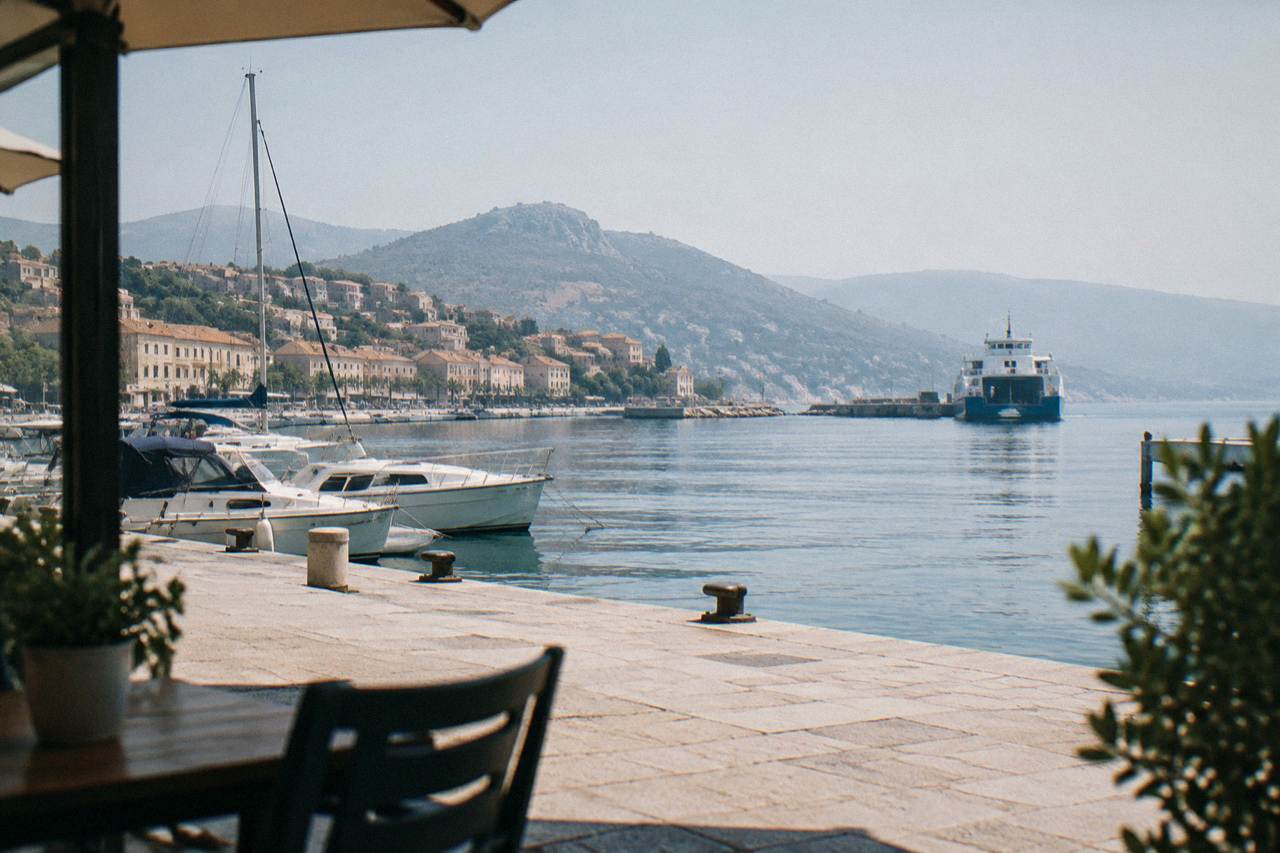
Saint Florent is a Corsican port town at the base of Cap Corse, used mainly as a base for boat shuttles to the Saleccia and Lotu beaches in the Désert des Agriates and for visits to the Patrimonio wine appellation.
Saint Florent is a small port town on the northern coast of Corsica, the French Mediterranean island of 8,722 km2 with more than 1,000 km of coastline, and it sits at the point where the fertile Patrimonio plain meets the stony emptiness of the Désert des Agriates. The town has 46,867 residents in Bastia, its big neighbour about 30 road kilometres east, and it lives off its marina, its shuttered old houses and its role as the departure point for the boat shuttles that carry swimmers to the beaches of Saleccia and Lotu between roughly April and October, weather permitting, as the visit-corsica.com page on the Agriates reports. Behind the town, the vineyards of the Patrimonio appellation climb toward the base of Cap Corse, the finger of land that points north toward Genoa. The area deserves a clear account of what it is, how the beaches are reached, what the wine appellation covers, and the numbers worth knowing before a stay is planned.
Where Is Saint Florent In Corsica?
Saint Florent lies on the northwest coast of Corsica, at the southern entrance to Cap Corse, roughly 30 road kilometres west of Bastia, the island's second town with 46,867 residents, and it faces the Golfe de Saint-Florent, where the Désert des Agriates begins immediately to the west. The town belongs to Haute-Corse, one of the island's two departments, inside the Collectivité de Corse, the single territorial authority in place since 1 January 2018, as reported from the French code governing Corsica's status. Corsica itself covers 8,722 km2 and is the fourth-largest island in the Mediterranean, with Monte Cinto at 2,706 m as its highest summit and a mountainous interior that the coast wraps around for more than 1,000 km.
Geography decides almost everything about a visit here. To the west of the marina stretches the Désert des Agriates, a protected, roadless stretch of maquis whose beaches, Saleccia and Lotu among them, are reached by sea rather than by tarmac. North of town the land narrows into Cap Corse, the peninsula whose villages are listed across this site's Cap Corse area guide. East and south the terrain softens into the Patrimonio plain and the Conca d'Oro, the grain and vine country that once fed the Genoese citadel Saint Florent still shows on its waterfront.
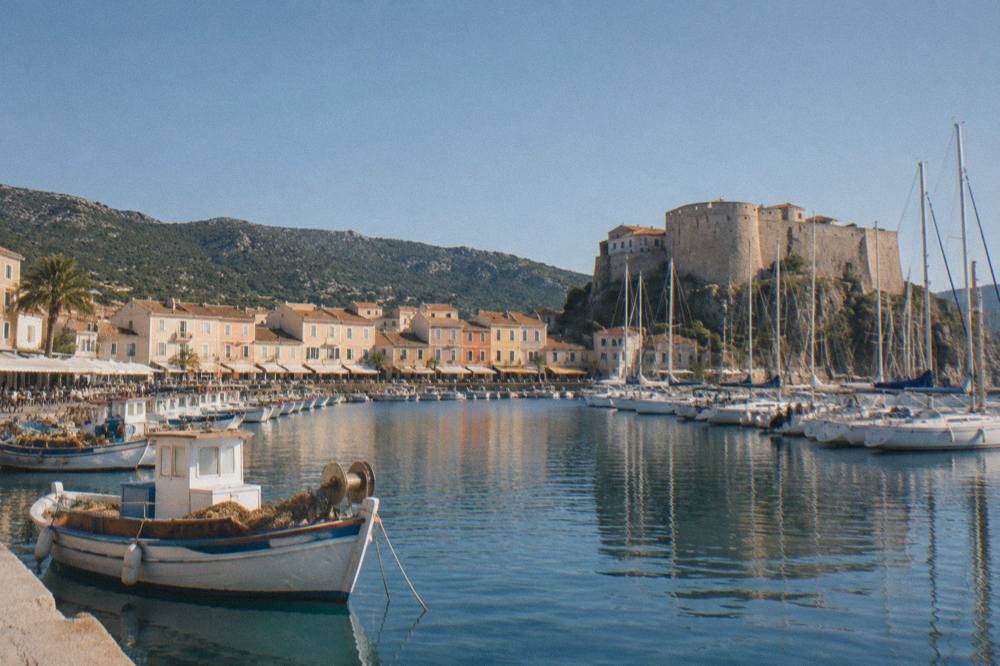
The town's size is part of its appeal and its limitation. Ajaccio, the island's capital and the birthplace of Napoleon, counts 76,320 residents and hosts Maison Bonaparte and the Palais Fesch, both covered in separate guides on this site. Saint Florent is a fraction of that, and everything in it, the citadel, the marina, the ring of cafés, is walkable within minutes. The practical consequence is that the town functions best as a base: sleep here, then move outward by boat, by car or on foot.
What Are The Best Things To Do Around Saint Florent?
The core activities around Saint Florent are the boat shuttle to the Agriates beaches of Saleccia and Lotu, the wine cellars of the Patrimonio appellation at the base of Cap Corse, the drive or ride up the Cap Corse peninsula, and the walking routes of the Conca d'Oro and the Agriates, all of which sit within a short radius of the marina. The town itself is small, so the day's plan is nearly always outward: a morning on the water, an afternoon in a cellar, or a full-day loop of the peninsula. The visit-corsica.com page on the Agriates reports that boat shuttles and taxi-boats run from Saint-Florent port from about April to October, weather permitting, with crossing times of roughly 15 to 20 minutes, and that the same beaches can also be reached by 4x4 track from Casta or on foot.
The boat option deserves its reputation. Saleccia's page on this site covers the beach itself; the practical point here is that the sea approach from Saint Florent is one of only three ways in, and the shuttle schedule is set by private operators, so the season, the weather and the day's demand decide what sails. For travellers who would rather have the whole thing organised, a guided small-group day trip that pairs Cap Corse with the Désert des Agriates, departing from Saint-Florent, runs as a bookable product, and Cap Corse and the Agriates half-day trips are one of the standard formats for the area.
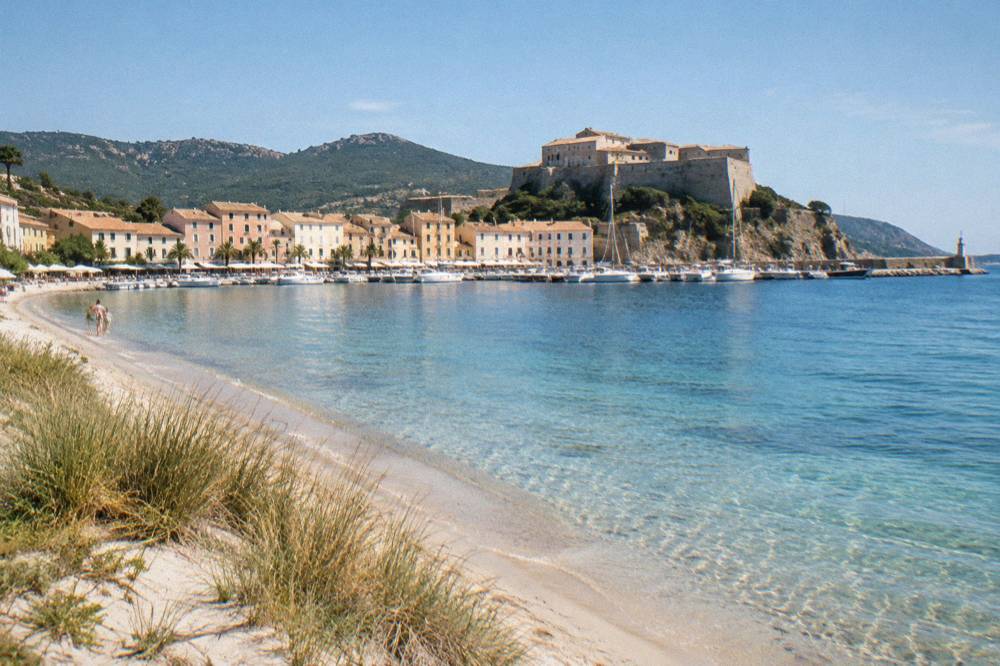
On land, the choices split two ways. North takes you into Cap Corse: the villages of Erbalunga, Nonza and Centuri each have their own page on this site, and the Museum of Bastia at the Palais des Gouverneurs reports high-season hours of 10:00 to 18:30 and low-season hours of 09:00 to 12:00 and 14:00 to 17:00, closed Sunday and Monday, hours worth confirming before you go. South and inland takes you toward Bastia and Corte: the Musée de la Corse in the Corte citadel charges EUR 5.50 full price, one ticket covering both museum and citadel, and the museum's own page gives road times to Corte of 1 hour from Bastia, 1 hour 30 from Ajaccio and Calvi, and 2 hours 45 from Bonifacio.
For underwater time, the area is a snorkelling and diving coast like most of Corsica, and a beginner scuba dive with an instructor operates out of Ajaccio as a bookable option if your route includes the capital. The same booking block above shows the three products listed for the wider region, with prices, ratings and durations rendered from live data rather than typed here. Whatever you book, the standing fire rule matters from mid-June: from 15 June to 30 September it is forbidden to light a fire or smoke in forests, maquis and massifs anywhere on the island, a rule the PNRC states for the whole of Corsica.
How Do You Reach Saleccia And Lotu In The Désert Des Agriates?
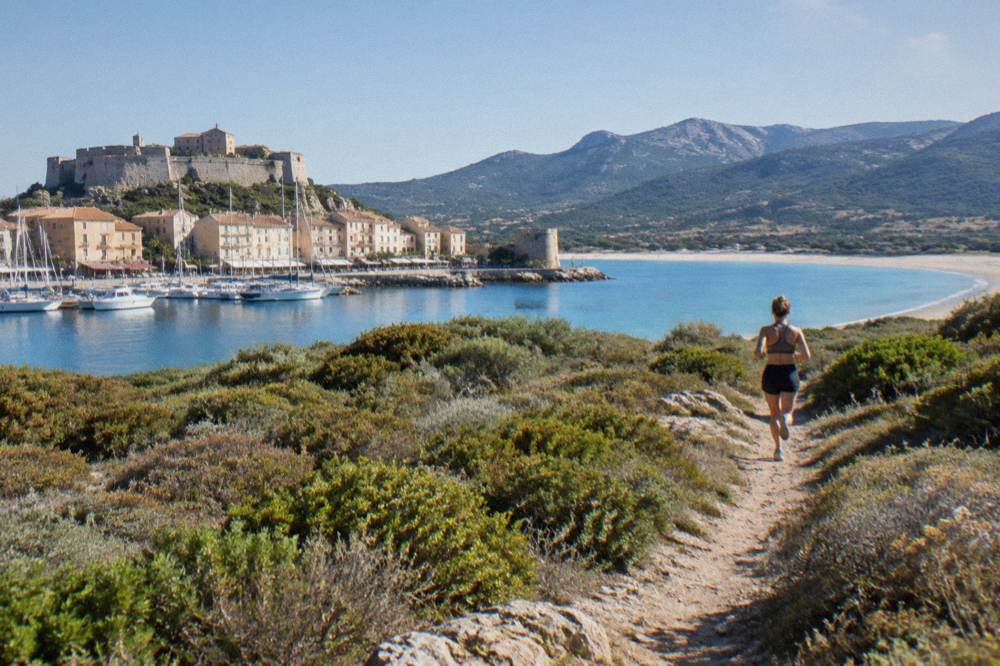
The Désert des Agriates beaches, Saleccia and Lotu, are reached by boat shuttle or taxi-boat from Saint-Florent port from about April to October, weather permitting, in roughly 15 to 20 minutes, or alternatively by 4x4 on the authorized track from Casta, or on foot, according to the visit-corsica.com page on the Agriates. There is no ordinary road: the Agriates is a protected landscape without a tarmac link to the beaches, which is precisely why the sea approach from Saint Florent became the standard way in. The shuttles are private operators working out of the port, so days and times follow the season and the weather rather than a fixed public timetable.
Walking in is the third option and it is a serious one. The Agriates sits astride some of Corsica's long-distance trails, and the Parc naturel régional de Corse publishes the figures for each of them in its trekking brochure: the Mare e Monti Nord runs 121 km over 10 days with 6,100 m of climbing, the Mare a Mare Nord runs 139 km, or 161 km with its variant, over 8 to 12 days with 5,900 m of climbing, and the shorter Mare a Mare Sud covers 73 km in 5 days ending in Propriano. The full set of lengths and climbs is in the table below.
| Trail | Length | Duration | Total climb |
|---|---|---|---|
| GR20 (Fra li Monti) | 180 km | About 15 stages of 4 to 8.5 h | Not published by the PNRC |
| Mare e Monti Nord | 121 km | 10 days | 6,100 m |
| Mare a Mare Nord | 139 km (161 km with variant) | 8 to 12 days | 5,900 m |
| Mare a Mare Centre | 84 km | 7 days (Ghisonaccia to Porticcio) | 3,900 m |
| Mare a Mare Sud | 73 km | 5 days | 3,200 m |
| Mare e Monti Sud | 66 km | 5 days | 2,700 m |
If a self-guided day feels like too much logistics, the guided option covers both the peninsula and the desert in one outing. The small-group half-day trip from Saint-Florent takes in Cap Corse and the Désert des Agriates with a Corsican meal as part of the package, and it can be reserved through the operator's live listing: Check availability for the dates you have in mind.
One standing rule protects the landscape you are walking through. Wild camping is banned across Corsica, including on the GR20 and inside the regional park, as reported by GR20 information sites citing municipal orders, with bivouac tolerated only in the marked areas beside PNRC refuges on the GR20, and those refuge nights must be booked online in advance. In the Agriates, that translates simply: plan the day around a return crossing, not a night on the sand.
What Is Patrimonio Known For?
Patrimonio is known as the home of Corsica's first and most reported wine appellation, the Patrimonio AOC, which sits at the base of Cap Corse just behind Saint Florent, planted chiefly on the Nielluccio red and Vermentinu white varieties that visit-corsica.com lists among the island's main grapes. The Corsican appellations, as reported by the tourism board's gourmet pages, are Patrimonio, Ajaccio, Vin de Corse with its named designations of Calvi, Coteaux du Cap Corse, Figari, Porto-Vecchio and Sartène, and the Muscat du Cap Corse. Patrimonio's cellars sit minutes from Saint Florent's marina, which makes a tasting stop the natural half-day complement to a beach morning.
Wine is only the headline of a wider protected-food story, and the appellations for the island's other produce are worth a table of their own. The Corsican Assembly's economic and social council documents the designations, and the tourism board's pages fill in the years, as reported below.
| Corsican product | Designation | Year, as reported |
|---|---|---|
| Brocciu cheese | Appellation d'origine | 1983; AOC/AOP 1998 |
| Prisuttu, lonzu, coppa charcuterie | AOC 2012, AOP 2014 | Nustrale pig breed recognised 2006 |
| Chestnut flour (Farina castagnina corsa) | AOP | Recognised 2010 |
| Olive oil (Oliu di Corsica) | AOC | Effective 2004 |
| Honey (Mele di Corsica) | AOC/AOP | AOC 1998 |
| Clémentine de Corse | IGP | 2007, Label Rouge 2014 |
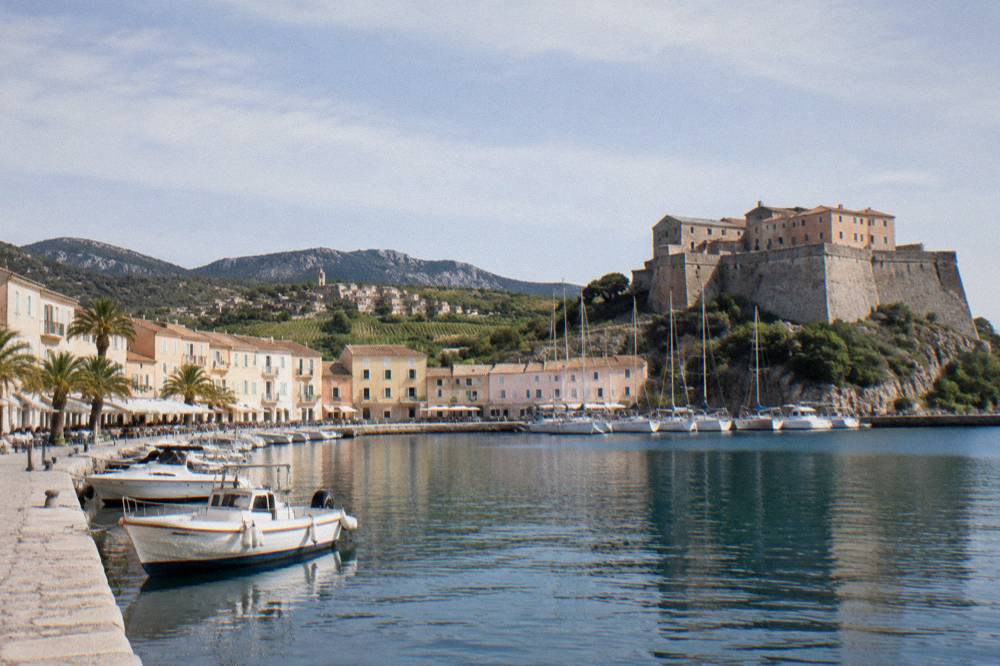
Reported facts need their caveat stated plainly: tasting prices, estate names and opening arrangements for individual cellars are not carried in this site's data, so check the room before you plan a route. What can be said is structural. The vineyards lie between Saint Florent and the village of Patrimonio itself on the road toward Bastia, the drive between the two towns being short enough that a morning on the water and an afternoon in a cellar is the area's standard rhythm. For a fuller treatment of the island's appellations, reds, whites and the Corsican grape varieties, see this site's Corsican wine guide and the wider Corsica regions overview.
Is Cap Corse Worth A Day Trip From Saint Florent?
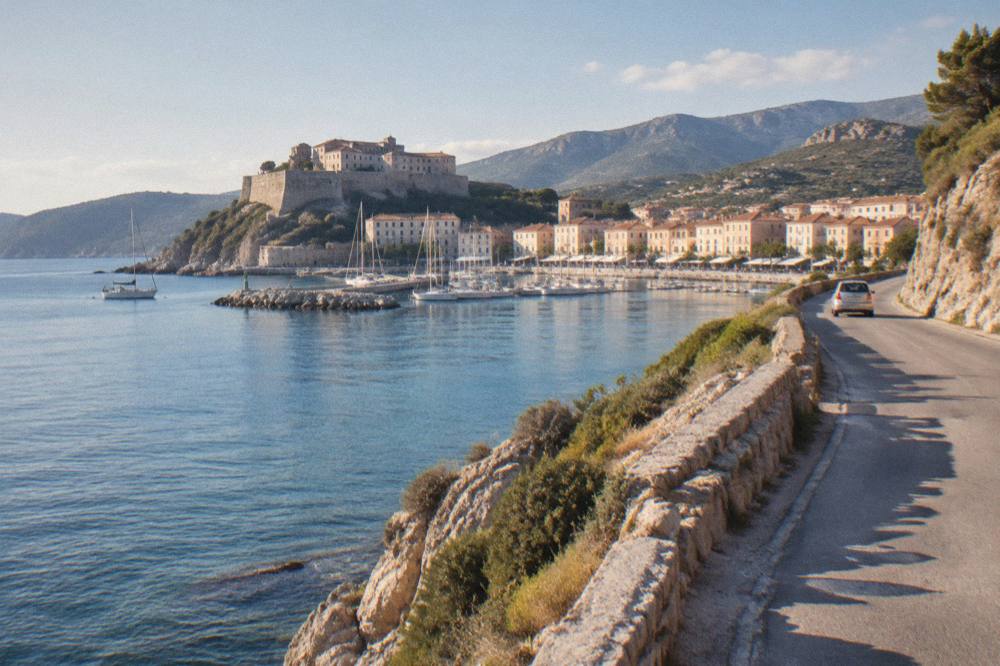
Cap Corse is a natural day trip from Saint Florent because the peninsula begins a short drive north of the town, and its villages, Erbalunga, Nonza and Centuri among them, plus the Museum of Bastia with reported high-season hours of 10:00 to 18:30, closed Sunday and Monday in low season, sit on a loop that returns the same day. The peninsula is Corsica's northernmost reach, the strip of land that points toward the Italian mainland, and Saint Florent is the last sizeable town at its base. This site carries dedicated pages for Erbalunga's neighbours on the cape, and the practical constraint is the road: mountain roads in Corsica are narrow, and Inforoutes Corse publishes live road conditions and accessibility levels for the main passes, which is the source to check before any long peninsula drive.
The cape rewards a slow loop rather than a single destination. Nonza's page on this site covers the village on its cliff; Centuri covers the fishing port at the tip; and back down the east side, Bastia's old harbour and the Museum of Bastia close the day. Reported figures for the museum: high season 10:00 to 18:30, low season 09:00 to 12:00 and 14:00 to 17:00, closed Sunday and Monday, and confirm before you go. Other pages covering the same trip are gathered on Corsica Travel Guide.
If driving the cape yourself is not the plan, the guided small-group format is the alternative, and the block above shows the Cap Corse and Agriates half-day trip with its live price, rating and duration. Whatever the choice, fire-season rules apply to the peninsula's tracks as they do everywhere on the island: from 15 June to 30 September, no fires and no smoking in forests, maquis and massifs, and the daily massif-access map is updated at 18:00 for the next day, with some massifs closed entirely on the highest-risk days under prefectural orders.
What Is The Weather Like In Saint Florent, Corsica?
Saint Florent, like the rest of Corsica's coast, has a hot dry summer and a mild wet winter, with the Météo-France 1991-2020 station normals for Ajaccio showing July averaging 8.6 mm of rain and August a mean daily high of 29.2 °C, while November carries 111.8 mm and the mean daily low bottoms at 4.3 °C in February; snow falls only on the high mountains. No station normals are published here for Saint Florent itself, so the Ajaccio station data is the island's west-coast reference. The Bastia station on the east side of the island, closer to Saint Florent's latitude, gives a comparison for the same period.
| Month | Ajaccio high °C | Ajaccio rain mm | Bastia high °C | Bastia rain mm |
|---|---|---|---|---|
| Jan | 14.0 | 54.1 | 13.8 | 67.3 |
| Feb | 14.2 | 48.1 | 13.9 | 63.5 |
| Mar | 16.0 | 50.4 | 15.8 | 63.7 |
| Apr | 18.5 | 53.1 | 18.3 | 71.6 |
| May | 22.1 | 49.8 | 22.4 | 53.7 |
| Jun | 25.9 | 25.9 | 26.4 | 38.8 |
| Jul | 28.6 | 8.6 | 29.4 | 13.8 |
| Aug | 29.2 | 15.8 | 29.8 | 21.1 |
| Sep | 26.1 | 57.8 | 26.0 | 74.5 |
| Oct | 22.8 | 85.7 | 22.0 | 126.5 |
| Nov | 18.3 | 111.8 | 17.7 | 134.3 |
| Dec | 15.1 | 73.9 | 14.8 | 88.1 |
Read the table for what it is: station averages, not forecasts. October and November carry the largest rain totals at both stations, November averaging 111.8 mm at Ajaccio and 134.3 mm at Bastia, and July the smallest at 8.6 mm and 13.8 mm respectively. The consequence for Saint Florent planning is direct, because the Agriates boat shuttles are weather-dependent and run only from about April to October, so a late-season trip should carry a land-based alternative. Supervised swimming has its own rhythm too: Ajaccio ran seven lifeguard posts from 1 July to the end of August 2026, and Haute-Corse's supervised beaches are reported to be staffed by volunteer firefighters from about 1 July to 31 August. This site's month-by-month breakdown carries the full picture in the Corsica weather by month guide, and the best time to visit Corsica guide adds the planning angles.
Where Should Saint Florent Fit In A Corsica Itinerary?
Saint Florent works best as a two-to-four-night base in the northern third of a Corsica itinerary, slotted between Bastia on arrival and the Cap Corse or Agriates loop, with the island's classic one-week and two-week routes passing through the town as the bridge between the east coast and the Balagne via the Désert des Agriates. The island's road geography makes the town a natural hinge: Bastia's port and airport sit east, Cap Corse runs north, and the wild coast runs west toward L'Île-Rousse and the Balagne, covered in this site's Calvi and the Balagne area guide and the L'Île-Rousse guide. For the sequencing itself, this site's ready-made routes, Corsica in 5 days, Corsica in one week and Corsica in 14 days, all place a northern segment where Saint Florent fits.
Pairing the town with the island's inland sights is where the sight-entry figures below come in, gathered for readers here in one place. The Musee de la Corse ticket at EUR 5.50 covers both the museum and the citadel in Corte, and Corte is 1 hour by road from Bastia, per the museum's own practical page. Filitosa, the prehistoric site far to the south, is open 1 April to 2 November with adults at EUR 9, useful only on a long southern day, but included here because families often ask for the price list in one place.
| Sight | Full price | Key hours |
|---|---|---|
| Maison Bonaparte, Ajaccio | EUR 10 | Closed Monday; 1 Jul to 30 Sep 10:00 to 17:30 |
| Palais Fesch, Ajaccio | EUR 10 | Daily 09:00 to 17:00 |
| Musee de la Corse and citadel, Corte | EUR 5.50 | 1 May to 31 Oct daily 10:00 to 19:00 |
| Filitosa prehistoric site | EUR 9 adults | Open 1 April to 2 November |
| Museum of Bastia (Palais des Gouverneurs) | Not carried in this site's data | High season 10:00 to 18:30 |
What Should You Know Before You Go To Saint Florent?
The practical essentials for Saint Florent are the same as for the rest of Corsica: the currency is the euro, emergency numbers are 112 for all services plus 15 medical, 17 police, 18 fire, 114 by SMS and 196 for sea rescue, the fire ban runs 15 June to 30 September in all forests and maquis, and service is included in restaurant prices by law, so tips are optional. The sea-rescue number matters more here than inland, given the shuttles, the swim stops and the number of days spent on the water. For anything in the mountains, the PGHM mountain-rescue base at Ajaccio answers on 04 95 24 24 00, and in an emergency the numbers below come first.
| Number | Service |
|---|---|
| 112 | EU-wide emergency |
| 15 | SAMU medical |
| 17 | Police |
| 18 | Fire brigade |
| 114 | Emergency SMS or app for deaf and speech-impaired users |
| 196 | Sea rescue, VHF channel 16 at sea |
Two further standing points shape a northern Corsica trip. First, the UK Foreign Office notes a high risk of wildfires in France from April to October, and the US State Department lists France at Level 2, Exercise Increased Caution; neither is Corsica-specific but both apply to the island. Second, the daily massif-access map is updated at 18:00 for the next day, and from mid-June to mid-September some massifs can be restricted or closed entirely on the highest-risk days, so a walk into the Agriates in high summer should be checked the evening before.
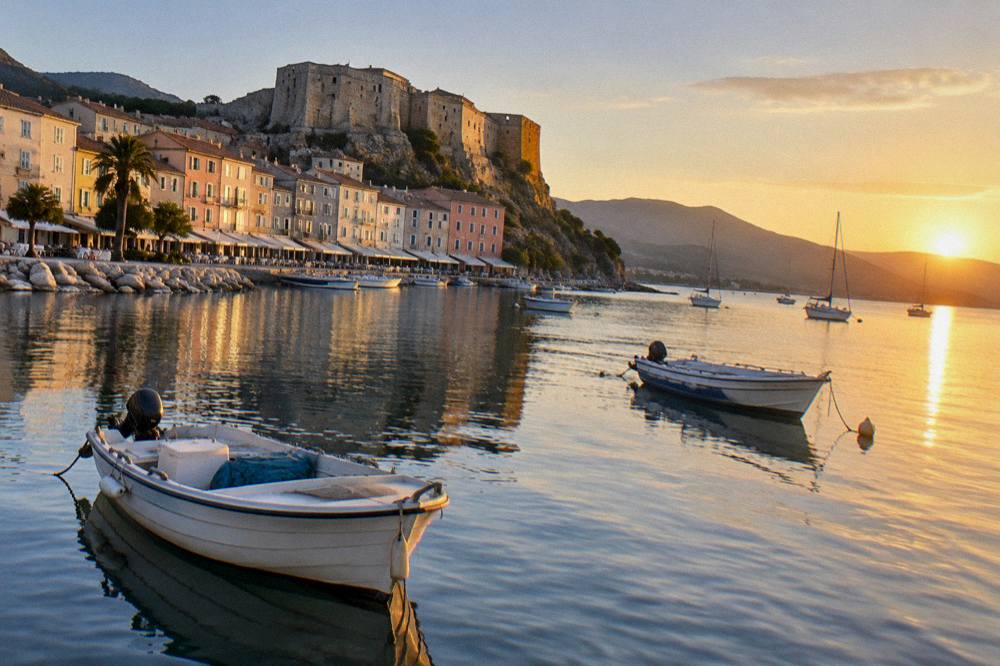
Getting to the region is covered elsewhere on this site: ferries from Marseille, Toulon, Nice, Livorno, Genoa, Savona and Santa Teresa Gallura serve Corsica's ports, with Moby and Ichnusa Lines reported to keep the short Santa Teresa Gallura to Bonifacio link, and the island's four airports at Ajaccio, Bastia, Figari and Calvi handle the flights. The ferry to Corsica guide and the Corsica airports guide carry the routes in detail, and Bastia's port is the arrival point that puts Saint Florent closest.
Common Questions About Saint Florent And Patrimonio
Where Is Saint Florent In Corsica?
Saint Florent is a small port town on Corsica's northwest coast, in Haute-Corse, at the base of the Cap Corse peninsula and roughly 30 road kilometres west of Bastia. It sits at the gateway to the Désert des Agriates.
How Do You Get To Saleccia And Lotu Beaches?
As the visit-corsica.com page reports, the Agriates beaches are reached by boat shuttle or taxi-boat from Saint-Florent port, about April to October and weather permitting, by 4x4 on the authorized track from Casta, or on foot.
What Is Patrimonio Famous For?
Patrimonio is reported to hold Corsica's best-known wine appellation, at the base of Cap Corse behind Saint Florent, planted chiefly with the Nielluccio red and Vermentinu white varieties listed among the island's main grapes.
Can You Camp In The Désert Des Agriates?
No. Wild camping is banned across Corsica, including inside the regional park, and the only tolerated bivouac areas are beside PNRC refuges on the GR20, where nights must be booked online in advance.
Is There A Train To Saint Florent?
No rail line serves the town. The Chemins de fer de la Corse network runs Ajaccio to Bastia via Corte and the Balagne coastal line from Calvi to L'Île-Rousse so the nearest railheads are at Bastia or Ponte-Leccia.
When Can You Swim Around Saint Florent?
The Météo-France 1991-2020 normals show the coast at its warmest in August, with a mean daily high of 29.8 °C at the Bastia station, and supervised beaches in Haute-Corse are reported to be staffed from about 1 July to 31 August. Boat shuttles to the Agriates beaches run about April to October, weather permitting.