Filitosa: The Prehistoric Site Of Southern Corsica, Tickets, Times And How To Visit
Filitosa, near Sollacaro in the Taravo valley of southern Corsica, is one of the island's headline prehistoric sites, open from 1 April to 2 November with a museum on site. Here is what the site itself publishes on times, prices and planning a visit.
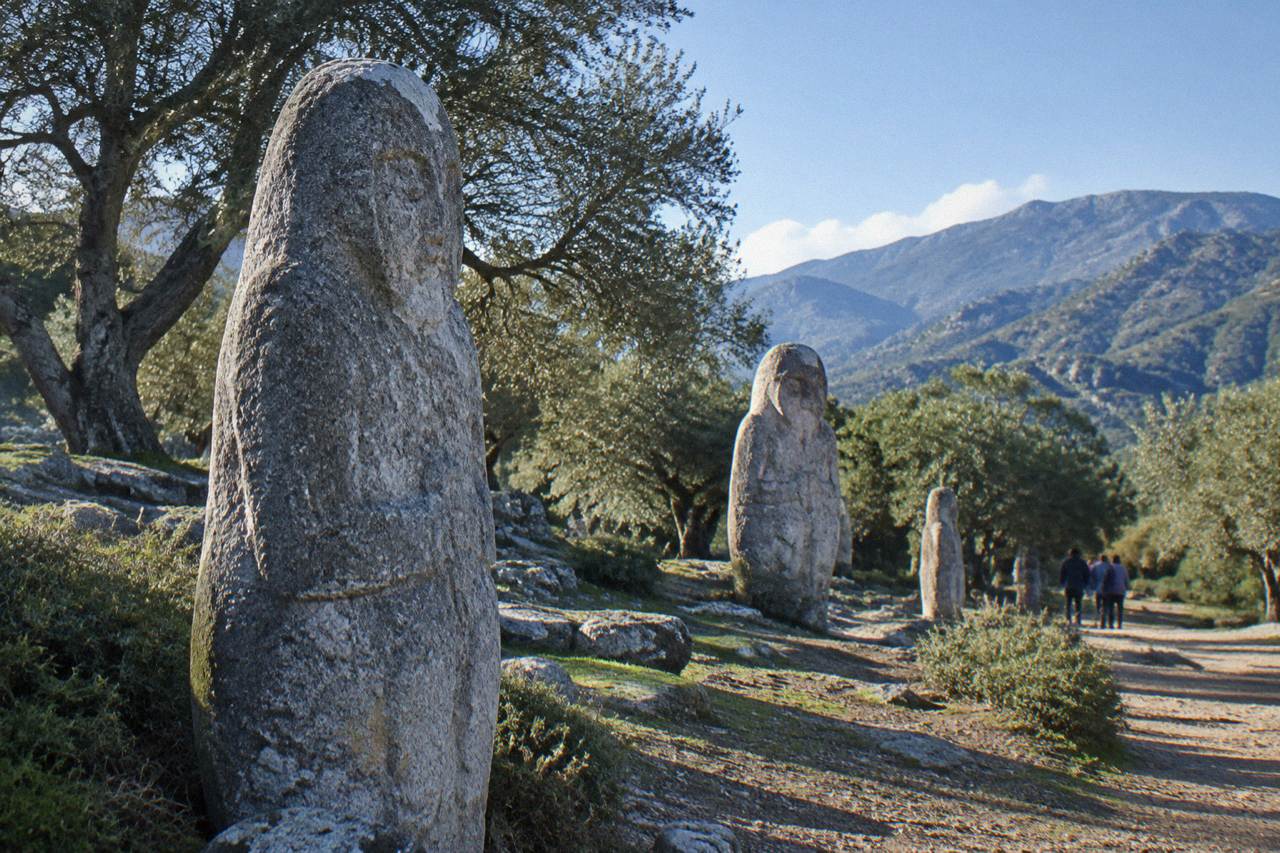
Filitosa is open 1 April to 2 November, 09:00 to sunset, and the site itself recommends allowing about 1 hour 30 minutes. Entry costs EUR 9 for adults, EUR 7 reduced (ages 6 to 17 and disabled visitors), EUR 28 for a family of two adults and two children, and is free for children under 6.
Filitosa sits in the Taravo valley near Sollacaro, in the south-west of Corsica, the French Mediterranean island of 8,722 km2 where more than 1,000 km of coastline wraps a mountainous interior. The site is a prehistoric monument park with its own museum, and its practical-information pages set out a clear season, fixed euro prices and a recommended visit length. This guide gathers what the site itself publishes, and builds a day around it, from the Valinco coast to the beaches and cliff towns of the far south.
What Is Filitosa In Corsica?
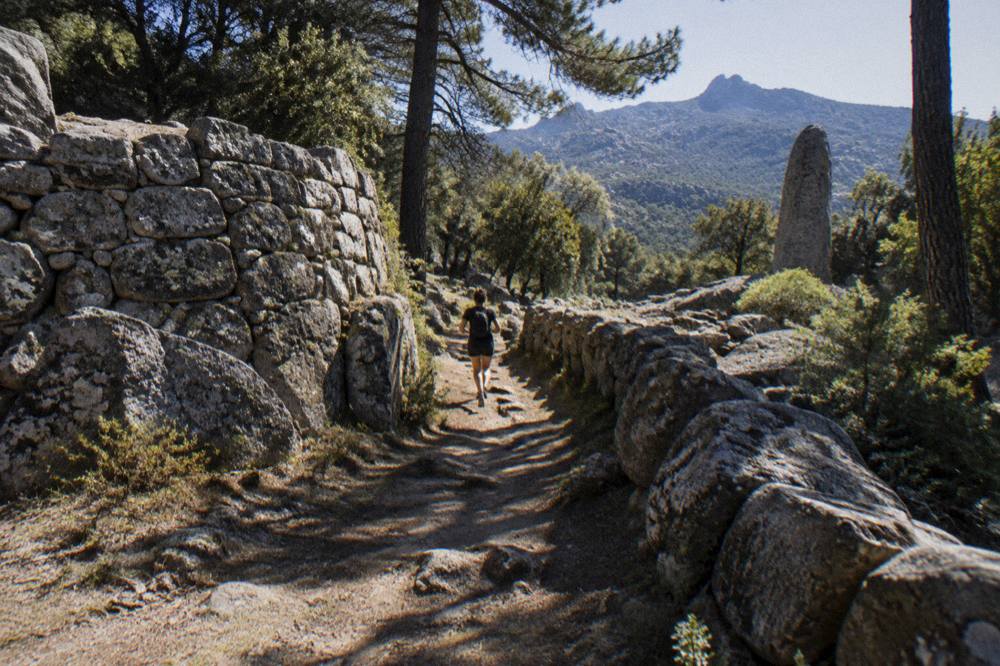
Filitosa is a prehistoric site in the Taravo valley near the village of Sollacaro, in Corse-du-Sud, the southern department of Corsica. It is one of the island's flagship monuments of prehistory, and it is presented to visitors as an outdoor site with carved granite statue-menhirs plus a museum on the grounds, open from April to November each year. The listing for the site, held by the local tourism authority, names it among the destination's heritage visits.
The site belongs to the Valinco region, the stretch of south-western Corsica that runs down to Propriano on the coast. Filitosa is an inland visit, set in maquis-covered hill country rather than on the shore, which makes it a natural pairing with the beaches and coves of the south during the same trip. The surrounding department, Corse-du-Sud, counted about 175,100 residents in the INSEE estimates for 2026, and the island as a whole reached 365,636 people on 1 January 2026, the provisional INSEE figure.
What the site's own pages confirm is the practical frame: an open-air circuit, an on-site museum with longer hours than the park itself, a fixed price list in euros, and a season that runs from spring to early November. Beyond that frame, this page sticks to what is published, and builds the rest of the day from the island's sights. Corsica's prehistoric legacy also appears at other points of the south, and the region around the site is dense with places to fill a full itinerary, starting with the pages collected at things to do in Corsica.
The name Filitosa is attached, in tourism listings, to the megalithic heritage of the island, and the museum on site covers that story in depth for visitors who want the full context before or after walking the grounds.
What Are The Filitosa Opening Times And Ticket Prices?
Filitosa is open every year from 1 April to 2 November, with the site open 09:00 to sunset and the museum open 09:00 to 19:00. Tickets cost EUR 9 for adults aged 18 and over, EUR 7 reduced for ages 6 to 17 and disabled visitors, EUR 28 for a family of two adults plus two children aged 6 to 17, and children under 6 enter free. The site recommends allowing about 1 hour 30 minutes for a visit.
Those figures come from the site's own timetable-and-rates page, and the tourist-office listing for the current season carries the same season dates. The gap between the two closing times matters for planning: the outdoor circuit closes at sunset, which in practice means the last useful entry drifts earlier as autumn moves on, while the museum holds a fixed 19:00 close through the season. A morning arrival gives the most margin on both.
| Item | Price (EUR) | Notes |
|---|---|---|
| Adult (18+) | 9 | Full price |
| Reduced (6 to 17, disabled) | 7 | Proof may apply |
| Family ticket | 28 | 2 adults + 2 children aged 6 to 17 |
| Under 6 | Free | No ticket needed |
| Period | Site hours | Museum hours |
|---|---|---|
| 1 April to 2 November | 09:00 to sunset | 09:00 to 19:00 |
Prices here are local euro costs, charged on site, and they are not converted or bundled with anything else. Reduced and family rates are the site's own categories, so a household with children aged 6 to 17 should compare the family ticket against per-person reduced tickets before paying.
For travellers basing themselves in the capital, the same practical-information discipline applies to the Ajaccio museums, and the Ajaccio city tour guide covers Napoleon's birth house in detail. If a broader look at Corsica's headline monuments helps with planning, Corsica Travel Guide keeps a page for each of them.
Beyond Filitosa's own gates, the rest of a southern Corsica day can be filled with visits that also carry published prices, and pairing a prehistory morning with an afternoon on the coast is the pattern this page builds below.
How Much Time Do You Need At Filitosa?
The site itself recommends allowing about 1 hour 30 minutes for a visit, which covers the outdoor circuit of the prehistoric grounds at a steady pace and leaves time for the museum, which stays open until 19:00 through the season. Visitors who want to read the museum displays in full, or arrive late in the afternoon, should plan closer to two hours so the sunset closing of the outdoor area does not cut the walk short.
That 1 hour 30 minutes figure is the only published visit length, and it is the site's own recommendation rather than an estimate. Two practical consequences follow. First, Filitosa fits comfortably as a half-day anchor for a day that continues to the coast, since the whole stop, parking to departure, sits inside a morning. Second, the sunset close means the visit is best not left as the day's last item from late October, when the useful daylight window narrows.
The museum's fixed 19:00 close makes it the safety net: if the circuit runs long, the indoor displays remain reachable afterward. Families with children in the 6 to 17 bracket, who pay the reduced EUR 7 rate or fall under the EUR 28 family ticket, often find the museum the part that holds younger attention longest, since the grounds are an open walk with no shelter.
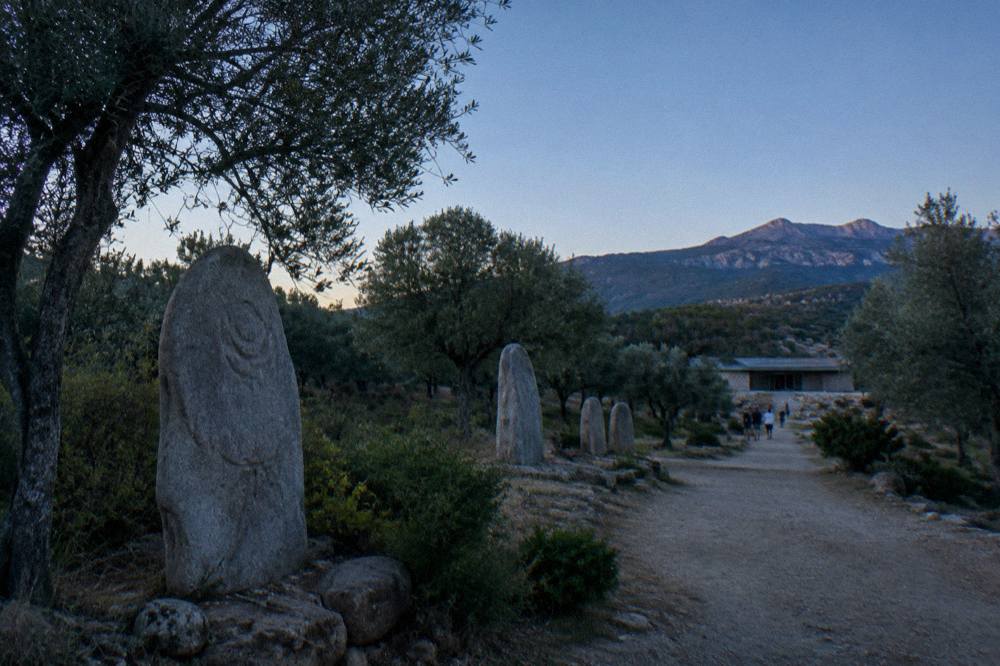
For scale, the other timed visits of the region compare simply: the museums of Ajaccio publish their own hours (Palais Fesch, daily 09:00 to 17:00 for the 16 January to 31 December 2026 period), and Corte's museum-citadel complex runs 10:00 to 19:00 in its May-to-October high season. Filitosa's about-1-hour-30 recommendation puts it in the same weight class as a single museum plus grounds, not a full-day site.
How Do You Get To Filitosa From Ajaccio, Propriano Or Bonifacio?
Filitosa is reached by road near Sollacaro, in the Taravo valley inland from the Valinco coast of southern Corsica, with signed access from the main southbound route out of Ajaccio and from the Propriano side. There is no rail link to the valley, and the island's train network runs on its two main lines, Ajaccio to Bastia via Corte and Ponte-Leccia to Calvi, none of which serves the south-west. A car or an organised excursion is the practical answer.
The driving frame that is published with figures concerns Corte, in the centre of the island, rather than the Taravo valley: the Corte museum lists Bastia 1 hour, Ajaccio 1 hour 30, Calvi 1 hour 30, Porto-Vecchio 2 hours, Bonifacio 2 hours 45 and Propriano 2 hours 45 as road times to Corte. Those figures show the general scale of Corsican road travel, mountainous interior included, and the Propriano figure is the useful anchor for the Valinco: Filitosa sits inland of that coast.
What can be said is the pattern every driver on the island meets: narrow mountain roads, and live status published by Inforoutes Corse for the main passes, which is the standing check before any long drive on the island.
For travellers without a car, the excursion route is the alternative, and the tours listed in this article's picks cover guided days from the island's main bases. The south of Corsica also rewards boat-based days, and the Bonifacio citadel and cliffs page covers the far-south town that pairs naturally with a Filitosa morning.
| From (published figure) | To Corte by road | Relevance to a Filitosa day |
|---|---|---|
| Bastia | 1 h | Northern starting point; pair via the centre |
| Ajaccio | 1 h 30 | Main western base for the south-west |
| Calvi | 1 h 30 | North-west base; long day |
| Porto-Vecchio | 2 h | South-east base |
| Bonifacio | 2 h 45 | Far south; combine over two days |
| Propriano | 2 h 45 | Valinco coast, nearest published anchor to Filitosa |
The table above is the road-time set the island's own institutions publish, and it is given here for scale rather than as door-to-door promises for the Filitosa legs.
What Can You Combine With Filitosa In A Day?
A Filitosa morning pairs naturally with an afternoon on the Valinco and far-south coast: the site sits inland near Sollacaro, within reach of Propriano's gulf, the wide beaches of the south such as Palombaggia and Rondinara, and the cliff-top town of Bonifacio, which warrants a separate visit in its own right. The site's about-1-hour-30 recommendation leaves most of the daylight free for a second stop.
The classic southern day runs prehistory in the cool of the morning, then descends to the sea. West of the site, the Valinco coast holds Propriano, the southern terminus of both the Mare a Mare Sud trail (73 km, 5 days, per the PNRC brochure) and the Mare e Monti Sud (66 km, 5 days), which makes the area a meeting point of walkers and beachgoers. South-east, the beach belt starts with Santa Giulia and continues through Palombaggia toward Bonifacio, while the wilder Plage de Roccapina lies on the far-south coast road beyond Sartène.
For a two-centre day that keeps driving moderate, the pairing is Filitosa plus one beach, or Filitosa plus Bonifacio's Escalier du Roi d'Aragon, the 189-step stair cut down the Bonifacio cliff. For travellers who want the far south in full, the Lavezzi islands sit just off Bonifacio and are visited by boat from the town, which turns a Filitosa day into a two-day southern loop with an overnight.
The published price set makes budgeting simple. Filitosa at EUR 9 adult, plus the Escalier's reported fee of about EUR 5, plus a beach afternoon at no entry cost, is a full southern day for under EUR 15 per adult in sight entries, before food and fuel. The table below lines up the entries of the region and the island's other headline inland stops. More of these guides are collected on Corsica Travel Guide.
| Site | Adult entry | Season / hours as published |
|---|---|---|
| Filitosa | EUR 9 | 1 Apr to 2 Nov, 09:00 to sunset; museum to 19:00 |
| Escalier du Roi d'Aragon, Bonifacio | about EUR 5 | Monthly hours; closed flat shoes required |
| Maison Bonaparte, Ajaccio | EUR 10 | Closed Mondays; seasonal hours |
| Palais Fesch, Ajaccio | EUR 10 | Daily 09:00 to 17:00 (16 Jan to 31 Dec 2026) |
| Musée de la Corse, Corte | EUR 5.50 | Daily 10:00 to 19:00, May to October |
Is Filitosa Suitable For Children And Families?
Yes, on the pricing and layout the site itself publishes: children under 6 enter free, ages 6 to 17 pay the reduced EUR 7 rate, and a family ticket at EUR 28 covers two adults and two children aged 6 to 17, which undercuts four single tickets. The visit is an outdoor walk of about 1 hour 30 minutes plus a museum open to 19:00, a shape that suits families with a morning to spend.
The family ticket is the number to check at the desk: two adult singles and two child singles cost more bought separately than the EUR 28 family rate for that exact household, so the family ticket is the cheaper buy. Families with one child, or with children over 17, buy singles.
Two practical cautions come from the island's rules rather than the site. From 15 June to 30 September it is forbidden to light a fire or smoke in forests, maquis and massifs, which applies to the scrub-covered valley country around Filitosa. And the summer heat is real: the Météo-France station normals for Ajaccio (1991-2020) put July's average daily high at 28.6 °C and August's at 29.2 °C, so the morning slot for the outdoor circuit is the comfortable one, with the museum as the shaded finish.
For families building the wider trip, the island is a family-friendly destination at large, and beach days at Santa Giulia or the sheltered Piscines naturelles de Cavu pair with heritage stops without long transfers once you are based in the south.
When Is The Best Time Of Year To Visit Filitosa?
The site's own season answers most of this: Filitosa is open 1 April to 2 November, so the choice is spring, early summer or autumn, with the outdoor circuit closing at sunset and the museum at 19:00 throughout. The Météo-France station normals for Ajaccio show July averaging just 8.6 mm of rain and November 111.8 mm, so within the open season the drier and milder months sit between April and June and in September and October.
No single month is named here as the best, because that is a judgement, but the numbers frame it. Spring averages at Ajaccio run 18.5 °C daily highs in April and 22.1 °C in May with roughly 50 mm of rain each month. June jumps to 25.9 °C with 25.9 mm. September still carries 26.1 °C highs; October cools to 22.8 °C with 85.7 mm of rain, and the site closes on 2 November, before the November peak of 111.8 mm.
| Month | Avg high °C (Ajaccio) | Rain mm | Reading for a Filitosa visit |
|---|---|---|---|
| April | 18.5 | 53.1 | Season opens on the 1st |
| May | 22.1 | 49.8 | Mild walking weather |
| June | 25.9 | 25.9 | Warm, low rainfall |
| July | 28.6 | 8.6 | 8.6 mm of rain, hot afternoons |
| September | 26.1 | 57.8 | Warm, sea still in season |
| October | 22.8 | 85.7 | Cooler, wetter; closes 2 Nov |
They describe averages, not forecasts, and the mountainous south-west can run warmer on the coast and cooler in the hills.
How Does Filitosa Fit Into A Wider Corsica Itinerary?
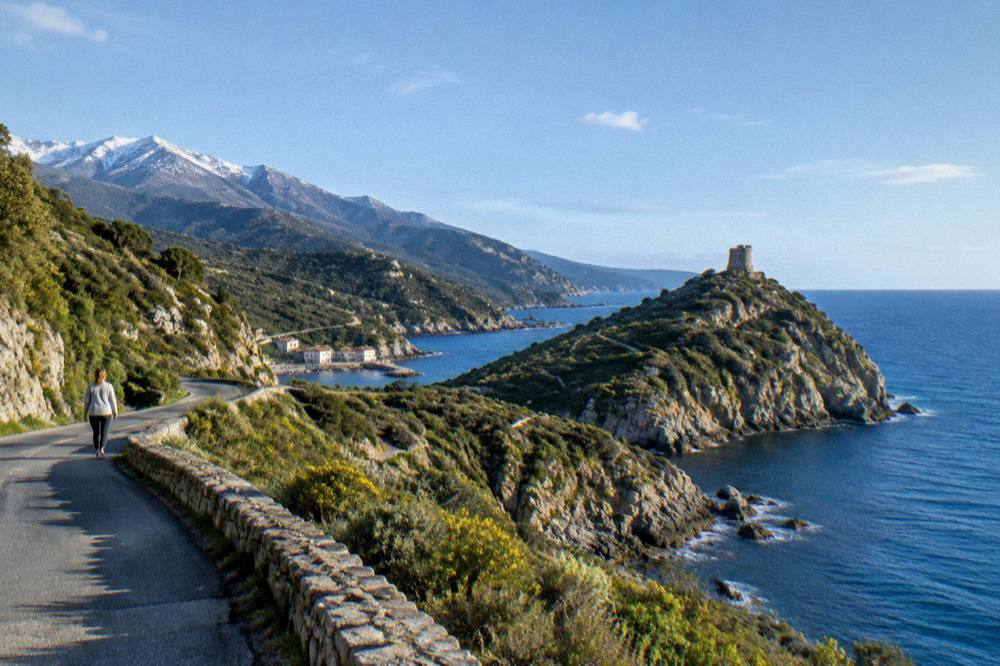
Filitosa works as the heritage anchor of a southern Corsica loop: base in Ajaccio, Propriano or Bonifacio, give the site a morning inside its 1 April to 2 November season, and spend the afternoons on the coast or cliff towns of the south-west. On longer trips it slots between the gulf of Porto's UNESCO shoreline in the west and Bonifacio and the Lavezzi islands in the far south, two of the island's headline sights.
A one-week frame for the island, which the itinerary pages cover in detail, typically splits the west coast (the Gulf of Porto, the Calanques de Piana, Girolata and the Scandola reserve, all reachable by boat) from the south and east (Bonifacio, Porto-Vecchio, the beaches). Filitosa sits between the two, on the inland road of the Taravo valley, which is exactly why it earns its half-day: it costs little time and fills the prehistory slot no beach can.
The island's long-distance walking web also touches the region: the PNRC brochure lists Mare a Mare Sud at 73 km over 5 days ending in Propriano, and Mare e Monti Sud at 66 km over 5 days, also ending in Propriano, so the Valinco is where hikers step off the trail and travellers step into prehistory.
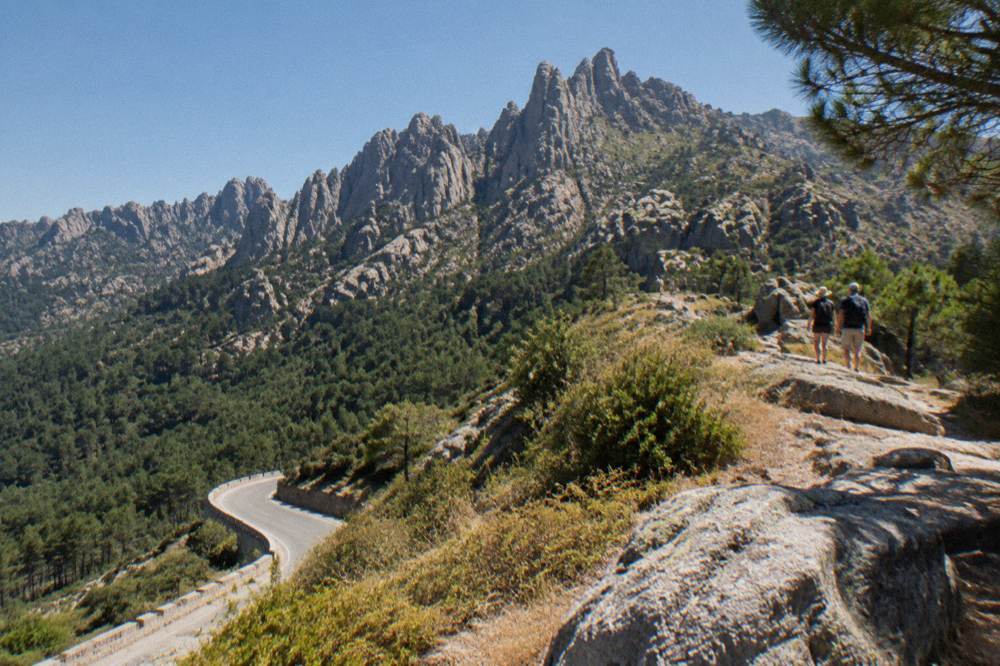
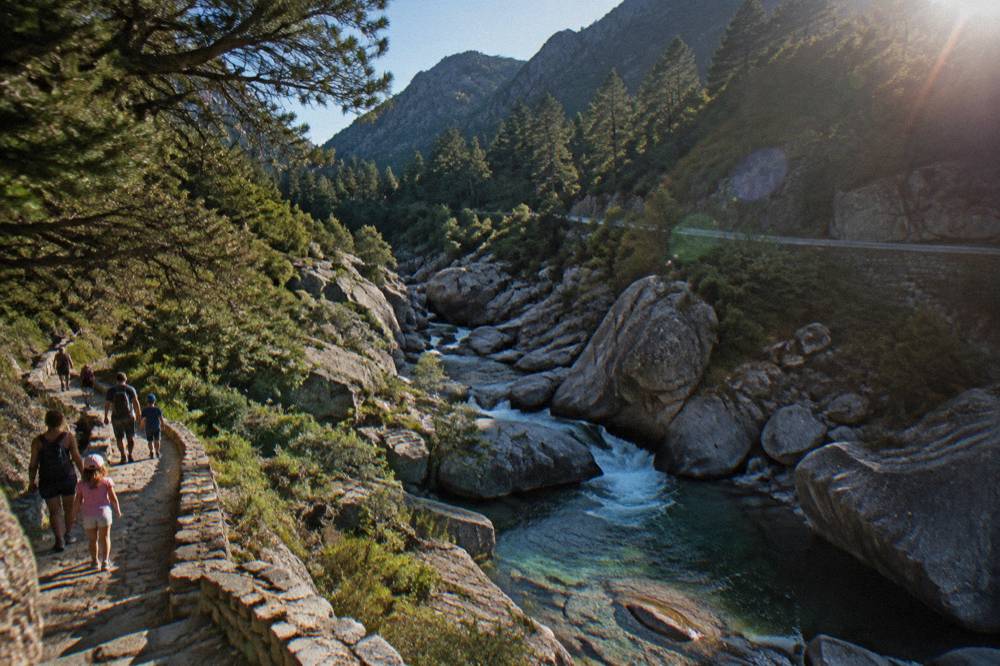
For the northern half of the island, the balance of a two-week trip shifts to the Balagne, Cap Corse and the interior around Corte, whose citadel and museum are covered on the Citadelle de Corte page. The Restonica valley and the Aiguilles de Bavella carry the high-mountain days, and the Gorges de Spelunca sit on the western route between Corte and the coast.
Where To Stay For Visiting Filitosa
The practical bases for Filitosa are Ajaccio, the island's capital with 76,320 residents in the 2023 census figure published in 2026, Propriano on the Valinco coast, and Bonifacio in the far south; each puts the site within a single day's driving loop, and each serves a different half of a southern itinerary. Choosing between them is a choice between city services, gulf-side calm and cliff-town drama.
Ajaccio is the transport hub of the west: its airport, its ferry port and its museum quarter, including Maison Bonaparte and the Palais Fesch, make it the base that needs the fewest transfers. Propriano is the closest coastal option to the Taravo valley and the quietest of the three. Bonifacio, perched on its cliffs, fronts the Lavezzi islands and the far-south beaches and suits a two-night finish.
The published sights table earlier in this page gives the entry costs that anchor a city stay.
Travellers who prefer a guided structure for the Ajaccio leg can look at the Ajaccio town and coast open-top bus tour, which covers the capital's sweep with an audio guide, and check current dates through the operator's live listing: Check availability.
Common Questions About Filitosa
What Are Filitosa Opening Times?
The site is open 1 April to 2 November. The outdoor grounds run 09:00 to sunset, and the museum is open 09:00 to 19:00 through the same season.
How Much Does Filitosa Cost?
Adults pay EUR 9, visitors aged 6 to 17 and disabled visitors pay EUR 7, a family ticket covering two adults and two children aged 6 to 17 costs EUR 28, and children under 6 enter free.
How Long Does A Visit To Filitosa Take?
The site itself recommends allowing about 1 hour 30 minutes, covering the outdoor circuit and the museum. Late-afternoon arrivals should remember the grounds close at sunset while the museum holds to 19:00.
Where Is Filitosa In Corsica?
Filitosa lies in the Taravo valley near Sollacaro, in Corse-du-Sud, the southern department of Corsica, inland from the Valinco coast and Propriano.
Can Children Visit Filitosa?
Yes. Under-6s enter free, ages 6 to 17 pay the reduced EUR 7 rate, and the EUR 28 family ticket covers two adults and two children aged 6 to 17.
What Else Is Near Filitosa?
The Valinco coast and Propriano to the west, Bonifacio and the Escalier du Roi d'Aragon to the south-east, and the beach belt of Palombaggia, Santa Giulia and Rondinara across the south, all sit within a day's loop of the site.
Filitosa earns its half-day cleanly: a fixed euro price list, a published season from 1 April to 2 November, a museum that outlasts the sunset close of the grounds, and a valley position that links the prehistory of the interior with the beaches and cliff towns of southern Corsica.