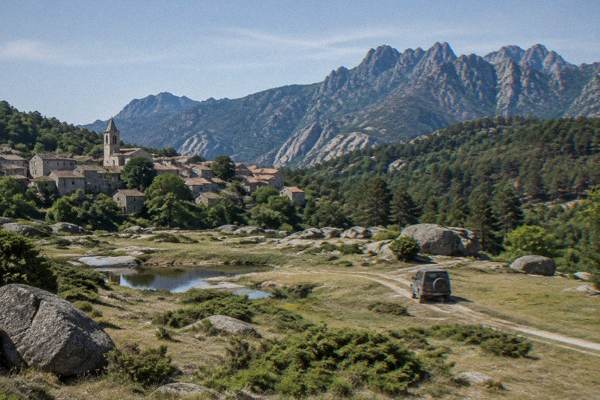
Aitone Forest In Corsica
This guide covers how to reach the island's forests, which long-distance trails cross the high country, the fire and bivouac rules that apply in summer, and the figures to plan around.
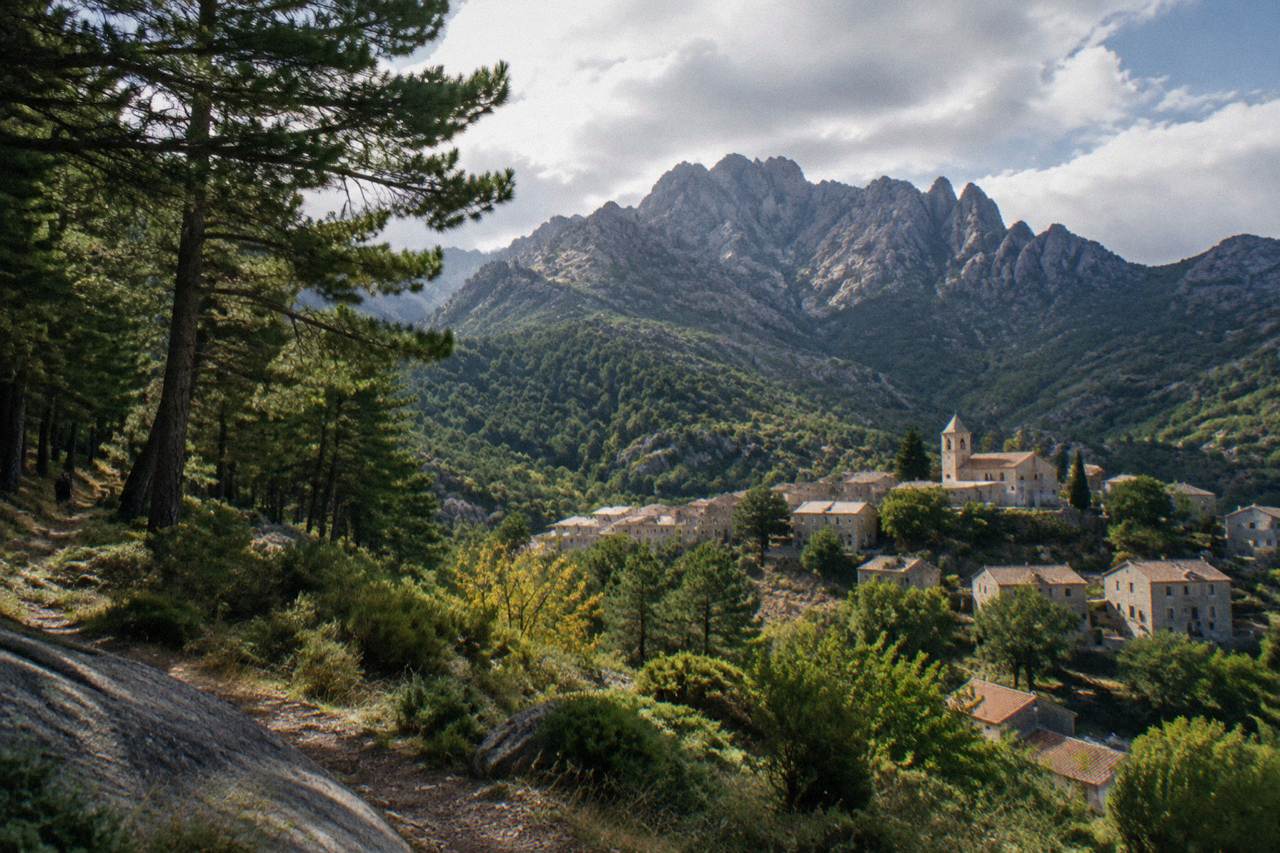
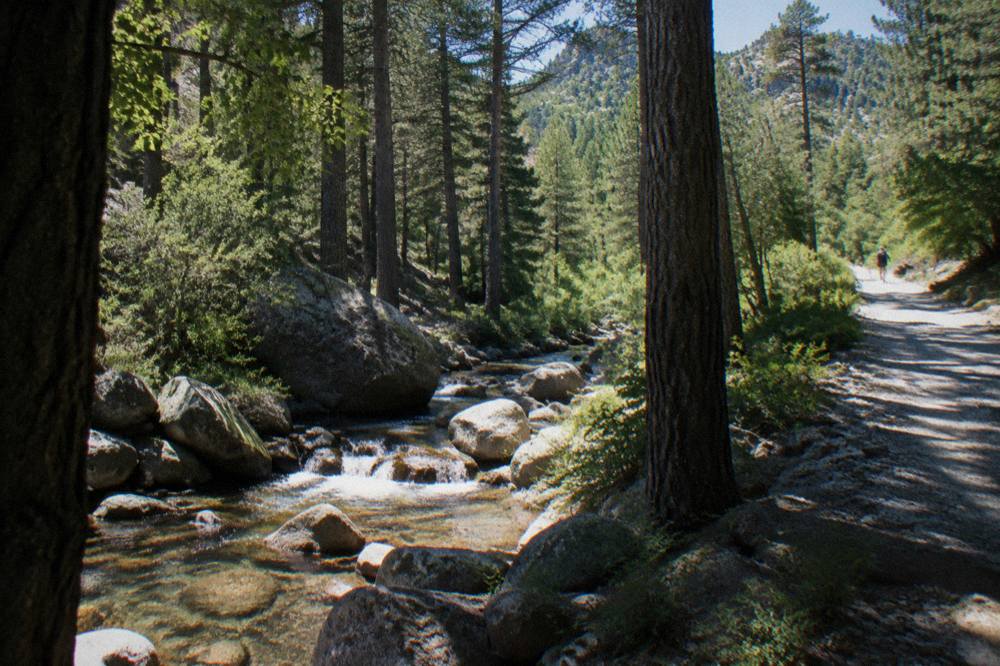
Aitone Forest is a high woodland area in the interior of Corsica, an island with more than 1,000 km of coastline and a mountainous interior. The interior is the inland part of the island: Corte is the old capital inland town, and the Parc naturel régional de Corse, created in 1972, covers 4,484 km2 including large valleys running down to the sea.
Corsica is a French Mediterranean island of 8,722 km2, the fourth-largest island in the Mediterranean, with more than 1,000 km of coastline and an interior that climbs to Monte Cinto at 2,706 m. Aitone Forest belongs to that interior: a wooded highland area whose pine and chestnut cover is part of the reason the Parc naturel régional de Corse, created in 1972, now protects 4,484 km2 of the island, including the Castagniccia and the big valleys that run down to the sea. The island's west coast, with the Calanques de Piana and the Scandola Nature Reserve, is the sea-facing counterpart of this mountain country, and the two are usually visited on the same swing through western Corsica. This Corsica Travel Guide page sets out what is known about the interior's forests and trails, the rules that govern them in summer, and the figures that shape any visit.
Where Is Aitone Forest In Corsica?
Aitone Forest lies in the mountainous interior of Corsica, the inland part of this sea-surrounded French island, which covers 8,722 km2 and is the fourth-largest island in the Mediterranean. The interior peaks at Monte Cinto, 2,706 m, and much of it falls inside the Parc naturel régional de Corse, created in 1972, which today spans 4,484 km2 and includes large valleys running down to the sea.
The island counts 360 communes and, as of 1 January 2026, a provisional population of 365,636 residents according to INSEE. Corse-du-Sud holds about 175,100 of them and Haute-Corse about 190,500. Ajaccio, the capital and the birthplace of Napoleon, has 76,320 residents, and Bastia, the second town on the northeast coast, has 46,867. Every one of these towns sits on the coast; the forests, including Aitone, belong to the high country between them, and the Collectivité de Corse, a single territorial authority with special status, has administered the island since 1 January 2018.
The park's western sea front runs 80 km from Capu Rossu to Capu Cavallu, and it is along that front that the UNESCO World Heritage property "Gulf of Porto: Calanche of Piana, Gulf of Girolata, Scandola Reserve", inscribed in 1983, protects 11,800 ha of cliffs and marine reserve. Aitone Forest is on the same western side of the island, up in the mountains behind that coast, which makes the pairing of forest days and boat days a natural one. The Check availability link beside this paragraph leads to a Porto cruise that covers the Scandola Reserve and the Calanches de Piana from the water.
What Can You Do At Aitone Forest And In The Corsican Interior?
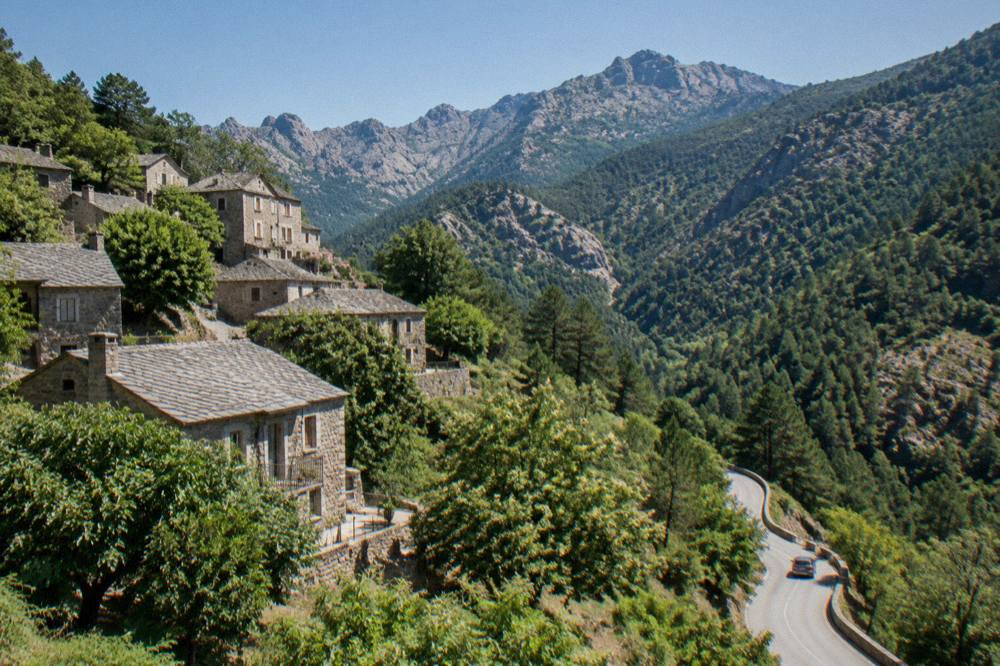
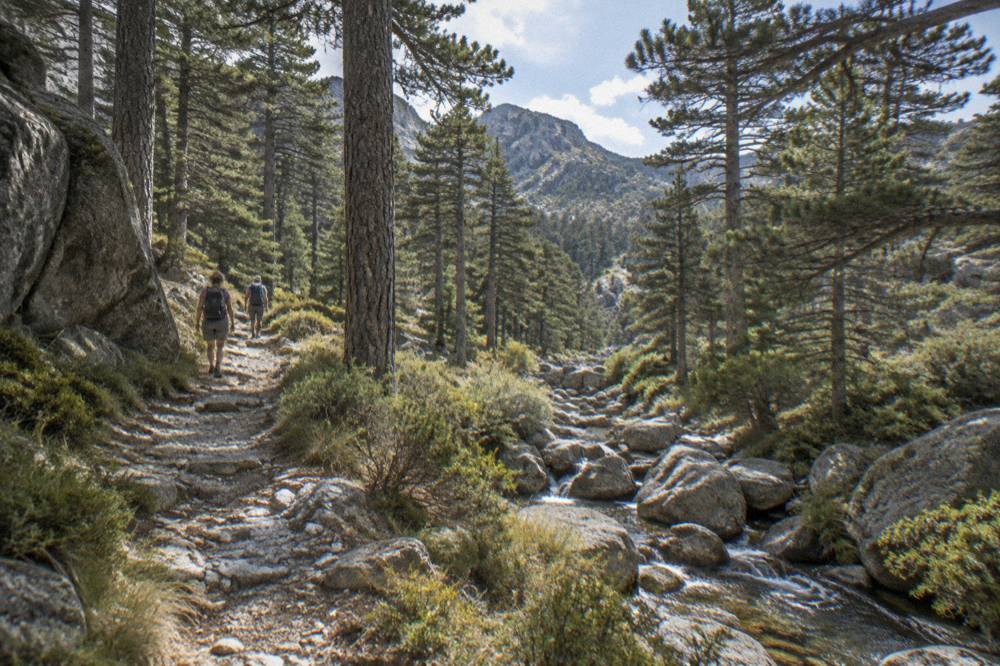
The Corsican interior is walking country above all: the GR20 runs 180 km north to south in about 15 stages of 4 to 8.5 hours, and a network of Mare a Mare and Mare e Monti trails crosses the same mountains, with the shortest of them, Mare e Monti Sud, covering 66 km in 5 days. Forest areas such as Aitone sit among these routes, and the park's refuges are guarded from 16 May to 4 October.
The GR20, or Fra li Monti, is the island's flagship trail. The Corsican Assembly's own text describes 180 km walked north to south in about fifteen stages, each taking 4 to 8.5 hours, with refuges and gîtes along the way. Calenzana is the northern start, and the first stage to Ortu di u Piobbu takes about 6 hours 30 out. The old Cirque de la Solitude section has been off the trail since a fatal rockfall in 2015, and an official variant replaces it. Booking a night in a PNRC refuge is mandatory, for both a bunk and a bivouac pitch, and it is done online only.
Shorter long-distance options cross forest and valley country on gentler lines. The PNRC's own brochure lists the lengths and climbing totals, which makes it possible to compare them at a glance:
| Trail | Length | Days | Total climbing |
|---|---|---|---|
| Mare e Monti Nord | 121 km | 10 | 6,100 m |
| Mare a Mare Nord | 139 km (161 km with variant) | 8 to 12 | 5,900 m |
| Mare a Mare Centre | 84 km | 6 to 7 | 3,900 m |
| Mare a Mare Sud | 73 km | 5 | 3,200 m |
| Mare e Monti Sud | 66 km | 5 | 2,700 m |
Mare a Mare Centre runs from Ghisonaccia to Porticcio over 7 days, or to Tavera over 6 days. Mare a Mare Sud and Mare e Monti Sud both finish at Propriano on the southwest coast. Mare e Monti Nord finishes at Cargèse. None of these requires the commitment of the GR20, and each passes through the kind of wooded high ground that Aitone represents. For a broader view of what the island offers beyond the trails, the site's things to do in Corsica roundup covers coast, towns and mountains together.
How Do You Get To Aitone Forest And The Interior Of Corsica?
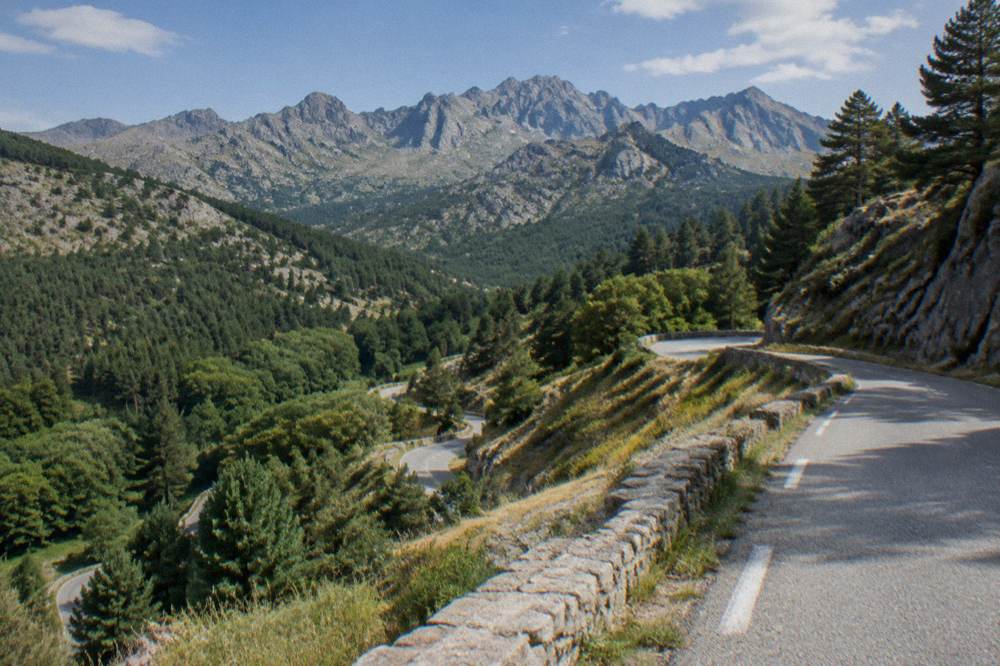
The interior's road hub is Corte, the island's old inland capital, and the Musée de la Corse's own practical page gives the drive times to it: 1 hour from Bastia, 1 hour 30 from Ajaccio, 1 hour 30 from Calvi, 2 hours from Porto-Vecchio, 2 hours 45 from Bonifacio and 2 hours 45 from Propriano. Corsica's mountain roads are narrow, and Inforoutes Corse publishes live road conditions and pass accessibility.
Arriving is by sea or air. Corsica Linea sails Marseille to L'Île-Rousse, Bastia, Propriano and Ajaccio, and La Méridionale sails Marseille to Ajaccio and Marseille to Porto-Vecchio. Moby sails Livorno to Bastia, Genoa to Bastia, and Santa Teresa Gallura to Bonifacio, a crossing of about 50 to 60 minutes, a route Moby and Ichnusa Lines keep after Sardinia found no rival operator. Corsica Ferries sails from Toulon and Nice to Ajaccio, Bastia, L'Île-Rousse, Porto-Vecchio and Propriano, and from Livorno and Savona to Bastia. Crossing times reported for the main routes are about 4 to 5 hours from Livorno to Bastia, about 6.5 hours from Savona, about 7.5 to 10 hours from Nice, about 10 to 13 hours from Toulon, and about 12 to 13 hours from Marseille, mostly overnight.
There are four airports: Ajaccio Napoléon Bonaparte (AJA), Bastia Poretta (BIA), Figari Sud Corse (FSC) and Calvi Sainte-Catherine (CLY). More than 8.5 million passengers, excluding cruise passengers, passed through Corsica's ports and airports in 2025, according to the ORTC and DREAL annual report published on 30 May 2026. The island railway, the Chemins de fer de la Corse, runs Ajaccio to Bastia via Corte, Ponte-Leccia to Calvi, and the Balagne coastal line between Calvi and L'Île-Rousse.
| Starting point | Drive time to Corte |
|---|---|
| Bastia | 1 h |
| Ajaccio | 1 h 30 |
| Calvi | 1 h 30 |
| Porto-Vecchio | 2 h |
| Bonifacio | 2 h 45 |
| Propriano | 2 h 45 |
Because the roads into the high country are narrow mountain roads, live conditions matter. Inforoutes Corse publishes current road status and accessibility levels for the main cols, and the prefecture-linked systems publish a daily fire-risk map for massif access, updated at 18:00 for the next day. Checking both the evening before a mountain drive is the standing advice, and in winter the same service reports which passes carry restrictions.
What Is The Weather Like Around Aitone Forest In Corsica?
Corsica has a hot dry summer and a mild wet winter, and snow falls only on the high mountains, according to the Météo-France 1991-2020 station normals for Ajaccio, the nearest long-record station on this coast: July averages 8.6 mm of rain and a daily high of 28.6 °C, while November averages 111.8 mm of rain. August carries the highest mean daily high on the table, 29.2 C.
The interior sits higher and cooler than the coast, and the climate table below is the coastal-station baseline. The annual rain total at the Ajaccio station is 635.0 mm. At Bastia, on the east side of the island, the annual total is higher, 816.9 mm, and November there averages 134.3 mm. More of these guides are collected on Corsica Travel Guide.
| Month | High °C | Low °C | Rain mm | Sunshine h/day |
|---|---|---|---|---|
| Jan | 14.0 | 4.7 | 54.1 | 4.4 |
| Feb | 14.2 | 4.3 | 48.1 | 5.5 |
| Mar | 16.0 | 5.9 | 50.4 | 6.8 |
| Apr | 18.5 | 8.3 | 53.1 | 7.7 |
| May | 22.1 | 11.8 | 49.8 | 9.3 |
| Jun | 25.9 | 15.4 | 25.9 | 11.1 |
| Jul | 28.6 | 17.7 | 8.6 | 12.1 |
| Aug | 29.2 | 18.1 | 15.8 | 11.1 |
| Sep | 26.1 | 15.4 | 57.8 | 8.7 |
| Oct | 22.8 | 12.6 | 85.7 | 6.7 |
| Nov | 18.3 | 9.0 | 111.8 | 4.7 |
| Dec | 15.1 | 5.8 | 73.9 | 4.0 |
For hikers the refuge season matters as much as the weather. PNRC refuges on the GR20 are guarded from 16 May to 4 October inclusive, and no departures from Calenzana are allowed after 11:00 under a municipal order tied to fire risk. The UK Foreign, Commonwealth and Development Office notes a high risk of wildfires in France from April to October, and the US State Department lists France at Level 2, Exercise Increased Caution, a nationwide advisory that includes Corsica. Météo-France publishes mountain forecasts and storm vigilance for the island's high ground.
What Rules Apply To Fires, Camping And Bivouacs Around Aitone Forest?
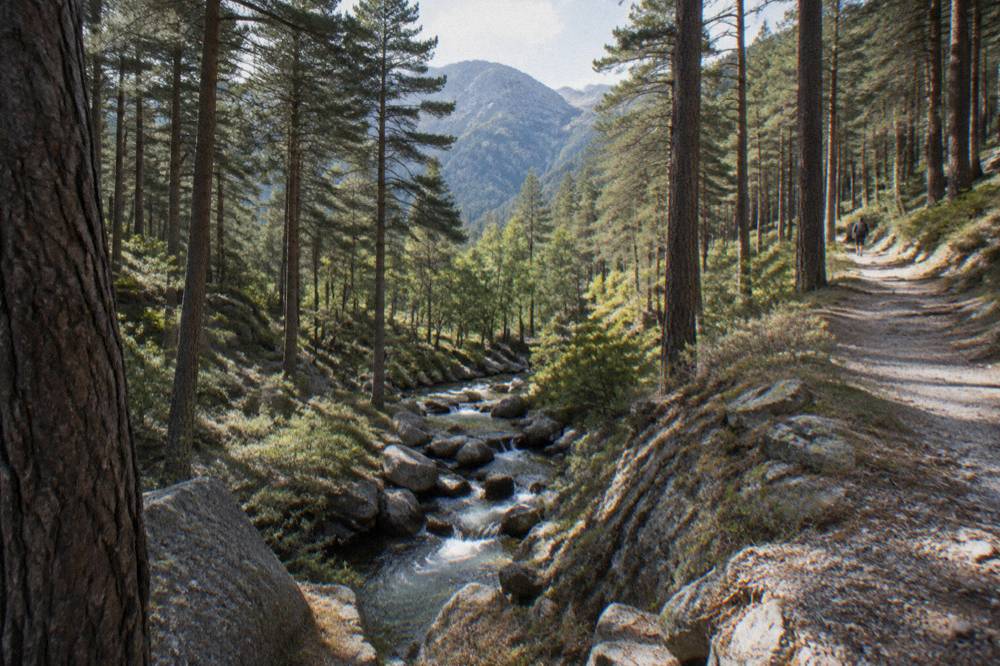
From 15 June to 30 September it is forbidden to light a fire or smoke in Corsica's forests, scrub and massifs, and wild camping is banned across the island, including on the GR20; bivouac is tolerated only in the marked areas next to PNRC refuges, and every refuge night or bivouac pitch must be reserved online in advance at published per-person rates.
The PNRC's 2026 rates are explicit: a bunk in a refuge costs EUR 20 per person, a bivouac pitch with your own tent EUR 12 per person, a rented tent for one person EUR 27, and a rented tent for two EUR 39. All rental tents sleep two and come with a 3 cm mat per person, and you bring your own sleeping bag. Dogs are not allowed inside refuges or rented tents. Meals at the refuges are paid in cash or by cheque to the guardian on site.
| Refuge option (2026 PNRC rates) | Price per person |
|---|---|
| Bunk in refuge (bat-flanc) | EUR 20 |
| Bivouac pitch, own tent | EUR 12 |
| Rented tent, 1 person | EUR 27 |
| Rented tent, 2 persons | EUR 39 |
Reservations run through the PNRC's online platform with card payment, changes are possible up to 48 hours before a stage subject to availability, and a full refund is possible up to two months ahead. FFRandonnée announced the opening of the 2026 GR20 reservation season on its own news page. The daily fire-risk map is updated at 18:00 for the next day, and from mid-June to mid-September access to some massifs can be restricted or closed by prefectoral order on high-risk days, so the map deserves a look the evening before any interior walk.
What Should You Combine With Aitone Forest On A Corsica Trip?
Aitone Forest pairs naturally with western Corsica's protected coast and the interior's towns: the Calanques de Piana and the Scandola Reserve lie on the same side of the island, Corte sits an hour and a half's drive from Ajaccio, and the region's museums and prehistoric sites publish their admission prices, from EUR 5.50 at the Musée de la Corse in Corte to EUR 10 at Maison Bonaparte in Ajaccio.
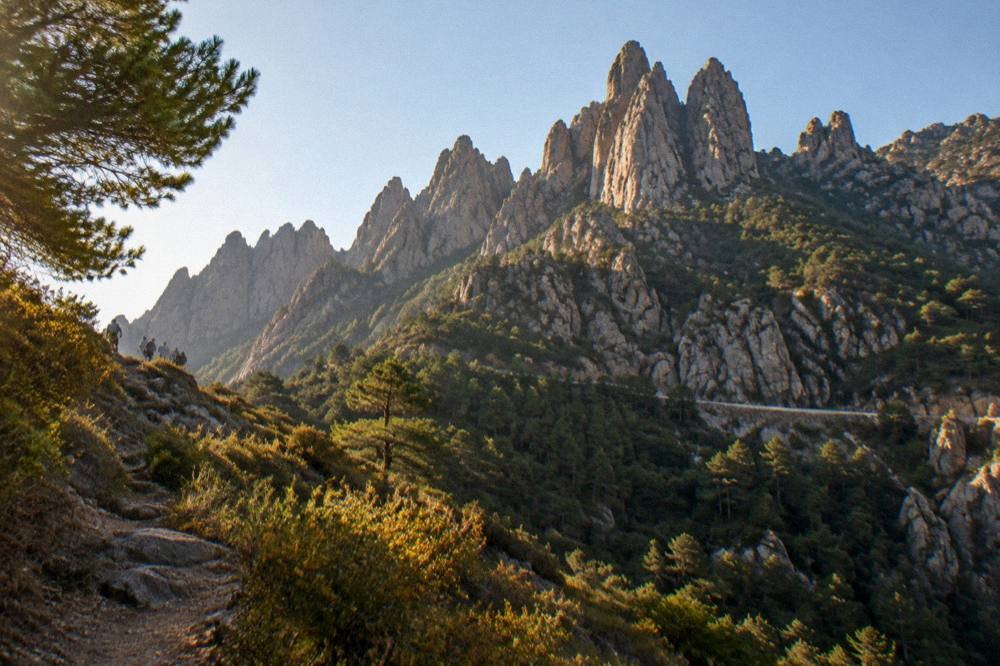
The Golfe de Porto, with its Calanques de Piana and the village of Girolata reachable by sea, is the coastal anchor for any western-forest itinerary. Inland, the Restonica Valley above Corte and the Aiguilles de Bavella in the far south offer the same mountain-and-water mix on the other side of the island. For current sight prices and hours across the island, the table below gathers the main inland and coastal museums.
| Sight | Admission | Hours as published |
|---|---|---|
| Maison Bonaparte, Ajaccio | EUR 10; EUR 8 non-EU 18-25 and large families; free EU under 26 | Closed Monday; 1 Jul to 30 Sep 10:00-17:30 |
| Palais Fesch, Ajaccio | EUR 10; EUR 6 over 65; free up to 18 | Daily 09:00-17:00 (16 Jan to 31 Dec 2026) |
| Musée de la Corse and Citadelle, Corte | EUR 5.50; EUR 4; EUR 3; one ticket covers museum and citadel | 1 May to 31 Oct daily 10:00-19:00 (closed 1 May) |
| Filitosa prehistoric site | EUR 9 adults; EUR 7 reduced; family EUR 28; free under 6 | Open 1 April to 2 November, 09:00 to sunset |
Is Aitone Forest A Good Day Out With Children In Corsica?
Corsica works well for families, and the interior's forests are part of that: the island's trails scale from 66-km Mare e Monti Sud walks to short valley strolls, the Filitosa prehistoric site charges EUR 28 for a family ticket covering two adults and two children aged 6 to 17 with free entry under 6, and Ajaccio ran seven staffed lifeguard posts on its main beaches from 1 July to the end of August 2026.
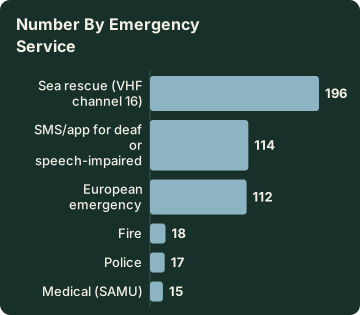
Fire rules bear repeating for families planning picnics: from 15 June to 30 September no fires and no smoking in forests, maquis and massifs. Emergency numbers are 112 for the European standard, 15 for medical, 17 for police, 18 for fire, 114 by SMS or app for deaf or speech-impaired callers, and 196 for sea rescue via VHF channel 16. Mountain rescue is the PGHM in Ajaccio on 04 95 24 24 00, with 17 or 112 in an emergency.
| Emergency service | Number |
|---|---|
| European emergency | 112 |
| Medical (SAMU) | 15 |
| Police | 17 |
| Fire | 18 |
| SMS/app for deaf or speech-impaired | 114 |
| Sea rescue (VHF channel 16) | 196 |
| PGHM mountain rescue, Ajaccio | 04 95 24 24 00 |
For a family split between mountains and sea, the Golfe de Porto and the Agriates beaches of Saleccia and Lotu on the north coast are reached by boat shuttle from Saint-Florent from about April to October, weather permitting, by 4x4 track from Casta, or on foot. Service in Corsican restaurants is another practical point: French law requires menus to state "prix service compris" with the service percentage included, so an extra tip is optional rather than expected.
Common Questions About Aitone Forest In Corsica
Where Is Aitone Forest In Corsica?
Aitone Forest is in the mountainous interior of Corsica, the inland part of the island. Corsica covers 8,722 km2, has more than 1,000 km of coastline, and peaks at Monte Cinto, 2,706 m. Much of the interior lies in the Parc naturel régional de Corse, created in 1972, which covers 4,484 km2.
Can You Camp Wild At Aitone Forest?
No. Wild camping is banned across Corsica, including on the GR20. Bivouac is allowed only in the marked areas beside PNRC refuges, and reservations are mandatory online, at EUR 12 per person for a pitch with your own tent.
When Are The GR20 Refuges Guarded?
The PNRC refuges on the GR20 are guarded from 16 May to 4 October inclusive. A bunk costs EUR 20 per person, a rented tent for one person EUR 27, and a rented tent for two EUR 39.
Can You Smoke Or Light A Fire In Corsican Forests?
From 15 June to 30 September it is forbidden to light a fire or smoke in forests, maquis and massifs across Corsica. A daily fire-risk map is published at 18:00 for the next day, and some massifs can close entirely on high-risk days.
How Far Is Corte From Ajaccio?
The Musée de la Corse's practical page gives the drive from Ajaccio to Corte as 1 hour 30. Bastia is 1 hour, Calvi 1 hour 30, Porto-Vecchio 2 hours, and Bonifacio and Propriano 2 hours 45 each.
Does It Snow At Aitone Forest In Winter?
Corsica has a mild wet winter at the coast, with November averaging 111.8 mm of rain at the Ajaccio station, and snow falls only on the high mountains, which is where the island's highest ground, including the forests' upper reaches, sits.
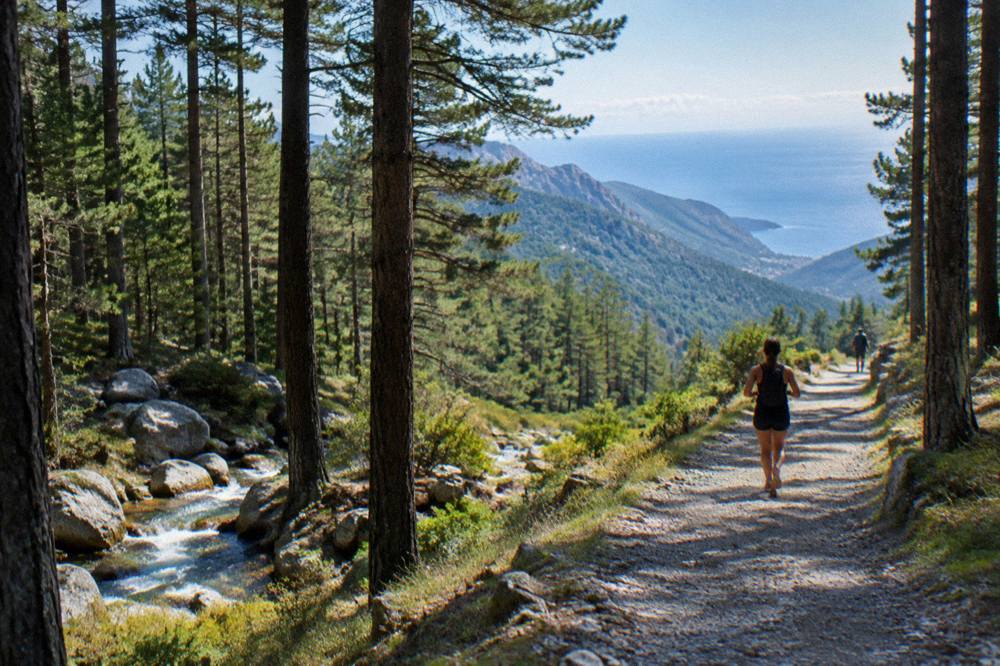
Aitone Forest is the interior at its most characteristic: pine and chestnut high ground on an island better known for its 1,000 km of coastline, threaded by trails whose lengths, refuge rates and fire rules are all published and verifiable. Plan the mountain days around the 18:00 fire-risk map and the refuge season, keep the boat days for the Scandola Reserve and the Calanques de Piana, and the two halves of Corsica, forest and sea, fall neatly into one trip.