Porto Vecchio Old Town
Porto Vecchio Old Town stands on a hill above the salt marshes and the gulfs of southeast Corsica, a walled core of granite streets within reach of Palombaggia, Santa Giulia and the boat trips of the far south.
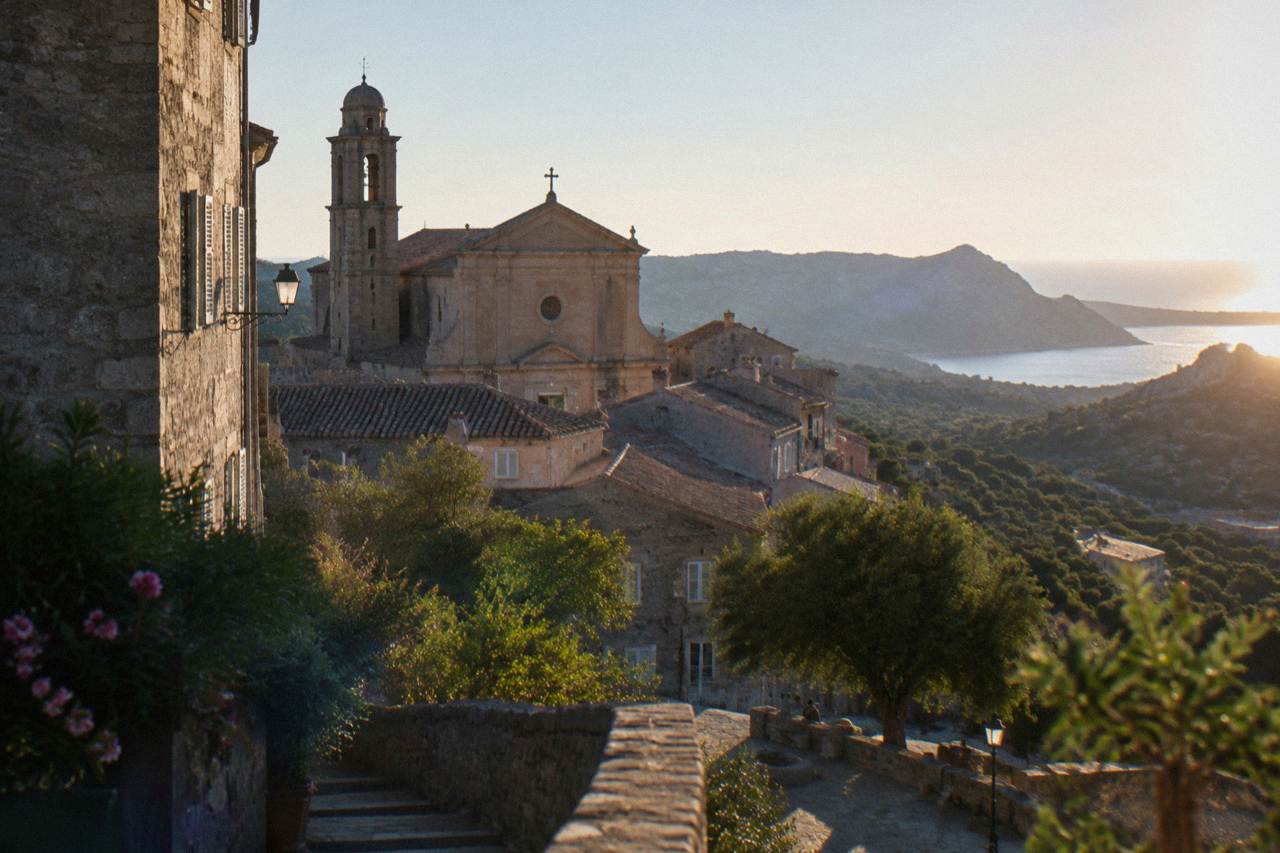
Porto Vecchio Old Town is the walled historic core of Porto Vecchio in southeast Corsica, a short drive from the beaches of Palombaggia and Santa Giulia and about 2 hours by road from Corte. This guide covers what to see in the town, the sights around it and the tours that leave from the area.
Porto Vecchio Old Town occupies a low hill above the salt marshes and the harbours of southeast Corsica, the French Mediterranean island of 8,722 km2 whose coastline runs to more than 1,000 km. The town is one of the island's main resorts, and its walled core sits between two very different worlds: the beach country of Palombaggia and Santa Giulia to the south, and the mountain country of the Ospedale forest and the Aiguilles de Bavella that climb inland behind it. La Méridionale sails Marseille to Porto Vecchio year round, one of the ferry links that put the town within reach without flying. This guide sets out what the sources say about the old town itself, the sights around it and the tours that leave from the area.
What Is Porto Vecchio Old Town In Corsica?
Porto Vecchio Old Town is the walled historic core of Porto Vecio, the resort town of southeast Corsica, set on a hill above salt marshes and a gulf in the department of Corse-du-Sud. The town belongs to the Collectivité de Corse, the single territorial authority in place since 1 January 2018, and its port is one of the island's ferry ports, served year round from Marseille.
The town's position is the whole story. Below the walls lie the salt pans that shaped the town's early economy, and the port that La Méridionale reaches from Marseille. To the south run the beaches of Palombaggia and Santa Giulia; inland, the road climbs to the Ospedale reservoir and the Bavella massif, part of the mountainous interior that covers so much of this island. Corte, the old capital in the centre of the island, is 2 hours away by road.
Porto Vecchio is not a museum town. It is a living resort where the old core holds restaurants, shops and viewpoints, while the sea and the mountains do the heavy lifting for visitors. The Porto Vecchio area guide covers the wider town and its districts, and the direct answer to whether the town deserves your time sits in is Porto Vecchio worth visiting?.
What Should You See Inside The Walls Of Porto Vecchio Old Town?
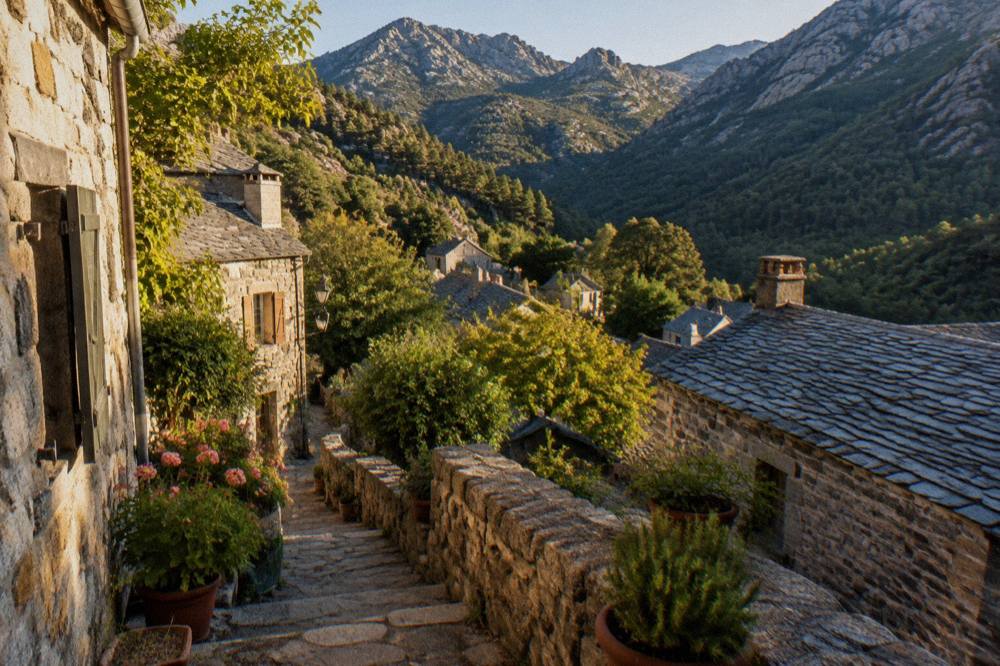
The old town's core sights are its granite ramparts and lanes, the main church on the central square, and the viewpoints over the gulf and the salt marshes from the upper streets. Everything sits within a compact hill that can be covered on foot, and the town gate and the bastion remnants are the fixed landmarks most guides direct you to first.
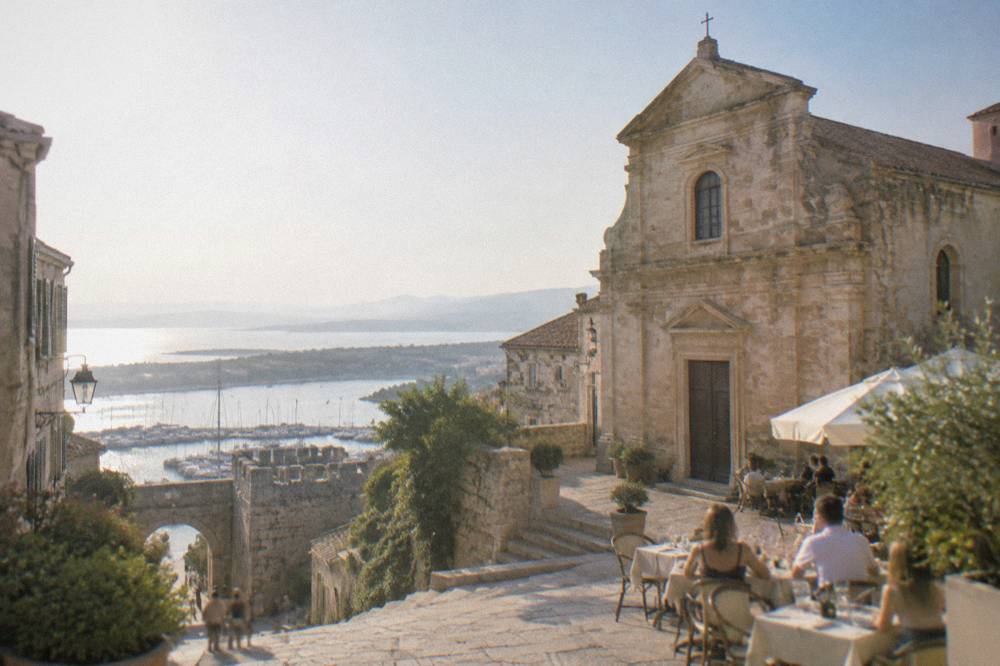
The walls themselves frame the visit. The town was fortified on its hill above the marshes, and the street plan inside keeps that compact, stepped character: lanes that climb, small squares, and openings in the fortifications that give views down to the port and out across the water. The main church anchors the central square, where the café tables gather in the evening.
The genuine draw of the town is its position as a base. The things to do across Corsica overview shows how the island's weight sits in its coast and mountains, and Porto Vecchio reaches both.
Which Sights And Sites Sit Within Day-Trip Range Of Porto Vecchio Old Town?
The day-trip range from Porto Vecchio Old Town runs from the Bonifacio citadel and the Escalier du Roi d'Aragon in the far south, to the prehistoric site of Filitosa to the northwest, to the Aiguilles de Bavella in the mountains behind the town. Corte is 2 hours by road, Bonifacio 2 hours 45, and Propriano the same, per the Musée de la Corse road-time table.
The far south packs the headline sights. The Bonifacio citadel and cliffs stand above the strait that separates Corsica from Sardinia, and the Escalier du Roi d'Aragon cuts 189 steps down the cliff face below it, with a fee of about EUR 5 and closed shoes required. A dedicated Bonifacio day trip from Porto Vecchio plan covers that route in full.
Inland and northwest the mix changes. Filitosa, the prehistoric site near Sollacaro, is open 1 April to 2 November from 09:00, with entry at EUR 9 for adults, EUR 7 reduced and EUR 28 for a family of two adults and two children aged 6 to 17, free under 6. In the mountains, the Bavella needles and the Ospedale forest are reached on the town's own back roads, and our Porto Vecchio boat trips page handles the seaward alternatives.
| Sight | Distance basis | Figure | Entry |
|---|---|---|---|
| Bonifacio, Escalier du Roi d'Aragon | Road time to Corte via Bonifacio 2 h 45 | 189 steps | About EUR 5 |
| Filitosa prehistoric site | Day trip west of the town | Open 1 Apr to 2 Nov, 09:00 to sunset | EUR 9 adult, EUR 7 reduced, EUR 28 family |
| Aiguilles de Bavella | Inland behind Porto Vecchio | Road times from Corte table apply regionally | No fee stated |
| Musée de la Corse, Corte | 2 h by road from Porto Vecchio | EUR 5.50, ticket covers museum and citadel | Daily 10:00 to 19:00, May to Oct |
The Corte museum line deserves a note: the one-ticket rule covers both the museum and the citadel above the town, and last access to the citadel is 1 hour before the museum closes, per the museum's own practical page.
Is Porto Vecchio Old Town A Good Base For The Beaches Of Southeast Corsica?
Porto Vecchio Old Town works as a base for the southeast's beaches because Palombaggia and Santa Giulia lie on the town's own coastal fringe, Rondinara and the southern beaches sit a short drive below it, and the boat trips to the Îles Lavezzi leave from the coast nearby. The town itself is inland of its beaches, on its hill above the marshes and the port.
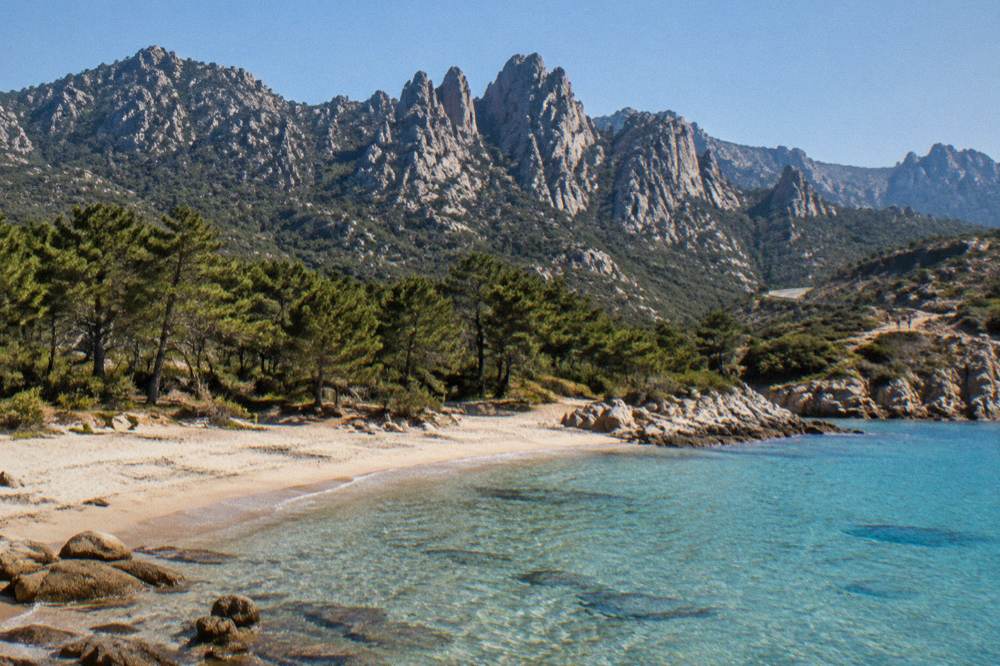
Palombaggia is the name that travels furthest: a long stretch of sand backed by pines on the peninsula south of the town, covered in full by our Palombaggia beach guide. Santa Giulia, to its east in a shallow bay, gets its own treatment in the Santa Giulia beach guide. Rondinara sits between Porto Vecchio and Bonifacio on the coast road south. None of these require anything but a car and a willingness to move in the middle of the day.
For swimmers, the supervision pattern matters: Ajaccio ran 7 lifeguard posts from 1 July to the end of August 2026 on its main beaches, and the supervised beaches of Haute-Corse are staffed by volunteer firefighters about 1 July to 31 August. The southeast follows the same seasonal rhythm, so a July or August visit coincides with the supervised window, and a June or September visit does not.
What Boat Trips Leave From The Porto Vecchio Coast?
The boat trips from the Porto Vecchio coast centre on the Îles Lavezzi and the Bouches de Bonifacio, the strait between Corsica and Sardinia, with catamaran cruises, snorkelling trips and a full-day Lavezzi catamaran tour on offer. The Lavezzi islands sit inside the Bouches de Bonifacio Nature Reserve, managed by the OEC.
The Lavezzi archipelago is the prize. Our Îles Lavezzi guide covers the islands themselves, including the rule that the reserve is managed by the Office de l'Environnement de la Corse.
Cross-border trips need one honest note: a boat trip from Bonifacio to La Maddalena and the Lavezzi islands is a Sardinia-and-Corsica product that departs from the strait, not from a Corsican beach, and it is described as such. For planning, the crossing between Santa Teresa Gallura and Bonifacio runs about 50 to 60 minutes, which frames how tight the strait is.
| Trip type | Departure area | What It Covers |
|---|---|---|
| Full-day Lavezzi catamaran cruise | Porto Vecchio | Catamaran, full-day product |
| Catamaran with snorkelling, Lavezzi | Bonifacio | Catamaran, snorkelling stops |
| Guided Lavezzi snorkelling cruise | Bonifacio | Small group, guided |
| Cliffs and Lavezzi cruise | Bonifacio | Cliffs and islands, short cruise |
What Food And Drink Should You Look For Around Porto Vecchio Old Town?
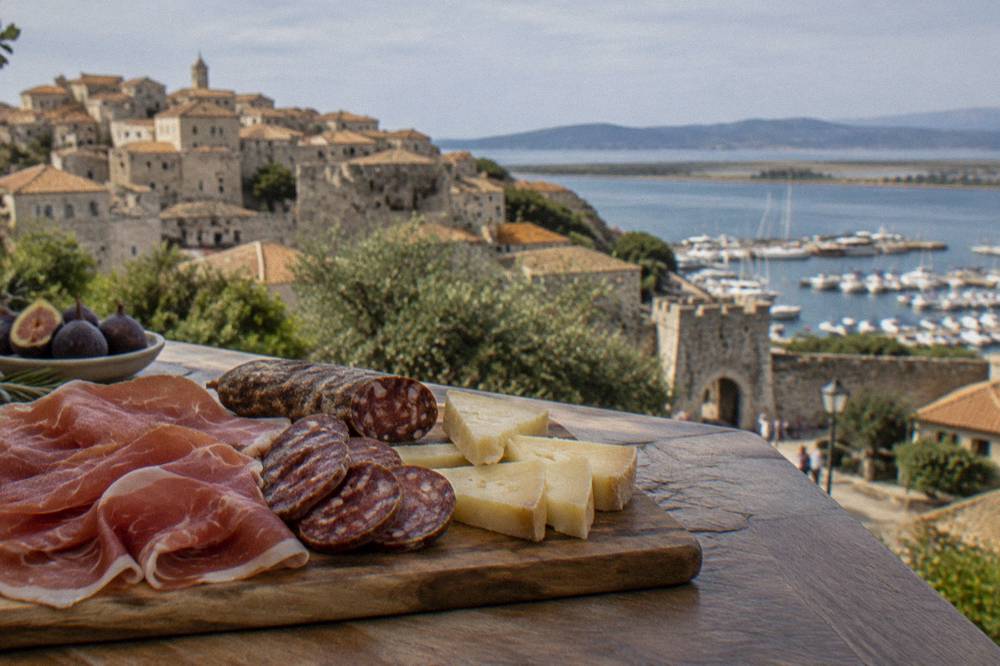
The Corsican table around Porto Vecchio Old Town is built on brocciu, the charcuterie trio of prisuttu, lonzu and coppa, chestnut flour, olive oil, honey and the island's wines, all of them carrying French appellation labels: brocciu's appellation d'origine dates to 1983, the charcuterie cuts took AOC in 2012 and AOP in 2014, and Corsican olive oil's AOC took effect in 2004.
The labels are the honest way into the food. Brocciu, the whey cheese, obtained its appellation d'origine in 1983 and its AOC/AOP in 1998. Prisuttu, lonzu and coppa, the three charcuterie cuts, took AOC in April 2012 and AOP in 2014, and the Nustrale pig breed behind them was recognised in 2006. Chestnut flour, farina castagnina corsa, holds an AOP recognised in 2010, with its defence body created in 2001. Corsican honey carries an AOP, with the AOC dated 1998, and clémentine de Corse took its IGP in 2007. Other pages covering the same trip are gathered on Corsica Travel Guide.
In the restaurants of the old town, service is included by law: menus must state "prix service compris" with the percentage, and any extra tip is optional, per the DGCCRF. Our Corsican food guide and the Corsican wine page go deeper; the wine appellations include Patrimonio, Ajaccio, Vin de Corse with its named crus including Porto-Vecchio itself, and Muscat du Cap Corse, with Nielluccio and Sciaccarellu the red grapes and Vermentinu the white.
| Product | Label | Date |
|---|---|---|
| Brocciu | Appellation d'origine, then AOC/AOP | 1983; AOC/AOP 1998 |
| Prisuttu, lonzu, coppa | AOC then AOP | AOC 2012, AOP 2014 |
| Chestnut flour, Farina castagnina corsa | AOP | Recognised 2010, defence body 2001 |
| Olive oil, Oliu di Corsica | AOC | Effective 2004 |
| Honey, Mele di Corsica | AOP, AOC | AOC 1998 |
| Clémentine de Corse | IGP | 2007 |
How Do You Get To Porto Vecchio Old Town?
Porto Vecchio is reached by sea on La Méridionale's year-round Marseille to Porto Vecchio ferry line, or by air through the island's four airports: Ajaccio Napoléon Bonaparte, Bastia Poretta, Figari Sud Corse and Calvi Sainte-Catherine, Figari being the airport closest to the far south. By road, Corte is 2 hours away and Bastia's old port sits beyond it.
Figari Sud Corse (FSC) serves the south of the island and is the natural airport for Porto Vecchio; our Figari airport guide covers it. On the sea side, the ferry picture is: Corsica Linea sails Marseille to L'Île-Rousse, Bastia, Propriano and Ajaccio; La Méridionale sails Marseille to Ajaccio and Marseille to Porto Vecchio; Moby sails Livorno to Bastia, Genoa to Bastia and Santa Teresa Gallura to Bonifacio. Corsica Ferries additionally sails from Toulon and Nice to several Corsican ports, including Porto Vecchio, and from Livorno and Savona to Bastia.
Crossing times, reported and worth confirming with the operator: Marseille runs about 12 to 13 hours, mostly overnight, Toulon about 10 to 13 hours, Nice to Bastia 7.5 to 10 hours, Savona to Bastia about 6.5 hours, Livorno to Bastia 4 to 5 hours, and Santa Teresa Gallura to Bonifacio about 50 to 60 minutes. More than 8.5 million passengers, cruise excluded, passed through Corsica's ports and airports in 2025, per the ORTC and DREAL report published 30 May 2026, which frames how busy these routes run.
| Route | Operator |
|---|---|
| Marseille to Porto Vecchio | La Méridionale |
| Marseille to Ajaccio | La Méridionale, Corsica Linea |
| Marseille to Bastia, L'Île-Rousse, Propriano | Corsica Linea |
| Livorno, Genoa to Bastia; Santa Teresa Gallura to Bonifacio | Moby |
| Toulon, Nice to Corsican ports incl. Porto Vecchio | Corsica Ferries |
| Livorno, Savona to Bastia | Corsica Ferries |
Once on the island, the Chemins de fer de la Corse run the Ajaccio to Bastia line via Corte, the Ponte-Leccia to Calvi line and the Balagne coastal line between Calvi and L'Île-Rousse, but the rail network does not serve the southeast, so Porto Vecchio is a car or bus town.
What Is The Weather Like Around Porto Vecchio Old Town?
Southeast Corsica shares the island's climate pattern, a hot dry summer and a mild wet winter with snow only on the high mountains, per the Météo-France station normals for 1991 to 2020. At Ajaccio, July averages 8.6 mm of rain and August a mean daily high of 29.2 °C; November carries 111.8 mm, and at Bastia November carries 134.3 mm, the highest figure on that table.
The Ajaccio and Bastia normals bracket the island's coasts, and the pattern holds: high pressure through July and August, the first sustained rain in September and October, and the heaviest monthly totals in October and November. Snow stays on the high mountains, which in this region means the Bavella crest, not the coast.
| Month | Ajaccio high °C | Ajaccio rain mm | Bastia high °C | Bastia rain mm |
|---|---|---|---|---|
| Jan | 14.0 | 54.1 | 13.8 | 67.3 |
| Apr | 18.5 | 53.1 | 18.3 | 71.6 |
| Jul | 28.6 | 8.6 | 29.4 | 13.8 |
| Aug | 29.2 | 15.8 | 29.8 | 21.1 |
| Oct | 22.8 | 85.7 | 22.0 | 126.5 |
| Nov | 18.3 | 111.8 | 17.7 | 134.3 |
Fire season shapes summer plans more than rain does. From 15 June to 30 September it is forbidden to light a fire or smoke in forests, maquis and massifs, and the daily massif-access map is updated at 18:00 for the next day, with access to some massifs restricted from mid-June to mid-September. The UK FCDO notes a high wildfire risk in France from April to October. Hikers heading for the hills behind town should check the prefecture map the evening before.
Can You Hike From Porto Vecchio Into The Mountains?
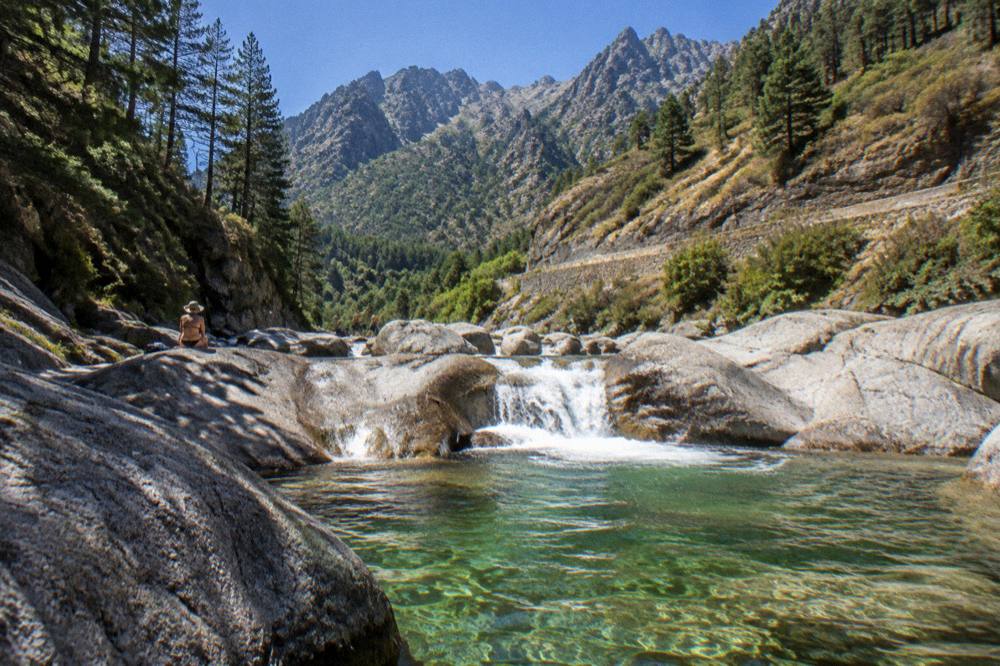
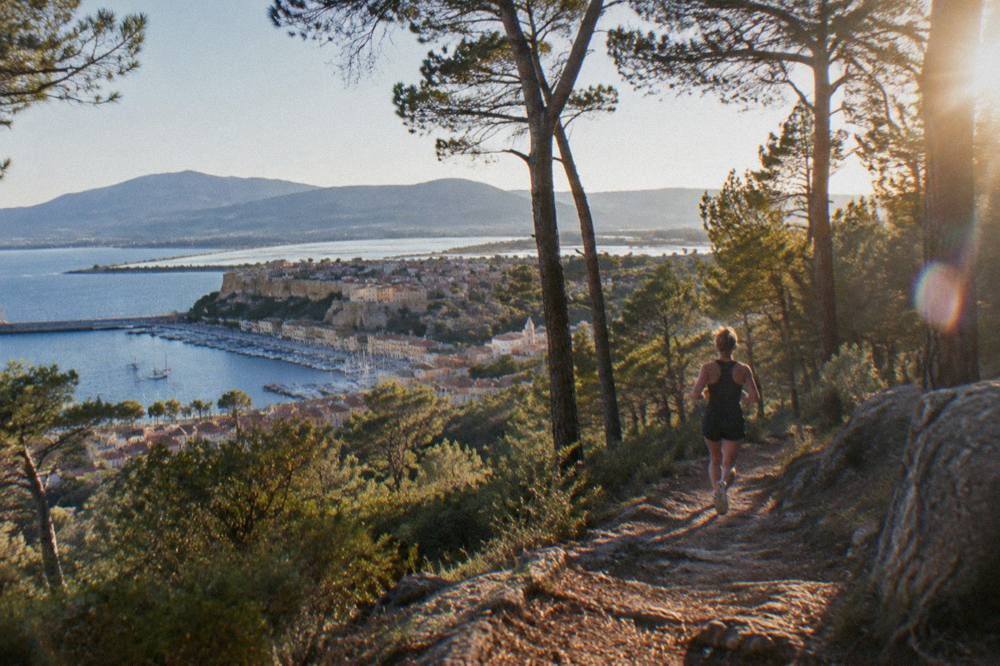
Yes, the mountains behind Porto Vecchio Old Town include the Aiguilles de Bavella and the Ospedale forest, and the island's long trails are reachable from the southeast, though the GR20 itself runs down the island's spine further west. The trail figures are Mare a Mare Sud at 73 km over 5 days ending in Propriano, and Mare e Monti Sud at 66 km over 5 days, also ending in Propriano.
Propriano is the southern trail hub, a short drive from Porto Vecchio, and both southern long trails finish there: Mare a Mare Sud covers 73 km with 3,200 m of climbing over 5 days, and Mare e Monti Sud covers 66 km with 2,700 m of climbing. For anyone tempted north, the GR20 runs 180 km with about 15 stages of 4 to 8.5 hours, refuges guarded 16 May to 4 October in the 2026 season, bunks at EUR 20 per person and bivouac pitches at EUR 12, booking online only. Wild camping is banned across Corsica, with bivouac allowed only in the marked areas at refuges. Our GR20 guide carries the full picture.
For a gentler mountain day without a backpack, the Aiguilles de Bavella guide covers the ridge and its walks.
| Trail | Length | Days | Climb | Finish |
|---|---|---|---|---|
| GR20 | 180 km | About 15 stages, 4 to 8.5 h each | Not stated | Calenzana to Conca spine |
| Mare a Mare Sud | 73 km | 5 | 3,200 m | Propriano |
| Mare e Monti Sud | 66 km | 5 | 2,700 m | Propriano |
| Mare a Mare Centre | 84 km | 6 to 7 | 3,900 m | Ghisonaccia to Porticcio or Tavera |
| Mare e Monti Nord | 121 km | 10 | 6,100 m | Cargèse |
Where Should You Eat And Stay Near Porto Vecchio Old Town?
The old town's own lanes hold the bulk of Porto Vecchio's restaurants, with prices set in euros and service legally included on the menu, while the accommodation spread runs from the town itself down to the beach strips of Palombaggia and Santa Giulia.
Inside the walls the evening scene gathers on the church square and the lanes off it. The menu law matters when the bill arrives: French menus must state "prix service compris" with the percentage included, and a pourboire is voluntary, per the DGCCRF fiche. Our restaurant guide and where to stay guide carry the island-wide picture, including the trade-offs between staying in the old town and staying on the beach.
Practical numbers worth having: the euro is the currency; the emergency numbers are 112, 15 for medical, 17 for police, 18 for fire, 114 by SMS or app and 196 for sea rescue on VHF channel 16; mountain rescue is the PGHM in Ajaccio on 04 95 24 24 00. The US State Department lists France at Level 2, Exercise Increased Caution, and the UK FCDO's France page carries the standing wildfire note for April to October.
What Should You Know Before You Go To Porto Vecchio Old Town?
Before you go, the facts that matter are these: the town is a car-and-bus base with no rail line, the fire rules of 15 June to 30 September restrict smoking and fires in the massifs, the lifeguard window on the beaches runs roughly 1 July to 31 August, and the full-day tours out of the town, by catamaran, snorkel boat or 4x4, are the efficient way to reach the Lavezzi islands and the Bavella crest.
Timing follows the climate table above and the fire map. Budget-wise, the entry fees in the area are small: EUR 9 at Filitosa, EUR 5.50 at the Corte museum and citadel, EUR 10 at Maison Bonaparte in Ajaccio and EUR 10 at the Palais Fesch, all covered above.
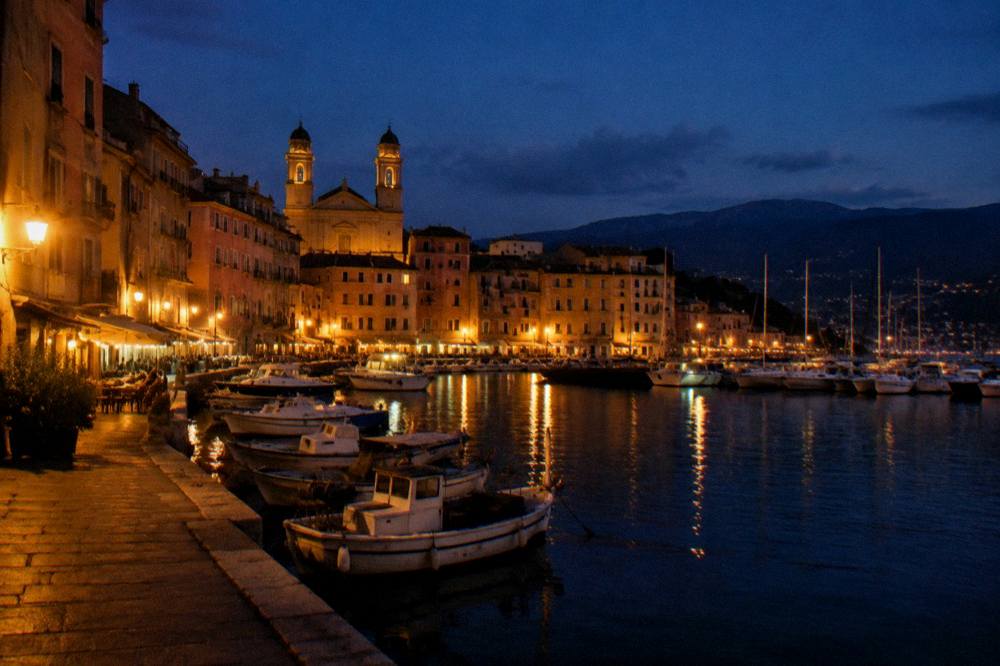
For depth beyond this page, our wider reading runs from the gulf of Porto and the Calanques de Piana on the west coast, to the citadel of Corte at the island's heart, to the comparisons in Corsica versus Sardinia for anyone splitting a trip across the strait.
Common Questions About Porto Vecchio Old Town
Is Porto Vecchio Old Town Worth Visiting?
The old town is a compact walled core above the salt marshes and the port, and its value sits in what surrounds it: the beaches of Palombaggia and Santa Giulia, the boat trips to the Îles Lavezzi and the mountains of the Ospedale forest and Bavella. Our full answer is on the page is Porto Vecchio worth visiting?
How Far Is Porto Vecchio From Bonifacio?
The Musée de la Corse road-time table gives Corte as 2 hours 45 from Bonifacio and 2 hours from Porto Vecchio, which places the two resort towns of the southeast within a short drive of each other along the coast road. Our Bonifacio day trip page plans the route.
Does The Train Reach Porto Vecchio?
No. The Chemins de fer de la Corse run Ajaccio to Bastia via Corte, Ponte-Leccia to Calvi and the Balagne coastal line between Calvi and L'Île-Rousse, and none of these serves the southeast. Porto Vecchio is reached by car, bus, ferry or via Figari Sud Corse airport.
Can You Swim Near Porto Vecchio In Summer?
Yes. The beaches of Palombaggia and Santa Giulia sit on the town's coastal fringe, and supervision follows the island's seasonal pattern: Ajaccio ran 7 lifeguard posts from 1 July to the end of August 2026, and Haute-Corse's supervised beaches are staffed by volunteer firefighters about 1 July to 31 August.
What Food Is Porto Vecchio Known For?
The Corsican table: brocciu with its 1983 appellation d'origine, the charcuterie cuts prisuttu, lonzu and coppa with AOC 2012 and AOP 2014, chestnut flour, olive oil with its AOC effective 2004, honey and clémentine de Corse. Service is legally included on restaurant menus, and our Corsican food guide covers the island's table in full.