Sardinia Day Trip From Corsica
Bonifacio sits at the southern tip of Corsica, and Sardinia lies just across the strait. Here is how the crossing works, what it involves and how to plan the day.
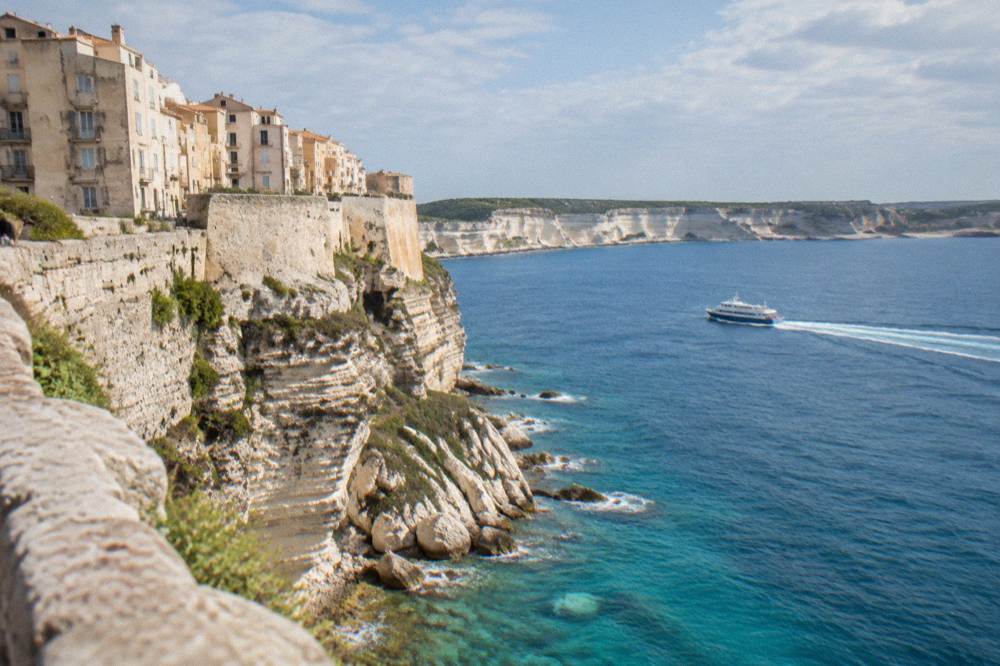
The Santa Teresa Gallura to Bonifacio ferry, run by Moby and Ichnusa Lines, crosses in about 50 to 60 minutes, making a Sardinia day trip from Corsica a realistic long day out of Bonifacio.
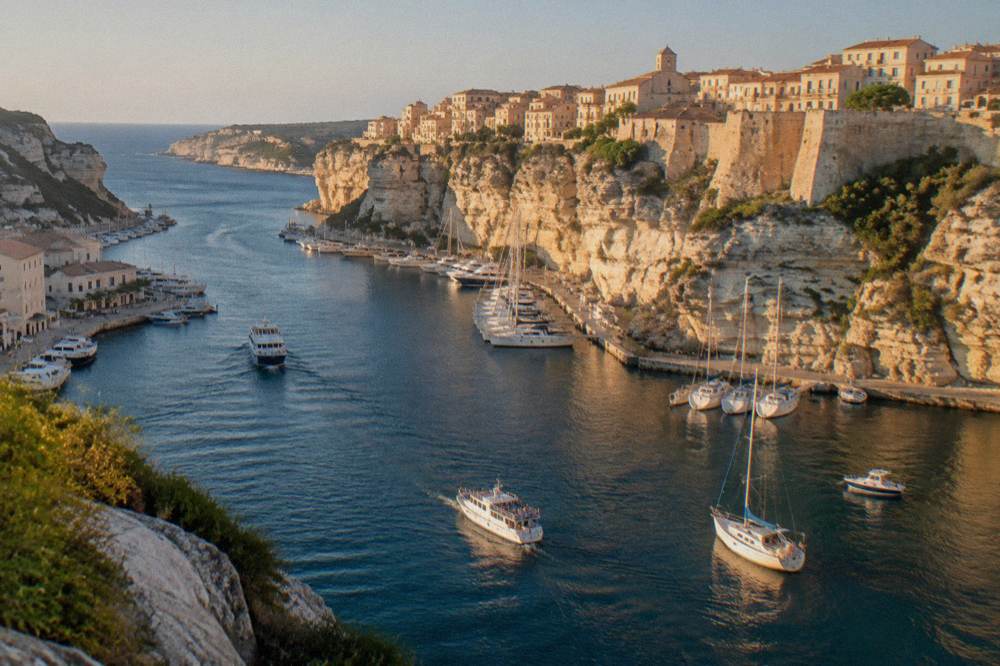
Bonifacio perches at the southern tip of Corsica, the French Mediterranean island with more than 1,000 km of coastline, and from its cliff-top citadel the coast of Sardinia is the landmass on the horizon across the strait. A Sardinia day trip from Corsica is one of the few excursions on the island that involves leaving the island altogether, and it starts from a single short ferry line. This guide sets out what the sources actually say about the crossing, how the timing works, what documents and seasons matter, and how to weigh the day against staying on the Corsican side of the water. The broader question of pairing the two islands in one holiday is covered separately in Corsica and Sardinia in one trip, and the full ferry picture is in the Corsica to Sardinia ferry guide.
How Do You Get From Bonifacio In Corsica To Sardinia?
The only scheduled passenger link between Bonifacio and Sardinia is the short ferry across the Strait of Bonifacio to Santa Teresa Gallura, operated by Moby and Ichnusa Lines, and a report of 9 October 2026 confirms the two operators keep the route after Sardinia found no rival bidder for the service. The crossing takes about 50 to 60 minutes, according to reported figures, and runs from Bonifacio's port at the base of the town's cliffs. Confirm timetables with the operator before committing to a day trip.
That is the whole picture in one paragraph: one route, two operators, one Sardinian port. The Strait of Bonifacio is the narrow stretch of water separating Corsica from Sardinia, and the ferry line across it is a public-service obligation route, which is why Sardinia ran a tender for it and why the October 2026 report of the outcome matters to travellers. With no rival operator found, Moby and Ichnusa Lines continue, so the day trip remains bookable from the Corsican side.
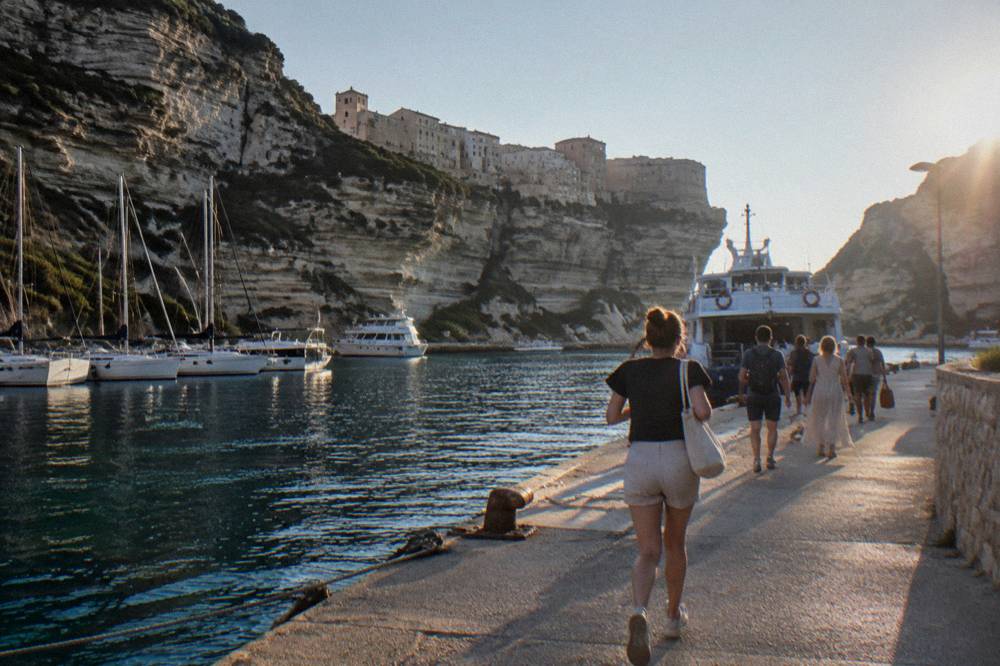
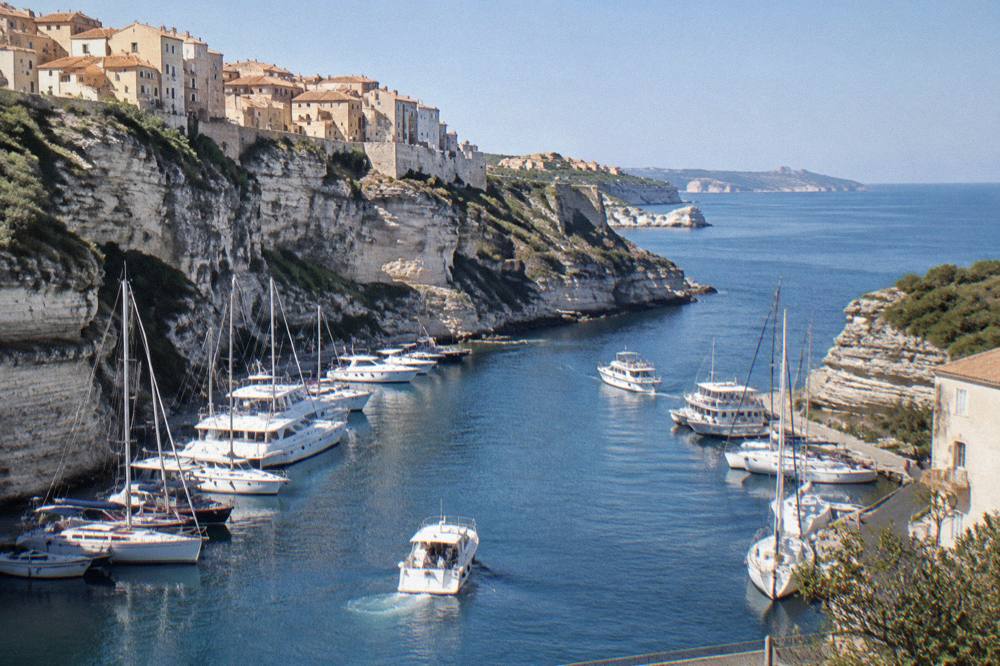
Everything else about the day flows from the crossing's shape. You leave from Bonifacio's harbour, which sits directly under the town, so a morning sailing is walkable from almost anywhere you would stay in Bonifacio itself. On the Sardinian side you arrive in Santa Teresa Gallura, the port town on the northern tip of Sardinia. The strait between the two is also the water body that contains the Îles Lavezzi, the Corsican island group that sits inside the Bouches de Bonifacio nature reserve, managed by the OEC, as reported by the prefecture; on a clear crossing the boat traffic of the strait, including the Lavezzi excursion boats out of Bonifacio, is visible from both shores.
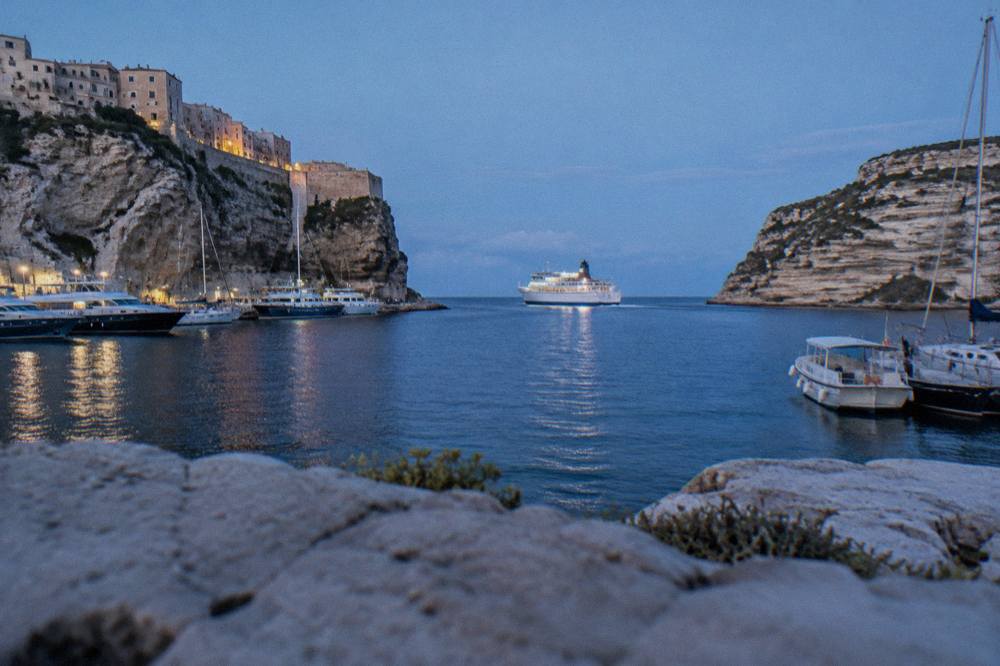
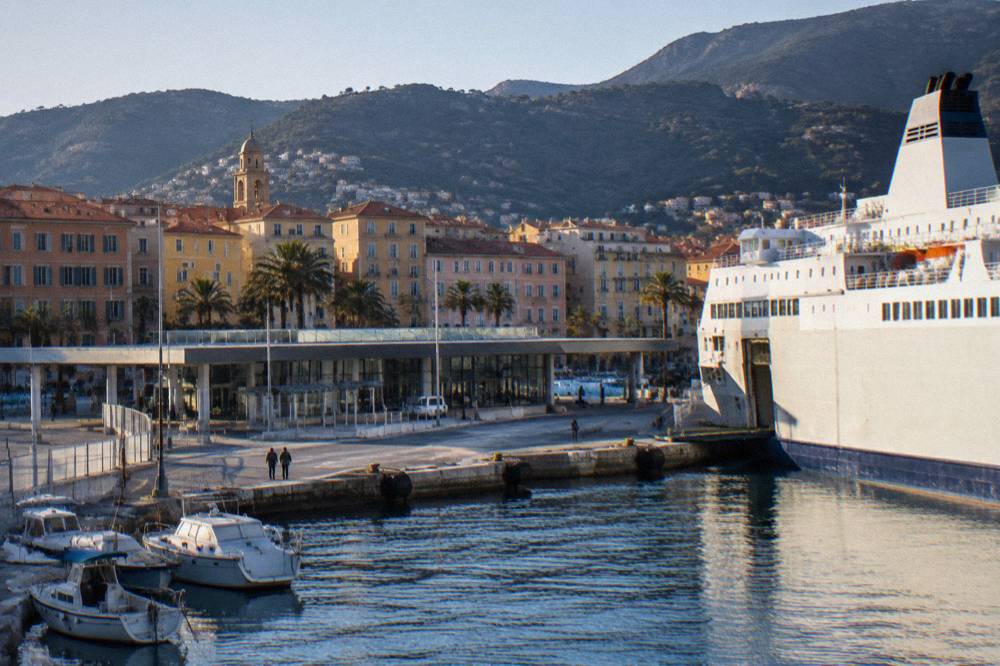
For context on where this sits among Corsica's crossings, the island's other ferry links all run to the French or Italian mainland: Corsica Linea from Marseille, La Méridionale from Marseille, Moby from Livorno, Genoa and Santa Teresa Gallura, and Corsica Ferries from Toulon, Nice, Livorno and Savona. The Bonifacio to Santa Teresa Gallura line is the shortest of them all and the only one that connects Corsica to another island. Longer crossings such as Marseille run 12 to 13 hours and are mostly overnight, according to reported figures; the Sardinia hop is a different animal entirely.
How Long Does The Sardinia Crossing From Corsica Take?
The Bonifacio to Santa Teresa Gallura ferry takes about 50 to 60 minutes each way, per reported crossing times, which means roughly two hours of sailing inside a day trip plus port time on both sides. Sardinia is a separate country-level logistics exercise from Corsica only in the sense that it is a different Italian region: both sides are inside the European Union and the Schengen area.
A realistic day allows for a morning sailing out and a late-afternoon or evening sailing back, timed against the operator's published schedule.
The arithmetic of the day is worth writing down before booking anything. Two sailings at up to an hour each, plus check-in and boarding buffers at both ports, plus whatever you plan to do in Santa Teresa Gallura, must fit between the first departure of the day and the last return. In high summer the schedule carries more departures, which widens the window; in the shoulder season the frequency thins, and a day trip can collapse into a very long wait on one side if a return sailing is missed. The operator's own timetable is the only reliable source for a given week, and it changes with the season.
One structural point in your favour: everything happens from Bonifacio itself. The town's position at the southern tip of Corsica means no transfer is needed between your bed and the boat if you are staying there, and the Escalier du Roi d'Aragon, the 189 steps cut down the cliff with a 180-degree view over the water toward Sardinia, is within the same town, with a reported entry price of about EUR 5 and monthly hours that need confirming before you go, closed shoes required.
How the day compares on paper:
| Crossing element | Figure |
|---|---|
| Bonifacio to Santa Teresa Gallura sailing | About 50 to 60 minutes |
| Operators on the route | Moby and Ichnusa Lines |
| Sardinian arrival port | Santa Teresa Gallura |
| Other Corsica ferry routes | Marseille, Toulon, Nice, Livorno, Savona, Genoa, Santa Teresa Gallura |
| Marseille crossings | About 12 to 13 hours, mostly overnight |
What Can You Do On The Sardinian Side Of A Day Trip From Corsica?
Santa Teresa Gallura is the arrival port on the Sardinian side, a coastal town at Sardinia's northern tip directly across the strait from Bonifacio, and the day's shape depends entirely on the ferry schedule: with about 50 to 60 minutes of sailing each way, the visit window is a few hours in and around the town rather than a tour of the island. This site's research covers Corsica in depth and does not extend to Sardinian attractions, so no Sardinian sight is described here beyond the port itself.
Plenty of guides happily describe Sardinian beaches, squares and drive times from a position of no firsthand sourcing. The safe planning frame is therefore: treat the Sardinian side as a half-day visit to the port town you arrive in, and do your own research on Sardinian attractions from Sardinian sources before the day, rather than relying on any Corsica-focused page, including this one.
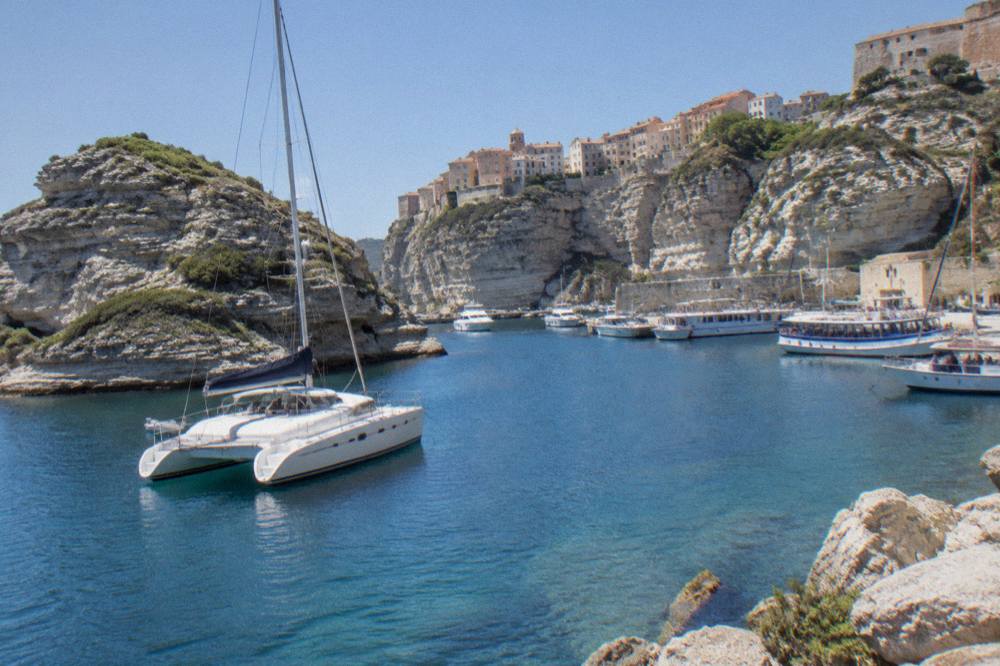
What the sources do support is the water in between. The Strait of Bonifacio contains the Îles Lavezzi on the Corsican side, inside the Bouches de Bonifacio nature reserve managed by the OEC and the Lavezzi islands guide covers that side of the strait in detail. A boat trip out of Bonifacio to the Lavezzi islands is, in effect, the Corsican alternative to the Sardinia day trip: same strait, same clear water, no customs of schedule risk, and it stays within ground the site covers. The Bonifacio and Lavezzi day trip guide lays out that option.
If you are staying in Ajaccio or Porticcio rather than Bonifacio, there is also a full-day Bonifacio sea trip that runs from those bases, covering the town's cliffs and coastline from the water; it is described on this site's Bonifacio boat pages. The inline option is Check availability if the Bonifacio sea approach appeals more than a Sardinian crossing.
Is A Sardinia Day Trip From Corsica Worth It Without A Car?
A car-free day trip from Bonifacio to Santa Teresa Gallura is workable in principle because both ends of the crossing are port towns you reach on foot from the quayside, but whether it is worth it depends on the ferry schedule holding up: about 50 to 60 minutes each way leaves a fixed window on the Sardinian side, and a no-car visit is confined to what is reachable from Santa Teresa Gallura itself.
Bringing a car on the ferry is a separate fare question this site does not cover, so confirm vehicle rules and costs with the operator directly.
The honest framing is a trade-off. Without a car, the trip is a port-to-port excursion: walk on in Bonifacio, sail about an hour, spend the middle of the day in and around Santa Teresa Gallura, sail back. That is a legitimate day out for travellers who want to set foot on a second Mediterranean island and say they crossed between two countries in a morning. It is not a Sardinia sampler; the island is large, and there is no basis on this page for any claim about reaching Sardinian beaches or towns beyond the arrival port within a day window.
With a car, the calculus changes because Sardinia's road network opens up, but so do the costs and the risk: vehicle fares, fuel, and the consequence of missing a return sailing with a car on board. Budget the crossing as an unknown until you have the operator's live price.
A decision table for the no-car question:
| Factor | Day trip on foot | Day trip with a car |
|---|---|---|
| Boarding | Walk on at Bonifacio port | Vehicle check-in and fare, confirm with operator |
| Range on the Sardinian side | Santa Teresa Gallura and its immediate area | Wider Sardinia, at your own risk against the return sailing |
| Cost certainty | Passenger fare only, from the operator | Passenger plus vehicle fare, from the operator |
| Schedule risk | Miss the boat, wait for the next | Same, with a vehicle to re-book |
| Best fit | A short second-island excursion | Only with a wide return window |
What Should You Budget For A Sardinia Day Trip From Corsica?
The budget figures for this trip are almost entirely on the Corsican side: ferry fares are not in this site's sources for any route, so the crossing cost must come from the operator, while local Corsican costs that can be stated include the Escalier du Roi d'Aragon at a reported about EUR 5 and the Filitosa site at EUR 9 adults if your day starts or ends with Corsican sightseeing.
That may read as a thin budget answer, but it is the truthful one. Tipping on either side of the strait follows the French and Italian norms; French menus must state "prix service compris", with extra tips optional. The rest of the planning pages sit on Corsica Travel Guide.
The crossing itself is the one unavoidable line item, and the right way to price it is to treat the operator's live fare as the budget's anchor and build around it. A family of four should price four return passenger fares before anything else; the operator's site is the source. If the fare plus the schedule risk pushes the budget past comfort, the Corsican alternatives in the same strait, a Lavezzi cruise out of Bonifacio, cost from the figures rendered in the tour blocks on this page.
| Budget line | Figure this site can state |
|---|---|
| Ferry passenger fare | From the operator |
| Ferry vehicle fare | From the operator |
| Escalier du Roi d'Aragon | About EUR 5 adult |
| Meals in Bonifacio or Santa Teresa Gallura | Live research |
| Corsican boat day alternatives | Rendered in the tour blocks below |
When Is The Best Season For A Sardinia Day Trip From Corsica?
The climate data that can be stated comes from the Météo-France station normals, 1991 to 2020, for Ajaccio and Bastia, and they show the pattern any strait crossing inherits: July averages 8.6 mm of rain at Ajaccio and August carries a mean daily high of 29.2 °C, while November averages 111.8 mm at Ajaccio and 134.3 mm at Bastia, so the crossing season is shaped by summer weather and winter rain, with the ferry's own winter frequency the deciding factor.
No single month is named here as best.
Summer gives the weather and the daylight but concentrates demand on the route; autumn and spring give softer conditions with a thinner schedule; winter rain, visible in the normals below, makes a strait crossing a rougher proposition and the Sardinian half-day a shorter one. The operator's seasonal timetable is the factual constraint to check against your dates.
| Month | Ajaccio rain mm | Ajaccio mean high °C | Bastia rain mm | Bastia mean high °C |
|---|---|---|---|---|
| Jan | 54.1 | 14.0 | 67.3 | 13.8 |
| Mar | 50.4 | 16.0 | 63.7 | 15.8 |
| May | 49.8 | 22.1 | 53.7 | 22.4 |
| Jul | 8.6 | 28.6 | 13.8 | 29.4 |
| Sep | 57.8 | 26.1 | 74.5 | 26.0 |
| Nov | 111.8 | 18.3 | 134.3 | 17.7 |
Source: Météo-France station normals, 1991 to 2020. October is worth a note of its own: Bastia averages 126.5 mm of rain in the month and Ajaccio 85.7 mm, and September sits between the summer dry and the autumn wet at 57.8 mm at Ajaccio. A shoulder-season crossing is therefore a gamble on the sky rather than the sea state alone.
What Should You Know Before Crossing From Corsica To Sardinia?
Both Corsica and Sardinia sit inside the European Union and the Schengen area, France and Italy respectively, so the crossing carries no hard border in normal conditions, but you should still carry the identity document the operators require, and the practical rules that matter are the operator's own: check-in times, the last return sailing, and the strait's weather, with emergency numbers on the Corsican side being 112, the EU standard, and 196 for sea rescue by VHF channel 16.
The paperwork question is the one most often asked and the least dramatic to answer. Corsica is French territory, Sardinia is Italian, and both are inside the EU's free-movement zone, so the day trip is administratively closer to a domestic crossing than an international one. Operators still check documents at boarding as a matter of routine, and the requirement is theirs to state. On safety, the Corsican numbers are 112 for general emergencies, 15 for medical, 17 for police, 18 for fire, 114 by SMS or app, and 196 for sea rescue on VHF channel 16; the mountain rescue PGHM in Ajaccio is 04 95 24 24 00, though a strait crossing is a sea matter, not a mountain one.
Two further Corsican rules brush against this trip. First, the fire rule: from 15 June to 30 September it is forbidden to light a fire or smoke in forests, maquis and massifs, and the daily massif-access map is updated at 18:00 for the next day, relevant if your Sardinia day is part of a wider Corsican road trip in summer. Second, road reality: Corsican mountain roads are slow, Inforoutes Corse publishes live road status, and the straight-line distances quoted anywhere on this site are as the crow flies, never drive times. A missed morning ferry because a mountain road took longer than a map estimate is the classic way a Sardinia day trip dies.
Practical checklist drawn only from key points:
| Item | Rule or figure |
|---|---|
| Border status | Both islands in the EU and Schengen; carry the ID the operator requires |
| Sea emergency | 196 by VHF channel 16; 112 general |
| Fire season | No fires or smoking in forests, maquis and massifs, 15 June to 30 September |
| Massif access map | Updated 18:00 daily for the next day |
| Road status | Inforoutes Corse publishes live conditions |
| Ferry schedule | The operator's own timetable, checked for your date |
What Are The Corsican Alternatives To A Sardinia Day Trip?
The strongest Corsican alternative to crossing the strait is a boat day out of Bonifacio itself: the Lavezzi islands inside the Bouches de Bonifacio reserve, reached by cruises including a catamaran with snorkelling, a cliffs-and-Lavezzi cruise and a guided snorkel cruise, all departing from Bonifacio and staying in the same waters the Sardinia ferry crosses. If the day trip idea is really a "see the strait" idea, these deliver it without a second country.
The comparison page Corsica versus Sardinia and the answer is Corsica better than Sardinia treat the two islands as destinations; this section is narrower, about the day itself. On that scale, the Bonifacio boat days have the advantage of product data on this site: prices, ratings and durations render in the tour blocks here, whereas the ferry day's Sardinian content has no description at all on this site. The Bonifacio-focused planning page Bonifacio day trip from Porto-Vecchio covers the town side, and the sea options sit under Bonifacio boat tours.
Beyond the strait, the day-trip energy could go north or west instead. The Agriates half-day trip from the Saint-Florent side explores the Désert des Agriates coast, whose beaches Saleccia and Lotu are reached by boat shuttle from Saint-Florent, by 4x4 track from Casta, or on foot. West of Ajaccio, the Sagone-area cruise covers Piana, Scandola and Girolata with a swim stop, and the full picture of that coast is in the Scandola and Girolata boat trip guide and the Calanques de Piana day trip. Any of these keeps the day on the island covered throughout this site.
How Does A Sardinia Day Trip Fit Into A Wider Corsica Itinerary?
A Sardinia day trip anchors naturally to a south-Corsica itinerary built around Bonifacio, since the ferry leaves from the town's own harbour, and the same base supports the Lavezzi cruises, the cliff staircase and day drives toward Porto-Vecchio, about 58 km away as the crow flies, and Sartène, about 39 km, straight-line figures that should never be read as driving times on Corsican roads.
Travellers on a one-week or two-week itinerary should give Bonifacio at least one full day plus the crossing day if Sardinia is on the list.
The itinerary pages on this site handle the sequencing: the Corsica road trip itinerary places the far south in context, and the regional guides for Bonifacio and Porto-Vecchio cover the bases. The honest planning advice is to treat the Sardinia crossing as a single fixed block in an itinerary rather than a flexible one: its timetable, not your mood, sets the day's start and end. Every other day trip out of the south, by contrast, is elastic.
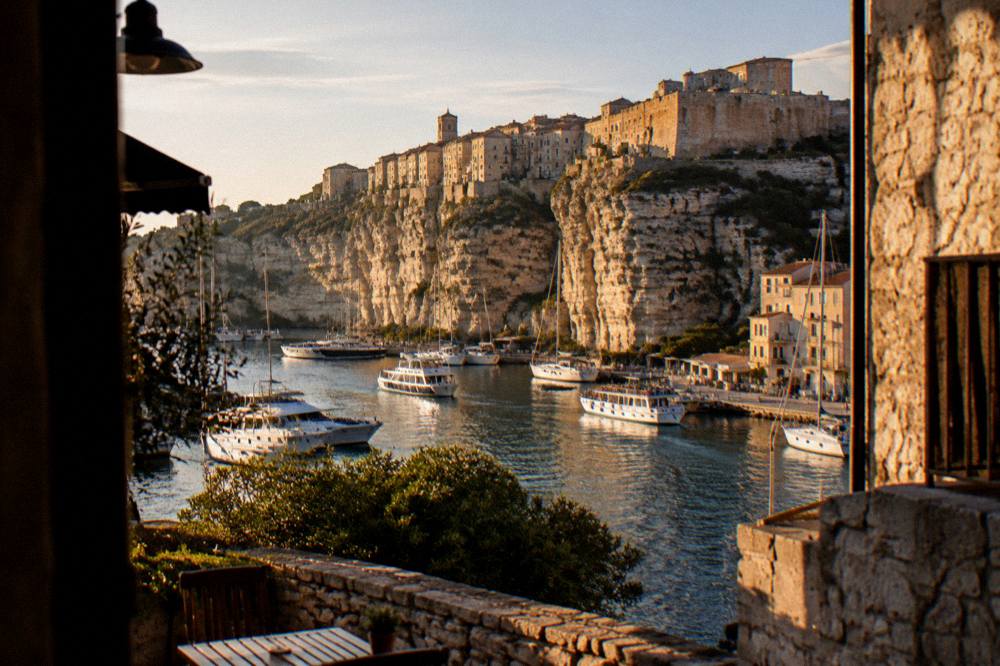
For travellers combining regions, the pattern that works is base-plus-day-trips: stay in Bonifacio or Porto-Vecchio, spend one day on the water in the strait, one on the crossing if Sardinia still calls, and one on the inland south toward the Aiguilles de Bavella, about 43 km as the crow flies from Ajaccio, whose day-trip page is Bavella day trip. The Porto-Vecchio boat trips page covers the eastern options. If weather closes the strait, the rain-day playbook lives at Corsica in the rain.
Common Questions About Sardinia Day Trips From Corsica
Can You Do A Day Trip From Corsica To Sardinia?
Yes. The Bonifacio to Santa Teresa Gallura ferry, run by Moby and Ichnusa Lines, crosses in about 50 to 60 minutes per reported figures, so a day trip is realistic from a base in Bonifacio. The operator's timetable sets the window.
How Long Is The Ferry From Bonifacio To Sardinia?
About 50 to 60 minutes to Santa Teresa Gallura, according to reported crossing times. The route is retained by Moby and Ichnusa Lines after Sardinia found no rival operator, per a report of 9 October 2026.
Which Sardinian Port Does The Corsica Ferry Reach?
Santa Teresa Gallura, at the northern tip of Sardinia, directly across the Strait of Bonifacio. It is the only scheduled passenger link between Bonifacio and Sardinia.
Do You Need A Passport To Cross From Corsica To Sardinia?
Both islands are inside the European Union and the Schengen area, France and Italy respectively, so there is no hard border in normal conditions. Carry the identity document the operator requires at boarding.
Is A Sardinia Day Trip Or A Lavezzi Boat Trip The Better Day Out Of Bonifacio?
That depends on what you want. The Lavezzi islands inside the Bouches de Bonifacio reserve are reached by cruises leaving Bonifacio and staying in Corsican waters. The Sardinia crossing gives you a second island and a port town, with the schedule as the constraint.
What Happens If You Miss The Return Ferry From Sardinia?
You wait for the next sailing the operator runs, which is why the day should be planned against the published timetable with a buffer. Overnight costs on either side go unmentioned in this site's sources, so plan the return margin conservatively.