Ajaccio Airport
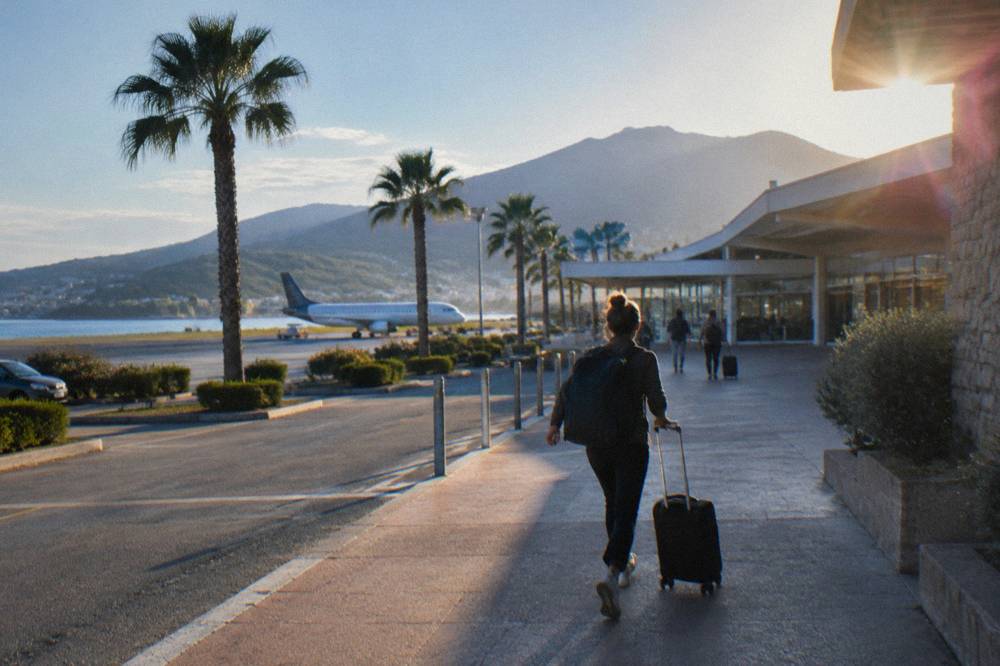
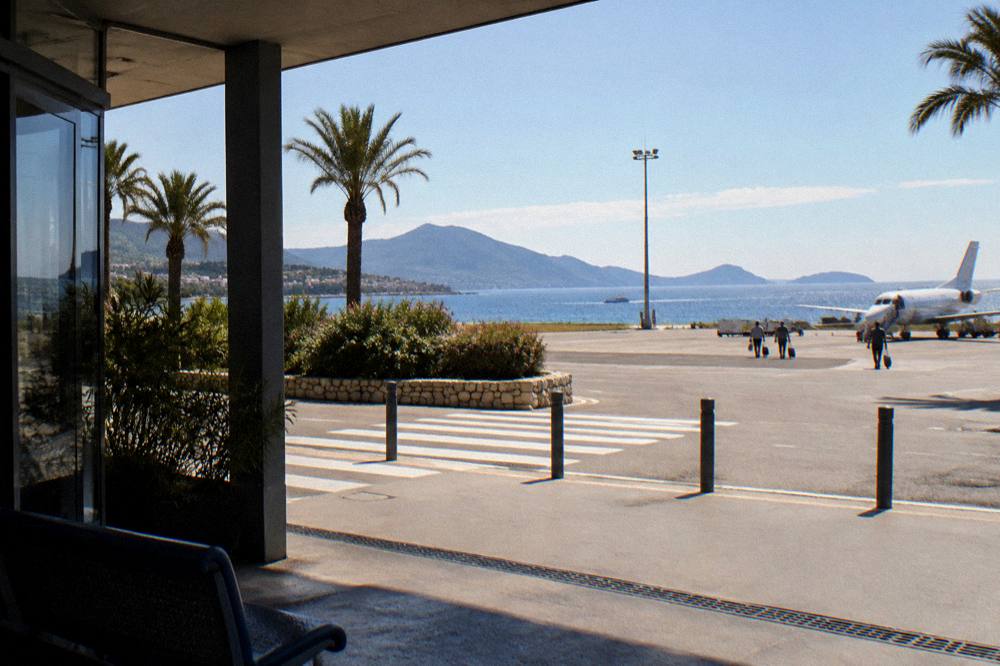
Ajaccio Napoléon Bonaparte Airport (AJA) is the main gateway to Corsica's capital and to the west of the island. This page covers the airport's role among Corsica's four airports, the reported transport links into town, what to do on a first day in Ajaccio, and the trips that work from there.
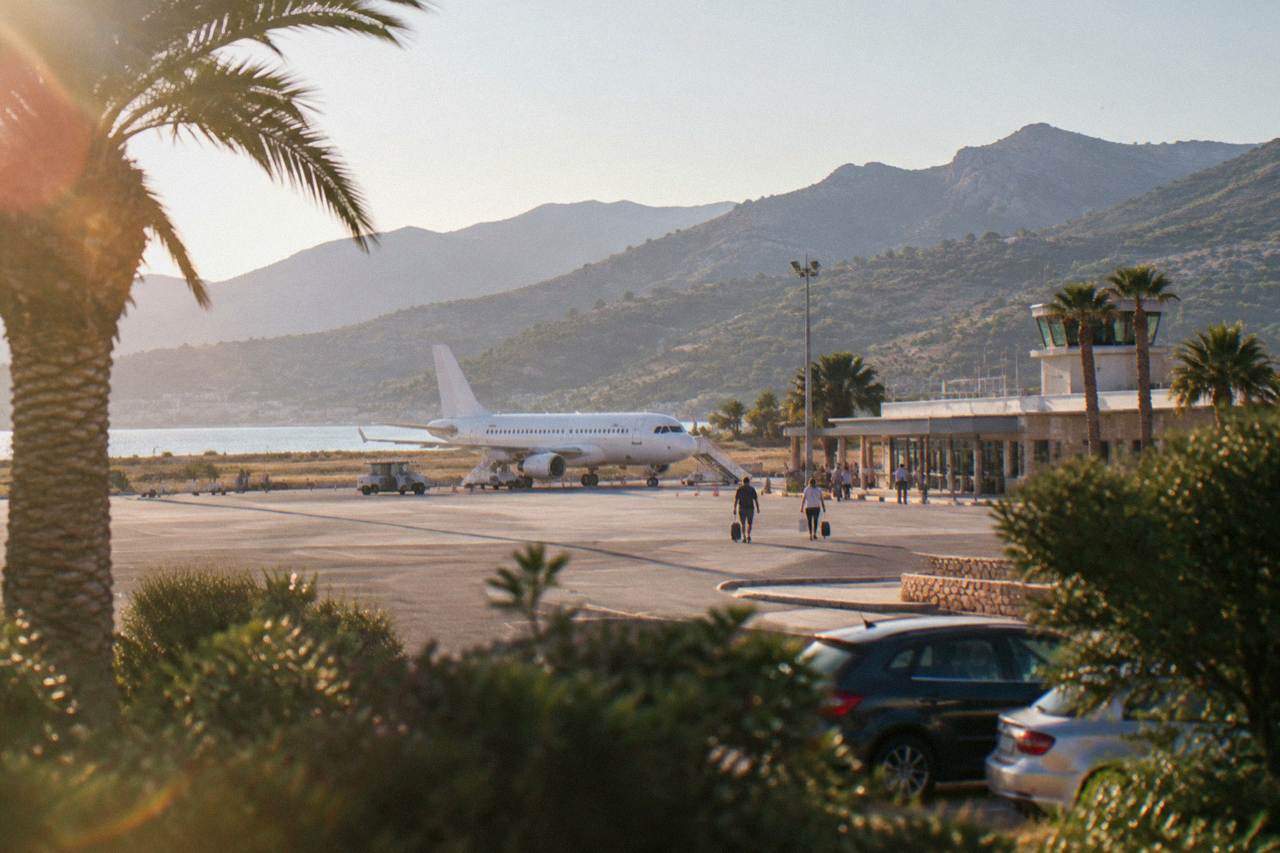
Ajaccio Airport is one of Corsica's four airports and sits close to Ajaccio, the island's capital, home to 76,320 residents. Bus 8 links the airport with the town centre, and the city's museums, gulf boat trips and west-coast day trips are all within easy reach.
Corsica is a French Mediterranean island of 8,722 km2 with more than 1,000 km of coastline and a mountainous interior that rises to Monte Cinto at 2,706 m, and Ajaccio is its capital, with 76,320 residents. Four airports serve the island, and the one travellers heading for the capital and the west coast use is Ajaccio Napoléon Bonaparte Airport, known by the code AJA. This page from the Corsica Travel Guide sets out what you need to know about the airport's place in the island's transport map, how the connection into town works, and what to do once you have landed: the museums of Napoleon's birthplace, the boat trips out into the Gulf of Ajaccio, and the day trips that reach the Calanques de Piana, Scandola and the interior villages.
Which Airports Serve Corsica And Where Does Ajaccio Airport Fit?
Corsica has four airports: Ajaccio Napoléon Bonaparte (AJA), Bastia Poretta (BIA), Figari Sud Corse (FSC) and Calvi Sainte-Catherine (CLY). Ajaccio's airport is the one that serves the island's capital and the whole west coast, from the Gulf of Ajaccio and the Îles Sanguinaires up to the Golfe de Porto and the Calanques de Piana, and it also gives access to the mountainous interior through Corte.
Each airport has its own catchment. Bastia Poretta covers the north-east and the Cap Corse, Figari Sud Corse serves Bonifacio and Porto-Vecchio in the far south, and Calvi Sainte-Catherine serves the Balagne. Ajaccio's field is the natural choice for a first stay in the capital, for the museums and beaches of the gulf, and for the UNESCO-listed Gulf of Porto. The island is small on paper but mountainous in practice, so picking the airport that matches your base saves hours of driving on narrow roads. Inforoutes Corse publishes live road conditions and accessibility levels for the main mountain passes, a useful check before any long drive after landing.
| Airport | Code | Serves |
|---|---|---|
| Ajaccio Napoléon Bonaparte | AJA | Ajaccio, the west coast, the Gulf of Porto |
| Bastia Poretta | BIA | Bastia, the Cap Corse, the north-east |
| Figari Sud Corse | FSC | Bonifacio, Porto-Vecchio, the far south |
| Calvi Sainte-Catherine | CLY | Calvi and the Balagne |
For a fuller comparison of all four fields, including which one suits which itinerary, see Corsica's four airports compared, and for the flight side of the journey, flights to Corsica explained. If you are weighing a sailing instead, the guides to the ferry to Corsica and the Nice to Corsica ferry cover the sea routes.
How Do You Get From Ajaccio Airport Into The City?
Bus 8 runs from Ajaccio Airport into the town, and the airport side of the journey is short: Ajaccio is a compact capital of 76,320 residents, and the airport sits on the edge of the gulf it serves. The Maison Bonaparte national museum's own practical page describes its location on Rue Saint-Charles as 200 m from the bus station and ferry terminal, reachable on bus 8 from the airport, which gives a clear picture of how close the centre is.
That detail comes from the museum's own page, and it matters for planning: a visitor landing at AJA can reach the town's museums, the old streets around Napoleon's birthplace and the waterfront without a long transfer.
Ajaccio is also a ferry port, one of seven on the island alongside Bastia, Bonifacio, Calvi, L'Île-Rousse, Propriano and Porto-Vecchio. That means air arrivals and sea arrivals share the same waterfront, and the bus station and ferry terminal sit within a short walk of the main sights. For travel beyond the town, getting around Corsica covers the options, and driving in Corsica explains what the mountain roads are like. The Chemins de fer de la Corse network runs three lines: Ajaccio to Bastia via Corte, Ponte-Leccia to Calvi, and the Balagne coastal line between Calvi and L'Île-Rousse, so the train can carry you east and north.
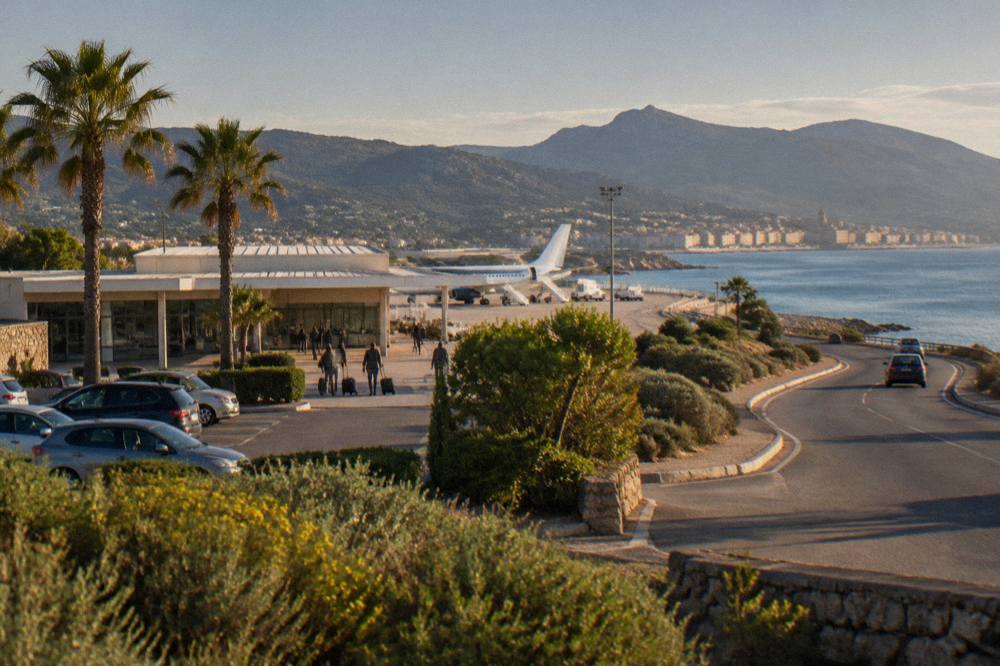
What Can You Do In Ajaccio On A First Day After Landing?
Ajaccio's two headline museums can fill a first day on their own: Maison Bonaparte, the national museum in Napoleon's birthplace house, is open every day except Monday and charges EUR 10 full price, while the Palais Fesch Musée des Beaux-Arts charges EUR 10 full price, EUR 6 for over-65s and is free up to 18, open daily 09:00 to 17:00. Both sit in the town centre, close to the bus station and ferry terminal.
Maison Bonaparte carries the fuller seasonal timetable, straight from the museum's own practical-information page: from 1 October to 31 March it opens 10:30 to 12:30 and 13:15 to 16:30; from 1 April to 30 June, 10:00 to 12:30 and 13:15 to 17:30; and from 1 July to 30 September, 10:00 to 17:30, with last entry 30 minutes before closing. Reduced admission is EUR 8 for non-EU residents aged 18 to 25 and for large families, and entry is free for EU residents under 26. The Palais Fesch figures come from the Ajaccio tourist-office listing for 16 January to 31 December 2026, which also notes closures on Christmas Day, New Year's Day and 1 November.
| Museum | Open | Full price | Reduced and free |
|---|---|---|---|
| Maison Bonaparte | Every day except Monday | EUR 10 | EUR 8 non-EU 18-25 and large families; free for EU under-26s |
| Palais Fesch | Daily 09:00 to 17:00 | EUR 10 | EUR 6 over 65; free up to 18 |
| Musée de la Corse, Corte | Daily in high season | EUR 5.50 | EUR 4 and EUR 3 reduced; ticket covers museum and citadel |
Beyond the museums, the sea is the other half of a first day. The Îles Sanguinaires lie at the mouth of the gulf, and a Sanguinaires boat trip from Ajaccio is the classic short outing, with gulf cruises, aperitif sailings and sunset runs all departing from the town. The wider question of the town as a base is covered in is Ajaccio worth visiting?, and the detailed neighbourhood guide is at Ajaccio area guide. For museum detail, see Maison Bonaparte and Palais Fesch.
A guided walk is another way into the town's past, covering the streets between the old quarter and the waterfront, and it pairs well with a museum afternoon. The tour card above prints its own current price, rating and duration.
Which Day Trips Work Best From Ajaccio?
The strongest day trips from Ajaccio are the boat journeys along the west coast to Scandola and the Calanques de Piana, the short gulf cruises to the Îles Sanguinaires, and inland trips into the hilltop villages of the interior. Ajaccio's position on the west coast puts the UNESCO-listed Gulf of Porto within day-trip range by sea, and the mountain roads east lead towards Corte, the old capital, in about 1 h 30 by road.
The sea option deserves its reputation. The UNESCO World Heritage property "Gulf of Porto: Calanche of Piana, Gulf of Girolata, Scandola Reserve", inscribed in 1983, is reachable on cruises that leave from Ajaccio and Porticcio as well as from Porto itself. Scandola is a nature reserve created by ministerial order on 9 December 1975, the first in Corsica, with 1,000 ha of sea and 919 ha of land, and its terrestrial part is closed to the public: visits are by boat only, with no landing in the integral reserve. A semi-rigid boat day trip from Ajaccio covering both Scandola and Piana is one of the strongest options, and the card below shows what the operator currently offers.
On land, the interior opens up quickly. Corte, the old capital, holds the Citadelle and the Musée de la Corse, where one EUR 5.50 ticket covers both museum and citadel, and the museum's own page gives road times of 1 h from Bastia, 1 h 30 from Ajaccio and 1 h 30 from Calvi. South of the town, the prehistoric site of Filitosa, open 1 April to 2 November with adult entry at EUR 9, sits on the road towards Propriano. A small-group day trip into the old hilltop villages lets you reach the interior without planning the mountain roads yourself, and you can Check availability alongside the internal guide to the Corsican train network, which covers another way of seeing the interior from Ajaccio.
| Day trip from Ajaccio | What it covers | Getting there |
|---|---|---|
| Calanques de Piana | Red granite calanche, part of UNESCO property 258 | Boat cruise or mountain road; see Calanques de Piana day trip |
| Scandola Nature Reserve | Reserve visits by boat only, no landing | Guided cruise from Ajaccio, Porticcio or Porto |
| Îles Sanguinaires | Islands at the mouth of the Gulf of Ajaccio | Short boat trip from Ajaccio |
| Corte and the interior | Citadelle, Musée de la Corse, mountain scenery | Reported train line via Corte, or road in about 1 h 30 |
Is Ajaccio Airport A Good Arrival Point For A West Corsica Road Trip?
Ajaccio Airport works well as the arrival point for a west and south Corsica road trip, because the capital sits at the junction of the west-coast road towards Piana and Porto and the inland roads towards Corte and the alta Rocca. More than 1,000 km of coastline ring the island, and the stretch between Ajaccio and Calvi holds the Îles Sanguinaires, Cargèse, the Golfe de Porto and the Balagne, all reachable on a one-way drive between AJA and CLY.
A car is the flexible option, and Corsica car rental explains the practicalities; the mountain roads are the reason many travellers prefer a guide for the interior legs, since Inforoutes Corse tracks pass accessibility levels and closures change with the weather. The classic pairing is a few nights in Ajaccio followed by nights in Porto, Calvi or Corte. Suggested itinerary pages for the whole island include Corsica in 5 days, Corsica in one week and the full Corsica road trip guide.
The island's long-distance trails are another way to see the interior, though none start at the airport itself. The GR20 runs 180 km north to south in about 15 stages of 4 to 8.5 hours, with PNRC refuges guarded from 16 May to 4 October and nights booked online only, at EUR 20 for a bunk and EUR 12 for a bivouac pitch. The GR20 guide and the wider hiking in Corsica pages cover those in detail, and the best time to visit Corsica page helps with season planning. The rest of the planning pages sit on Corsica Travel Guide.
| Trail | Length | Duration |
|---|---|---|
| GR20 (Fra li Monti) | 180 km | About 15 stages of 4 to 8.5 hours |
| Mare a Mare Nord | 139 km (161 km with variant) | 8 to 12 days |
| Mare a Mare Centre | 84 km | 6 to 7 days |
| Mare a Mare Sud | 73 km | 5 days |
| Mare e Monti Sud | 66 km | 5 days |
What Is The Weather Like In Ajaccio Through The Year?
Ajaccio has a hot, dry summer and a mild, wet winter, according to the Météo-France station normals for 1991-2020 recorded at Campo dell'Oro. July averages 28.6 °C daytime highs with just 8.6 mm of rain and 12 h 6 min of sunshine a day, August averages 29.2 °C, and November carries the largest monthly rainfall at 111.8 mm, with October close behind at 85.7 mm. Snow in Corsica falls on the high mountains, not on the coast.
The monthly figures below are station means, so a given day can sit well above or below them, but they show the shape of the year clearly: a dry June-to-August core, a September that stays warm at 26.1 °C average highs while rain returns, and a November-to-February period when rain jackets matter more than swimwear. The Corsica weather by month page expands on each month for travel planning.
| Month | Average high °C | Average low °C | Rain mm | Sunshine h/day |
|---|---|---|---|---|
| Jan | 14.0 | 4.7 | 54.1 | 4.4 |
| Feb | 14.2 | 4.3 | 48.1 | 5.5 |
| Mar | 16.0 | 5.9 | 50.4 | 6.8 |
| Apr | 18.5 | 8.3 | 53.1 | 7.7 |
| May | 22.1 | 11.8 | 49.8 | 9.3 |
| Jun | 25.9 | 15.4 | 25.9 | 11.1 |
| Jul | 28.6 | 17.7 | 8.6 | 12.1 |
| Aug | 29.2 | 18.1 | 15.8 | 11.1 |
| Sep | 26.1 | 15.4 | 57.8 | 8.7 |
| Oct | 22.8 | 12.6 | 85.7 | 6.7 |
| Nov | 18.3 | 9.0 | 111.8 | 4.7 |
| Dec | 15.1 | 5.8 | 73.9 | 4.0 |
One seasonal rule matters more than the temperature table for anyone heading into the hills after landing. From 15 June to 30 September it is forbidden to light a fire or smoke in forests, maquis and massifs, and the fire-risk map is updated at 18:00 each day for the next day, with access to some massifs restricted from mid-June to mid-September when danger levels are high. The UK FCDO notes a high wildfire risk in France from April to October. Emergency numbers are 112, 15 for medical, 17 for police, 18 for fire, 114 by SMS and 196 for sea rescue.
Where Can You Travel Next From Ajaccio, By Sea Or By Air?
From Ajaccio you can fly out through the island's other three airports, or sail from one of Corsica's ferry ports: Corsica Linea sails Marseille to Ajaccio among its routes, La Méridionale links Marseille with Ajaccio and Porto-Vecchio, and crossings from Italy reach Bastia from Livorno, Savona and Genoa. The short Sardinia link between Santa Teresa Gallura and Bonifacio takes about 50 to 60 minutes and is run by Moby and Ichnusa Lines.
Ajaccio's own port makes the capital a genuine two-mode gateway: you can arrive by air and leave by sea, or add a Sardinia leg to a Corsica trip. The route picture is: Corsica Linea from Marseille to L'Île-Rousse, Bastia, Propriano and Ajaccio; La Méridionale from Marseille to Ajaccio and Porto-Vecchio; Moby from Livorno, Genoa and Santa Teresa Gallura; and Corsica Ferries reported to sail from Toulon and Nice as well as Livorno and Savona. Crossing-time ranges reported for planning purposes are about 4 to 5 hours from Livorno to Bastia, about 6.5 hours from Savona, about 7.5 to 10 hours from Nice, about 10 to 13 hours from Toulon and about 12 to 13 hours from Marseille, mostly overnight. The Corsica Sardinia ferry page covers the short crossing in detail.
| Route | Operator | Crossing time |
|---|---|---|
| Marseille to Ajaccio | Corsica Linea, La Méridionale | About 12 to 13 hours, mostly overnight |
| Livorno to Bastia | Corsica Ferries, Moby | About 4 to 5 hours |
| Savona to Bastia | Corsica Ferries | About 6.5 hours |
| Nice to Bastia | Corsica Ferries | About 7.5 to 10 hours |
| Santa Teresa Gallura to Bonifacio | Moby, Ichnusa Lines | About 50 to 60 minutes |
For arriving at a different airport and finishing in Ajaccio, the Bastia airport, Figari airport and Calvi airport pages cover the other three fields, and the whole-island overview of things to do in Corsica helps sequence a trip between them.
Should You Stay In Ajaccio Or Move Straight On After Landing?
Staying one or two nights in Ajaccio before moving on rewards most itineraries, because the town stacks a national museum, a fine-arts museum, gulf boat trips and a working ferry port within walking distance of each other, and it sits within about 1 h 30 by road of Corte in the interior. Travellers heading straight for Bonifacio or Porto-Vecchio in the far south may prefer Figari airport instead, which exists precisely for that corner of the island.
The decision usually comes down to which coast you want first. West-coast priorities, the Golfe de Porto, Scandola, Piana, Cargèse and the Balagne, all sit naturally behind an Ajaccio arrival. South-coast priorities, Bonifacio's cliffs and citadel, the Îles Lavezzi and the beaches of Porto-Vecchio, sit behind Figari. The island's road network joins the two, but the mountains make the drive a journey rather than a hop, so the airport choice is worth a few minutes of planning. More than 8.5 million passengers, excluding cruise passengers, passed through Corsica's ports and airports in 2025, a scale that explains why the island fields four airports and its ferry ports rather than one of each.
A sunset or aperitif cruise is a good way to close an Ajaccio stay, and the gulf's short sailings are among the most-booked outings on this coast. The pick below is a small-group food-and-walking option in the town itself, useful for an arrival evening when a full day trip is too much.
Common Questions About Ajaccio Airport
How Many Airports Does Corsica Have?
Corsica has four airports: Ajaccio Napoléon Bonaparte (AJA), Bastia Poretta (BIA), Figari Sud Corse (FSC) and Calvi Sainte-Catherine (CLY).
How Do I Get From Ajaccio Airport To The City Centre?
Bus 8 links the airport with the town, and the Maison Bonaparte museum's page places its Rue Saint-Charles site 200 m from the bus station and ferry terminal. Fares and timetables need checking locally before travel.
Is Ajaccio Airport Close To The Ferry Port?
Yes. Ajaccio is both an airport city and a ferry port, and the museum sources place the bus station and ferry terminal within about 200 m of the town-centre sights, so air and sea arrivals share the same waterfront.
Can I Visit Scandola From Ajaccio?
Yes, by boat. Scandola's terrestrial part is closed to the public and visits are by boat only, with cruises from Ajaccio and Porticcio as well as from Porto itself covering the reserve and the Calanques de Piana.
What Is The Rainiest Month In Ajaccio?
November carries the largest monthly rainfall in the Météo-France 1991-2020 station normals for Ajaccio, at 111.8 mm, with October at 85.7 mm. July averages 8.6 mm, the lowest figure on the table.
Can I Take A Train From Ajaccio?
The Chemins de fer de la Corse network is reported to run Ajaccio to Bastia via Corte, Ponte-Leccia to Calvi, and the Balagne coastal line between Calvi and L'Île-Rousse.
How Does Ajaccio Airport Compare With Arriving By Sea?
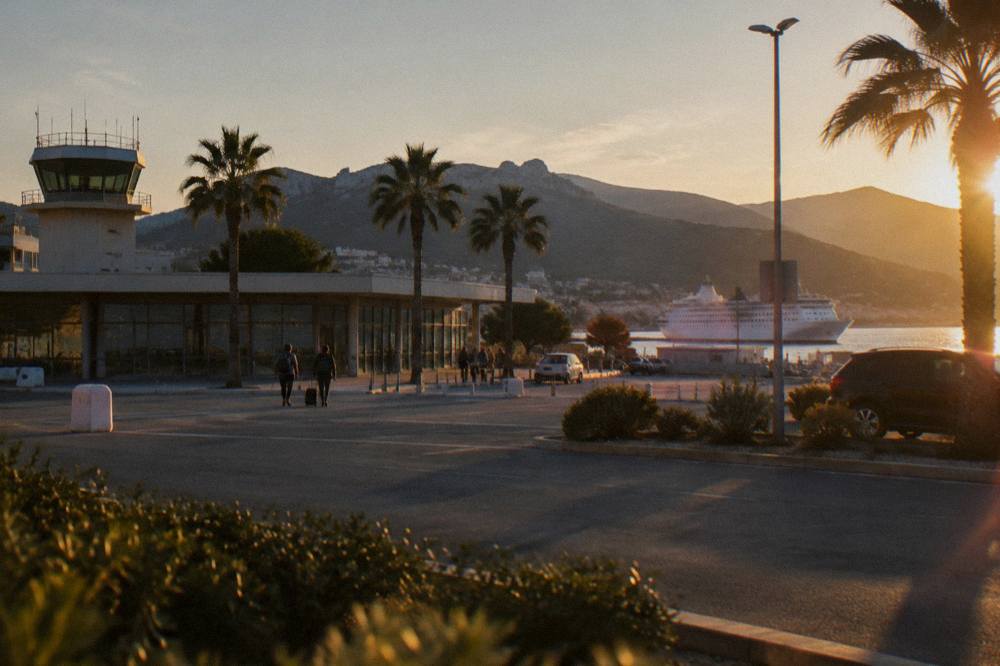
Arriving by air at AJA puts you minutes from Corsica's capital and its museums, while arriving by sea into Ajaccio, Bastia, Bonifacio, L'Île-Rousse, Propriano or Porto-Vecchio lets you bring a car and start a road trip from the dock. Both modes served more than 8.5 million passengers across the island's ports and airports in 2025, excluding cruise passengers, and Ajaccio is the one place where the two networks meet most directly, with the ferry terminal a short walk from the town centre.
The choice often follows your starting point. Travellers from elsewhere in France have overnight sailings from Marseille on Corsica Linea and La Méridionale and reported Corsica Ferries routes from Toulon and Nice; travellers from Italy have the shorter Livorno, Savona and Genoa crossings into Bastia; and anyone combining Corsica with Sardinia has the 50-to-60-minute Santa Teresa Gallura to Bonifacio link. Air arrivals spread across the four airports according to the base you want, and AJA remains the airport for the capital, the west coast and the mountain interior behind it.
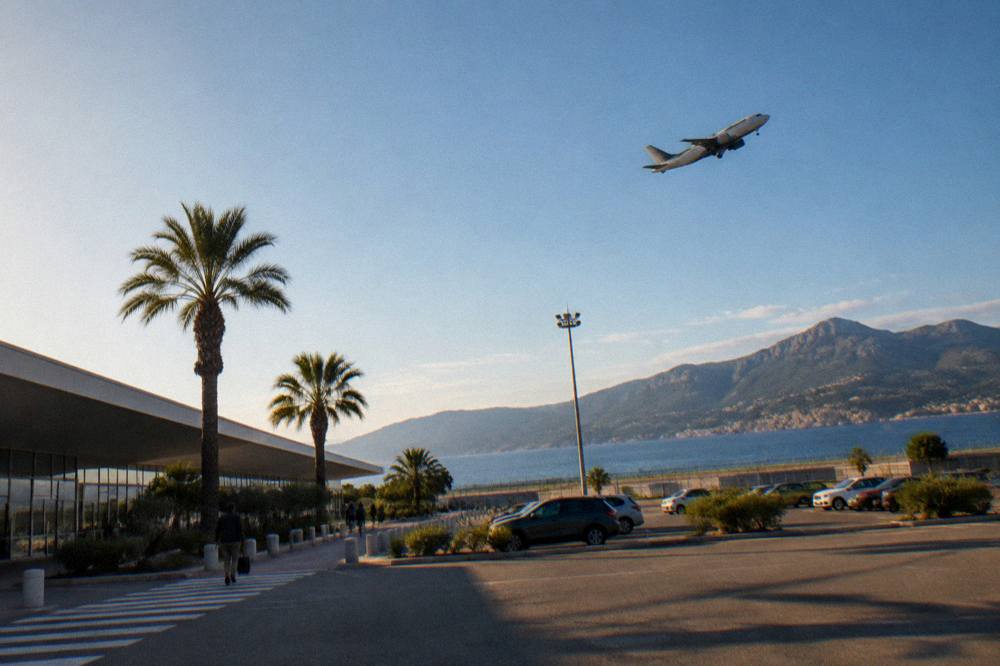
However you arrive, Ajaccio rewards at least a night: two museums within walking distance of the port, gulf cruises to the Îles Sanguinaires, and west-coast day trips to Scandola and Piana all start from the town that the airport serves. The range of material behind this page, from the museum's own practical information to the Météo-France station normals, all points the same way: land at AJA, and the best of west Corsica is already within reach.