Corsica 14 Days
This itinerary runs anticlockwise from Ajaccio through the Balagne, Corte and the far south, using driving times, entry prices and season dates.
A 14-day Corsica trip works best as an anticlockwise loop: three nights in Ajaccio, three in the Calvi and Balagne area, two near Saint-Florent, two in Corte, and four split between Porto-Vecchio and Bonifacio, with boat days to Scandola and the Îles Lavezzi built in.
Two weeks is the length at which Corsica stops being a checklist and becomes an island you have actually crossed. In 14 days you can base in Ajaccio, work up the west coast through the Calanques de Piana and the Balagne, cross the Désert des Agriates to Saint-Florent, drop inland to Corte, then finish among the beaches and cliffs of the far south around Porto-Vecchio and Bonifacio. The island covers 8,722 km2 with more than 1,000 km of coastline and a mountainous interior that tops out at Monte Cinto at 2,706 m, so the driving is real and the loop below budgets it honestly.
The itinerary assumes a hire car throughout. Public transport exists, including the Chemins de fer de la Corse lines from Ajaccio to Bastia via Corte and the coastal Balagne line between Calvi and L'Île-Rousse, but the Agriates tracks, the Restonica valley and the southern beaches need wheels. More on the planning logic, including a shorter alternative, sits in how many days in Corsica is enough.
What Does A Corsica 14 Days Itinerary Cover?
A full 14-day Corsica itinerary covers the whole island as an anticlockwise loop: Ajaccio and the Sanguinaires, the Calanques de Piana and Scandola by boat, Calvi and the Balagne villages, L'Île-Rousse, the Désert des Agriates beaches of Saleccia and Lotu, Saint-Florent, Corte and the Restonica, Porto-Vecchio, Palombaggia and Santa Giulia, and finally Bonifacio with a boat day to the Îles Lavezzi. It leaves out nothing essential and adds no rushed end-to-end days. The busiest single leg is the run down the west coast, and even that is broken by a night in the Golfe de Porto area.
The table below is the skeleton. Nights are deliberately uneven: three in Ajaccio to absorb the town and a gulf boat trip, two in the Porto and Piana area because the Scandola cruise takes a full half day, and four in the south because that is where the beaches are.
| Days | Base | What the days hold |
|---|---|---|
| 1-3 | Ajaccio | Town museums, Sanguinaires boat trip, a canyon or e-bike day |
| 4-5 | Porto / Piana | Calanques de Piana, Scandola cruise, Girolata |
| 6-7 | Calvi or L'Île-Rousse | Balagne villages, citadel, catamaran in the Agriates |
| 8-9 | Saint-Florent | Saleccia and Lotu by shuttle boat, Cap Corse half day |
| 10-11 | Corte | Restonica valley, Musée de la Corse, old capital on foot |
| 12-14 | Porto-Vecchio / Bonifacio | Palombaggia, Santa Giulia, Bonifacio cliffs, Îles Lavezzi |
If 14 days is more than you have, the same loop compressed works at Corsica in 10 days or trimmed to the coast at Corsica in one week. First-time visitors should also read first time in Corsica before committing to this much driving.
How Should You Structure Two Weeks Around Corsica?
Structure the fortnight as one anticlockwise loop with six bases and no base held for fewer than two nights, starting and ending at the same airport so the car return is simple: fly into Ajaccio, sweep north up the west coast, cut across to Cap Corse, drop south through Corte to Bonifacio, and return along the east coast plain to Ajaccio. The west coast carries the scenery and the slow roads; the east coast plain carries the fast return. Reversing the loop works equally well and simply flips the light.
Two structural rules keep the trip sane. First, put the two big boat days, Scandola and the Îles Lavezzi, on days 4 and 13 rather than back to back, because both are water mornings and the legs between them are long. Second, treat Corte as the inland hinge: the Musée de la Corse's own practical page gives road times of one hour from Bastia, one and a half from Ajaccio and Calvi, two from Porto-Vecchio and two and three quarters from Bonifacio and Propriano, which is why the town makes a natural midpoint stop.
| Leg | Road time to Corte (per the Musée de la Corse page) |
|---|---|
| From Bastia | 1 h |
| From Ajaccio | 1 h 30 |
| From Calvi | 1 h 30 |
| From Porto-Vecchio | 2 h |
| From Bonifacio | 2 h 45 |
| From Propriano | 2 h 45 |
For anyone weighing the trade-offs, do you need a car in Corsica covers the car-free alternative, and driving in Corsica explains the mountain-road reality, including the live road-status service published by Inforoutes Corse. Before the itinerary starts, here are the three bookable days this plan leans on hardest.
Days 1 To 3: Ajaccio, Napoleon's Town And The Îles Sanguinaires
Days 1 to 3 sit in Ajaccio, Corsica's capital and the birthplace of Napoleon: day 1 for Maison Bonaparte and the Palais Fesch, day 2 for a boat trip to the Îles Sanguinaires at the mouth of the gulf, and day 3 for an active day inland or south, with the town's restaurants carrying the evenings. Both museums are walkable from the centre and both close a weekday, so check the day-of-week before locking the schedule.
Maison Bonaparte, on Rue Saint-Charles 200 m from the bus station and ferry terminal, is open every day except Monday. Full entry is EUR 10, EUR 8 for non-EU residents aged 18 to 25 and large families, and free for EU residents under 26. From 1 July to 30 September the hours are 10:00 to 17:30 without a lunch break; in spring and autumn the museum splits morning and afternoon. The Palais Fesch charges EUR 10 full, EUR 6 for over-65s and nothing up to 18, open daily 09:00 to 17:00 through 2026 with closures on Christmas, New Year and 1 November. The Maison Bonaparte and Palais Fesch pages carry the full hour tables.
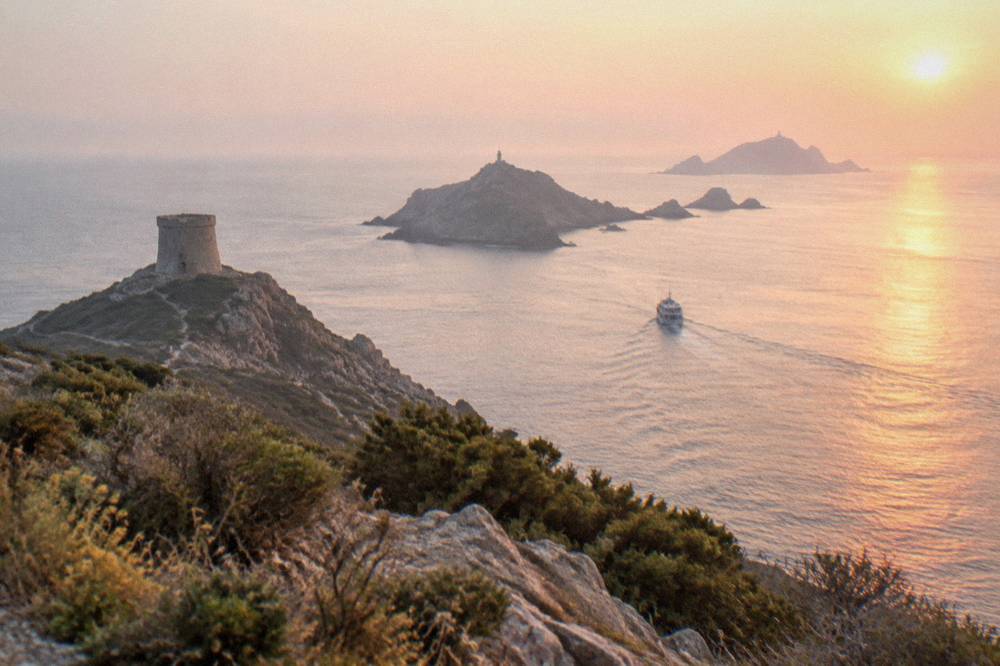
Day 2 goes to sea. The Sanguinaires boat trip from Ajaccio guide compares the gulf cruise, the aperitif version and the sunset departure; all three round the same islands at the gulf mouth. Day 3 has two honest options: canyoning in the Richiusa canyon above Bocognano, or a self-guided e-bike ride out toward Capo di Feno on the Pointe de la Parata side of the gulf. Food matters here too, and the Corsican food and wine tour guide maps the charcuterie, brocciu and wine stops worth building an evening around.
| Ajaccio sight | Full price | Closed |
|---|---|---|
| Maison Bonaparte | EUR 10 (EUR 8 non-EU 18-25, large families; free EU under 26) | Monday |
| Palais Fesch | EUR 10 (EUR 6 over 65, free up to 18) | 25 Dec, 1 Jan, 1 Nov |
| Îles Sanguinaires boat trip | From the operator's live listing | Sea conditions |
Days 4 To 5: The Calanques De Piana, Scandola And Girolata
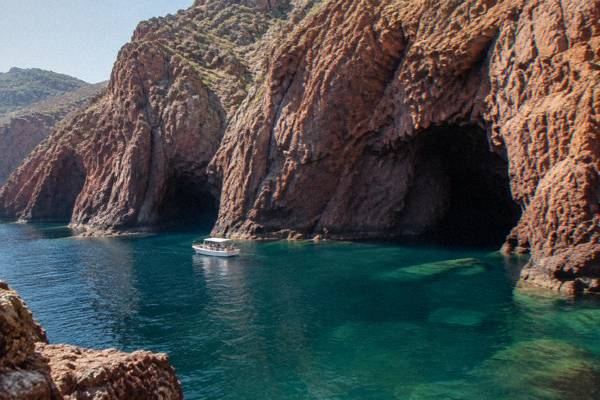
Days 4 and 5 move north to the Golfe de Porto, the stretch of Corsican coast that UNESCO inscribed in 1983 as "Gulf of Porto: Calanche of Piana, Gulf of Girolata, Scandola Reserve", with day 4 driving up through the Calanques de Piana and day 5 given entirely to a boat cruise into the Scandola Nature Reserve with a stop at Girolata. The drive and the cruise are the two halves of the same landscape, red granite above water, and doing both is the point of basing here two nights.
Scandola is the first nature reserve created in Corsica, by ministerial order of 9 December 1975: 919 ha of land, 1,000 ha of sea and a 70 ha integral reserve, managed by the Parc naturel régional de Corse. The land part is closed to the public, so visits are by boat only, and no landing is allowed in the integral reserve. Boats leave from Porto, from Cargèse, from Sagone and even from Ajaccio on full-day versions; the Scandola boat tour and Calanques de Piana tour pages compare them, and the Scandola Nature Reserve and Calanques de Piana attraction pages explain the reserve rules.
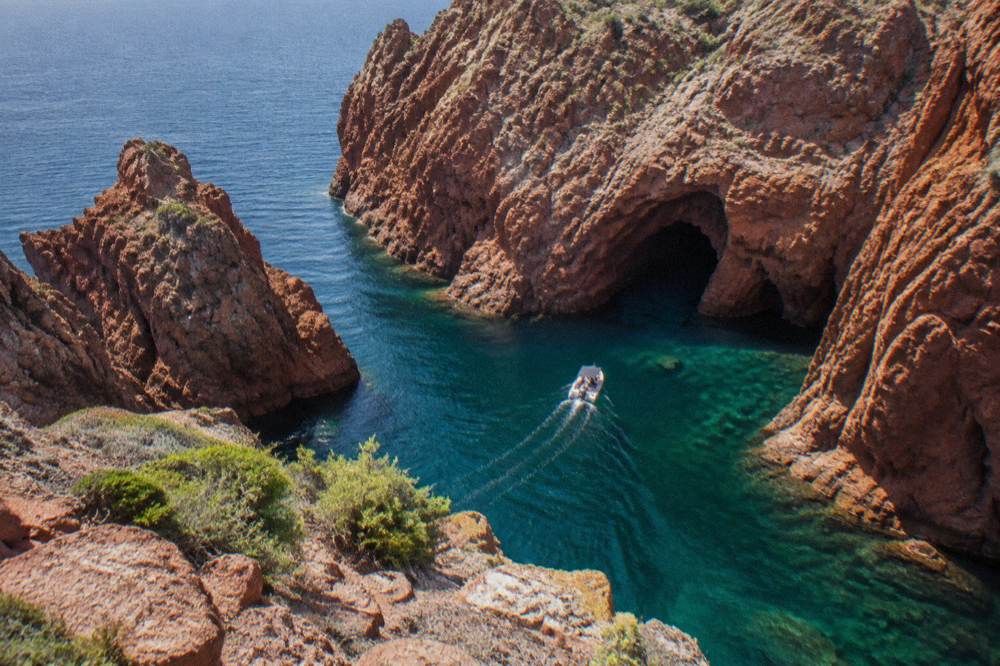
State and regional authorities confirmed a shared protection roadmap for the site in 2026, including voluntary labelling of boat operators, a QR-code tracking trial for pleasure boats and renewed quiet zones for the osprey, the bird the reserve is credited with saving in Corsica. None of that changes the visitor experience on a licensed cruise. Budget the afternoon of day 4 for the Girolata hamlet, reachable by boat or on foot, and read is Scandola worth it if you are tempted to skip the cruise and view the rocks only from the road.
Days 6 To 7: Calvi, The Balagne And L'Île-Rousse
Days 6 and 7 cross into the Balagne, Corsica's northwest, with day 6 on the coast between Calvi's citadel and L'Île-Rousse and day 7 in the hilltop villages of the interior, ideally with a catamaran afternoon in the Désert des Agriates coves if the sea is calm. The Balagne is the one region where the Chemins de fer de la Corse genuinely helps a visitor: the coastal line between Calvi and L'Île-Rousse runs along the beaches and links the two towns without a car.
The citadel at Calvi sits above the marina; the town pairs naturally with a sunset cruise out to the Revellata peninsula. L'Île-Rousse gives the region its second base, a planned square and a beach at the edge of the maquis. From either town the full-day catamaran into the Agriates, with swimming stops along the coast that the road never reaches, is the signature water day of the northern half of the island. The rest of the planning pages sit on Corsica Travel Guide.
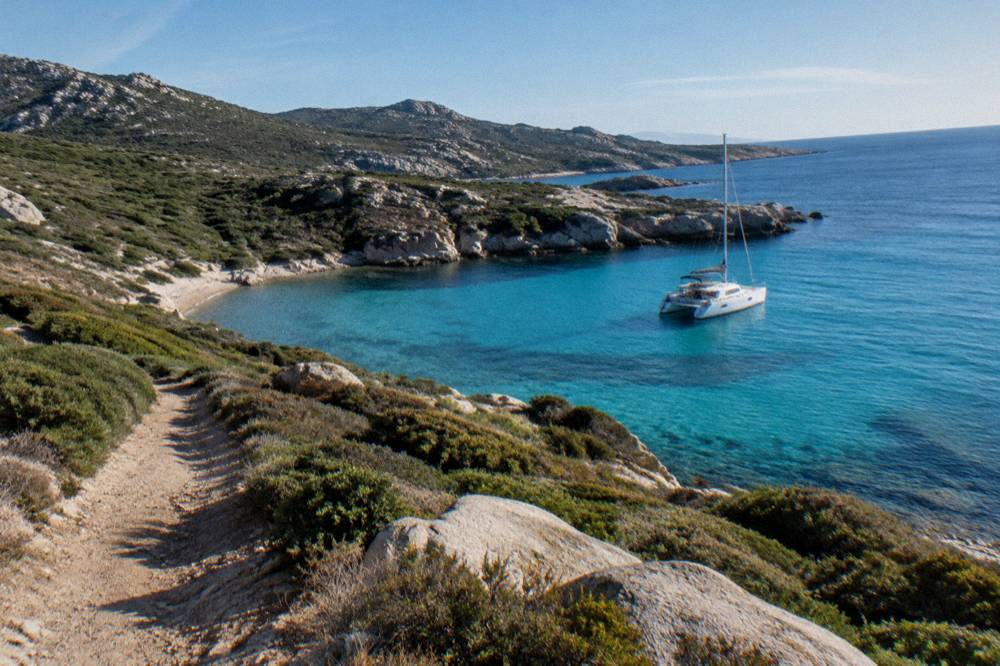
Day 7 belongs to the Balagne villages day trip: the inland road strings the hilltop villages together, and wine tastings around Calvi and L'Île-Rousse break the drive. The region's wines carry the Calvi name within the Vin de Corse appellation family, and the principal red grapes behind them are Nielluccio and Sciaccarellu, with Vermentinu for the whites, per the island's tourism authority. If two weeks feels generous but the north pulls hardest, Corsica north itinerary deepens this half of the island on its own.
Days 8 To 9: Saint-Florent, Saleccia And Lotu
Days 8 and 9 base in Saint-Florent on the north coast, using it as the gateway to the Désert des Agriates: day 8 takes the shuttle boat to the beaches of Saleccia and Lotu, and day 9 either explores Cap Corse on a half-day trip or returns to a different Agriates cove on foot or by 4x4 track from Casta. The Agriates is the stretch of protected coast between Saint-Florent and the Balagne, and its two famous beaches have no ordinary road.
The shuttle boats run from Saint-Florent's port roughly April to October, weather permitting, and the crossing takes about 15 to 20 minutes; the alternative is the authorised 4x4 track from Casta or walking in. There is no village, no motorised access road and no shade infrastructure at the far end, so carry water. The Saleccia beach and Lotu beach pages cover the details, and the Désert des Agriates guide explains the whole protected area.
Day 9's Cap Corse option is a peninsula of fishing ports and Genoese towers, covered in the Cap Corse day trip and Cap Corse pages, with the small ports of Centuri and Erbalunga as the turnaround points. If the forecast turns wet, Corsica in the rain has the indoor substitutes, including the museums already listed in Ajaccio and Corte.
Days 10 To 11: Corte And The Mountain Interior
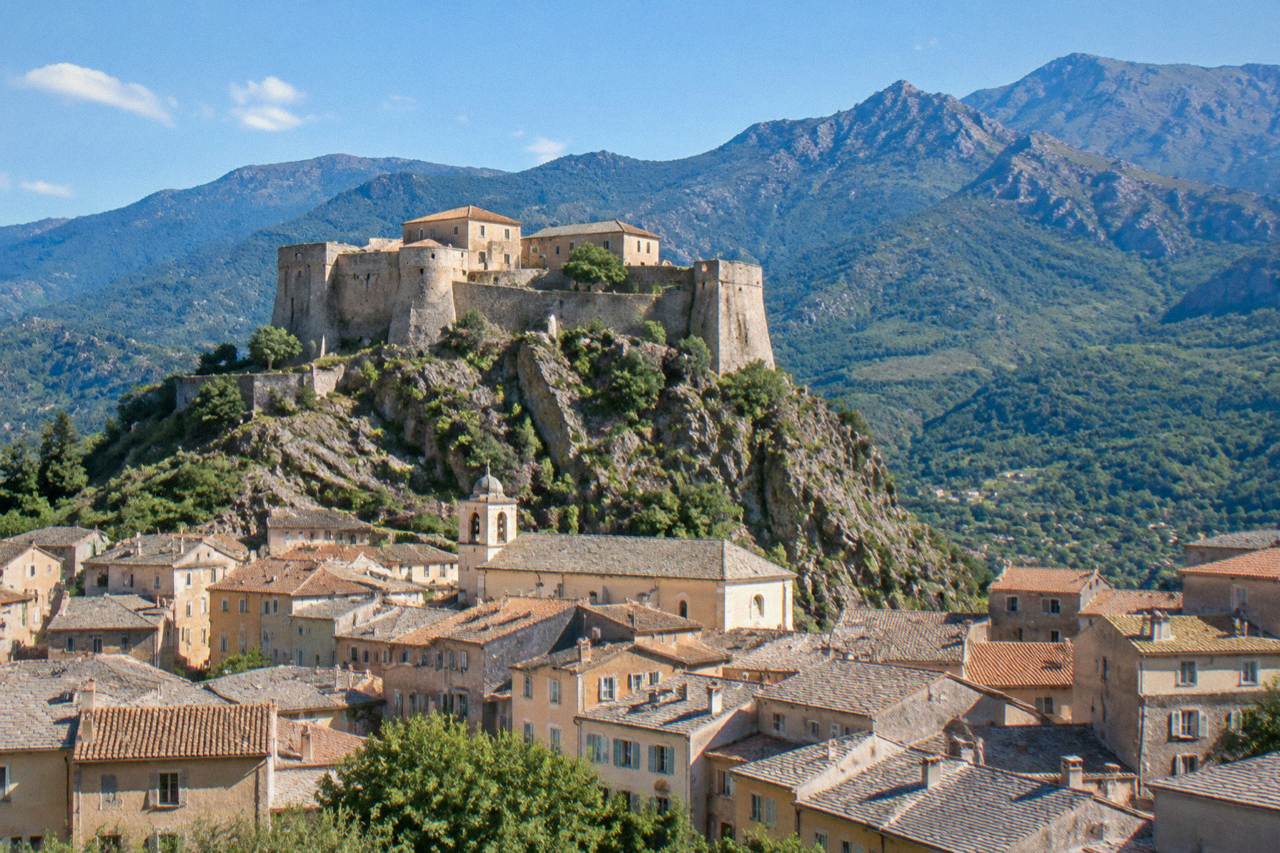
Days 10 and 11 turn inland to Corte, the old capital of Corsica under Pasquale Paoli's brief independence, sitting at the confluence of the Restonica and Tavignano valleys: day 10 for the citadel and the Musée de la Corse, day 11 for the Gorges de la Restonica and its mountain lakes above the town. Corte is the only genuinely inland base on this itinerary, and the change of register after a week of coast is exactly why it earns two nights.
One ticket at EUR 5.50 covers both the Musée de la Corse and the citadel, with EUR 4 and EUR 3 reductions; the site runs daily 10:00 to 19:00 from 1 May to 31 October, with shorter low-season hours and an annual closure from 31 December to 14 January. The Citadelle de Corte and Corte and the interior pages carry the full schedule.
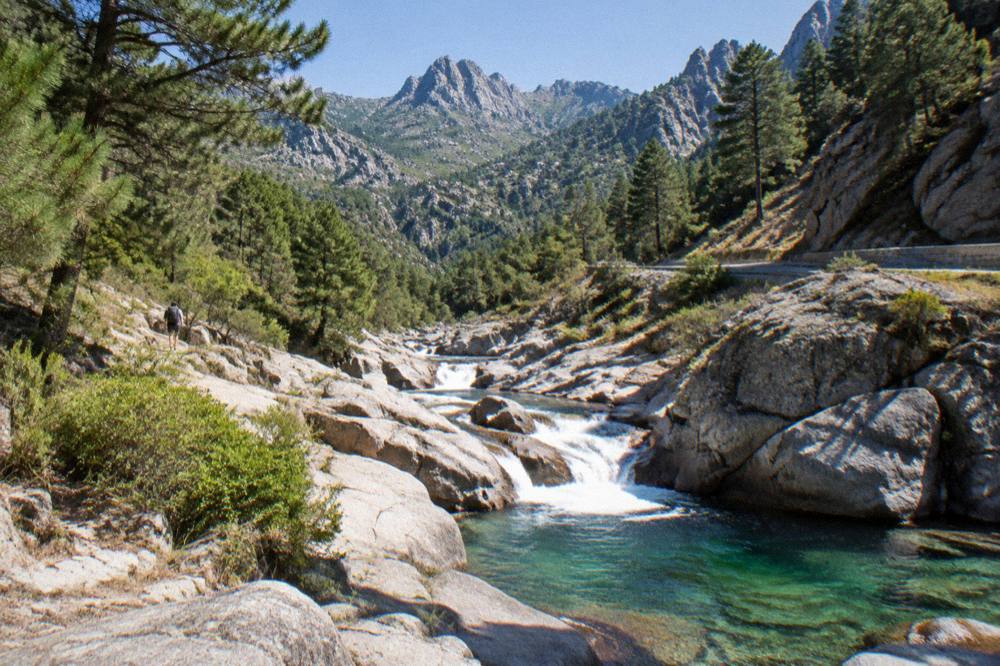
The Restonica valley climbs from town into the high mountains, and the Restonica valley and Restonica and Corte day trip guides describe the road and the trailheads. Two safety notes from the region's own rules matter in summer. From 15 June to 30 September it is forbidden to light a fire or smoke in forests, maquis and massifs, and the prefecture's colour map of massif access is updated each evening at 18:00 for the next day, with some massifs closed entirely on the highest-risk days. The Restonica valley guide covers what to check before driving up.
Hikers with more than two weeks, or planning a return trip built around trails rather than beaches, should know the long-distance network: the GR20 runs 180 km north to south in about fifteen stages of 4 to 8.5 hours, while the Mare e Monti Nord covers 121 km in 10 days and the Mare a Mare routes cross the island in 5 to 12 days depending on the variant.
| Corsica long trail | Length | Days | Total climb |
|---|---|---|---|
| GR20 (Fra li Monti) | 180 km | About 15 stages, 4 to 8.5 h each | Not stated |
| Mare e Monti Nord | 121 km | 10 | 6,100 m |
| Mare a Mare Nord | 139 km (161 km with variant) | 8 to 12 | 5,900 m |
| Mare a Mare Centre | 84 km | 6 to 7 | 3,900 m |
| Mare a Mare Sud | 73 km | 5 | 3,200 m |
| Mare e Monti Sud | 66 km | 5 | 2,700 m |
Days 12 To 14: Porto-Vecchio, Bonifacio And The Îles Lavezzi
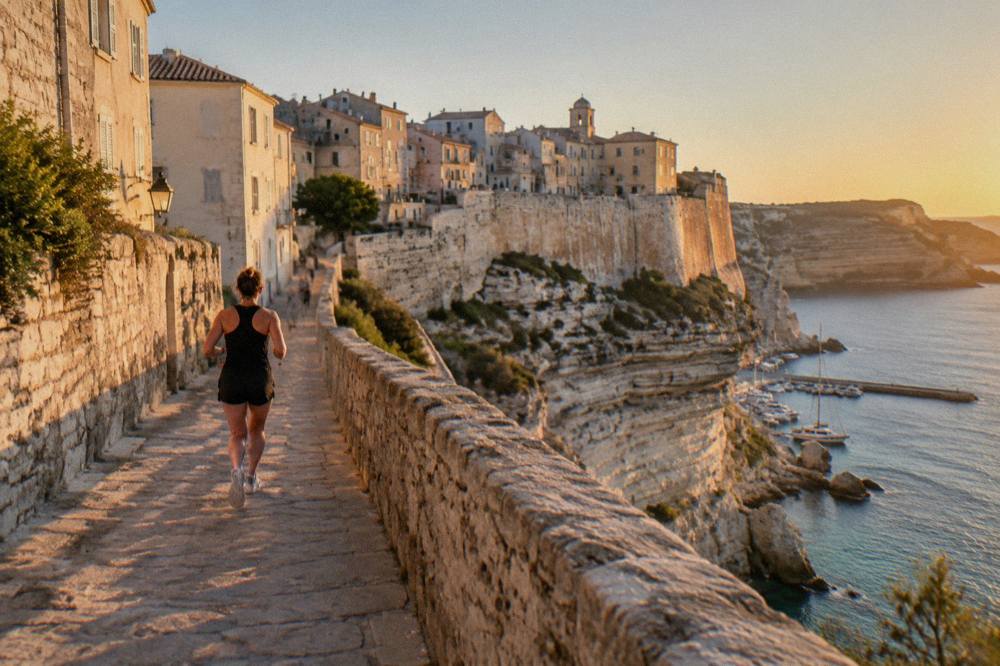
Days 12 to 14 finish in the far southeast: day 12 in Porto-Vecchio's old town and at Palombaggia or Santa Giulia, day 13 at the Bonifacio citadel and the 189 steps of the Escalier du Roi d'Aragon, and day 14 on the water among the Îles Lavezzi, before the drive back north to fly out of Ajaccio or Figari. This is the beach-and-cliffs finale, and it deliberately puts the Lavezzi boat day last so the fortnight ends on the sea.
The southern beaches are the island's headline sand. Palombaggia, Santa Giulia and Rondinara sit within a short drive of Porto-Vecchio's old town, covered in the Porto-Vecchio old town and Porto-Vecchio guides, and the Plage de Roccapina breaks up the coast road south. Bonifacio deserves a full day of its own, and the question how many days do you need in Bonifacio answers itself quickly: the citadel, the cliffs and a boat out to the caves fill one very full day.
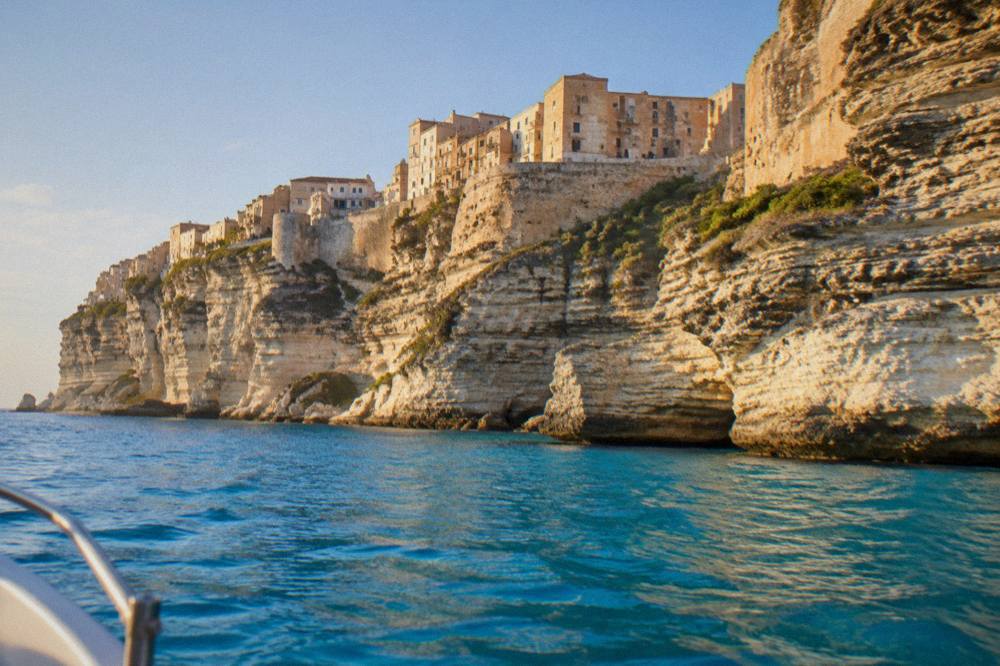
The Escalier du Roi d'Aragon cuts 189 steps down the cliff face below the citadel, with a 180-degree view over the strait toward Sardinia at the bottom; children receive a small diploma at the top, and closed-toe flat shoes are required. The full-day boat trip to La Maddalena and the Îles Lavezzi is the region's signature excursion, a small-group crossing to the islands inside the Bouches de Bonifacio Nature Reserve, and it anchors the final day of this itinerary: Check availability. The Bonifacio boat tour page compares the shorter cliff cruises, the Îles Lavezzi guide covers the reserve, and the Bonifacio citadel and cliffs page covers the town.
If Sardinia tempts rather than satisfies, the Santa Teresa Gallura to Bonifacio ferry, about 50 to 60 minutes each way, makes a combined trip feasible, and can you visit Corsica and Sardinia in one trip covers the sequencing.
What Does Two Weeks In Corsica Cost?
A 14-day Corsica trip costs what you make of the three big levers: the car, the beds and the boat trips, with the fixed sight entry fees adding up to well under EUR 100 per person for the whole fortnight and the three bookable sea days priced individually on each operator's live listing. The euro is the currency throughout, and restaurant menus must state that service is included, so tips are optional rather than expected.
| Item | Cost on this itinerary |
|---|---|
| Maison Bonaparte | EUR 10 full |
| Palais Fesch | EUR 10 full, EUR 6 over 65 |
| Musée de la Corse and citadel, Corte | EUR 5.50, one ticket for both |
| Filitosa prehistoric site | EUR 9 adults, EUR 7 reduced, EUR 28 family |
| Escalier du Roi d'Aragon | About EUR 5 |
| GR20 refuge bunk (if you add a trail night) | EUR 20 per person |
| GR20 bivouac pitch | EUR 12 per person |
Filitosa, the prehistoric site near Sollacaro, is not on the strict route above but fits naturally as a stop on the drive south from Ajaccio toward Propriano on a variant of days 10 to 12; it opens 1 April to 2 November. The Corsica cost and budget guide breaks down the rest of the spending picture, and the Corsica road trip guide covers the fuel and driving logic of the full loop.
When Should You Take A 14-Day Corsica Trip?
Take a 14-day Corsica trip between late May and early October if you want both the mountain days and the sea days to work, with July and August carrying average daily highs of 28.6 to 29.2 °C at Ajaccio and only 8.6 to 15.8 mm of monthly rain, and June or September trading a little warmth for 26 °C highs with more moderate rainfall. The Météo-France station normals for 1991 to 2020 show the pattern plainly: a hot dry summer and a mild wet winter, with November carrying the heaviest monthly rainfall.
| Month | Ajaccio high | Ajaccio low | Rain | Bastia high | Bastia rain |
|---|---|---|---|---|---|
| May | 22.1 °C | 11.8 °C | 49.8 mm | 22.4 °C | 53.7 mm |
| June | 25.9 °C | 15.4 °C | 25.9 mm | 26.4 °C | 38.8 mm |
| July | 28.6 °C | 17.7 °C | 8.6 mm | 29.4 °C | 13.8 mm |
| August | 29.2 °C | 18.1 °C | 15.8 mm | 29.8 °C | 21.1 mm |
| September | 26.1 °C | 15.4 °C | 57.8 mm | 26.0 °C | 74.5 mm |
| October | 22.8 °C | 12.6 °C | 85.7 mm | 22.0 °C | 126.5 mm |
The GR20 refuge season runs only from 16 May to 4 October, so any trail night on this itinerary has to sit inside that window and be booked online in advance, since booking is mandatory for both bunks and bivouac pitches. And the summer fire rules, no fires or smoking in forests and massifs from 15 June to 30 September, plus possible massif access closures on high-risk days, make June and September the months where the itinerary runs with the least friction. The full month-by-month picture, including the water question in autumn, is in Corsica weather by month, best time to visit Corsica and can you swim in Corsica in October.
Emergency numbers are worth saving before day 1: 112 for all emergencies, 15 medical, 17 police, 18 fire, 114 by SMS and 196 for sea rescue, with the mountain rescue unit PGHM in Ajaccio on 04 95 24 24 00. The Corsica safety and Corsica travel tips pages collect the rest of the practical layer, and the shortest versions of this same loop are at Corsica in 3 days and Corsica in 5 days.
Common Questions About Corsica 14 Days
Is 14 Days In Corsica Too Long?
No. Corsica covers 8,722 km2 with more than 1,000 km of coastline and a mountainous interior, and the full anticlockwise loop with boat days to Scandola and the Îles Lavezzi fills a fortnight without padding.
Can You Do Corsica 14 Days Without A Car?
Partly. The Chemins de fer de la Corse links Ajaccio, Corte, Bastia, Calvi and L'Île-Rousse, but the Désert des Agriates beaches, the Restonica valley and Palombaggia all depend on wheels or shuttle boats.
What Is The Best Month For A Corsica 14 Days Trip?
No single month is a fact. July averages 28.6 °C at Ajaccio with 8.6 mm of rain; June and September sit in the mid-20s with moderate rainfall, and the GR20 refuges are guarded only from 16 May to 4 October.
How Many Bases Should A Two-Week Corsica Itinerary Have?
Six works well: Ajaccio, Porto or Piana, Calvi or L'Île-Rousse, Saint-Florent, Corte, then Porto-Vecchio and Bonifacio split across the final days, with no base held for fewer than two nights.
Which Boat Trips Should A 14-Day Corsica Itinerary Include?
Three: a Sanguinaires trip from Ajaccio, a Scandola and Calanques de Piana cruise from Porto or Cargèse, and an Îles Lavezzi day from Bonifacio, with the Agriates catamaran from L'Île-Rousse as a fourth if the sea allows.
Is The Corsica 14 Days Loop Doable In Either Direction?
Yes. Anticlockwise from Ajaccio up the west coast puts the slow scenic roads first; clockwise flips the light and saves the cliffs of Bonifacio and Piana for the second week.
This site's wider coverage, from Corsica hidden gems to Corsica solo and Corsica with kids, extends the same care behind every page of Corsica Travel Guide, and this two-week loop is the template the shorter itineraries on things to do in Corsica are cut from.