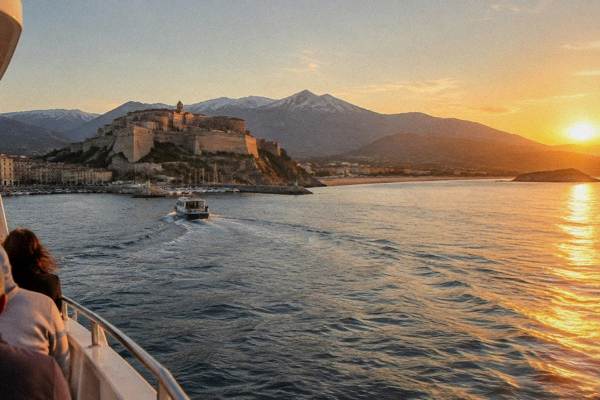
Calvi Citadel
This guide sets out what there is to know about the citadel, the sea trips that leave from Calvi, and how to plan a visit around the wider region.
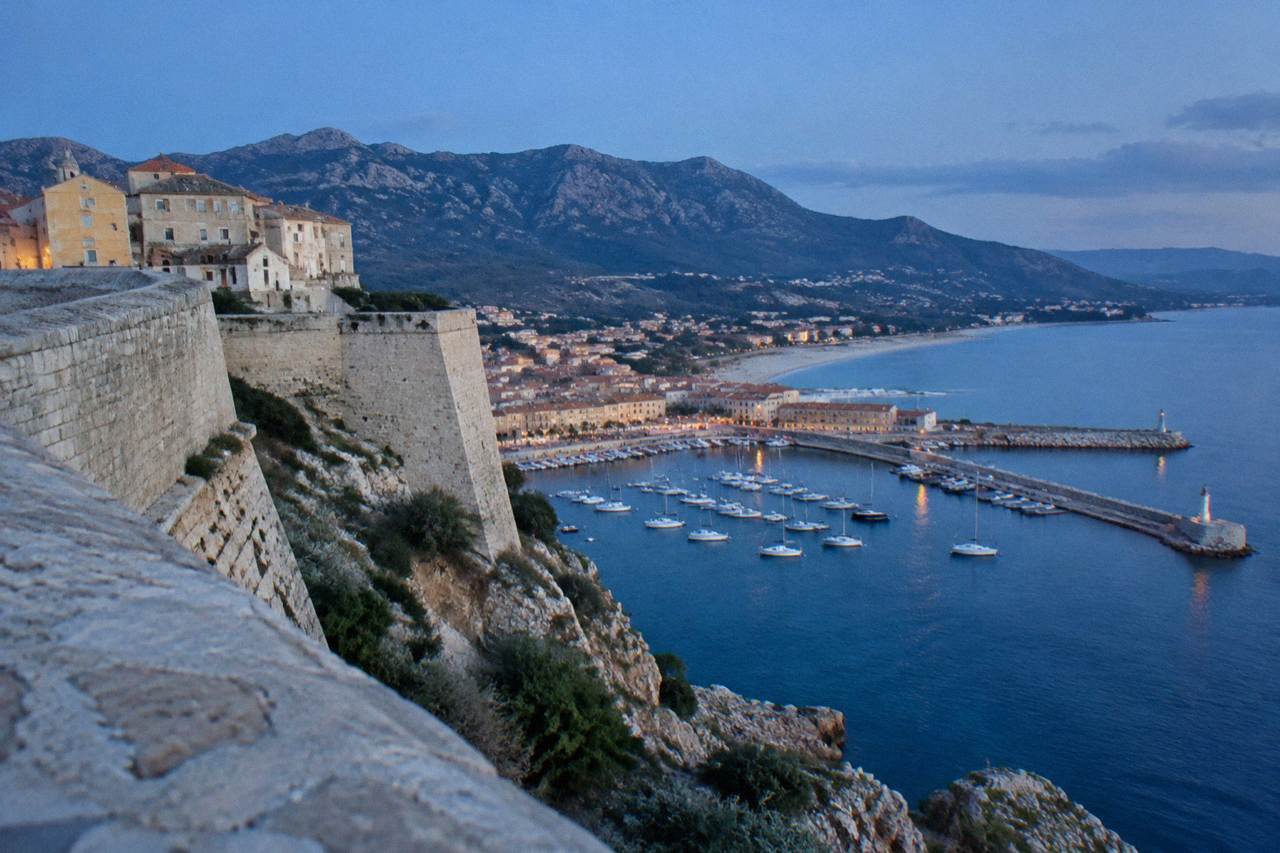
The Calvi Citadel is the fortified upper town of Calvi, a ferry and marina port in the Balagne, on the northwest coast of Corsica. Reach it via Calvi Sainte-Catherine airport, the port or the Balagne coastal train line to L'Île-Rousse, and pair it with boat trips on the Gulf of Calvi toward the Scandola Reserve and the Revellata peninsula.
Calvi is a coastal town in the Balagne, on the northwest coast of Corsica, the French Mediterranean island of 8,722 km2 with more than 1,000 km of coastline. The citadel is the town's fortified quarter, and the harbour below it is one of the island's working ports, with a marina and ferry traffic. The town also gives its name to the surrounding gulf, the Gulf of Calvi, which is the departure point for a dense cluster of boat trips along this stretch of coast, including runs toward the Revellata peninsula and the long crossing to the Scandola Nature Reserve.
This page gathers what is known about the citadel and the town around it. Corsica's citadel towns are a set, and Calvi belongs alongside Corte, Bastia and Bonifacio, each with its own character and its own practicalities. The Corsica Travel Guide covers all of them, and this article links to the sibling pages where each one is treated in depth.
What Is The Calvi Citadel In Corsica?
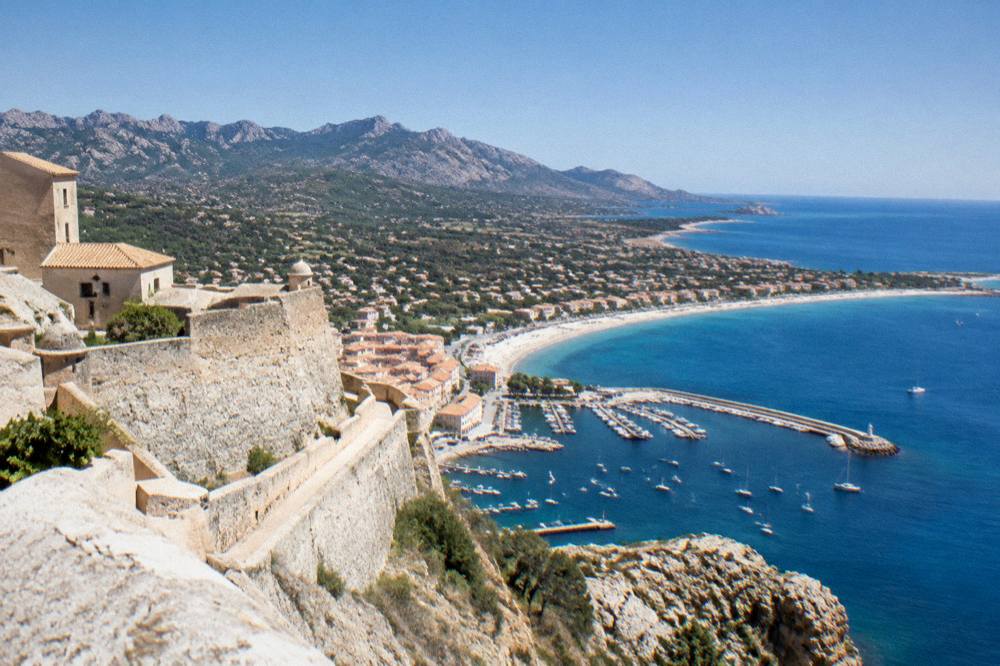
The Calvi Citadel is the walled fortification that crowns the town of Calvi, a port on the northwest coast of Corsica in the Balagne region, and it is the structural landmark around which the town, the marina and the seafront are laid out. The citadel quarter and the harbour sit together at the edge of the Gulf of Calvi, from which scheduled boat trips run along the coast. Calvi is also one of Corsica's ferry ports and airport towns.
The citadel is the reason Calvi reads as one of Corsica's fortified towns rather than simply a beach resort. The town combines three layers that matter to a visitor: the walled quarter itself, the harbour and marina below it, and the beaches and headlands of the gulf on either side. No entry fee, opening schedule or founding date is attached to the Calvi Citadel, so this guide concentrates on where the town sits, how it is reached, and what leaves its port.
The Balagne, the region around Calvi, is one of Corsica's named areas, running along the northwest coast toward L'Île-Rousse. The Calvi and the Balagne area guide covers the coast, the hilltop villages inland and the beaches between the two towns. The citadel is the anchor point for almost any route through the region, because the harbour beneath it is where the boats leave from and the coastal railway ends up.
Calvi's position also puts it within reach of the Gulf of Porto, the UNESCO-inscribed stretch of Corsica's west coast. The property, formally "Gulf of Porto: Calanche of Piana, Gulf of Girolata, Scandola Reserve", was inscribed in 1983 and covers 11,800 ha. From Calvi, the sea route toward Scandola is a long one, and it is covered below in the section on boat trips.
Where Is The Calvi Citadel And How Do You Get There?
Calvi sits on Corsica's northwest coast in the Balagne, and the town is served by Calvi Sainte-Catherine airport (CLY), one of Corsica's four airports, by ferry connections through the region's ports, and by the Balagne coastal train line between Calvi and L'Île-Rousse, reported as one of the Chemins de fer de la Corse routes. Corsica's rail network also links Ajaccio and Bastia via Corte, and Ponte-Leccia to Calvi.
The four airports of Corsica are Ajaccio Napoléon Bonaparte (AJA), Bastia Poretta (BIA), Figari Sud Corse (FSC) and Calvi Sainte-Catherine (CLY). Calvi's own airport is the smallest anchor of the set, and the Calvi airport guide covers it in detail. Travellers who cannot fly into CLY usually arrive at Ajaccio or Bastia and cross the island by road or rail; Inforoutes Corse publishes live road conditions and accessibility levels for the main mountain passes, which matters on Corsica's narrow interior roads.
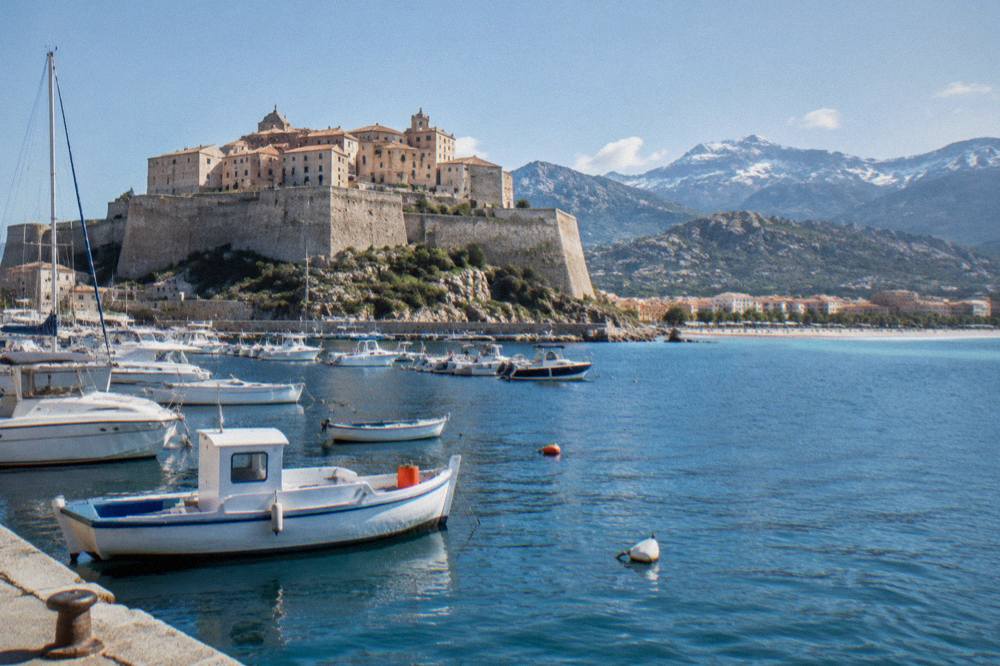
The rail detail is worth a separate line. The Chemins de fer de la Corse operate three lines: Ajaccio to Bastia via Corte, Ponte-Leccia to Calvi, and the Balagne coastal line between Calvi and L'Île-Rousse, which hugs the shore. The coastal line is the one that serves the Calvi end of the Balagne directly, and it is described in the sources as the tramway-style service of that stretch. Anyone planning to ride it should check current timetables with the operator, since schedules change by season and the sources here do not carry journey times.
The table below puts Calvi's transport anchors in one place.
| Transport | Serves Calvi | Detail |
|---|---|---|
| Calvi Sainte-Catherine airport (CLY) | Yes | One of Corsica's four airports, with AJA, BIA and FSC |
| Chemins de fer de la Corse, Ponte-Leccia to Calvi line | Yes | Reported as one of the island's three rail lines |
| Balagne coastal line, Calvi to L'Île-Rousse | Yes | Coastal service along the Balagne shore |
| Ferry ports of Corsica | Regional | Ajaccio, Bastia, Bonifacio, L'Île-Rousse, Propriano, Porto-Vecchio |
| Inforoutes Corse | Island-wide | Live road status and pass accessibility levels |
For arrivals from the mainland, Corsica Linea sails Marseille to L'Île-Rousse, Bastia, Propriano and Ajaccio, La Méridionale sails Marseille to Ajaccio and Porto-Vecchio, Moby sails Livorno, Genoa and Santa Teresa Gallura routes, and Corsica Ferries is reported to sail from Toulon and Nice to several Corsican ports and from Livorno and Savona to Bastia. L'Île-Rousse, the other Balagne port, is the closest named ferry destination to Calvi in the route list.
What Boat Trips Leave From Calvi's Harbour?
Calvi's harbour is the departure point for boat trips along the Gulf of Calvi, including a four-hour boat tour toward the Scandola Nature Reserve, a two-hour sunset cruise to the Revellata peninsula, snorkelling trips at the edge of the Revellata marine reserve, and an introductory dive with an instructor. Farther along the coast, operators run from Porto, Cargèse, Sagone and Ajaccio into Scandola and the Calanques de Piana.
The sea is the point of Calvi. The reserve at the far end of the run, Scandola, was the first nature reserve created in Corsica, by ministerial order of 9 December 1975, and it is managed by the Parc naturel régional de Corse. Its land area is closed to the public: visits are by boat only, with no landing in the integral reserve, daytime anchoring allowed outside the integral reserve and the Gargalu channel, and no recreational line or spear fishing. That rule set is what makes the guided boat format the standard way to see it.
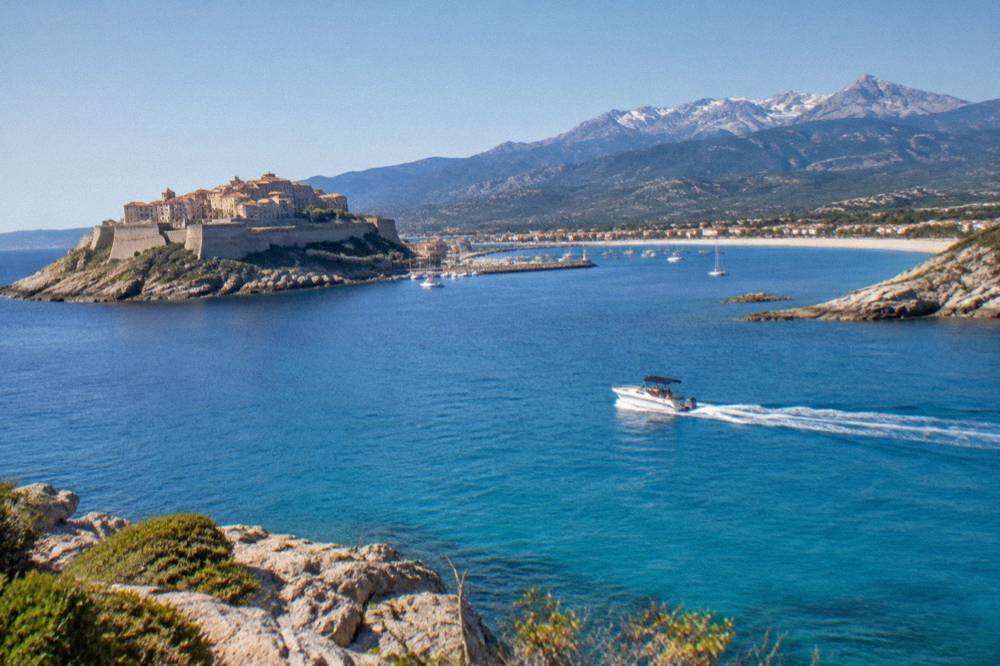
The Calvi to Girolata and Scandola day trip guide covers the long western run in full, and the Scandola Nature Reserve page and Girolata page treat the reserve and the only sea-access village on that coast. The UNESCO listing that covers Scandola also covers the Calanche of Piana, and the Calanques de Piana sit at the southern end of the same gulf.
Closer to home, the Revellata peninsula trips stay inside or beside the Gulf of Calvi itself. Those are the short options: a sunset run, a snorkelling trip at the edge of the marine reserve, and a beginner dive with an instructor.
Between the citadel and the sea, the pattern is simple: the harbour is where the day's options are, and the town's food and wine walks fill the evenings. The full island-wide set of activities is on the things to do in Corsica page.
How Does The Calvi Citadel Compare With Corsica's Other Citadels?
Calvi's citadel charges no fee and has no published hours. Corte's citadel, by contrast, is ticketed with the Musée de la Corse at EUR 5.50 full, EUR 4 reduced and EUR 3 for over-65s. Bastia's Musée de Bastia reports hours only, and Bonifacio's Escalier du Roi d'Aragon has 189 steps with a fee of about EUR 5.
Corte is the instructive comparison, because it is the one where the sources are richest. Corte is Corsica's old capital and sits inland, in the island's mountainous interior, with road times of one hour from Bastia, one and a half from Ajaccio and Calvi, two from Porto-Vecchio and two and three quarters from Bonifacio and Propriano. The Citadelle de Corte page carries the full detail. The museum inside it, the Musée de la Corse, charges EUR 5.50 full, EUR 4 reduced and EUR 3 for over-65s and young people, and one ticket covers both museum and citadel.
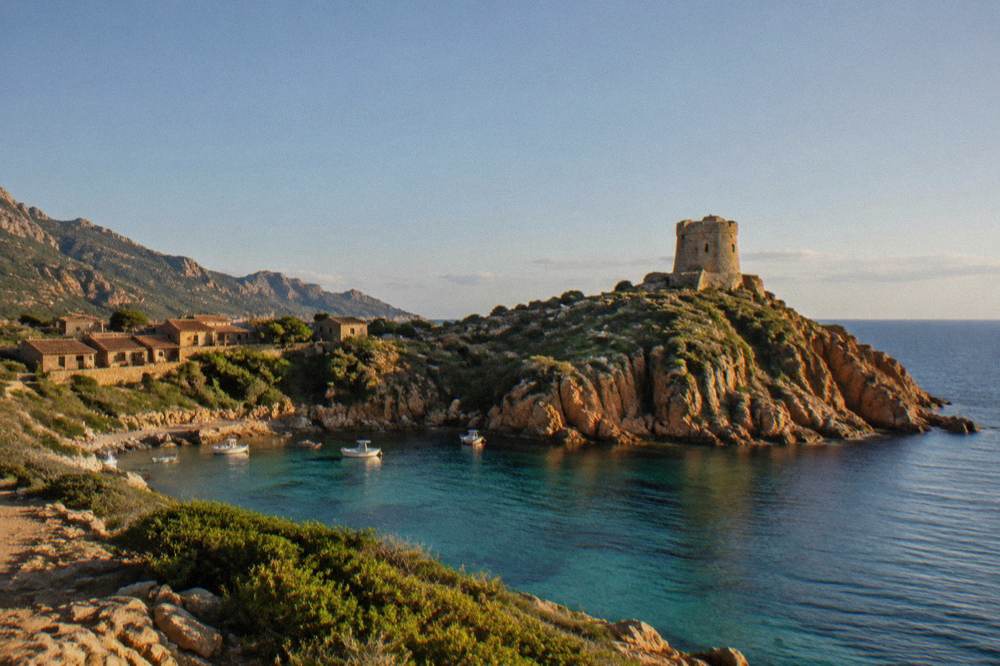
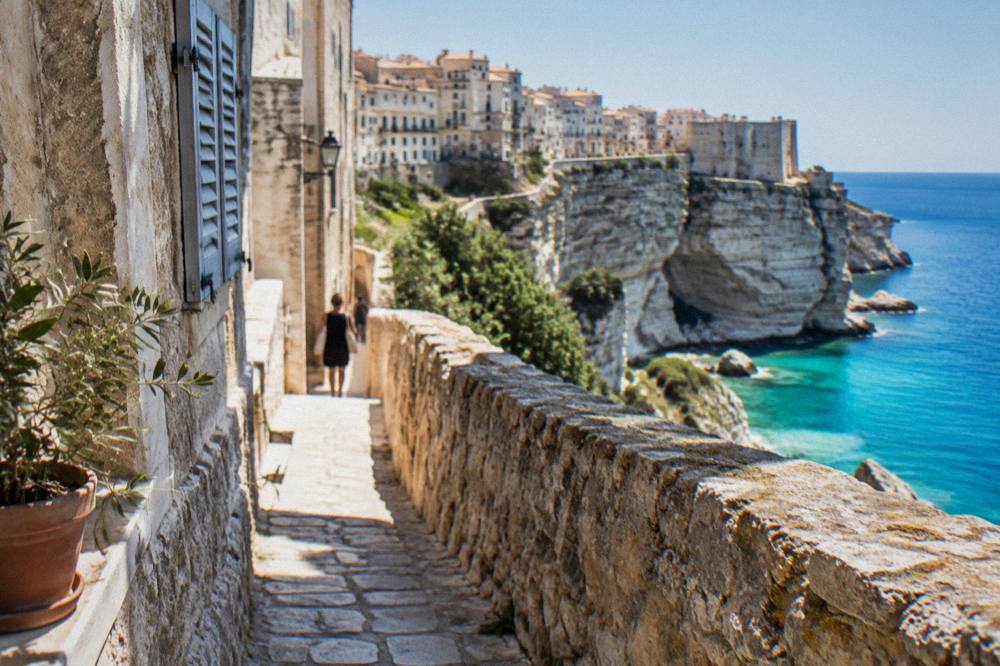
Bastia, the second town of Corsica with 46,867 residents at the 2023 census, keeps its citadel around the Palais des Gouverneurs, and the Citadelle de Bastia and Vieux-Port de Bastia pages cover it. The Musée de Bastia is reported open 10:00 to 18:30 in high season and 09:00 to 12:00 and 14:00 to 17:00 in low season, closed Sundays and Mondays. At the opposite end of the island, the Bonifacio citadel and cliffs stand above the Bouches de Bonifacio, where the Îles Lavezzi sit inside the nature reserve managed by the OEC.
| Fortified sight in Corsica | Entry detail |
|---|---|
| Citadelle de Corte and Musée de la Corse | EUR 5.50 full, EUR 4 reduced, EUR 3 over-65s, one ticket covers both |
| Musée de Bastia, Palais des Gouverneurs | Reported hours only, no fee |
| Escalier du Roi d'Aragon, Bonifacio | 189 steps, fee about EUR 5 and monthly hours reported |
| Calvi Citadel | No fee or hours |
What Else Is There To Do In Calvi And The Balagne?
Beyond wine tasting in the Calvi cru appellation, visitors can tour the hilltop villages behind Calvi and L'Île-Rousse on a small-group day trip, reach the beaches of Saleccia and Lotu in the Désert des Agriates, or pair the Calvi Citadel with Ajaccio's Maison Bonaparte and Palais Fesch.
The wine angle is specific to this coast. Corsica's wine appellations are reported to include Patrimonio, Ajaccio, Vin de Corse with named crus including Calvi, Coteaux du Cap Corse, Figari, Porto-Vecchio and Sartène, and Muscat du Cap Corse, with Nielluccio and Sciaccarellu as red varieties and Vermentinu as the white. A Calvi cruise named among the crus means the Balagne's own vineyards sit inside a recognised appellation, and the wine-tasting tours of the region are the direct way into it.
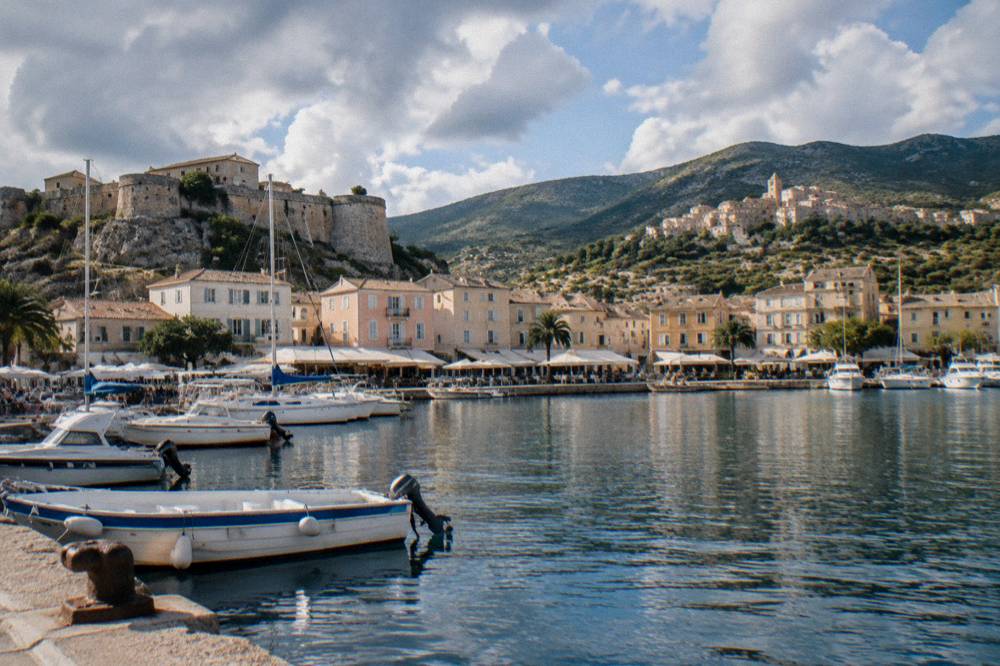
Inland from the coast, the villages of the Balagne sit on the slopes behind Calvi and L'Île-Rousse, and the small-group day trip covers a loop of them in one outing. To the northeast stretches the Désert des Agriates, whose beaches, Saleccia and Lotu, are reached by boat shuttle from Saint-Florent, by 4x4 track from Casta, or on foot, per the reporting on that coast. The Saleccia beach page has the detail, and the jeep tour from Calvi is the overland version of the same trip.
It is introduced here as the related pick for anyone using Calvi as a base and giving the island's capital a day; the full run of Corsica walking and history tours sits on the island page.
Ajaccio is the capital, Napoleon's birthplace and home of 76,320 residents, and its two museums, Maison Bonaparte and the Palais Fesch, are covered on their own pages. If a fortress-to-fortress route appeals, pairing the Calvi Citadel with the Ajaccio history walk and the Palais Fesch, EUR 10 full and EUR 6 over 65, daily 09:00 to 17:00, makes a clean two-town itinerary. The operator's live listing carries the current schedule, and the link below goes straight to it: Check availability.
When Is The Best Time To Visit Calvi In Corsica?
Corsica has a hot, dry summer and a mild, wet winter, per the Météo-France station normals for 1991 to 2020: at Ajaccio, July averages 8.6 mm of rain and August averages a 29.2 °C daily high, while November carries 111.8 mm and the winter months average daily highs near 14 to 15 C. The high mountains take snow, and no month is named as the best one, because that is a traveller's call.
Calvi's own station figures are unavailable, so the island pattern is stated instead. The sea-facing summers are why the boat calendar runs at full strength from the citadel's harbour in July and August, and the fire rules are the other summer reality: from 15 June to 30 September it is forbidden to light a fire or smoke in forests, maquis and massifs, and the UK FCDO notes a high wildfire risk in France from April to October.
| Month | Ajaccio high °C | Ajaccio rain mm | Bastia high °C | Bastia rain mm |
|---|---|---|---|---|
| Jan | 14.0 | 54.1 | 13.8 | 67.3 |
| Apr | 18.5 | 53.1 | 18.3 | 71.6 |
| Jul | 28.6 | 8.6 | 29.4 | 13.8 |
| Aug | 29.2 | 15.8 | 29.8 | 21.1 |
| Oct | 22.8 | 85.7 | 22.0 | 126.5 |
| Nov | 18.3 | 111.8 | 17.7 | 134.3 |
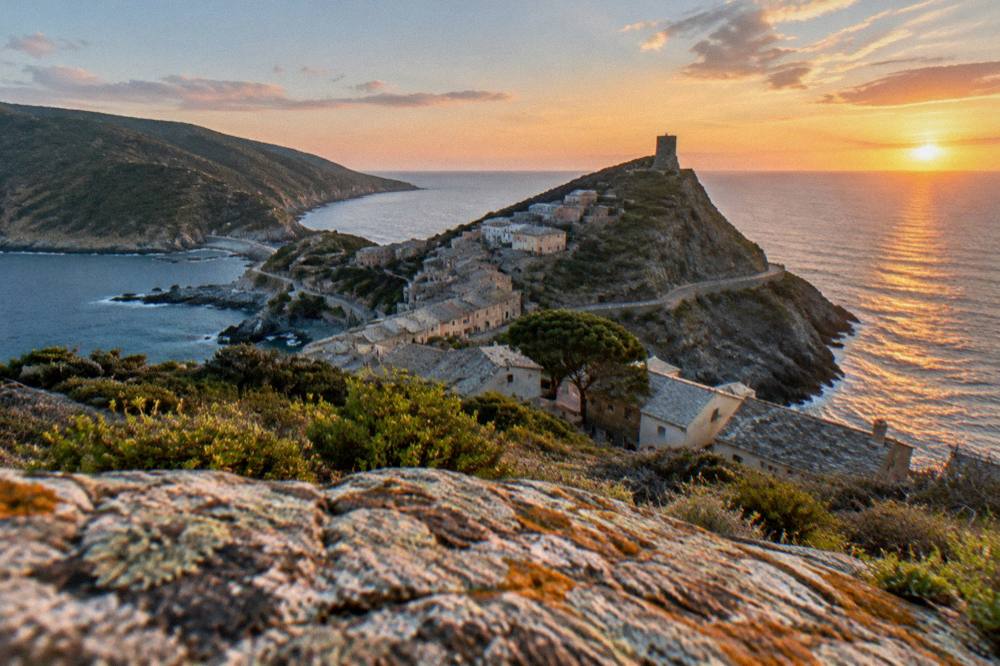
Supervised swimming is a dated, local affair rather than an island-wide guarantee: Ajaccio runs lifeguard posts on its main beaches from 1 July to the end of August 2026, and Haute-Corse beaches are reported as staffed by volunteer firefighters from about 1 July to 31 August. Sea rescue is reached on 196 by VHF channel 16 at sea, and 112 covers everything else. The answers page on whether Calvi is worth visiting takes the seasonal question head on.
What Should You Know Before Visiting The Calvi Citadel?
Practical Corsica basics apply: the currency is the euro, the timezone is Europe/Paris, emergency numbers are 112, 15, 17, 18, 114 and 196 at sea, mountain rescue is the PGHM in Ajaccio on 04 95 24 24 00, restaurant menus must state that service is included, and the US State Department lists France at Level 2, Exercise Increased Caution, per its travel advisory. Tipping beyond the included service is optional, and no island-specific eco-tax or visitor fee is announced.
Getting around the Balagne without a car is possible along the coastal train line and by boat, but the hilltop villages and the Agriate tracks reward wheels. The fire-season massif rules matter for walkers: the fire-risk map is updated at 18:00 for the next day, and from mid-June to mid-September access to some massifs can be restricted. The GR20, Corsica's 180 km north-south mountain traverse of about 15 stages of 4 to 8.5 hours, touches neither Calvi nor the coast, but its refuge system shows how the island manages its busiest trail, and the table below lists the current refuge rates per person.
| GR20 refuge option | Rate per person |
|---|---|
| Bunk (bat-flanc) in a PNRC refuge | EUR 20 |
| Bivouac pitch, own tent | EUR 12 |
| Rented tent for one, pitch and tent | EUR 27 |
| Rented tent for two, two pitches and tent | EUR 39 |
Refuge nights on the GR20 must be booked online, the refuges are guarded from 16 May to 4 October inclusive in 2026, dogs are not allowed inside refuges or rented tents, and wild camping is banned across Corsica, with bivouac only in the marked areas at refuges. None of that applies to a citadel stroll in Calvi, but it frames what the island's rules feel like if a Calvi base turns into something more ambitious inland.
Food is the other practical layer. Corsica's protected products include brocciu, which obtained its appellation d'origine in 1983, the charcuterie cuts prisuttu, lonzu and coppa, which took AOC in 2012 and AOP in 2014, chestnut flour, olive oil, honey and the Clémentine de Corse, and the menus of the Balagne carry them in season. The site's things to do in Corsica page rounds up the food, wine and walking options across the island, including the tours below for travellers basing themselves in Calvi or touring the coast.
Common Questions About The Calvi Citadel
Is The Calvi Citadel Worth Visiting?
The citadel is the walled landmark that defines Calvi, one of Corsica's main coastal towns in the Balagne, and the harbour beneath it is the departure point for the Gulf of Calvi's boat trips. No entry fee or opening schedule for the citadel could be found, so confirm current practicalities locally when you arrive.
How Do I Get To The Calvi Citadel?
Calvi is served by Calvi Sainte-Catherine airport (CLY), one of Corsica's four airports, and by the Balagne coastal train line to L'Île-Rousse, reported as part of the Chemins de fer de la Corse network. Ferry arrivals for the region use the island's ports, with L'Île-Rousse the nearest named port in the route list.
What Boat Trips Leave From Calvi?
Boat trips from Calvi include a tour toward the Scandola Nature Reserve, a sunset cruise to the Revellata peninsula, snorkelling at the edge of the Revellata marine reserve and an introductory dive with an instructor. Prices, ratings and schedules are on the operators' live listings.
Can You Visit Scandola From Calvi?
Yes, by boat. Scandola's land area is closed to the public, visits are by boat only, with no landing in the integral reserve and no recreational line or spear fishing. The run from Calvi is the long way in; Porto, Cargèse and Sagone operators also serve the reserve.
How Does The Calvi Citadel Compare With Corte And Bastia?
Corte's citadel and Musée de la Corse charge EUR 5.50 full on a single ticket covering both, while Bastia's Musée de Bastia inside the Palais des Gouverneurs is reported open 10:00 to 18:30 in high season. No comparable fee is published for Calvi's citadel.
When Is The Best Time To Visit Calvi?
Corsica's summer is hot and dry and its winter mild and wet, per the Météo-France 1991 to 2020 normals: Ajaccio averages a 29.2 °C daily high in August and 111.8 mm of rain in November. No single month is named as best; the boat calendar runs hardest in July and August, and supervised beaches operate mainly in July and August.
A final planning note: the Calvi Citadel rewards a slow base, because the town stacks a fortress quarter, a working harbour, a wine appellation and a train line into one walkable stretch of the Balagne coast, and day trips from its port reach both the Revellata marine reserve and, on the long run, the UNESCO-listed Gulf of Porto. Pair it with Corte's inland citadel for contrast, and the island's fortified story reads complete from one end to the other.