Corsican Language
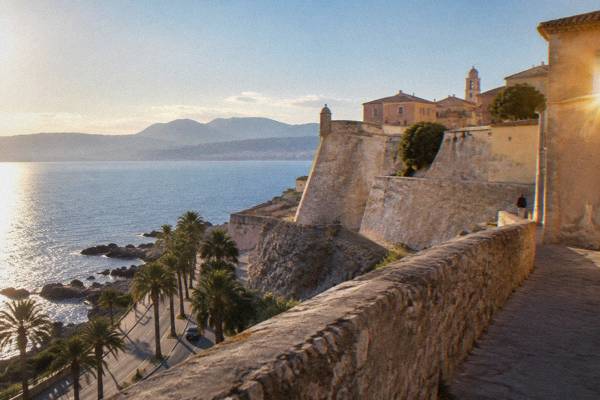
Corsican is the island's own Romance language, heard in the interior villages and printed on trail signs, museum walls and menus across Corsica, and it sits beside French in daily life. This guide explains what it is, how the Collectivité de Corse supports it, and which words a visitor actually meets.
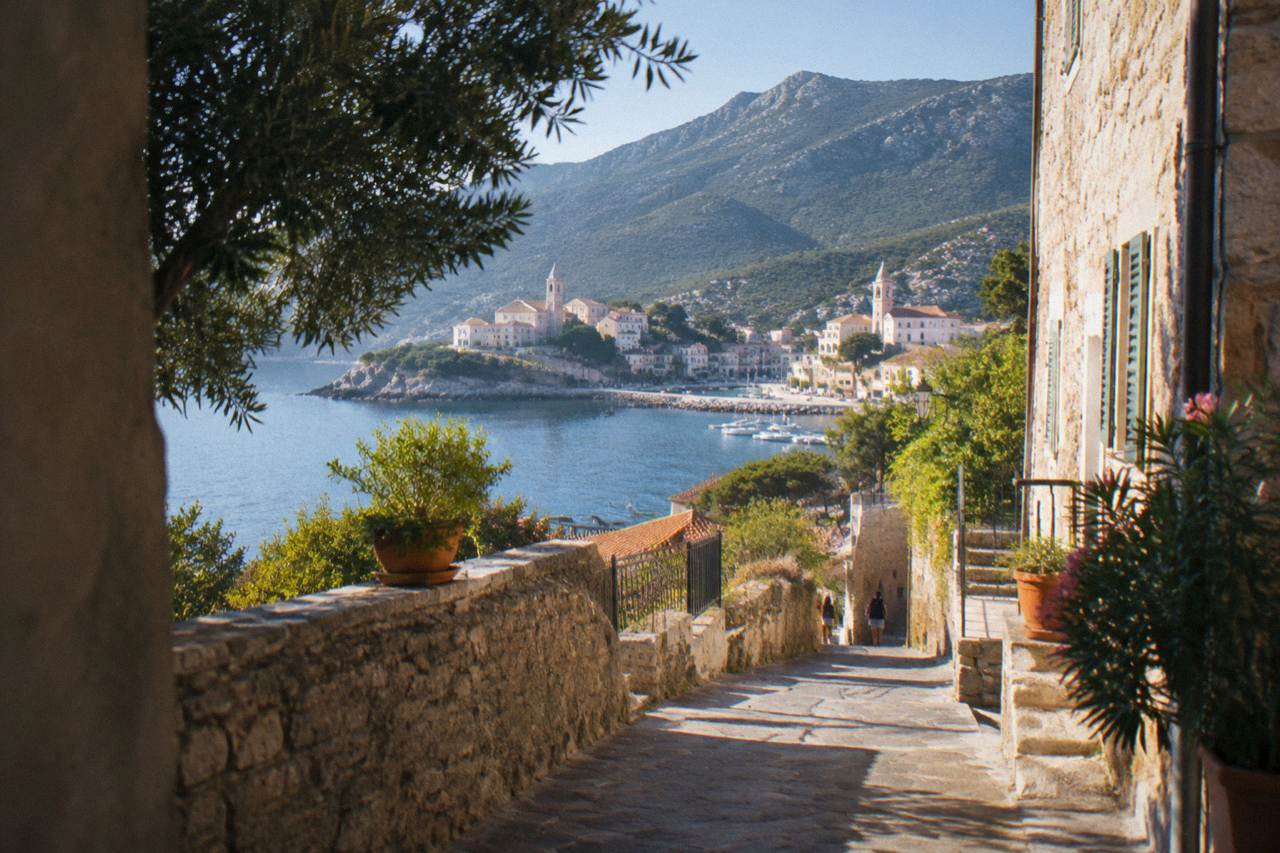
Corsican is a Romance language spoken on the French island of Corsica. French is the language of the state, while the Collectivité de Corse runs Corsican-language programmes such as the Cartula di a lingua corsa and immersion schools. Travelers meet Corsican most often in place names, trail names like GR20 Fra li Monti, food words like brocciu, and the Museu di a Corsica in Corte.
Corsica is a French Mediterranean island of 8,722 km2 with more than 1,000 km of coastline, a mountainous interior crowned by Monte Cinto at 2,706 m, and a population of 365,636 as of 1 January 2026, per the provisional INSEE estimate. It is also an island with its own language. Corsican appears on the trail signs of the GR20, on the menus that list brocciu and figatellu, on the walls of the Museu di a Corsica in Corte, and in the diacritics of names like Sartène and L'Île-Rousse that no traveller can miss. This page from Corsica Travel Guide explains what the language is, how the island's institutions teach and protect it, and where a visitor will actually cross paths with it, from the ferry port to the high refuges.
What Is The Corsican Language?
Corsican is the island's own Romance language, spoken alongside French across Corsica, and it is woven through the island's place names, its food vocabulary, its long-distance trails and its museums. French is the language of the French state to which the island belongs, while Corsican carries the island's own toponymy and culture. The Collectivité de Corse, the island's single territorial authority with special status in place since 1 January 2018 as reported, actively runs Corsican-language programmes.
The Collectivité de Corse runs Corsican-language programmes including the Cartula di a lingua corsa and immersion schools, a fact stated on the Collectivité's own language pages. That institutional backing matters: the language is not a relic kept alive only in songs, it is taught, broadcast and printed with public support. The island's cultural identity shows in its very geography. Corsica is the fourth-largest island in the Mediterranean, divided into Corse-du-Sud and Haute-Corse, with 360 communes, and its two main towns are Ajaccio, with 76,320 residents, and Bastia, with 46,867, both figures from the INSEE 2023 census population.
For a traveller, the practical entry point is the written word. Village signs, shopfronts and museum panels carry names such as Cargèse, Sartène and L'Île-Rousse with their accents intact, and the long-distance paths are named in Corsican, from Fra li Monti, the GR20's own name, to the Mare a Mare and Mare e Monti routes. Anyone planning walks should read the companion page on hiking trails across Corsica, which lists those routes with their official lengths.
How Is The Corsican Language Taught In Corsica?
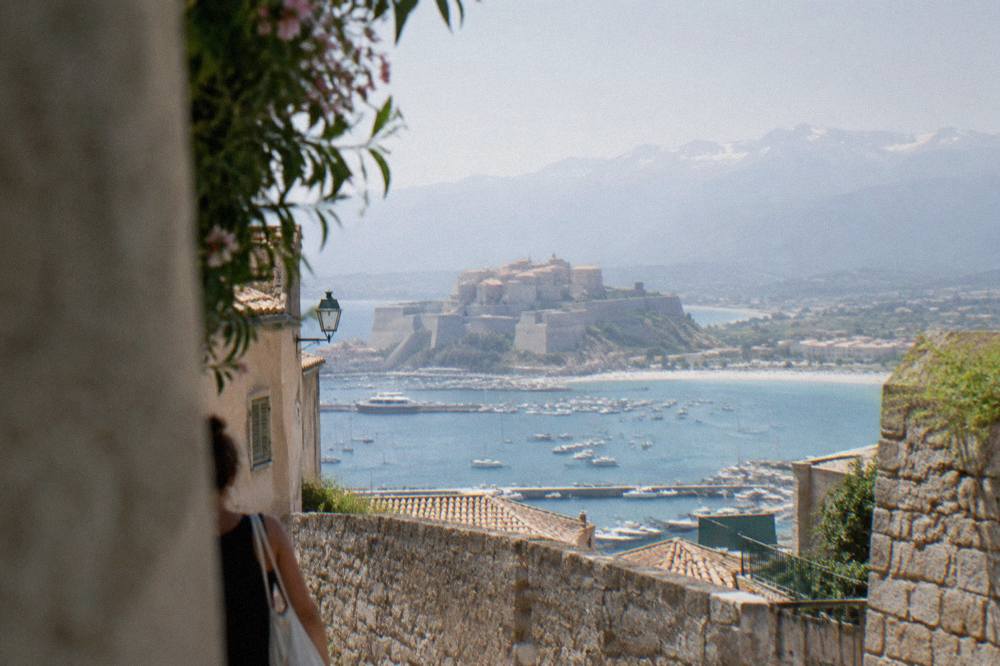
The Collectivité de Corse runs dedicated Corsican-language programmes, including the Cartula di a lingua corsa and immersion schools where pupils are taught through Corsican, and these programmes are described on the Collectivité's own language pages. Corsican is therefore present in the island's education system by public decision, not by private initiative alone. The same authority has managed the island's affairs as a single territorial collectivity since 1 January 2018.
The institutional story matters for understanding why the language is so visible. The island's population of 365,636 is spread across two departments, Corse-du-Sud with about 175,100 residents and Haute-Corse with about 190,500, per INSEE 2026 estimates, and the language programmes run island-wide rather than in one corner. A visitor sees the results in public signage and in the bilingual character of cultural institutions such as Corte's museum, which is officially the Museu di a Corsica, the Corsican form of its own name.
The museum world makes the point well. The following sites all present the island's story, and their own hours and prices come straight from their official practical-information pages.
| Site | Town | Admission | Hours |
|---|---|---|---|
| Maison Bonaparte | Ajaccio | EUR 10 full, EUR 8 non-EU residents aged 18 to 25 and large families, free for EU residents under 26 | Closed Monday; 1 Jul to 30 Sep 10:00 to 17:30 |
| Palais Fesch | Ajaccio | EUR 10 full, EUR 6 over 65, free up to 18 | Daily 09:00 to 17:00 |
| Museu di a Corsica, Citadelle de Corte | Corte | EUR 5.50 full, EUR 4 reduced, EUR 3 over-65s and young people, one ticket covers museum and citadel | 1 May to 31 Oct daily 10:00 to 19:00, closed 1 May |
| Filitosa | Sollacaro | EUR 9 adults, EUR 7 reduced, EUR 28 family, free under 6 | 1 April to 2 November, 09:00 to sunset |
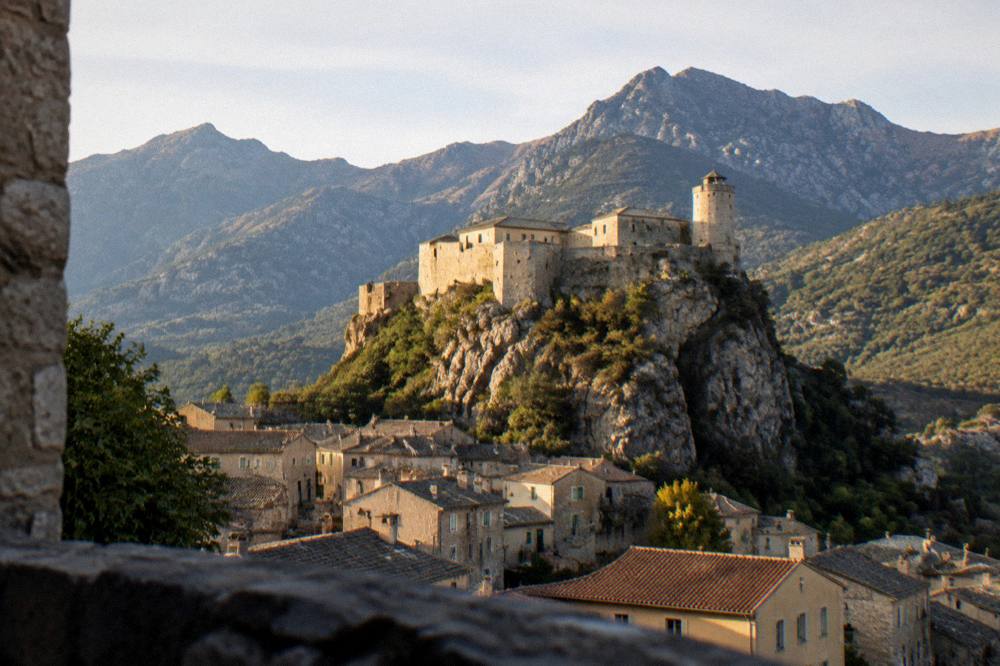
Corte deserves a special mention because it is the old capital and sits inland, and its citadel museum is the single best place on the island to meet Corsican culture under one roof. The day-by-day itineraries for Corsica show how to slot Corte into a route that also covers the coast.
Where Will You See And Hear Corsican Around Corsica?
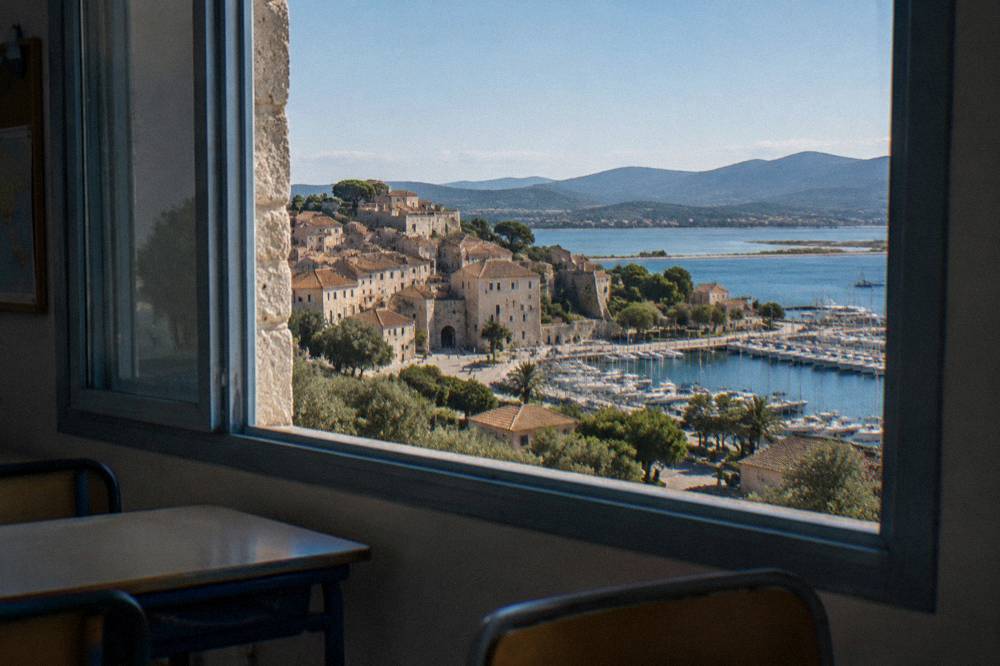
Travelers meet Corsican most often in writing: on village nameplates with their accents, on the panels of the Museu di a Corsica, on trail markers for Fra li Monti and the Mare a Mare routes, and on menus listing brocciu, figatellu and fiadone. The language also lives in the island's protected food names, several of which hold French and EU appellations, so a food market is a language lesson in itself.
Start with the trails, because they are unavoidable. The GR20's own name is Fra li Monti, which the Parc naturel régional de Corse uses on its official GR20 page, and the park's long-distance network includes the Mare a Mare and Mare e Monti families, all Corsican names. The official lengths below come from the PNRC's own brochure.
| Trail | Corsican name family | Length | Days |
|---|---|---|---|
| GR20 | Fra li Monti | 180 km, about 15 stages of 4 to 8.5 hours | About 15 |
| Mare e Monti Nord | Mare è Monti | 121 km | 10 |
| Mare a Mare Nord | Mare à Mare | 139 km, or 161 km with the variant | 8 to 12 |
| Mare a Mare Centre | Mare à Mare | 84 km | 6 to 7 |
| Mare a Mare Sud | Mare à Mare | 73 km | 5 |
| Mare e Monti Sud | Mare è Monti | 66 km | 5 |
Then come the food names, and here the language is backed by law. Brocciu obtained its appellation d'origine in 1983 and its AOC/AOP in 1998, per the visit-corsica.com pages and the isula.corsica documents. The three charcuterie cuts, prisuttu, lonzu and coppa, took AOC in 2012 and AOP in 2014, with the Nustrale pig breed recognised in 2006. Chestnut flour, farina castagnina corsa, has an AOP recognised in 2010, Corsican olive oil, Oliu di Corsica, an AOC effective in 2004, and Corsican honey, Mele di Corsica, an AOC in 1998. These words appear on every serious menu, and the page on Corsican food and what to eat collects them for travellers who want to order with confidence.
Which Corsican Words Appear On Menus And In Shops In Corsica?
The core menu words are brocciu, the island's protected whey cheese, the charcuterie trio of prisuttu, lonzu and coppa, the sweets fiadone and canistrelli, and the chestnut flour farina castagnina corsa, which all appear on menus and shop shelves across Corsica. Each of the main ones is tied to a registered appellation, so the word on the menu is also a legal label. Understanding roughly a dozen terms covers most of a Corsican menu.
The appellations give the vocabulary real weight. A menu that lists brocciu is referring to a cheese whose name has been protected since 1983, when it obtained its appellation d'origine. A plate of charcuterie names three cuts protected since 2012 at AOC level and 2014 at AOP level. A bag of chestnut flour carries the farina castagnina corsa AOP recognised in 2010, and a jar of honey the Mele di Corsica appellation from 1998. Even the island's clémentine has its own IGP, obtained in 2007, with a Label Rouge in 2014.
| Corsican word | What it is | Protection |
|---|---|---|
| brocciu | Whey cheese | Appellation d'origine 1983, AOC/AOP 1998 |
| prisuttu | Dry-cured ham | AOC 2012, AOP 2014 |
| lonzu | Cured pork loin | AOC 2012, AOP 2014 |
| coppa | Cured pork shoulder | AOC 2012, AOP 2014 |
| farina castagnina corsa | Chestnut flour | AOP 2010 |
| Oliu di Corsica | Olive oil | AOC effective 2004 |
| Mele di Corsica | Honey | AOC 1998 |
| Clémentine de Corse | Clementine | IGP 2007, Label Rouge 2014 |
Wine has its own vocabulary of place names. The island's appellations, as listed by visit-corsica.com, include Patrimonio, Ajaccio, Vin de Corse with its named crus such as Calvi, Coteaux du Cap Corse, Figari, Porto-Vecchio and Sartène, and Muscat du Cap Corse, and the main grape varieties are Nielluccio and Sciaccarellu for reds and Vermentinu for whites. The words to learn first are the grape names, because they appear on labels everywhere from the Balagne to Patrimonio.
How Do Corsican Place Names Help You Navigate The Island?
Corsican place names carry diacritics and spellings a traveller must copy exactly, from L'Île-Rousse and Sartène to Cargèse and the Désert des Agriates, and the island's geography sits inside those names: the Mare a Mare trails cross from sea to sea, Fra li Monti runs ridge to ridge, and the interior towns such as Corte hold the old Corsican forms. Copying the accented form into a mapping tool is the difference between finding a place and not.
The diacritics matter practically. A search for Sartène without its grave accent can fail; the Î of L'Île-Rousse and the accents of the Îles Lavezzi and the Forêt d'Aïtone are part of the address. The same care applies to the natural sites: the Calanques de Piana, the Aiguilles de Bavella, the Gorges de la Restonica and the Gorges de Spelunca all carry their French or Corsican forms on signs, and the UNESCO property is formally the "Gulf of Porto: Calanche of Piana, Gulf of Girolata, Scandola Reserve", inscribed in 1983.
A planning map of the island's main bases helps place the names. Corte is the inland old capital, with road times of about 1 hour from Bastia, 1 hour 30 from Ajaccio and Calvi, 2 hours from Porto-Vecchio and 2 hours 45 from Bonifacio and Propriano, per the Corte museum's own practical page. The full island map and orientation guide shows the same geography visually.
| Named place | Form to copy | Where it sits |
|---|---|---|
| L'Île-Rousse | With the accent and apostrophe | Balagne coast, north-west |
| Sartène | With the grave accent | South-west interior |
| Cargèse | With the acute accent | West coast, south of Piana |
| Désert des Agriates | With the accents | North coast, Saint-Florent hinterland |
| Îles Lavezzi | With the circumflex | South of Bonifacio |
| Forêt d'Aïtone | With both diacritics | Near Evisa, inland from Porto |
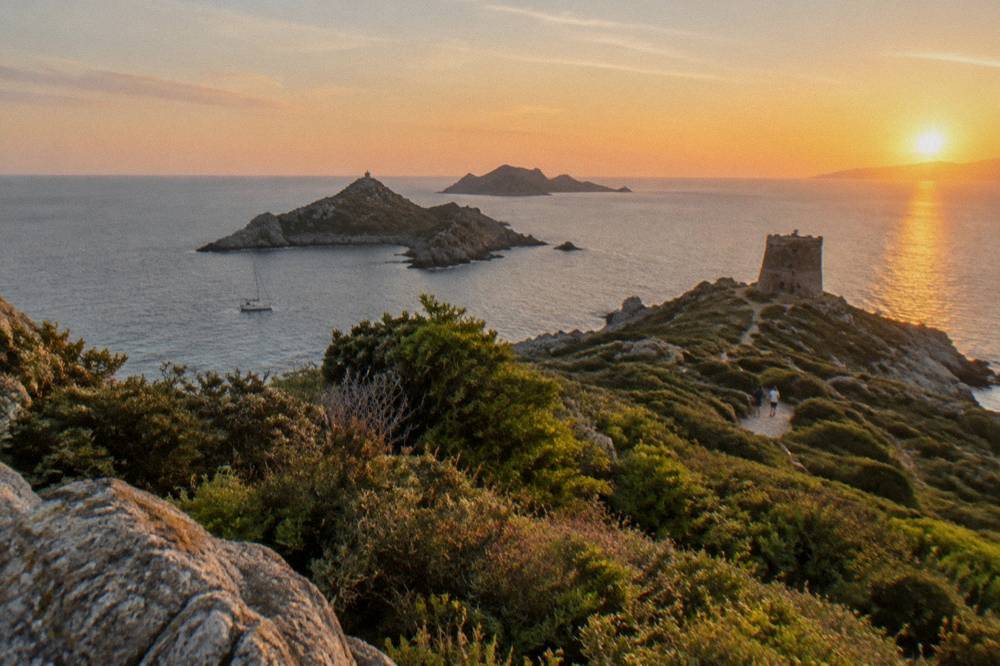
Language aside, the island rewards slow evenings, and the Valinco sunset tour pairs a Corsican rosé with the coast of the Golfe de Valinco near Propriano. The related tour can be checked directly: Check availability.
Which Museums In Corsica Present The Island's Language And Culture?
The Museu di a Corsica inside the Citadelle de Corte is the island's cultural museum and carries a Corsican name, and one EUR 5.50 ticket covers both museum and citadel, per the museum's own practical page. In Ajaccio, Maison Bonaparte costs EUR 10 and Palais Fesch EUR 10, both open daily except that Maison Bonaparte closes Mondays. Together these three sites give the fullest picture of the island's history and its language in context.
Corte is the natural anchor. It is the island's old capital, it sits inland, and its citadel museum states its hours plainly: daily 10:00 to 19:00 from 1 May to 31 October, closed 1 May, then 10:00 to 17:00 in the low season except Sundays, Mondays, holidays and 24 December, with an annual closure from 31 December to 14 January. Ajaccio adds Maison Bonaparte, the national museum on Rue Saint-Charles, 200 m from the bus station and ferry terminal, and Palais Fesch, open daily 09:00 to 17:00 with EUR 6 admission for over-65s and free entry up to 18.
For travellers arriving by air, the island has four airports, Ajaccio Napoléon Bonaparte (AJA), Bastia Poretta (BIA), Figari Sud Corse (FSC) and Calvi Sainte-Catherine (CLY), all covered in the guide to Corsica's airports. Ferry arrivals are equally multilingual in their own way: Corsica Linea, La Méridionale, Moby and Corsica Ferries all serve the island's ports, and the ferry guide for Corsica explains the routes.
Does The Corsican Language Show Up On The GR20 And Other Trails?
Yes, and unavoidably so: the GR20's own name is Fra li Monti, the Parc naturel régional de Corse uses that name on its official trail page, and the park's other long routes carry the Corsican names Mare a Mare and Mare e Monti, which describe exactly what they do, crossing from sea to sea or linking sea and mountains. Even the refuges and stage names a hiker books are Corsican forms.
The PNRC's 2026 season runs its guarded refuges from 16 May to 4 October inclusive, with booking mandatory and online only. The 2026 rates, published by the park, are EUR 20 per person for a refuge bunk, EUR 12 for a bivouac pitch with your own tent, EUR 27 for a rented one-person tent package and EUR 39 for a two-person package. Dogs are not allowed inside refuges or rented tents, and there are no GR20 departures from Calenzana after 11:00 under a municipal fire-risk order.
| Option on the GR20 | 2026 PNRC rate per person |
|---|---|
| Refuge bunk (bat-flanc) | EUR 20 |
| Bivouac pitch, own tent | EUR 12 |
| Rented tent, 1 person | EUR 27 |
| Rented tent, 2 persons | EUR 39 |
The detailed planning resource is the complete GR20 guide, which walks through booking and staging. Wild camping is banned across the island, with bivouac allowed only in the marked areas at refuges, and from 15 June to 30 September it is forbidden to light a fire or smoke in forests, maquis and massifs, rules the PNRC states on the same page.
What Should Language-Savvy Travelers Know About Corsican Weather And Timing?
The Météo-France 1991-2020 station normals for Ajaccio show a hot, dry summer and a mild, wet winter: July averages 8.6 mm of rain and August a mean daily high of 29.2 °C, while November carries 111.8 mm of rain, and the high mountains take the snow. Any month choice is a trade-off between those figures, not a single best answer, and the language-related sites, Corte's museum in particular, keep long summer hours that fit the July to October pattern.
The full monthly picture at Ajaccio helps with planning, and every figure below is a Météo-France station normal for 1991-2020.
| Month | Mean high °C | Mean low °C | Rain mm |
|---|---|---|---|
| Jan | 14.0 | 4.7 | 54.1 |
| Mar | 16.0 | 5.9 | 50.4 |
| May | 22.1 | 11.8 | 49.8 |
| Jul | 28.6 | 17.7 | 8.6 |
| Sep | 26.1 | 15.4 | 57.8 |
| Nov | 18.3 | 9.0 | 111.8 |
Bastia, the island's second town with 46,867 residents, follows a similar pattern with November averaging 134.3 mm of rain. The month-by-month breakdown, including sunshine hours, is in the Corsica weather by month guide, and the seasonal trade-offs are weighed in when to visit Corsica.
How Does Corsican Culture Reach The Coast And The Sea?
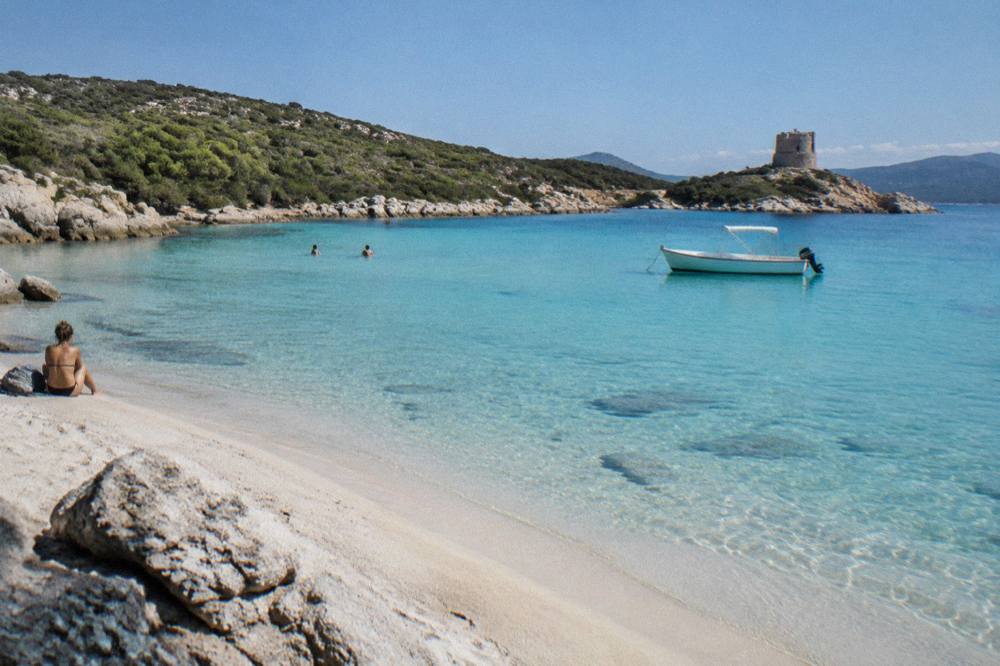
Corsican is an island culture, and the sea is part of it: the island's protected reserves carry names such as Scandola, the Bouches de Bonifacio Nature Reserve that holds the Îles Lavezzi, and the Îles Sanguinaires off Ajaccio, while boat operators, from the Golfe de Valinco to Bonifacio, work these waters daily. The language's world is not limited to the mountains, it frames the coastline too, with more than 1,000 km of it.
The numbers behind that coast are substantial. The UNESCO property "Gulf of Porto: Calanche of Piana, Gulf of Girolata, Scandola Reserve" covers 11,800 ha and was inscribed in 1983, and the Scandola reserve itself, created by ministerial order on 9 December 1975 as the first nature reserve in Corsica, spans 1,000 ha of sea and 919 ha of land with a 70 ha integral reserve, managed by the PNRC. Its land area is closed to the public, and visits are by boat only. The Îles Lavezzi sit inside the Bouches de Bonifacio Nature Reserve, managed by the OEC.
Beachgoers will meet Corsican and French place names all along the shore, and the guide to Corsica's beaches covers them one by one, from Palombaggia and Santa Giulia to Saleccia and Lotu, the latter reached by boat shuttle from Saint-Florent, by 4x4 track from Casta or on foot.
Common Questions About The Corsican Language
What Language Do They Speak In Corsica?
French is the language of public life on the island, and Corsican, the island's own Romance language, is spoken alongside it, taught in immersion schools and supported by Collectivité de Corse programmes such as the Cartula di a lingua corsa. Place names, trails and menus mix the two throughout the island.
Is Corsican The Same As Italian?
Corsican is a Romance language with its own vocabulary, orthography and protected food names, distinct from Italian. The island's own institutions treat it as the island's language, and its written forms, from Fra li Monti to farina castagnina corsa, follow Corsican spelling rather than Italian conventions.
Will I Hear Corsican As A Tourist In Corsica?
Mostly you will see it. Trail markers for the GR20, named Fra li Monti, the Mare a Mare and Mare e Monti routes, village nameplates such as Sartène and L'Île-Rousse, the Museu di a Corsica in Corte and menus listing brocciu, lonzu and coppa all carry the language in daily view.
What Does Mare A Mare Mean?
The name describes the route: the Mare a Mare trails cross the island from sea to sea. The PNRC brochure gives Mare a Mare Centre as 84 km from Ghisonaccia to Porticcio, Mare a Mare Nord as 139 km and Mare a Mare Sud as 73 km, ending in Propriano.
Are Corsican Food Words Protected By Law?
Several are. Brocciu obtained its appellation d'origine in 1983 and its AOC/AOP in 1998, prisuttu, lonzu and coppa hold AOP status since 2014, chestnut flour farina castagnina corsa has an AOP from 2010, and Mele di Corsica an AOC from 1998.
Where Is The Best Place To Learn About Corsican Culture?
The Museu di a Corsica inside the Citadelle de Corte, where a EUR 5.50 ticket covers both museum and citadel, per the museum's practical page. Ajaccio's Maison Bonaparte, EUR 10, and Palais Fesch, EUR 10, add the island's Napoleonic and art history in the capital.
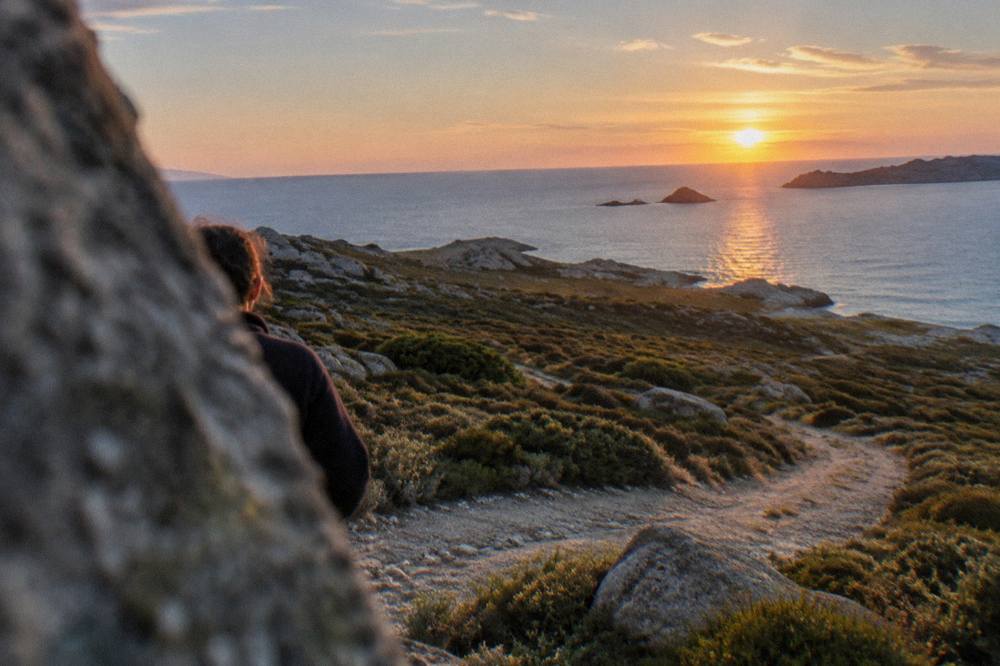
The Corsican language rewards a little preparation. Learn a dozen menu words, copy the accented place names exactly, and read the trail markers as part of the landscape, and the island opens a layer that tends to be skipped. Pair that with a museum afternoon in Corte and a sunset on the water, and the language stops being background and becomes the trip's quiet soundtrack.