Corsica Travel Tips
Corsica is a French Mediterranean island of 8,722 km2, more than 1,000 km of coastline and a mountainous interior that rises to Monte Cinto at 2,706 m, and planning around its ferries, mountain roads and summer fire rules makes any trip smoother.
Fly into Ajaccio, Bastia, Figari or Calvi, or take a ferry from Marseille, Toulon, Nice or Italy; hire a car for the interior and coast roads; respect the 15 June to 30 September fire ban; book GR20 refuges online in advance.
Corsica is a French Mediterranean island with sea on every side: 8,722 km2 of territory, more than 1,000 km of coastline and a mountainous interior that tops out at Monte Cinto at 2,706 m. The population, at the provisional INSEE estimate of 1 January 2026, is 365,636, and more than 8.5 million passengers passed through the island's ports and airports in 2025. Those two numbers explain most of what follows. This is a small island that a lot of people want to be on in July and August, with a road network built around mountains rather than straight lines.
What Should You Know About Corsica Before You Go?
Corsica is a single territorial collectivity with special status, the Collectivité de Corse, which since 1 January 2018 has replaced the former collectivity and the two departmental councils, and it spans the departments of Corse-du-Sud and Haute-Corse. It covers 8,722 km2, holds 360 communes, and its Parc naturel régional de Corse, created in 1972, now stretches across 4,484 km2 including the Castagniccia and valleys that run down to the sea. The capital is Ajaccio, with 76,320 residents; Bastia, with 46,867, is the second town. The currency is the euro, the timezone is Europe/Paris, and the language of daily life is French, with the Collectivité running Corsican-language programmes such as the Cartula di a lingua corsa and immersion schools.
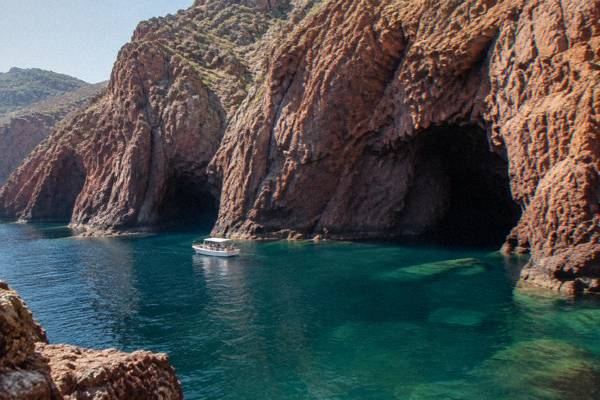
What surprises first-time visitors is the scale of the mountain block in the middle. Monte Cinto at 2,706 m is the highest summit, and the interior towns such as Corte, the island's old capital, sit well inland. Only that interior is inland: everywhere else the site's topics run to beaches, coves, ports and boat trips. The UNESCO property "Gulf of Porto: Calanche of Piana, Gulf of Girolata, Scandola Reserve", inscribed in 1983, sits on the west coast, and the Scandola reserve itself, created by ministerial order of 9 December 1975 as the first nature reserve in Corsica, spans 1,000 ha of sea and 919 ha of land. For a first orientation, the Corsica map and region overview and the site's first-time visitor guide are the natural starting points, and the root things to do in Corsica page lists the full range of activities.
How Do You Get To Corsica?
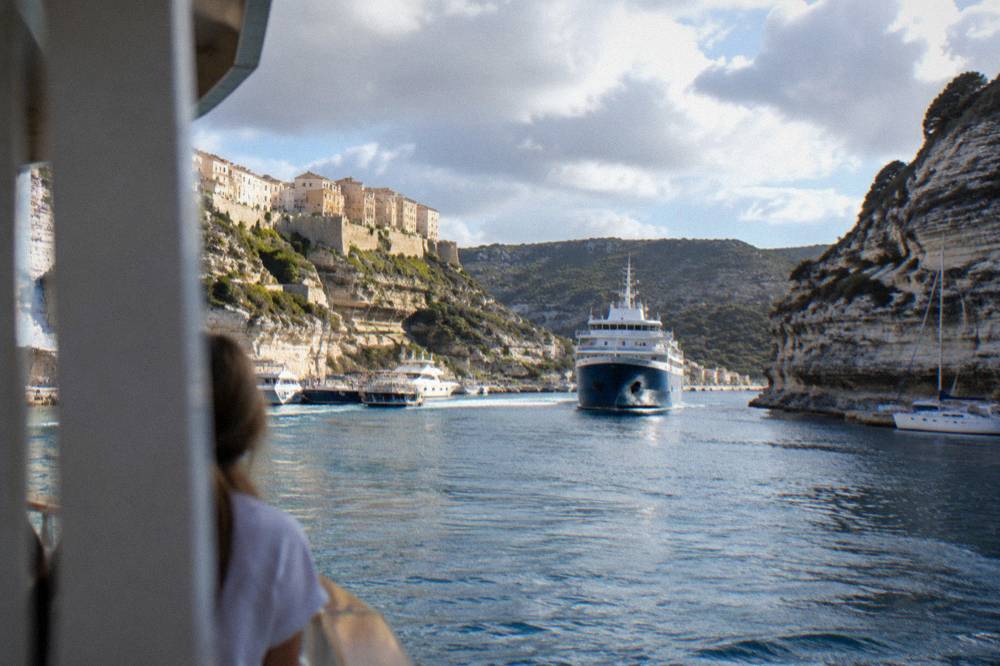
Corsica has four airports, Ajaccio Napoléon Bonaparte (AJA), Bastia Poretta (BIA), Figari Sud Corse (FSC) and Calvi Sainte-Catherine (CLY), and ferry ports including Ajaccio, Bastia, Bonifacio, L'Île-Rousse, Propriano and Porto-Vecchio, served by Corsica Linea, La Méridionale, Moby, Ichnusa Lines and Corsica Ferries from Marseille, Toulon, Nice, Livorno, Genoa, Savona and Santa Teresa Gallura. Corsica Linea sails Marseille to L'Île-Rousse, Bastia, Propriano and Ajaccio; La Méridionale sails Marseille to Ajaccio and Porto-Vecchio; Moby sails Livorno to Bastia, Genoa to Bastia and Santa Teresa Gallura to Bonifacio, the last route kept by Moby and Ichnusa Lines after Sardinia found no rival operator. Corsica Ferries, per its own route listing, sails from Toulon and Nice to Ajaccio, Bastia, L'Île-Rousse, Porto-Vecchio and Propriano, and from Livorno and Savona to Bastia.
Crossing times reported by the aggregator ferrygogo.fr run in ranges: Santa Teresa Gallura to Bonifacio about 50 to 60 minutes, Livorno to Bastia about 4 to 5 hours, Savona to Bastia about 6.5 hours, Nice to Bastia about 7.5 to 10 hours, Toulon crossings about 10 to 13 hours and Marseille crossings about 12 to 13 hours, often overnight. Treat those as planning ranges and confirm the sailing you actually book. The detailed write-ups on flights to Corsica, the Corsica airports guide, the ferry to Corsica guide and the Nice to Corsica ferry page carry the port-by-port detail, and the Corsica to Sardinia ferry page covers the short southern hop.
Do You Need A Car In Corsica?
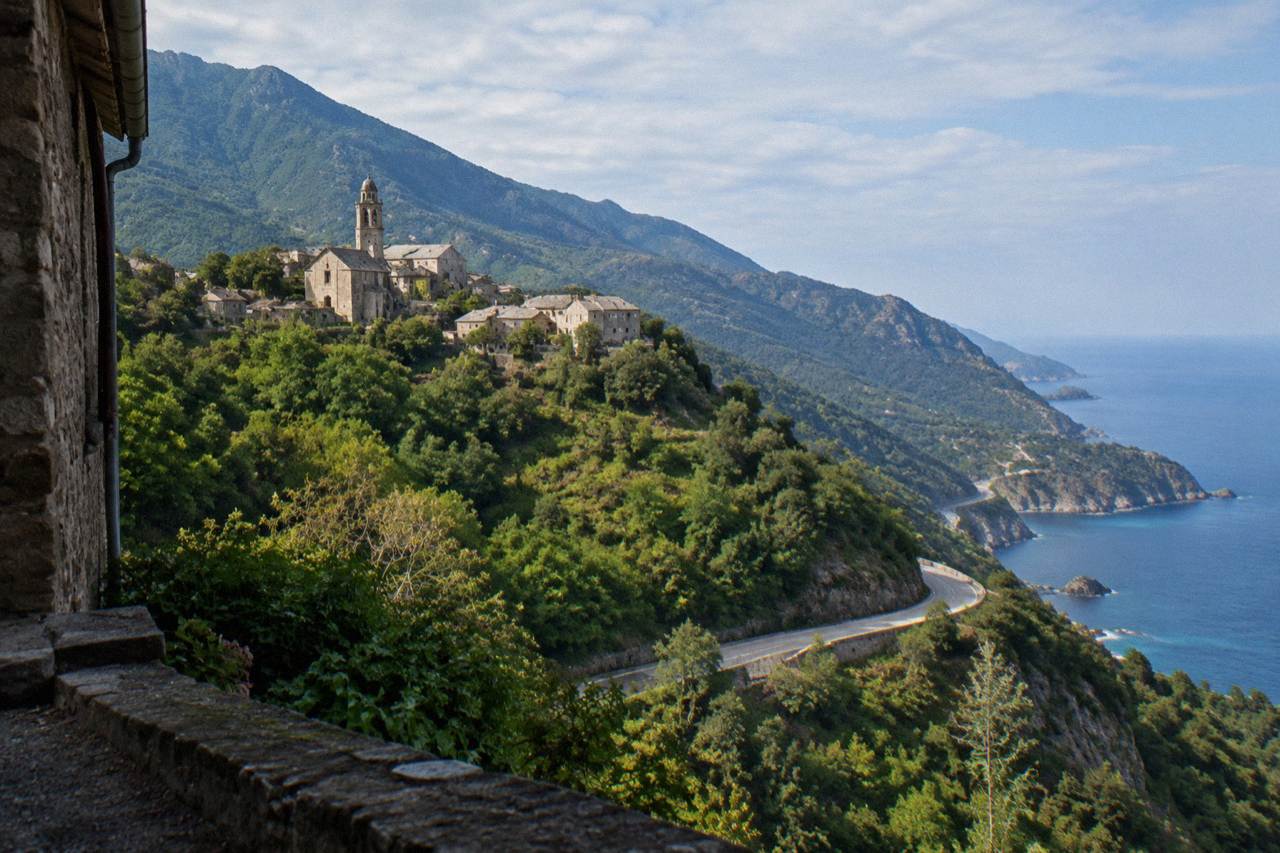
A car is the practical answer for almost any Corsican itinerary beyond a single base town, because the island's mountainous interior means roads curve around massifs rather than cross them, and Inforoutes Corse, the official road-information service, publishes live conditions and accessibility levels for the main mountain passes precisely because they matter year-round. The train network, the Chemins de fer de la Corse, runs three lines: Ajaccio to Bastia via Corte, Ponte-Leccia to Calvi, and the Balagne coastal line between Calvi and L'Île-Rousse. It is a real asset for the Corte corridor and the Balagne, but it does not serve Bonifacio, Porto-Vecchio, the Calanques de Piana or the Désert des Agriates.
Driving tips that come straight from the sources: check Inforoutes Corse before any mountain pass drive, since accessibility levels are graded by colour and some passes carry restrictions for certain vehicle types; expect narrow, winding roads on the west coast; and in summer build slack into every inter-town drive. The site's driving in Corsica and getting around Corsica guides cover the detail, and the Corsica car rental page explains where hiring makes sense, including the airport pickup options at Ajaccio airport and Bastia airport. For anyone based in one town, boat shuttles substitute well: the Désert des Agriates beaches of Saleccia and Lotu are reached by boat shuttle from Saint-Florent, roughly April to October, weather permitting, by 4x4 track from Casta, or on foot.
What Is The Weather Like In Corsica Through The Year?
Corsica has a hot, dry summer and a mild, wet winter, with snow confined to the high mountains, and the Météo-France station normals for 1991-2020 put Ajaccio's July average rainfall at just 8.6 mm against 28.6 °C average daily highs, while November carries 111.8 mm of rain; at Bastia the same normals show July at 13.8 mm and November at 134.3 mm. October and November carry the most rain at both stations, and August holds the highest average daily high at both, 29.2 °C at Ajaccio and 29.8 °C at Bastia. These are station averages, not forecasts, and the mountains run colder than the coast at any time of year.
The month-by-month figures for both stations sit in the Corsica weather by month guide. The table below gives the Ajaccio normals for a representative spread of months.
| Month | Avg daily high °C | Avg daily low °C | Rain mm | Sunshine h/day |
|---|---|---|---|---|
| January | 14.0 | 4.7 | 54.1 | 4.4 |
| March | 16.0 | 5.9 | 50.4 | 6.8 |
| May | 22.1 | 11.8 | 49.8 | 9.3 |
| July | 28.6 | 17.7 | 8.6 | 12.1 |
| September | 26.1 | 15.4 | 57.8 | 8.7 |
| November | 18.3 | 9.0 | 111.8 | 4.7 |
What this means for planning: June through August is the dry, hot period, with July averaging 8.6 mm of rain at Ajaccio, and sea-based activities everywhere. September still averages 26.1 °C daily highs at Ajaccio with 57.8 mm of rain across the month. From late October the rain totals climb, and the winter months suit town visits, museum days and the island's food. The best time to visit Corsica guide works through the trade-offs by season without declaring a single winning month.
How Do The Summer Fire Rules Affect Your Trip?
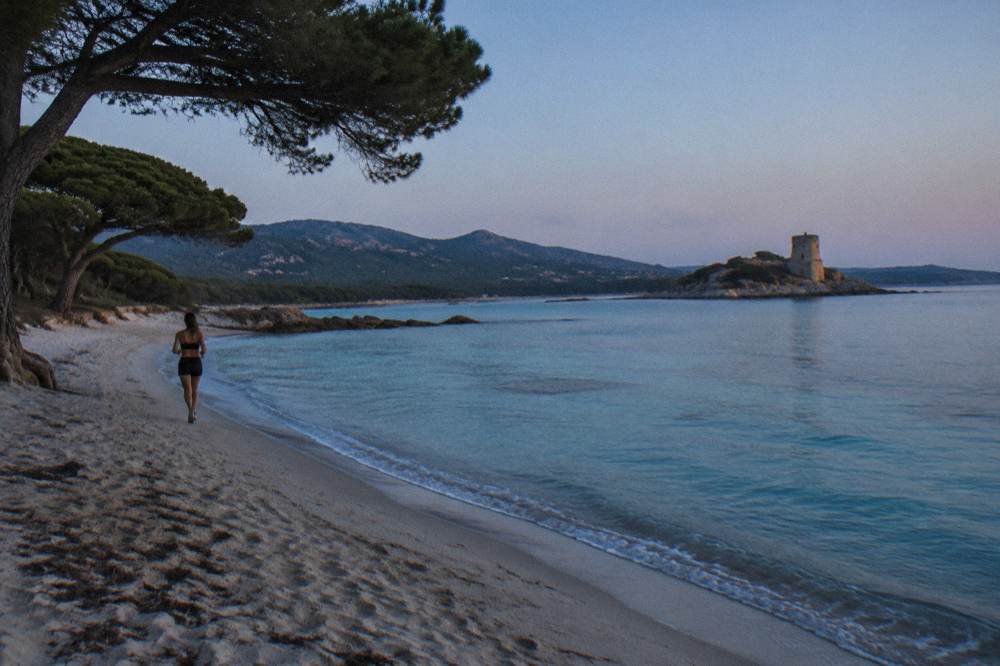
From 15 June to 30 September it is forbidden to light a fire or smoke in Corsica's forests, maquis, garrigue and massifs, and the prefecture's fire-risk map is updated at 18:00 each day for the next day, with access to some massifs restricted from mid-June to mid-September when the risk level is high. The UK FCDO notes a high risk of wildfires in France from April to October, and the rule has direct operational consequences: on the GR20, for example, no departures are allowed from Calenzana after 11:00 under a municipal order tied to fire risk.
Check the risk map daily in summer if you plan to walk, and treat any red-day closure as final rather than negotiable. The rules also touch the coast indirectly: lifeguard cover at Ajaccio's main beaches runs from 1 July to the end of August across seven posts, and Haute-Corse's supervised beaches are staffed by volunteer firefighters roughly 1 July to 31 August. The site's Corsica safety guide collects the full picture, and the hiking in Corsica guide explains how the colour map interacts with trail access.
How Do You Plan A GR20 Or Long-Trail Hike In Corsica?
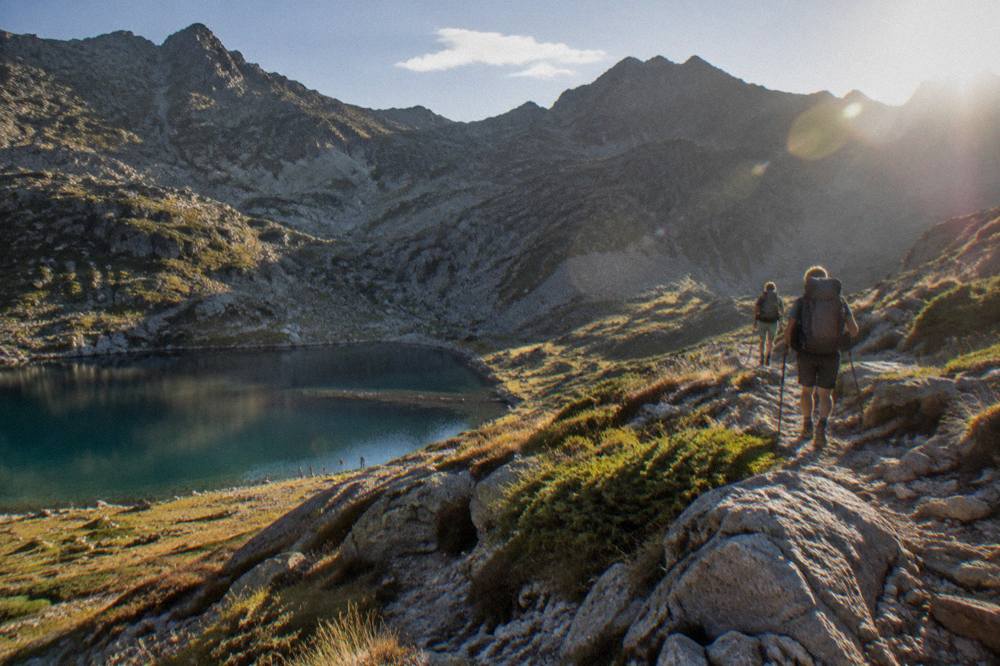
The GR20 runs 180 km north to south in about fifteen stages of 4 to 8.5 hours each, the PNRC refuges are guarded from 16 May to 4 October, and every night, whether a bunk or a bivouac pitch, must be booked in advance and online only; a refuge bunk costs EUR 20 per person, a bivouac pitch EUR 12, a rented tent for one person EUR 27 and a rented tent for two EUR 39. All PNRC rental tents sleep two and come with a 3 cm mat per person; you bring your own sleeping bag. Dogs are not allowed inside refuges or rented tents. Wild camping is banned across Corsica, including the GR20; bivouac is tolerated only in the marked areas at the refuges.
The first stage, Calenzana to Ortu di u Piobbu, is given as about 6 h 30 out, and Calenzana is the northern start. Changes to bookings are possible up to 48 hours before a stage, subject to availability, and a full refund is possible up to two months before. The old Cirque de la Solitude section has been off the trail since a fatal rockfall in 2015 and is replaced by a variant. If fifteen stages is more than the holiday allows, the island's other long trails are shorter and, per the PNRC's own figures, look like this. The rest of the planning pages sit on Corsica Travel Guide.
| Trail | Length | Days given by PNRC | Total climb | End point |
|---|---|---|---|---|
| GR20 (Fra li Monti) | 180 km | about 15 stages | not stated by PNRC | Conca direction |
| Mare e Monti Nord | 121 km | 10 days | 6,100 m | Cargèse |
| Mare a Mare Nord | 139 km (161 km with variant) | 8 to 12 days | 5,900 m | not stated |
| Mare a Mare Centre | 84 km | 7 days (6 to Tavera) | 3,900 m | Porticcio |
| Mare a Mare Sud | 73 km | 5 days | 3,200 m | Propriano |
| Mare e Monti Sud | 66 km | 5 days | 2,700 m | Propriano |
The full planning walkthrough, including the reservation system, is the site's GR20 guide.
How Much Do The Main Sights In Corsica Cost?
The headline sight prices from the official listings are: Maison Bonaparte EUR 10 full price, Palais Fesch EUR 10 full and EUR 6 for over-65s, the Musée de la Corse in Corte EUR 5.50 with one ticket covering both museum and citadel, Filitosa EUR 9 adults, and the Escalier du Roi d'Aragon about EUR 5 with its 189 steps. Maison Bonaparte, on Rue Saint-Charles in Ajaccio, is free for EU residents under 26, charges EUR 8 for non-EU residents aged 18 to 25 and large families, and is open every day except Monday; from 1 July to 30 September it runs 10:00 to 17:30. Palais Fesch is listed daily 09:00 to 17:00 with free entry up to 18.
| Sight | Full price | Reduced / free | Closed |
|---|---|---|---|
| Maison Bonaparte, Ajaccio | EUR 10 | EUR 8 non-EU 18-25 and large families; free EU under 26 | Monday |
| Palais Fesch, Ajaccio | EUR 10 | EUR 6 over 65; free up to 18 | Christmas, New Year, 1 Nov |
| Musée de la Corse and Citadelle, Corte | EUR 5.50 | EUR 4 and EUR 3 categories; one ticket covers museum and citadel | 31 Dec to 14 Jan |
| Filitosa, Sollacaro | EUR 9 | EUR 7 aged 6-17 and disabled; family EUR 28; free under 6 | 3 Nov to 31 Mar |
| Escalier du Roi d'Aragon, Bonifacio | about EUR 5 | children's rate available | closed-toe shoes required |
Filitosa is open 1 April to 2 November, from 09:00 to sunset with the museum to 19:00, and the site suggests allowing about 1 h 30. The Musée de la Corse runs daily 10:00 to 19:00 from 1 May to 31 October, and 10:00 to 17:00 the rest of the year except Sundays, Mondays, holidays and 24 December. Budgeting guidance for the whole trip, including the item that dominates most budgets, accommodation, sits in the Corsica cost and budget guide, and the where to stay in Corsica page maps the bases town by town.
What Should You Pack For A Corsica Trip?
Pack for three climates in one bag: beachwear and sun protection for a coast that averages 28.6 °C daily highs in July at Ajaccio, layered clothing and proper boots for an interior where the trailheads sit high and the weather turns fast, and closed-toe flat shoes if the Escalier du Roi d'Aragon is on the list, because the Bonifacio reservation site states they are required. A sleeping bag is on the list for anyone walking the GR20, since PNRC rented tents supply only a 3 cm mat per person. Cash or cheque belongs in the kit for GR20 refuge meals, which are paid on site to the guardian, not online.
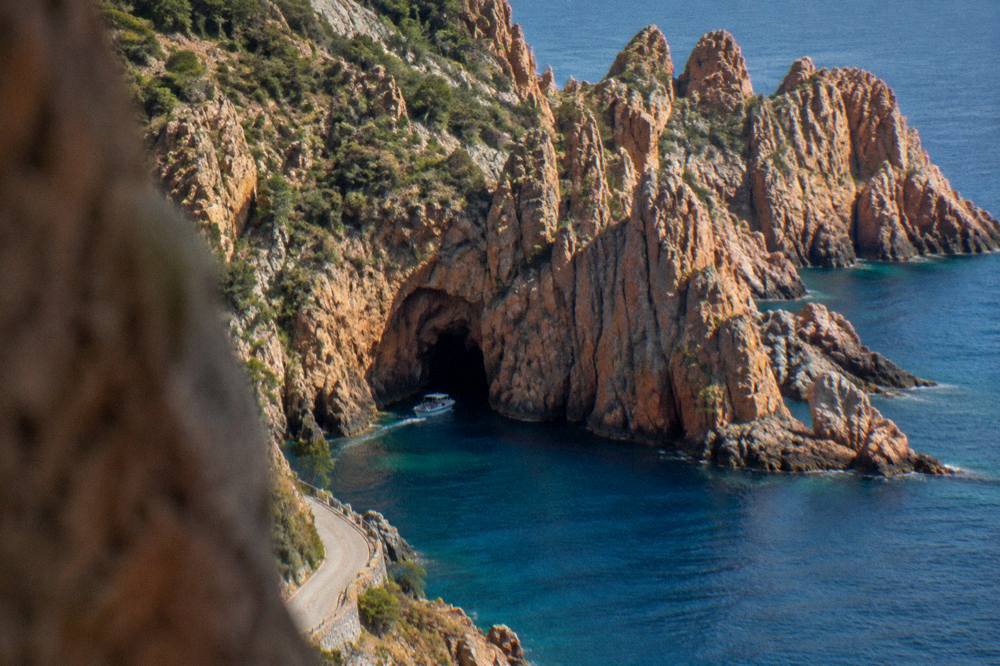
For boat days, the sea rules matter more than the wardrobe: in the Scandola reserve the land area is closed to the public and visits are by boat only, anchoring is allowed in daytime outside the integral reserve and the Gargalu channel with anchors up at sunset, and recreational line and spear fishing are prohibited. A short cruise such as the Piana calanques and caves trip covers the red rock and the sea caves with a crew that knows the local rules; Check availability if a Golfe de Porto boat day is part of the plan. Swimwear doubles for the beaches catalogued in the Corsica beaches guide, and the swimming in Corsica in October question is answered separately.
What Food And Drink Should You Try In Corsica?
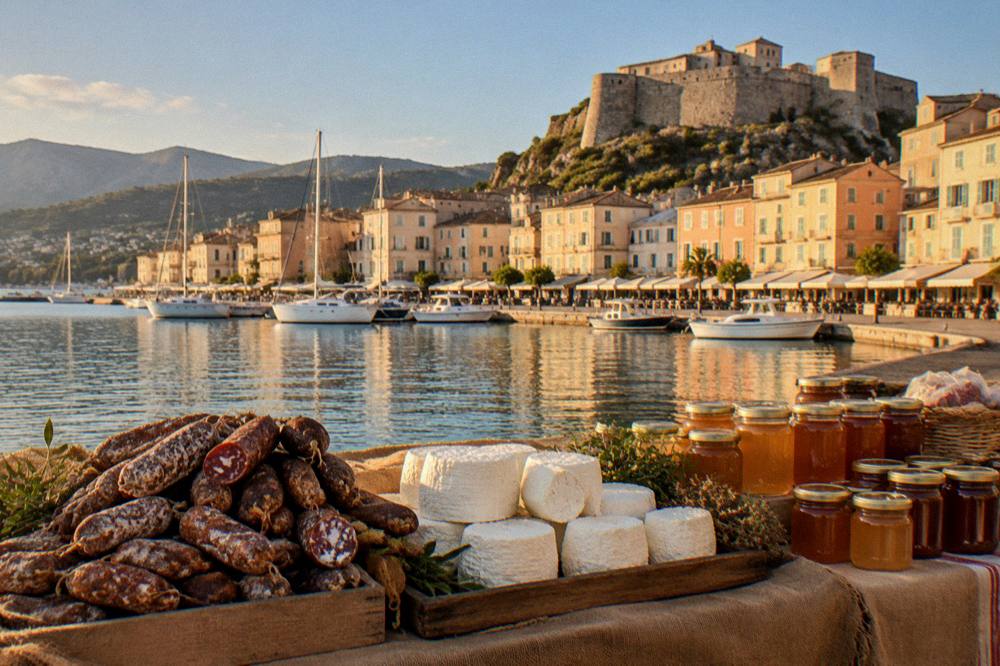
The island's protected foods read like a menu: brocciu obtained its appellation d'origine in 1983 and its AOC in 1998, the three charcuterie cuts prisuttu, lonzu and coppa took AOC in 2012 and AOP in 2014, Corsican honey carries the AOP Mele di Corsica, olive oil the AOC Oliu di Corsica effective 2004, chestnut flour the AOP Farina castagnina corsa recognised in 2010, and the Clémentine de Corse its IGP in 2007. The wine appellations include Patrimonio, Ajaccio, Muscat du Cap Corse and Vin de Corse with its named crus such as Calvi, Coteaux du Cap Corse, Figari, Porto-Vecchio and Sartène, and the main grapes reported across the island's tourism materials are Nielluccio and Sciaccarellu for reds and Vermentinu for whites.
In restaurants, service is included by law: menus must state "prix service compris" with the percentage, and an extra tip is optional, per the DGCCRF's own guidance. One figure from the CESEC data worth knowing: about 98% of metropolitan France's citrus area was in Corsica at the time of that dataset, which is why the Clémentine de Corse carries its own IGP. The full food background is in Corsican food and what to eat and the Corsican wine guide.
How Do You Stay Safe In Corsica?
The emergency numbers are 112 for all EU emergencies, 15 for medical (SAMU), 17 for police, 18 for fire, 114 by SMS or app for deaf or speech-impaired callers, and 196 for sea rescue via VHF channel 16; for mountain rescue the PGHM base at Ajaccio answers on 04 95 24 24 00, and in an emergency you call 112 or 17. The US State Department lists France at Level 2, Exercise Increased Caution, which applies nationwide, and the UK FCDO's France advice highlights the summer wildfire risk from April to October, the same window the island's own fire rules cover.
The practical safety habits are few and simple: check the daily fire-risk map before walking in summer, check Inforoutes Corse before driving mountain passes, swim at supervised beaches in July and August, and keep 112 in the phone. At sea, the drowning-prevention campaigns run each season, and the prefecture reports an average of about 10 drownings per season in Corse-du-Sud, a figure worth taking seriously rather than statistically. The full write-up is the Corsica safety guide, and solo travellers have a dedicated Corsica solo itinerary.
Which Practical Details Are Easy To Get Wrong?
The GR20 has about fifteen stages, never a fixed sixteen, covering 180 km in 4 to 8.5 hour days. Maison Bonaparte sits 200 m from Ajaccio's bus station and ferry terminal, with bus 8 from the airport. Saleccia and Lotu beaches have no ordinary road, and tipping is genuinely optional because the service charge is already in the printed price.
A few more that matter. The GR20 has about fifteen stages, never a fixed sixteen, because the Corsican Assembly's own text says "une quinzaine d'étapes" of 4 to 8.5 hours over 180 km. Maison Bonaparte sits 200 m from Ajaccio's bus station and ferry terminal, with bus 8 from the airport, so it needs no car. The beaches of Saleccia and Lotu have no ordinary road: boat shuttle from Saint-Florent, 4x4 track from Casta, or feet. And tipping is genuinely optional, because the service charge is already in the printed price. Each of these is small; together they are the difference between a plan and a holiday.
Common Questions About Corsica Travel Tips
Do You Need To Book GR20 Refuges In Advance?
Yes. Booking is mandatory for every option, bunk or bivouac or rented tent, and it is online only through the PNRC reservation platform. Changes are possible up to 48 hours before a stage, subject to availability, and a full refund is available up to two months before.
Can You Smoke Or Light A Barbecue In Corsica In Summer?
No. From 15 June to 30 September it is forbidden to light any fire or to smoke in forests, maquis, garrigue and massifs. The prefecture's risk map is updated at 18:00 daily, and some massifs can close entirely on high-risk days.
Is Corsica Expensive For Sightseeing?
The headline entries are moderate: Maison Bonaparte and Palais Fesch are both EUR 10 full price, the Musée de la Corse in Corte is EUR 5.50 with the citadel included, Filitosa is EUR 9, and the Escalier du Roi d'Aragon is about EUR 5. Free-entry categories exist at each, including EU residents under 26 at Maison Bonaparte.
What Is The Emergency Number In Corsica?
Call 112 for any emergency, 15 for medical, 17 for police, 18 for fire, 114 by SMS or app, and 196 for sea rescue. The PGHM mountain rescue base at Ajaccio answers on 04 95 24 24 00 for non-emergency contact.
Can You Wild Camp In Corsica?
No. Wild camping is banned across the island, including on the GR20 and inside the Parc naturel régional de Corse. Bivouac is allowed only in the designated areas at PNRC refuges, with a per-person reservation.
Do You Need To Tip In Corsican Restaurants?
Not as an obligation. French law requires menus to state that service is included, "prix service compris", with the percentage shown, and the DGCCRF confirms that any extra tip is voluntary.