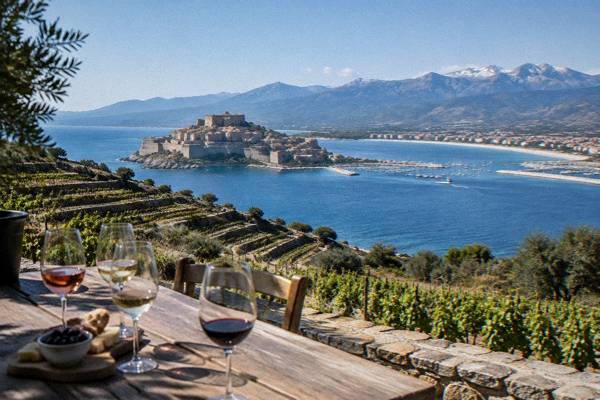
Corsica Wine
Corsica wine runs on three signature grapes and a string of appellations that stretch from Patrimonio in the north to Bonifacio's hinterland. This guide sets out what is reported about the island's appellations, where to taste them, and how to build a wine trip around Ajaccio, Calvi and Île-Rousse.
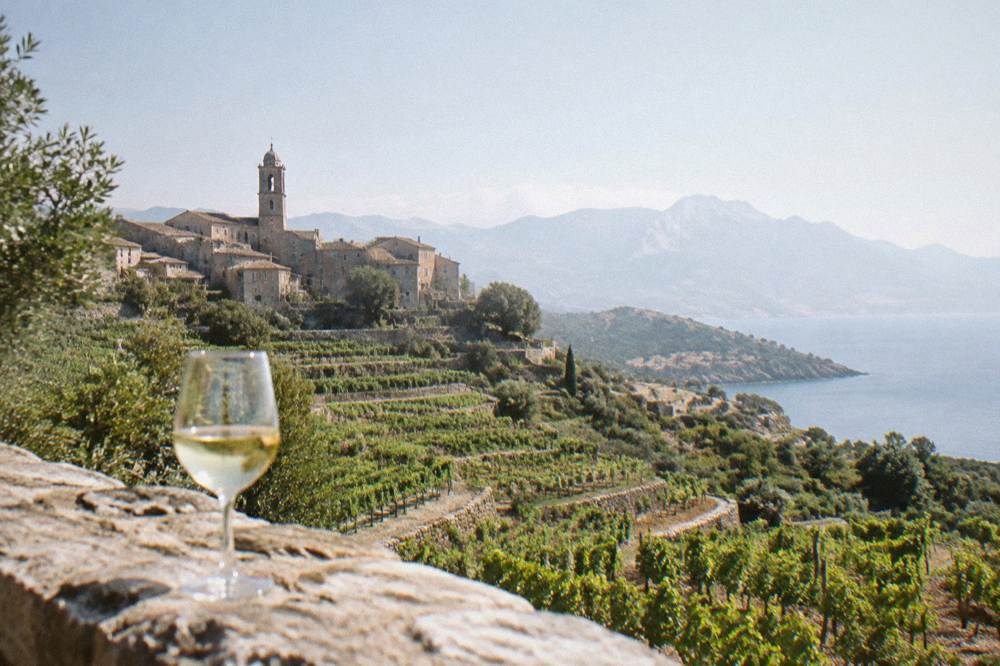
Corsica's reported wine appellations include Patrimonio, Ajaccio, Vin de Corse (with the Calvi, Coteaux du Cap Corse, Figari, Porto-Vecchio and Sartène designations) and Muscat du Cap Corse, built mainly on the Nielluccio and Sciaccarellu red grapes and the Vermentinu white grape.
Corsica, the French Mediterranean island of 8,722 km2 with more than 1,000 km of coastline, makes wine in the shadow of mountains that rise to Monte Cinto at 2,706 m. The vineyards sit closer to the sea than almost anywhere in France, and the island's wine identity is tied to grape varieties, Nielluccio, Sciaccarellu and Vermentinu, that you will see on labels from Patrimonio in the north to the hills behind Bonifacio in the far south. What follows is a planning guide: every figure below comes from the reported tourism and institutional pages, the Météo-France station normals, or the island's own museum listings, and anything those sources do not state is left unsaid.
What Makes Corsica Wine Distinct?
Corsica wine is defined above all by its three reported signature grapes: Nielluccio and Sciaccarellu for the reds, and Vermentinu for the whites, varieties listed across the island's official tourism material as the backbone of Corsican bottlings. The same reported sources present the island's vineyards as spread across coastal and hillside zones within several distinct appellations rather than one single region, which is why labels carry names as varied as Patrimonio and Porto-Vecchio.
That structure matters for a visitor. Unlike a single-valley wine region, Corsica parcels its vineyard land into named areas that also happen to be the island's most visited corners: the Calvi area in the Balagne, the Cap Corse peninsula, the granite country behind Ajaccio, and the southern plateaux inland of Figari and Porto-Vecchio. A wine trip here is therefore also a road trip, and the drive between appellations passes through the Calanques de Piana, the Désert des Agriates or the Aiguilles de Bavella depending on your route. The basics of moving between them are covered in the site's guide to getting around Corsica, and the practicalities of hiring a car in the Corsica car rental guide.
The tourism board's reported pages list the grape varieties without ranking them or giving planted areas, and this guide follows that restraint. What the reported material does make plain is the naming logic: reds and rosés carry Nielluccio and Sciaccarellu, whites carry Vermentinu, and a sweet exception, Muscat du Cap Corse, stands on its own at the tip of the cape.
| Grape | Colour role | Where it appears on labels |
|---|---|---|
| Nielluccio | Red | Reported as a main red variety of Corsican wine |
| Sciaccarellu | Red | Reported as a main red variety of Corsican wine |
| Vermentinu | White | Reported as the main white variety of Corsican wine |
Which Wine Appellations Does Corsica Have?
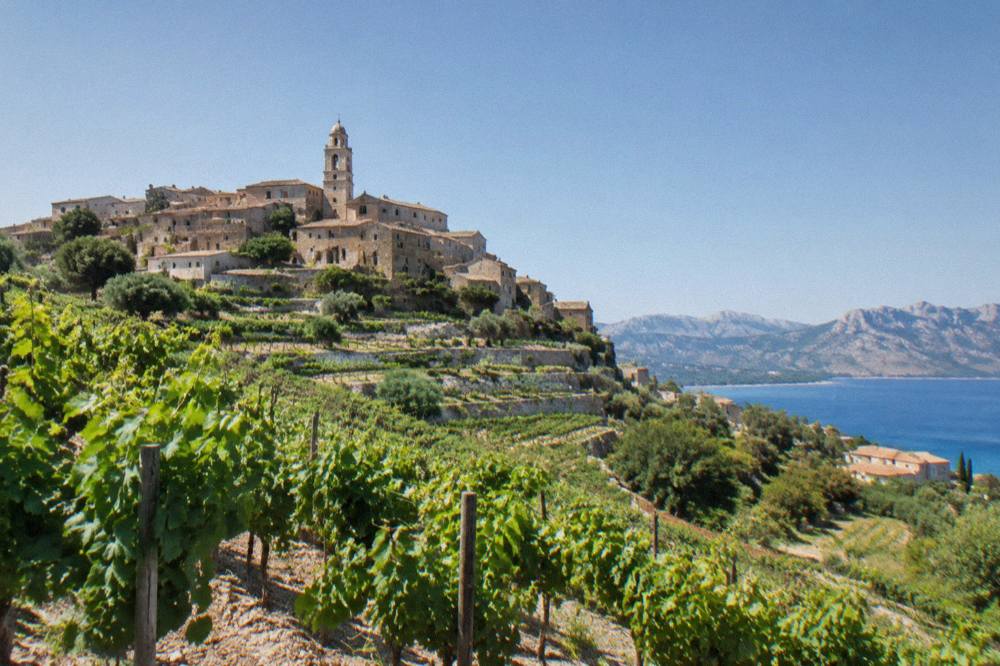
The reported appellations of Corsica wine are Patrimonio, Ajaccio, the broad Vin de Corse (which includes the named Calvi, Coteaux du Cap Corse, Figari, Porto-Vecchio and Sartène designations), and the sweet Muscat du Cap Corse, according to the island's official tourism material. No total count of AOCs is stated in the sources this site reports from. The designations cover both the north and the south of the island, which makes a two-base trip entirely workable.
The practical geography runs like this. Patrimonio sits near Saint-Florent on the northern coast. The Coteaux du Cap Corse and Muscat du Cap Corse designations belong to the Cap Corse peninsula above Bastia. The Calvi designation covers the Balagne coast around Calvi and L'Île-Rousse, which pairs vineyard visits with some of the island's most familiar beaches, covered in the site's guide to Corsica beaches. Ajaccio's own appellation surrounds the island capital, and the Figari and Porto-Vecchio designations lie inland of the far south-east coast, close to Bonifacio. Sartène's designation covers the south-west.
| Appellation | Island area | Nearby base towns |
|---|---|---|
| Patrimonio | North, near the Nebbiu | Saint-Florent, Bastia |
| Coteaux du Cap Corse | Cap Corse peninsula | Bastia, Cap Corse villages |
| Muscat du Cap Corse | Tip of Cap Corse | Bastia, Centuri, Erbalunga |
| Calvi (Vin de Corse designation) | Balagne coast | Calvi, L'Île-Rousse |
| Ajaccio | South-west, around the capital | Ajaccio, Porticcio |
| Figari (Vin de Corse designation) | Far south | Figari, Bonifacio |
| Porto-Vecchio (Vin de Corse designation) | South-east | Porto-Vecchio, Bonifacio |
| Sartène (Vin de Corse designation) | South-west | Sartène, Propriano |
Wine is also only one strand of the island's protected food culture, and a cellar-door day usually brushes against cheese, charcuterie, chestnut flour, honey and olive oil, all of which carry their own appellation status. The reported tourism pages describe these pairings in detail, and the site's broader Corsica food and wine tour guide covers how to build a full tasting itinerary.
Where To Taste Corsica Wine In Ajaccio?
Ajaccio works as a wine-tasting base because the town holds two national collections you can visit in half a day, the Palais Fesch musée des Beaux-Arts at EUR 10 full price (EUR 6 over 65s, free up to 18, open daily 09:00 to 17:00 for the 16 January to 31 December 2026 period, closed Christmas, New Year and 1 November) and Maison Bonaparte at EUR 10 full price, closed Mondays.
Both are city-centre sights you can walk between, and the tourism listings confirm the hours above.
The reported wine appellation of Ajaccio surrounds the town itself, so a tasting outing from the capital is short by island standards. Maison Bonaparte's own practical page adds useful detail: the museum stands on Rue Saint-Charles, 200 m from the bus station and ferry terminal, with bus 8 from the airport, which makes an arrival-day visit realistic before you have picked up a hire car. Its hours shift by season: 10:30 to 12:30 and 13:15 to 16:30 from October to March, 10:00 to 12:30 and 13:15 to 17:30 from April to June, and 10:00 to 17:30 through July to September, with entry free for EU residents under 26 and EUR 8 for non-EU residents aged 18 to 25 and large families.
| Ajaccio sight | Full price | Opening pattern (per the listing) | Closed |
|---|---|---|---|
| Palais Fesch | EUR 10 (EUR 6 over 65s, free up to 18) | Daily 09:00 to 17:00, 16 Jan to 31 Dec 2026 | Christmas, New Year, 1 November |
| Maison Bonaparte | EUR 10 (EUR 8 non-EU 18 to 25 and large families, free EU under 26) | Seasonal hours, see above | Mondays |
A guided food walk is the simplest way to taste brocciu, figatellu, lonzu and coppa alongside local pours without planning each stop yourself. The Ajaccio local food tour with tastings runs as a small-group format, and details of price and duration render on its own page: Ajaccio local food tour with tastings.
Where To Taste Wine Around Calvi And L'Île-Rousse?
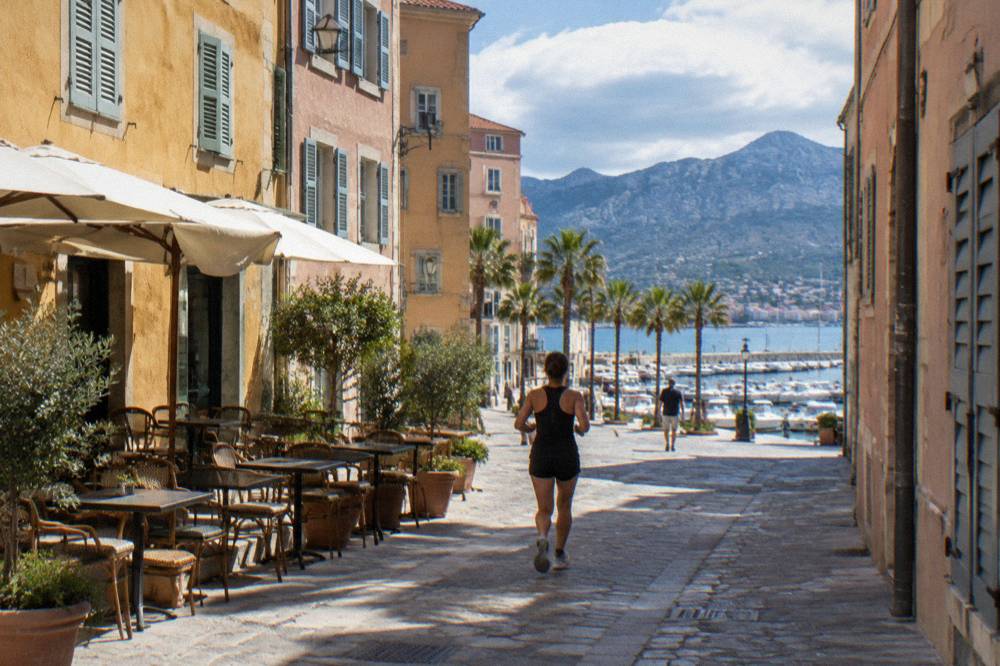
The Balagne coast, from Calvi to L'Île-Rousse, is the reported home of the Calvi designation within Vin de Corse, and it is the one Corsican wine area where vineyards, beaches and a citadel town sit within a short drive of each other. The reported tourism material names Calvi among the island's wine designations, and the area's tourism identity combines cellar doors with the coast, which is why most wine itineraries place at least two nights here.
Two guided options cover the ground. Wine tastings around Calvi and Île-Rousse is a dedicated tasting format in the area, and the Corsican wine tour and picnic in Calvi is a private format with a picnic, pairing cellar visits with an outdoor meal. The private wine tour's details, price, rating and length, print on its own page: Corsican wine tour and picnic in Calvi, and live availability is on the operator's listing at Check availability.
The Balagne also rewards the drive itself. The old hilltop villages behind the coast are strung along inland roads, and a villages day trip from Calvi is the standard way to see them; the site's Balagne villages day trip guide lays out the route. When you are not tasting, the region's boat trips, from the Calvi to Scandola cruise to the Revellata sunset sail, leave from Calvi's harbour, and both the Calvi and the Balagne guide and the L'Île-Rousse guide cover the coastal options.
How Does Corsica Wine Pair With Island Food?
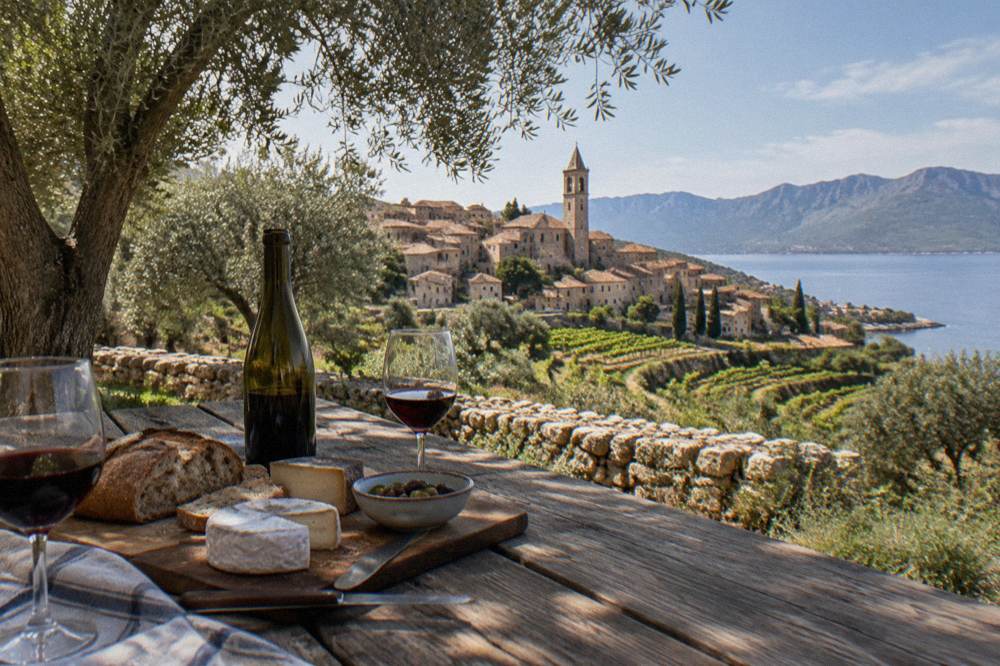
Corsican wine is reported alongside an unusually dense list of protected foods: brocciu cheese (designation of origin 1983, AOC and AOP from 1998), the charcuterie trio of prisuttu, lonzu and coppa (AOC 2012, AOP 2014), chestnut flour (AOP recognised 2010), Corsican honey (AOC 1998), Corsican olive oil (AOC effective 2004) and the Clémentine de Corse (IGP 2007, Label Rouge 2014). A tasting table in Corsica therefore carries more appellation labels than almost any comparable island region.
The reported tourism pages connect these foods directly: brocciu appears inCorsican cooking from savoury dishes to the fiadone dessert, charcuterie is cut from the Nustrale pig breed recognised in 2006, and chestnut flour anchors the Castagniccia's rural economy, a region covered in the site's Castagniccia guide. Red pours from Nielluccio and Sciaccarellu are the natural reported companions to the charcuterie, while Vermentinu whites carry the seafood plates of the coastal towns.
| Corsican product | Status | Year |
|---|---|---|
| Brocciu | Designation of origin | 1983 |
| Brocciu | AOC then AOP | 1998 |
| Prisuttu, lonzu, coppa | AOC, then AOP | 2012, 2014 |
| Nustrale pig breed | Recognised | 2006 |
| Chestnut flour (Farina castagnina corsa) | AOP | 2010 |
| Corsican honey (Mele di Corsica) | AOC | 1998 |
| Corsican olive oil (Oliu di Corsica) | AOC | 2004 |
| Clémentine de Corse | IGP (Label Rouge 2014) | 2007 |
What Is The Weather Like For A Corsica Wine Trip?
The Météo-France 1991-2020 station normals for Ajaccio show a hot, dry summer and a mild, wet winter: July averages 8.6 mm of rain with highs around 28.6°C, August highs average 29.2°C, and November carries the highest monthly rain total at 111.8 mm. October averages 85.7 mm and September 57.8 mm, which places the shoulder months between the summer dry and the autumn rains.
No single month is named here as the time to go; the figures let you weigh heat against rain yourself.
For the north of the island the pattern is broadly similar with more rain in the wet months: the Bastia station normals show October at 126.5 mm and November at 134.3 mm, against July at 13.8 mm. Sunshine at Ajaccio averages 12.1 hours a day in July and 11.1 in August, falling to 4.0 in December. The high mountains take snow in winter, which matters only if your route crosses the interior cols; live pass status is published by Inforoutes Corse, and the site's Corsica weather by month guide carries the full tables.
| Month | Ajaccio high °C | Ajaccio low °C | Ajaccio rain mm | Ajaccio sunshine h/day |
|---|---|---|---|---|
| Jan | 14.0 | 4.7 | 54.1 | 4.4 |
| Feb | 14.2 | 4.3 | 48.1 | 5.5 |
| Mar | 16.0 | 5.9 | 50.4 | 6.8 |
| Apr | 18.5 | 8.3 | 53.1 | 7.7 |
| May | 22.1 | 11.8 | 49.8 | 9.3 |
| Jun | 25.9 | 15.4 | 25.9 | 11.1 |
| Jul | 28.6 | 17.7 | 8.6 | 12.1 |
| Aug | 29.2 | 18.1 | 15.8 | 11.1 |
| Sep | 26.1 | 15.4 | 57.8 | 8.7 |
| Oct | 22.8 | 12.6 | 85.7 | 6.7 |
| Nov | 18.3 | 9.0 | 111.8 | 4.7 |
| Dec | 15.1 | 5.8 | 73.9 | 4.0 |
One standing rule affects any wine walk that leaves the coast road. From 15 June to 30 September it is forbidden to light a fire or smoke in forests, maquis and massifs, and the daily fire-risk map is updated at 18:00 for the next day. The UK FCDO notes a high wildfire risk in France from April to October. Emergency numbers are 112, 15, 17, 18, 114 and 196 at sea, and the mountain rescue PGHM in Ajaccio answers on 04 95 24 24 00; the site's Corsica safety guide has the full list.
How Do You Build A Corsica Wine Itinerary?
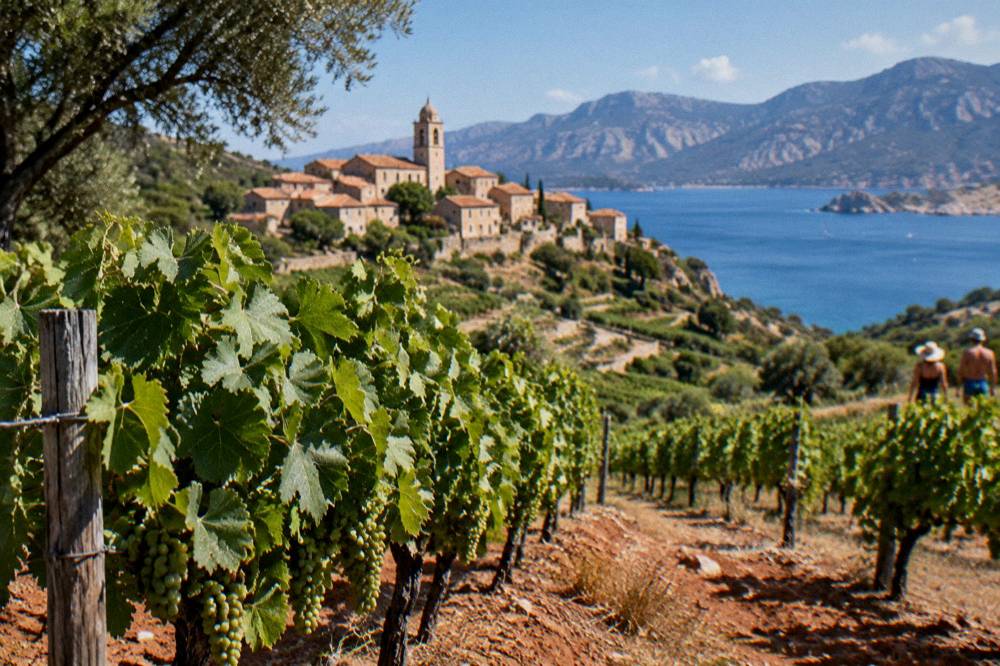
A workable Corsica wine itinerary splits the island into two bases: two or three nights in the Balagne around Calvi or L'Île-Rousse for the Calvi designation, and two or three nights in Ajaccio or the far south for the Ajaccio, Sartène, Figari and Porto-Vecchio designations, with Patrimonio and the Cap Corse added from a Saint-Florent or Bastia base if you enter through the north.
The reported appellations cluster exactly where the island's main towns already sit, so no itinerary needs a detour to reach wine country.
Fly in and the choice of airport follows the itinerary: Ajaccio Napoléon Bonaparte (AJA), Bastia Poretta (BIA), Figari Sud Corse (FSC) and Calvi Sainte-Catherine (CLY) are the island's four airports, and the site's Corsica airports guide and flights to Corsica guide cover each. Arriving by sea, the ferry ports at Ajaccio, Bastia, Bonifacio, L'Île-Rousse, Propriano and Porto-Vecchio are served by Corsica Linea, La Méridionale, Moby and Corsica Ferries, and the ferry to Corsica guide sets out the routes. The Santa Teresa Gallura to Bonifacio crossing from Sardinia takes about 50 to 60 minutes, which pairs a Sardinia holiday with the Bonifacio and Figari wine country.
Between tastings, the island's headline sights sit on the wine routes themselves. Filitosa, the prehistoric site, opens 1 April to 2 November, 09:00 to sunset, at EUR 9 adults, EUR 7 reduced and EUR 28 for a family, and it sits on the road between Ajaccio and Propriano, inside the reported Sartène designation's part of the island. The Musée de la Corse in Corte, at EUR 5.50 full with one ticket covering museum and citadel, makes an interior stop between the northern and southern vineyards.
| Itinerary base | Wine areas in reach | Non-wine anchors |
|---|---|---|
| Calvi or L'Île-Rousse | Calvi designation | Scandola boat trips, Balagne villages, Revellata |
| Saint-Florent or Bastia | Patrimonio, Coteaux du Cap Corse, Muscat du Cap Corse | Cap Corse, Désert des Agriates, Saleccia and Lotu |
| Ajaccio | Ajaccio appellation | Îles Sanguinaires, Palais Fesch, Maison Bonaparte |
| Porto-Vecchio or Bonifacio | Figari, Porto-Vecchio designations | Bonifacio citadel and cliffs, Îles Lavezzi, Palombaggia |
| Sartène or Propriano | Sartène designation | Filitosa, Rondinara, Valinco gulf |
Can You Combine Corsica Wine With Boat Trips And Day Tours?
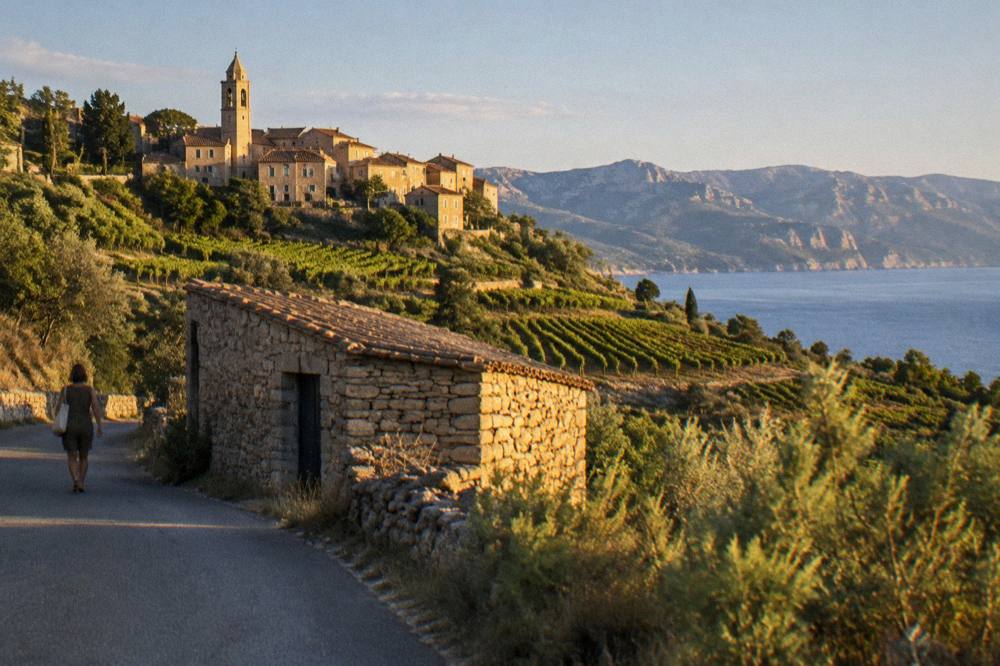
A Corsica wine trip combines naturally with the island's boat trips because the reported wine areas all front the sea: the Scandola reserve and the Calanques de Piana sit beside the Balagne and Ajaccio vineyards, the Îles Lavezzi lie off the Figari and Porto-Vecchio designations, and the Îles Sanguinaires sit at the mouth of Ajaccio's gulf. Scandola itself is a UNESCO World Heritage property, "Gulf of Porto: Calanche of Piana, Gulf of Girolata, Scandola Reserve", inscribed in 1983, and visits are by boat only.
A single day in the Balagne can hold both a morning tasting and an afternoon on the water, since the Calvi to Scandola boat tour and the shorter Calanques de Piana cruises leave from harbours inside the wine areas. From Ajaccio, the Sanguinaires gulf trips run from the town's own port. The site's Scandola boat tour guide, Calanques de Piana tour guide and sanguinaires boat trip guide each break down the sailing options, and the things to do in Corsica page collects the full island programme.
Land-based pairings work the same way. The A Cupulatta turtle park near the Ajaccio wine area sells skip-the-line admission, and a private history and gastronomy walk through Ajaccio, from Genoa to Napoleon, is a small-group format that ends the day in the town the wine appellation is named for. Both appear in the selection below alongside the wine tour and picnic in Calvi.
Common Questions About Corsica Wine
What Wine Is Corsica Famous For?
Corsica is reported for reds and rosés from Nielluccio and Sciaccarellu, whites from Vermentinu, and the sweet Muscat du Cap Corse, under appellations including Patrimonio, Ajaccio, Vin de Corse with its named designations, and Muscat du Cap Corse.
How Many Wine AOCs Does Corsica Have?
No total count of Corsican wine AOCs is given in the official tourism material this site reports from. The reported appellations are listed in the table above.
Which Grapes Are Used In Corsica Wine?
The reported main grapes are Nielluccio and Sciaccarellu for reds and Vermentinu for whites, per the island's tourism pages on Corsican produce.
Where Can You Taste Corsica Wine?
Tasting options include guided formats around Calvi and L'Île-Rousse in the Balagne, food and tasting walks in Ajaccio, and cellar visits in the wine areas listed above. Two guided wine formats around Calvi appear on this page.
Can You Visit Corsican Vineyards Without A Car?
Partly. Ajaccio's sights and food tours are walkable from the town, and bus 8 links the airport to the centre, per the Maison Bonaparte listing. For the Balagne, Cap Corse and southern vineyards, a hire car or a guided tour is the practical route; the site's car rental guide covers the options.
Is Corsican Wine Expensive To Taste?
Tasting prices for Corsican wine are not stated in the sources this site reports from.
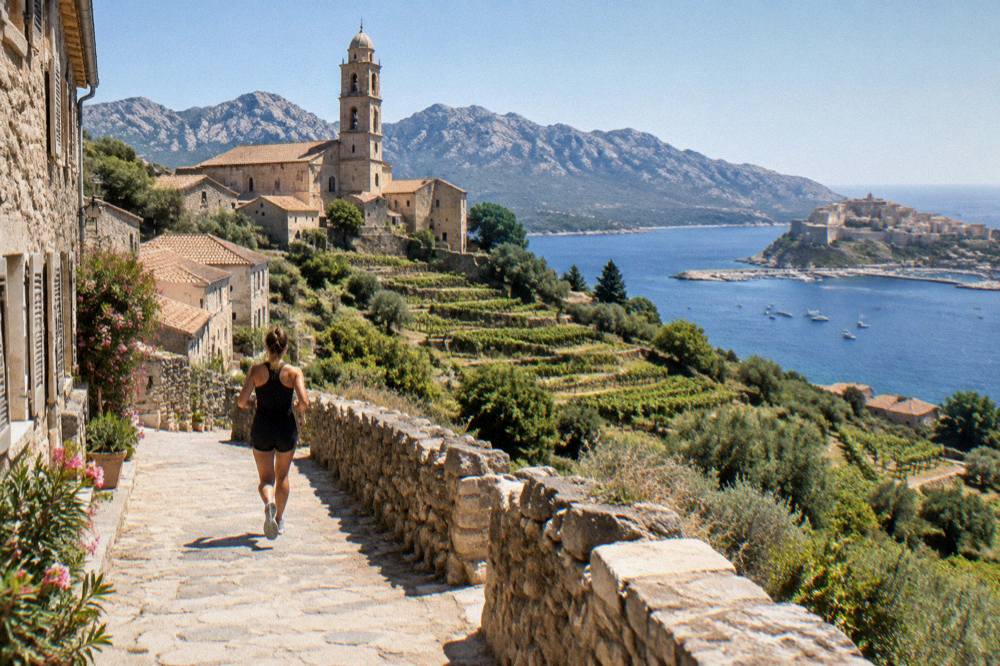
The short version for planners: pick two bases, one in the Balagne and one in the south or around Ajaccio, taste the reported Nielluccio, Sciaccarellu and Vermentinu pours at cellar doors reachable by short drives, and let the island's boat trips and prehistoric sites fill the days between tastings. More on the whole island programme, from the GR20 to the beaches of the Désert des Agriates, sits on the Corsica Travel Guide homepage and its collection of regional and practical guides.