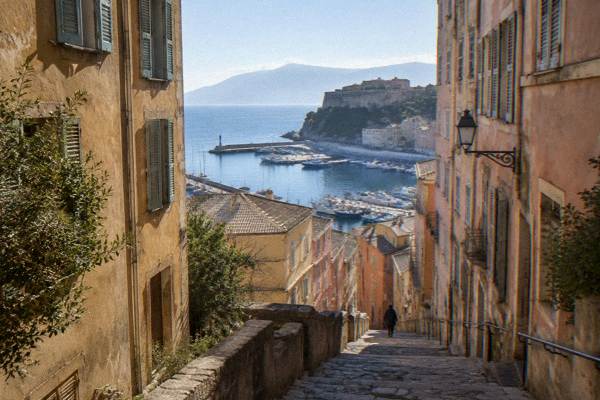
Bastia Citadel
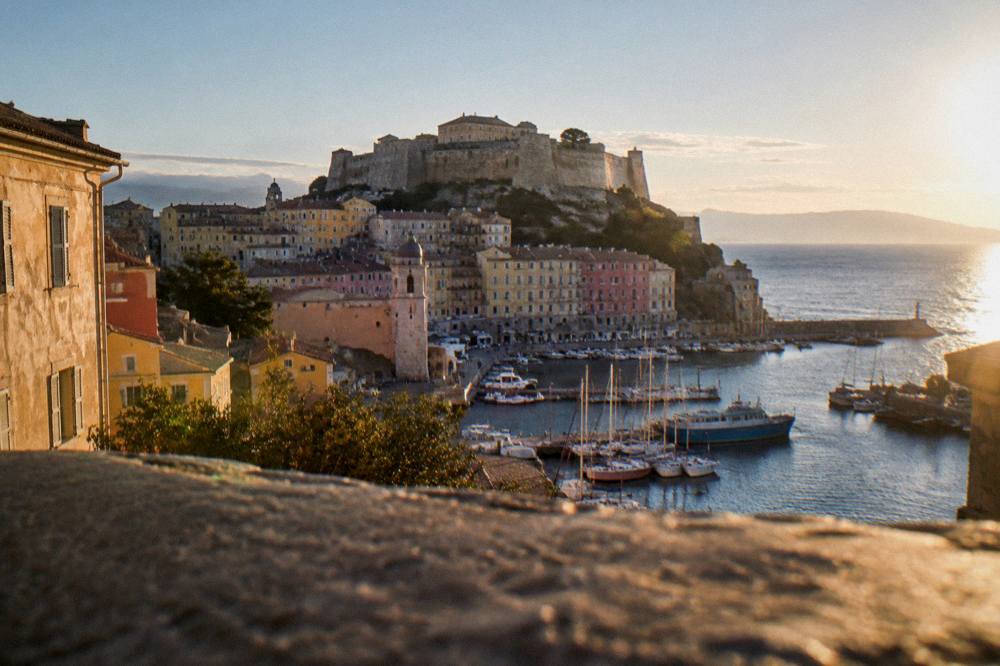
The Bastia Citadel stands over the old port of Bastia, the second town of Corsica, on the island's north-east coast. This guide sets out what the citadel holds, how the Museum of Bastia runs, and how to plan a visit around ferry, train and road links.
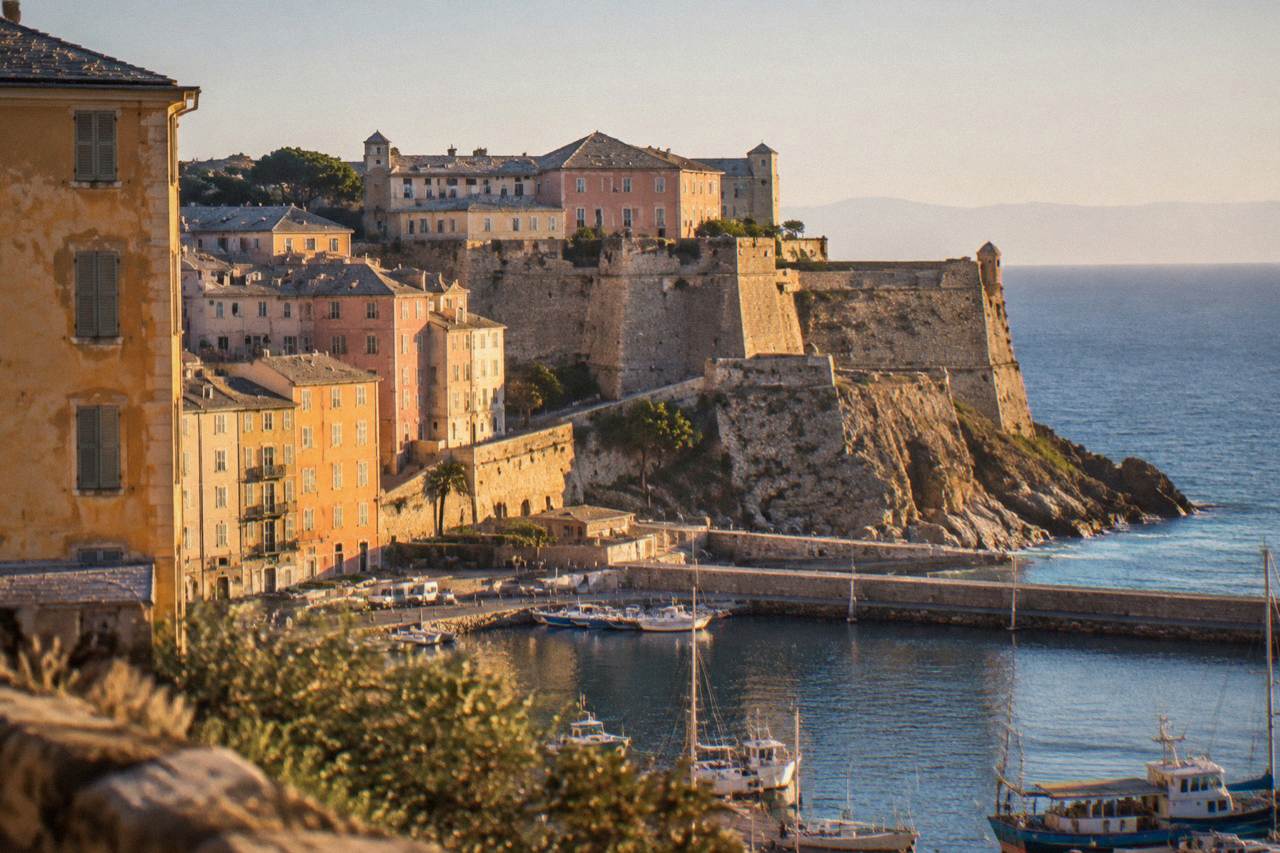
The Bastia Citadel is the fortified upper town above Bastia's old harbour in Haute-Corse, Corsica, and its main indoor sight is the Museum of Bastia in the Palais des Gouverneurs, open 10:00 to 18:30 in high season and closed Sunday and Monday in low season, reported hours visitors should confirm before travelling.
The Bastia Citadel rises above the old harbour of Bastia, the second town of Corsica with 46,867 residents at the 2023 census, on the north-east coast of the French Mediterranean island. The town grew around its port: ferries from Livorno, Savona and Genoa berth here, the Chemins de fer de la Corse start here, and the citadel quarter looks down on all of it. This page sets out what the citadel holds, how its museum runs, and how to build a day around it.
What Is The Bastia Citadel In Corsica?
The Bastia Citadel is the fortified upper town of Bastia, the second town of Corsica, sitting above the old harbour in the north-east of the island. Its landmark building is the Palais des Gouverneurs, which houses the Museum of Bastia, and the quarter's lanes, ramparts and church squares sit a short walk above the port where ferries from Italy arrive. Bastia counts 46,867 residents, with a population density of 2,418 per km2, per INSEE census data published in 2026.
Bastia is the working port town of Haute-Corse, and the citadel quarter is its historical core. The town is the island's ferry gateway from Italy: Corsica Ferries sails from Livorno and Savona to Bastia, and Moby sails from Livorno and Genoa, so the citadel is often the first thing arriving travellers see of Corsica. The Chemins de fer de la Corse network also centres on Bastia, with lines running south to Ajaccio via Corte and west along the Balagne coast to Calvi and L'Île-Rousse.
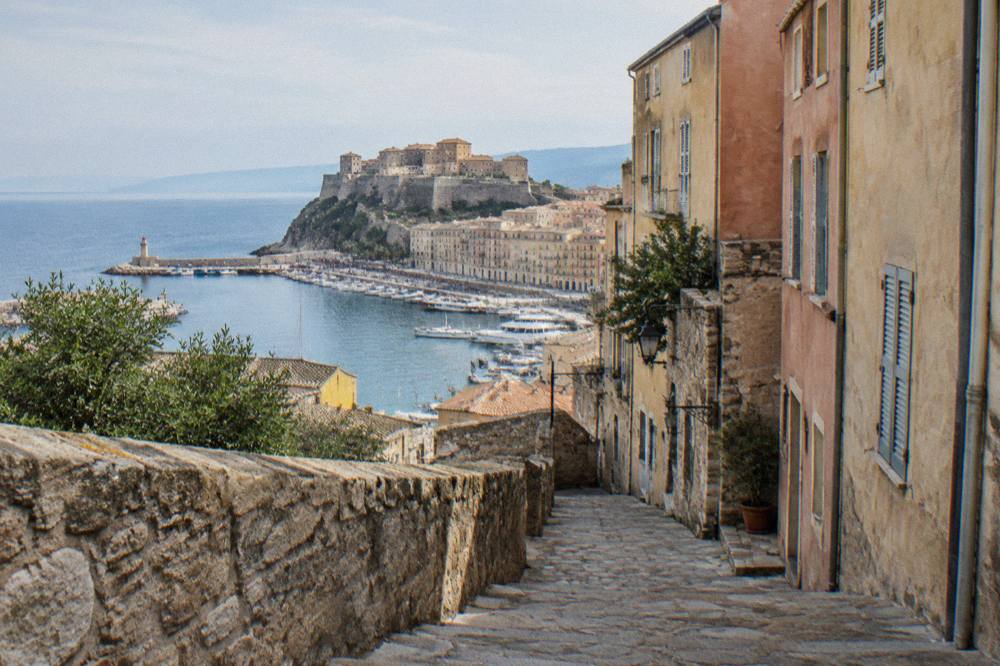
The quarter rewards slow walking. Lanes climb from the old harbour of Bastia up to the rampart walk, and the whole area is compact enough to cover on foot in a morning. For a first taste of the town as a whole, the Bastia area guide covers the neighbourhoods below the walls, and the wider question of whether the town deserves your time is answered on is Bastia worth visiting.
Haute-Corse, the department whose prefecture sits in Bastia, counted about 190,500 residents in the 2026 INSEE estimates, against about 175,100 in Corse-du-Sud. Since 1 January 2018 the island has been governed as a single territorial authority with special status, the Collectivité de Corse, replacing the former collectivity and the two departmental councils. Corsica itself covers 8,722 km2, is the fourth-largest island in the Mediterranean, and has more than 1,000 km of coastline, so Bastia's citadel is one walled quarter on a long, mountainous, sea-encircled island.
A table of the town's key figures:
| Fact | Figure |
|---|---|
| Population of Bastia | 46,867 |
| Population density | 2,418 per km2 |
| Department | Haute-Corse (2B) |
| Department population | about 190,500 |
| Island population | 365,636 (1 January 2026, provisional) |
| Ferry links to Bastia | Livorno, Savona, Genoa |
Where Is The Bastia Citadel And How Do You Get There?
The Bastia Citadel sits directly above the old harbour in central Bastia, in Haute-Corse on Corsica's north-east coast, a short walk from the ferry terminal. Bastia Poretta airport (BIA) is one of the island's four airports, ferries arrive from Livorno in about 4 to 5 hours and from Savona in about 6.5 hours, reported figures, and the Chemins de fer de la Corse connect the town to Ajaccio, Calvi and L'Île-Rousse.
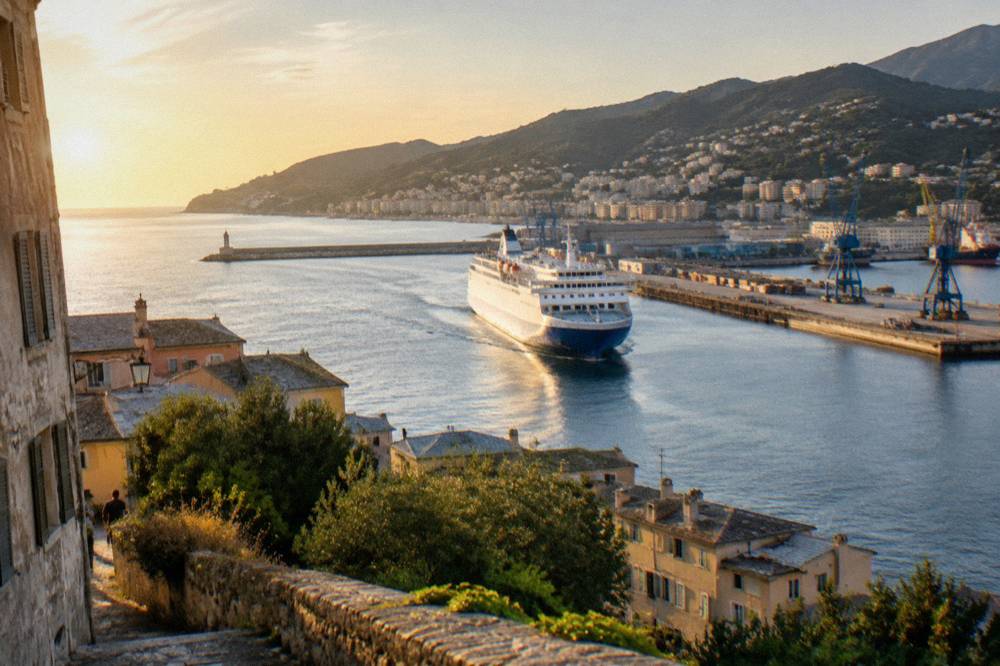
Arriving by ferry puts you closest. Livorno to Bastia is the shortest mainland Italy crossing, reported at about 4 to 5 hours, and Savona to Bastia at about 6.5 hours; Genoa to Bastia also runs seasonally with Moby. From the port the citadel is reached on foot through the streets of the lower town. The guide to Bastia airport covers flying in, and the general getting to Corsica overview links the island's main entry points.
By train, the Chemins de fer de la Corse run three lines: Bastia to Ajaccio via Corte, Ponte-Leccia to Calvi, and the Balagne coastal line between Calvi and L'Île-Rousse. Reported sources confirm the lines but publish no journey times here, so check the operator's timetables when planning. By road, the island's scale comes into focus: Corte is 1 hour from Bastia, Calvi 1 hour 30, and Bonifacio 2 hours 45.
Mountain roads are a characteristic of Corsica's terrain, and the island's road authority, Inforoutes Corse, publishes live road conditions and accessibility levels for the main mountain passes. Checking the pass status before any long cross-island drive is the standing advice, and it applies doubly in the shoulder seasons when storms can close a col. The island's four airports, Ajaccio Napoléon Bonaparte (AJA), Bastia Poretta (BIA), Figari Sud Corse (FSC) and Calvi Sainte-Catherine (CLY), spread arrivals across the coast, but Bastia remains the sea gateway for Italian traffic.
For travellers who want the citadel quarter explained rather than simply found, a small-group guided walk is the practical option: Check availability for a tour that covers the town and its history with a guide.
What Are The Opening Hours Of The Museum Of Bastia?
The Museum of Bastia, in the Palais des Gouverneurs inside the citadel, is reported open 10:00 to 18:30 in high season, and 09:00 to 12:00 and 14:00 to 17:00 in low season, when it closes on Sundays and Mondays. These hours are unconfirmed, so confirm them before you go.
The seasonal split matters for planning. High season runs from early June to the end of September, with Monday closures in May, June and September and daily opening in July and August. Low season, October to April, brings the split morning and afternoon hours plus Sunday and Monday closures, and the museum also closes over Christmas school holidays. A winter or spring visit therefore needs a weekday plan.
| Period | Hours | Closed |
|---|---|---|
| July to August | 10:00 to 18:30 daily | Public holidays |
| May, June, September | 10:00 to 18:30 | Mondays |
| October to April | 09:00 to 12:00 and 14:00 to 17:00 | Sundays, Mondays, some holidays |
Compare this with Corsica's other citadel museums, where the sources do give firm figures. The Museum of la Corse in the Citadelle de Corte charges EUR 5.50 full, with one ticket covering both museum and citadel, and is open daily 10:00 to 19:00 from 1 May to 31 October. The difference is instructive: Corte's museum publishes a full price list, while the Bastia museum's visitor information is thinner, so budget accordingly and confirm locally.
Other sights on the island show the same spread of published detail. Maison Bonaparte in Ajaccio prints exact prices, EUR 10 full and EUR 8 for non-EU residents aged 18 to 25 and large families, free for EU residents under 26, with hours for every season. Filitosa, the prehistoric site in the south, publishes EUR 9 adults and EUR 7 reduced, family EUR 28, for its season of 1 April to 2 November.
What Can You See Inside The Bastia Citadel?
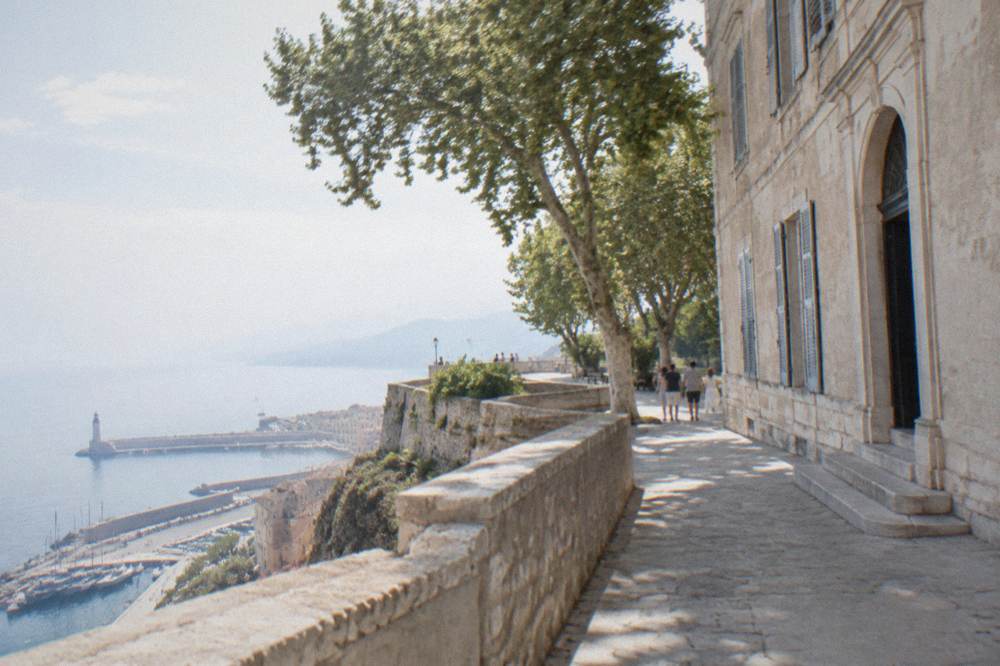
The interior of the Bastia Citadel centres on the Palais des Gouverneurs, home of the Museum of Bastia, whose collections fill the main building of the quarter, alongside the rampart walks and church squares that run above the old harbour. The museum is the quarter's principal covered sight, and the lanes and viewpoints between the walls are open to walk freely.
The Museum of Bastia is the reason to go inside on a wet day. Its reported high-season hours, 10:00 to 18:30, give a long visiting window, and the Palais des Gouverneurs is the citadel's landmark structure. Beyond the museum, the quarter's own fabric is the attraction: the ramparts look out over the old harbour and the sea lane toward Italy, and the small squares inside the walls hold the citadel's churches.
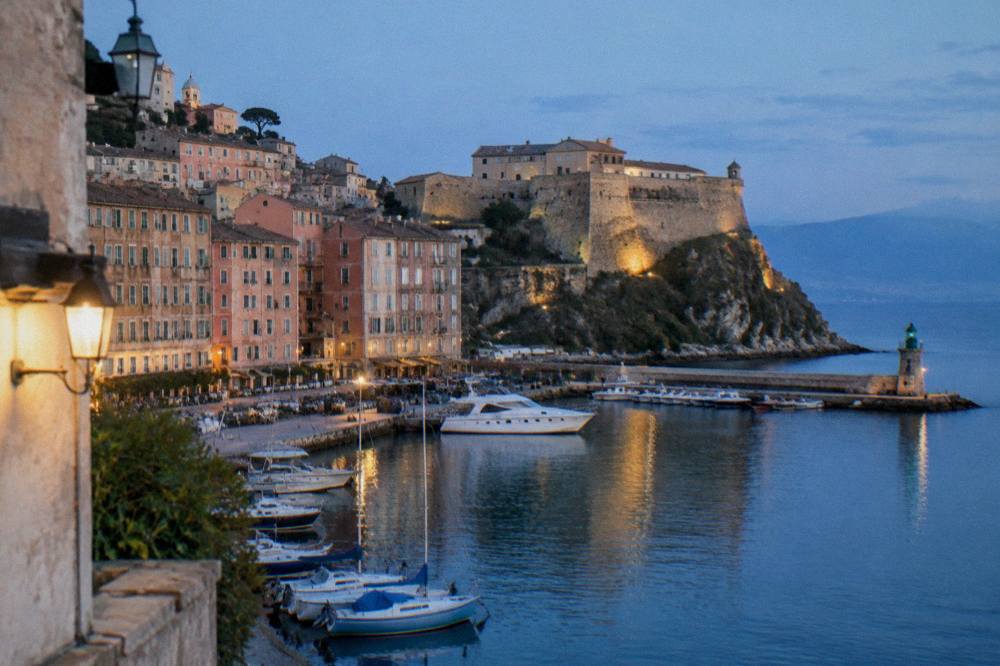
The walk down to the old harbour completes the visit. The port below the walls is where Bastia's identity as a sea town is most visible, with the fishing harbour and the ferry piers side by side. Allow a full half-day for the citadel and the old port together at an unhurried pace. Comfortable shoes matter: the lanes between the harbour and the ramparts climb steadily, and the paving is old stone throughout.
How Does The Bastia Citadel Compare With Corsica's Other Citadels?
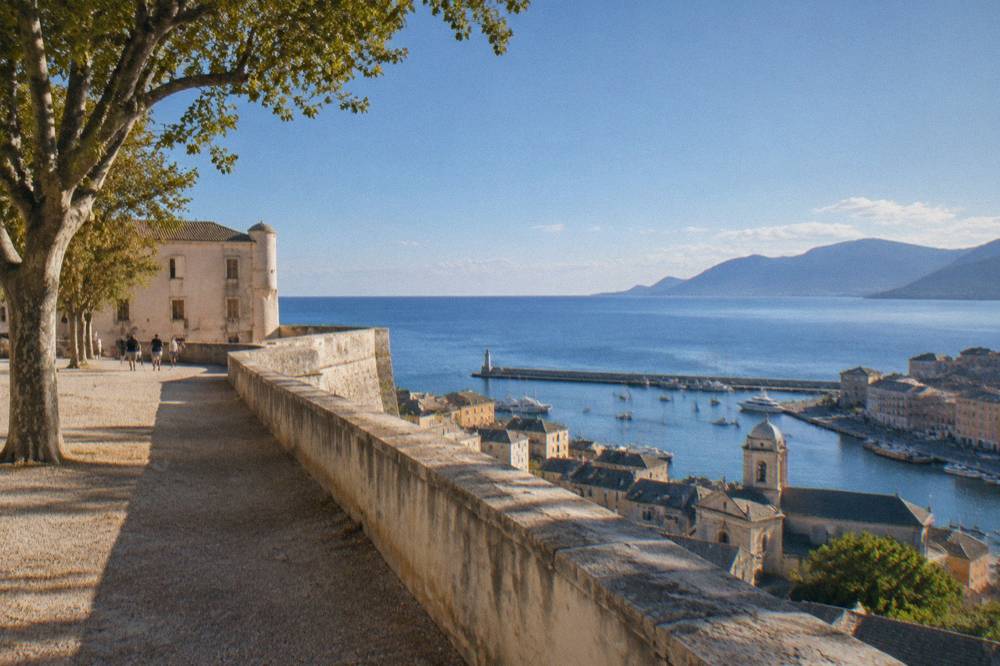
Bastia's citadel is Corsica's most port-facing fortress quarter, standing above a working ferry harbour, whereas the Citadelle de Corte sits inland in the island's mountainous middle and the Citadelle de Calvi looks over the Balagne coast in the north-west. Corte's is the only one with a fully published ticket system, EUR 5.50 covering museum and citadel together, while Calvi's fees and hours remain unconfirmed.
Each citadel answers a different Corsica. Bastia's is the arrival citadel, the first architectural statement for ferry passengers from Italy, tied to the island's busiest sea corridor. Corte's is the inland citadel of the old capital, and its combined museum ticket and daily summer hours to 19:00 make it the most straightforward to plan. Calvi's citadel crowns the Balagne coast between the sea and the mountains, near the L'Île-Rousse end of the coastal railway line. The full index of guides sits on Corsica Travel Guide.
| Citadel | Setting | Ticket and hours in this site's sources |
|---|---|---|
| Bastia | Above the ferry port, north-east coast | Museum hours reported, 10:00 to 18:30 high season; no fee published |
| Corte | Inland mountain town, old capital | EUR 5.50 full, one ticket for museum and citadel; 10:00 to 19:00 May to October |
| Calvi | Balagne coast, north-west | No fees or hours stated |
Further south, the Bonifacio citadel and cliffs give the island's most dramatic clifftop fortification, with the Escalier du Roi d'Aragon's 189 steps cut down the rock below it. The fee for the Escalier is reported at about EUR 5 with closed shoes required, details to confirm before travelling. Together with the Citadelle de Calvi, these four walled towns frame any tour of Corsica's fortified heritage, and each pairs with a different stretch of coast or mountain.
What Is There To Do Around The Bastia Citadel?
Around the Bastia Citadel the choices run from the old harbour immediately below the walls, through Cap Corse and the Désert des Agriates to the north and west, to the rail line down to Corte in the island's interior.
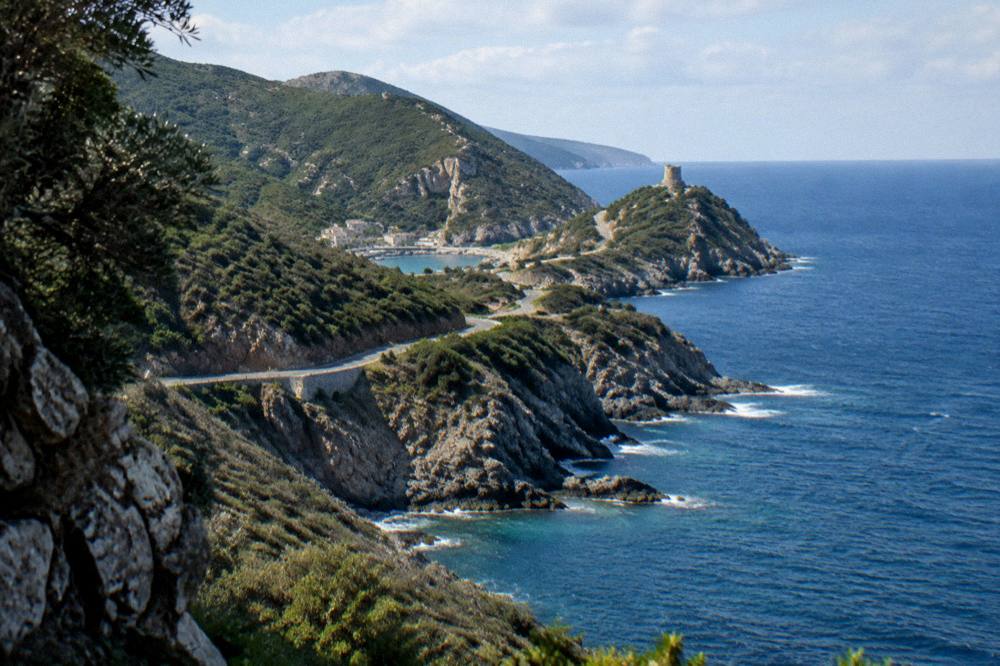
The old harbour comes first. Below the citadel walls, the port district holds the town's restaurants and the seafront, and the two quarters together fill a day without a car. With a car, Cap Corse, the peninsula reaching north from Bastia, and the Désert des Agriates beyond Saint-Florent are the headline destinations: the Agriates beaches of Saleccia and Lotu are reached by boat shuttle from Saint-Florent about April to October, weather permitting, by 4x4 track from Casta, or on foot, reported by the island's tourism body.
Southward, the road to Corte takes 1 hour, and Corte is the base for the Restonica valley and the GR20 country of the high mountains. Bastia also makes a feasible base for a long day to the Calanques de Piana and the Scandola Nature Reserve on the west coast, though the road times through the mountains make an overnight in Porto or Calvi the saner plan. Scandola itself is visited by boat only, with the land area of the reserve closed to the public, so any west-coast plan runs through a cruise from Porto, Cargèse or Sagone.
The half-day Cap Corse and Agriates trip below pairs naturally with a citadel morning:
| Road times from Bastia (verified, Museum of la Corse listing) | Time |
|---|---|
| Corte | 1 h |
| Calvi | 1 h 30 |
| Porto-Vecchio | 2 h |
| Bonifacio | 2 h 45 |
| Propriano | 2 h 45 |
How Does The Weather In Bastia Shape A Visit?
Bastia's climate normals, Météo-France station data for 1991-2020, show a hot dry summer and a mild wet winter: August averages a 29.8 °C daily high, July carries only 13.8 mm of rain, and November carries 134.3 mm. Snow in Corsica falls on the high mountains, not on the coast, and October and November bring the heaviest rainfall of the Bastia year.
What this means for a citadel visit is simple. The summer months, when the museum opens daily and the ferry season is at full strength, are also the months when Bastia's daytime highs sit at 29.4 °C in July and 29.8 °C in August, and sunshine runs above ten hours a day. The citadel's lanes are steep and largely unshaded, so morning visits and water are practical in that window.
| Month | Daily high °C | Rain mm | Sunshine h/day |
|---|---|---|---|
| January | 13.8 | 67.3 | 4.5 |
| April | 18.3 | 71.6 | 7.3 |
| July | 29.4 | 13.8 | 11.2 |
| August | 29.8 | 21.1 | 10.1 |
| October | 22.0 | 126.5 | 5.9 |
| November | 17.7 | 134.3 | 4.5 |
Autumn and spring suit walkers who prefer cool air, but the trade-offs are real: from October the museum drops to its low-season hours and Sunday and Monday closures, and from mid-June to mid-September access to some forest massifs on the island can be restricted under the fire-risk map, updated at 18:00 daily. From 15 June to 30 September fires and smoking are forbidden in forests, maquis and massifs across Corsica. Bastia's coastal position keeps it clear of the snow that sits on the high mountains in winter, and the town's winters stay mild, with January averaging a 13.8 °C daily high.
What Practical Tips Help At The Bastia Citadel?
Practical basics for the Bastia Citadel: the currency is the euro, the emergency number is 112, with 15 for medical, 17 for police and 18 for fire, and mountain rescue in Corsica runs through the PGHM in Ajaccio on 04 95 24 24 00. Tipping in French restaurants is optional by law, since menus must state that service is included, and the UK FCDO notes a high wildfire risk in France from April to October.
A few details make the day smoother. Service in Corsican restaurants is "prix service compris", with the service percentage shown on the menu, so an extra tip is a voluntary gesture rather than an obligation. At sea, the emergency number 196 reaches sea rescue, monitored on VHF channel 16. In the mountains, the PGHM base in Ajaccio answers on 04 95 24 24 00, and in any emergency 17 or 112 is the call. None of this should spoil a citadel stroll, but anyone heading on from Bastia into the massifs or out on the water should have the numbers to hand.
The US State Department lists France at Level 2, Exercise Increased Caution, reported in its travel advisory, standard advice for France nationwide. Corsica's lifeguarded beaches run on a seasonal pattern: Ajaccio staffed seven posts from 1 July to the end of August 2026, and Haute-Corse's supervised beaches were reported staffed by volunteer firefighters about 1 July to 31 August.
Is The Bastia Citadel Worth Visiting?
The Bastia Citadel is worth visiting for anyone arriving in or staying near Bastia: it is the town's historical core, it holds the Museum of Bastia with a long high-season opening window, and it sits within a half-day's reach of Cap Corse, the Désert des Agriates, Corte and the Balagne. Its practical limits are the low-season museum closures and the thin published visitor information compared with Corte.
The honest framing is this. If Corsica means beaches and boat trips to you, the citadel is a half-day cultural stop, not a destination in itself, and the island's headline sea sights, from Palombaggia beach to the Lavezzi islands, lie hours to the south. If you arrive by ferry from Italy, or you base in Haute-Corse, the citadel and the old harbour are the natural first walk, and the question of the town as a base is weighed in full on is Bastia worth visiting.
For a structured visit, the guided walking tour is the one bookable product this site carries for the town itself, and it covers the ground most first visitors want:
Common Questions About The Bastia Citadel
Is The Bastia Citadel Open On Sundays?
The Museum of Bastia is reported closed on Sundays and Mondays in low season, October to April, and open daily in July and August with Monday closures in May, June and September. Confirm the current schedule before you go.
For comparison, the Museum of la Corse in Corte charges EUR 5.50 full, with one ticket covering museum and citadel.
How Do I Get To The Bastia Citadel From The Ferry Port?
The citadel sits directly above Bastia's old harbour, a short walk from the ferry terminal through the lower town streets. No transport is needed; the climb is on foot and the lanes are steep.
Can You Visit The Bastia Citadel And Cap Corse In One Day?
Yes. The citadel and old harbour fill a morning, and Cap Corse and the Désert des Agriates half-day trip runs as an afternoon option from the Saint-Florent area, reported as a four-hour outing.
Is The Bastia Citadel Good In Winter?
Winter visits are possible but constrained: the Museum of Bastia keeps low-season hours of 09:00 to 12:00 and 14:00 to 17:00, closed Sundays and Mondays, and Bastia's November rainfall averages 134.3 mm per the Météo-France 1991-2020 station normals. The lanes and viewpoints remain walkable in dry weather, and January still averages a 13.8 °C daily high.
Bastia's citadel is the island's front door, and a morning on its walls, followed by a long lunch at the old harbour below, is the shape of a good first day in Haute-Corse.