Calvi Airport
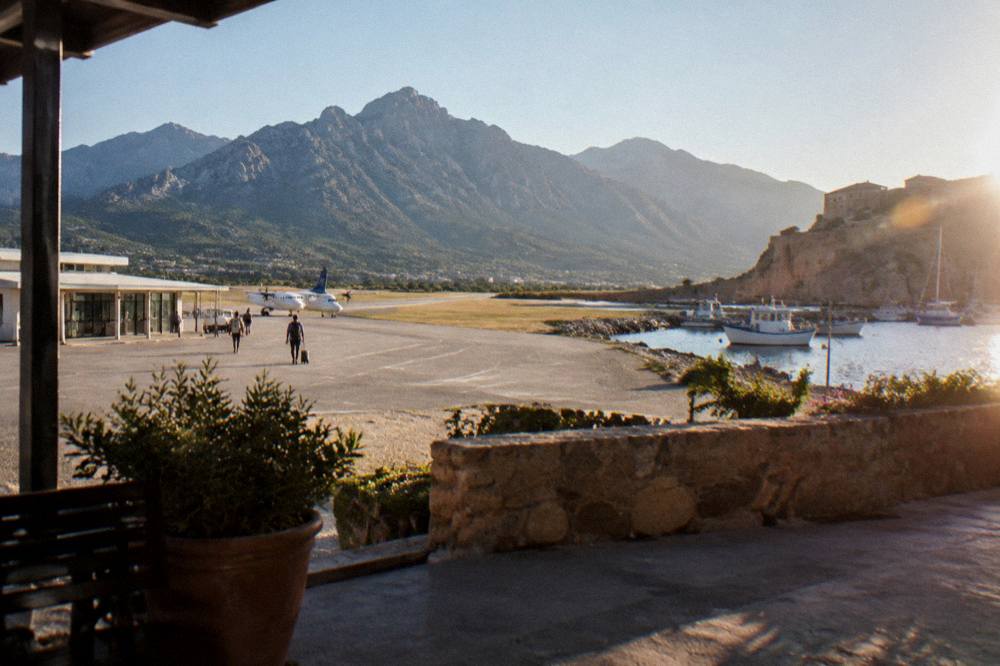
Calvi Sainte-Catherine Airport (CLY) is the smallest of Corsica's four airports and the one that puts you straight into the Balagne, the island's northwest coastal region of sandy beaches and hilltop villages.
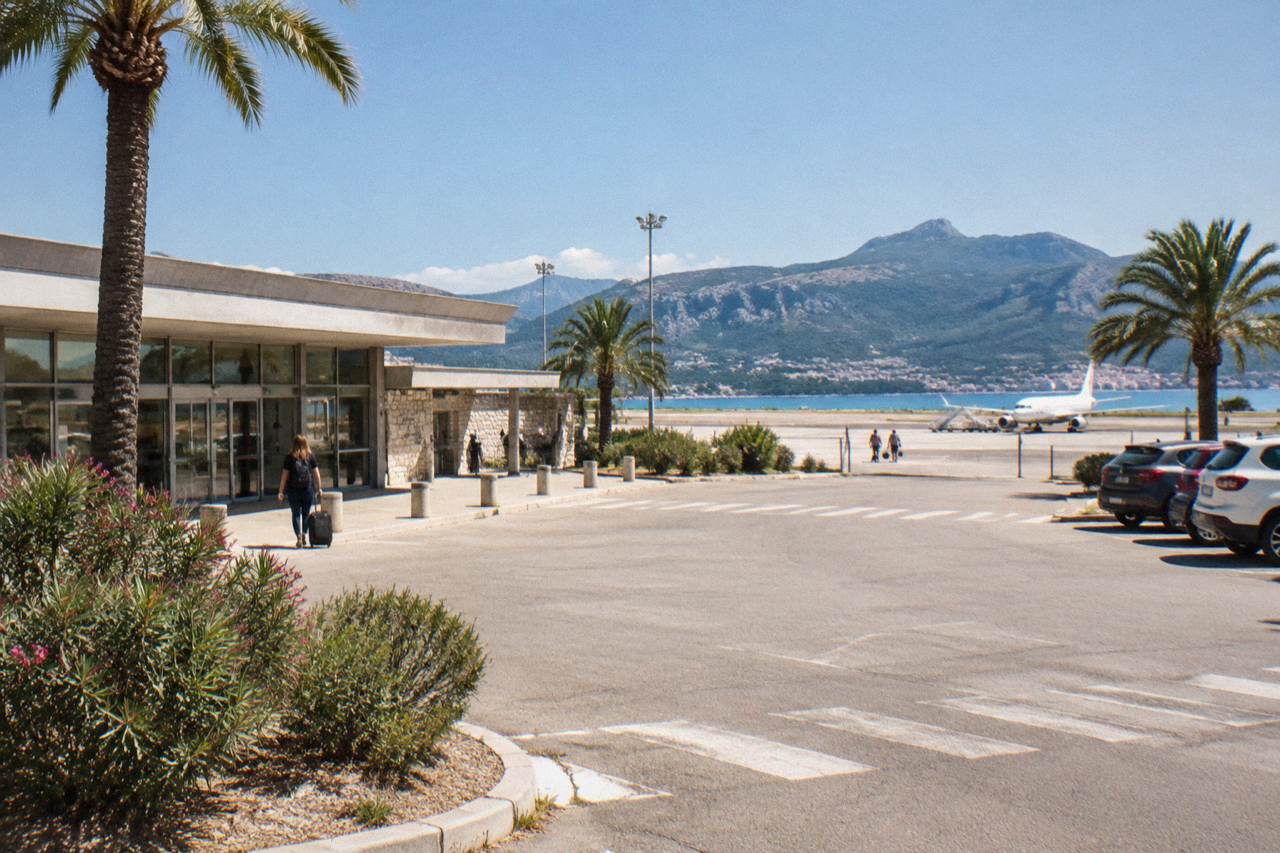
Calvi Sainte-Catherine (CLY) is one of Corsica's four airports, alongside Ajaccio (AJA), Bastia (BIA) and Figari (FSC). It serves Calvi and the Balagne on the northwest coast, with reported seasonal flights by Air Corsica, Air France, easyJet and Volotea. Car hire, the Balagne coastal train to L'Île-Rousse and boat trips along the coast are the main ways onward from the terminal.
Calvi Sainte-Catherine Airport (CLY) sits on the northwest coast of Corsica, the French Mediterranean island of 8,722 km2 with more than 1,000 km of coastline and a mountainous interior that rises to Monte Cinto at 2,706 m. It is the airport for Calvi and the whole Balagne region, a stretch of coast and hill villages between the sea and the high interior. Of the island's four airports, Ajaccio Napoléon Bonaparte, Bastia Poretta, Figari Sud Corse and Calvi Sainte-Catherine, CLY is the one that drops you closest to the beaches of the northwest.
This page sets out what the sources say about the airport itself, the reported airlines, and every practical question that follows landing: getting to Calvi town, whether you need a car, the coastal train, and what to do once you are there. Corsica is a sea-surrounded island, so boat trips, ports and beaches sit at the centre of any stay in the Balagne, and the region also opens onto the Scandola Reserve and the Désert des Agriates.
Where Is Calvi Airport In Corsica?
Calvi Sainte-Catherine Airport (CLY) is the northwest airport of Corsica, serving Calvi and the Balagne region on the coast between the sea and the island's mountainous interior. Corsica's four airports are Ajaccio Napoléon Bonaparte (AJA), Bastia Poretta (BIA), Figari Sud Corse (FSC) and Calvi Sainte-Catherine (CLY), and CLY is the one placed on the northwest coast.
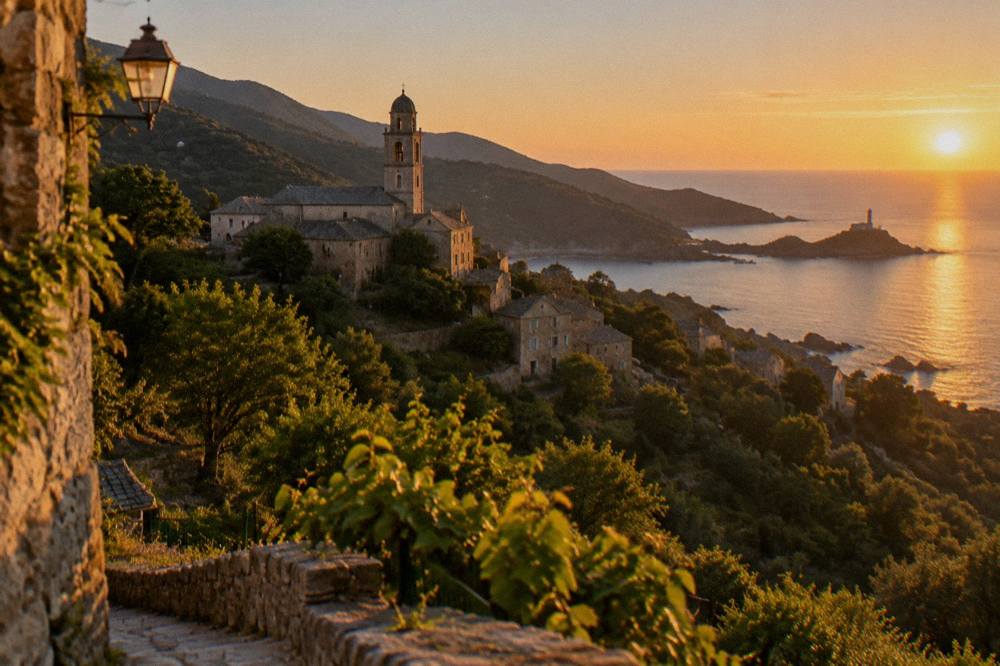
The Balagne is the region around Calvi and L'Île-Rousse, a stretch of coast backed by hill villages and, further inland, the high massifs of the island's interior. The interior of Corsica, places like Corte and the Niolu, is the inland part of the island; the Balagne is its sea-facing flank. Flying into CLY puts the beaches, the citadel town of Calvi and the hilltop villages of the interior all within reach on the same visit.
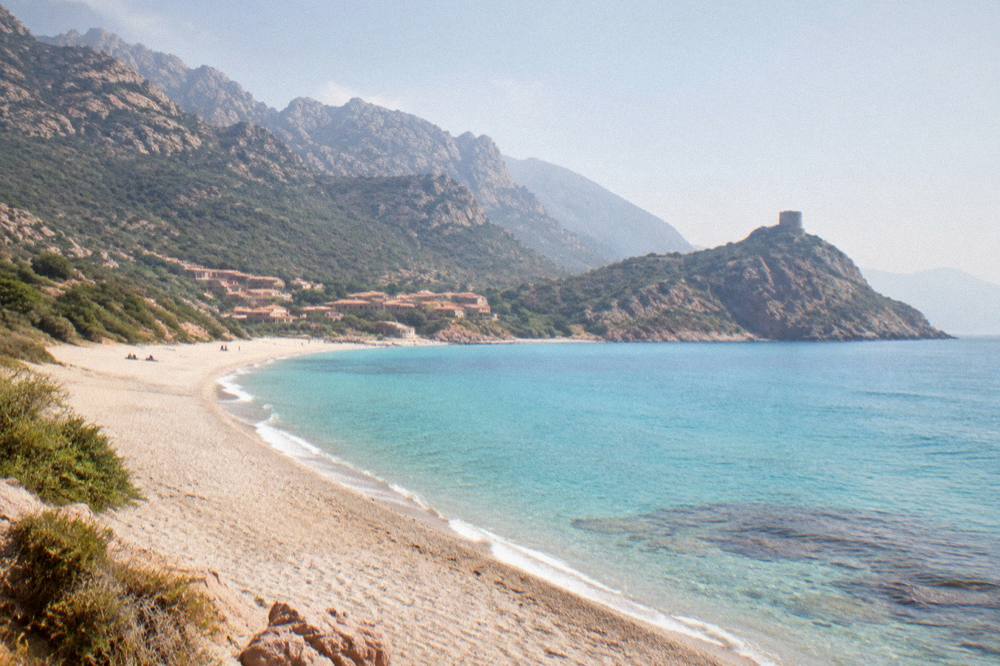
Corsica itself is 8,722 km2, the fourth-largest island in the Mediterranean, with 360 communes and a population the provisional INSEE estimate for 1 January 2026 puts at 365,636. The Parc naturel régional de Corse, created in 1972, covers 4,484 km2 and includes not only the mountain heart of the island but big valleys that run down to the sea. Its western sea front runs 80 km from Capu Rossu to Capu Cavallu, which gives a sense of how closely mountain and sea sit together here.
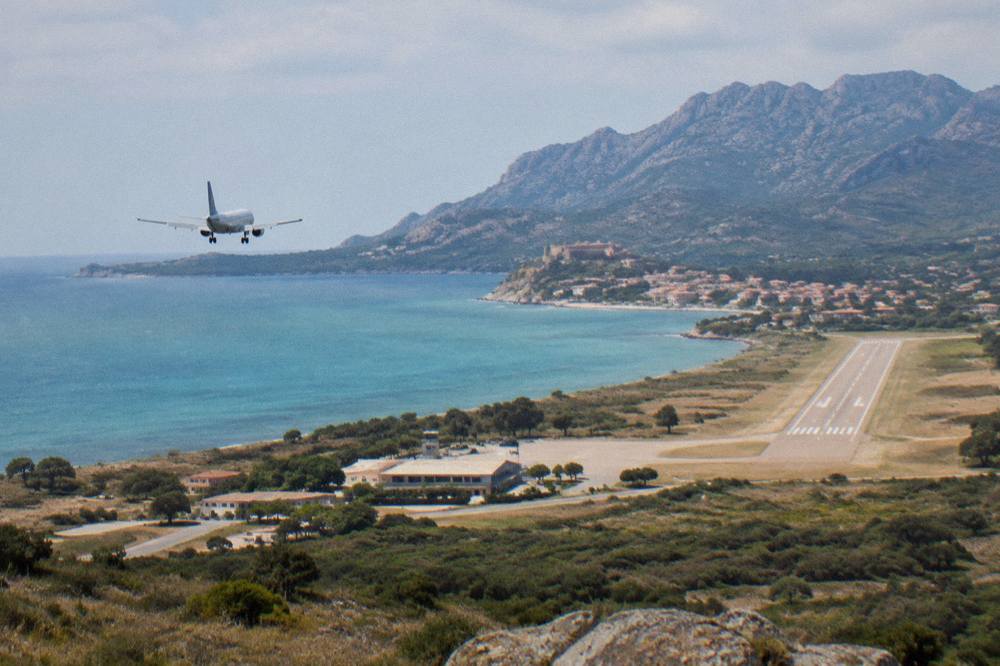
Choosing CLY over the island's other airports is mostly a decision about geography. Ajaccio, the capital and the island's main town with 76,320 residents, sits on the west coast well to the south. Bastia, the second town with 46,867 residents, is on the northeast coast. Figari serves the far south near Bonifacio and Porto-Vecchio. Calvi serves the northwest, and nothing else does. The wider picture of the island's four gateways is covered in the Corsica airports overview, and the question of whether the town itself rewards the flight is weighed in is Calvi worth visiting.
| Airport | Code | Serves |
|---|---|---|
| Ajaccio Napoléon Bonaparte | AJA | Ajaccio and the west coast |
| Bastia Poretta | BIA | Bastia, Cap Corse and the northeast |
| Figari Sud Corse | FSC | Bonifacio, Porto-Vecchio and the far south |
| Calvi Sainte-Catherine | CLY | Calvi, L'Île-Rousse and the Balagne |
Which Airlines Fly To Calvi Sainte-Catherine?
Airlines reported to serve Corsica's airports include Air Corsica, Air France, easyJet and Volotea, among others, with schedules varying by season, and specific Calvi routes should be confirmed with the operator before booking. CLY is a small seasonal airport, and the flight list changes between winter and summer, so the live timetable is the only reliable source for a given week.
The airline information comes from reporting on the island's airports rather than a single carrier list for CLY, and seasonal airports in Corsica routinely add summer-only routes. The practical advice is to treat any route you find as provisional until it is ticketed. For the full picture of reaching the island by air, including the other three airports, see flights to Corsica, and for the sea alternative, the ferry to Corsica runs year-round on key lines from Marseille with Corsica Linea and La Méridionale, while Corsica Ferries is reported to sail from Toulon and Nice.
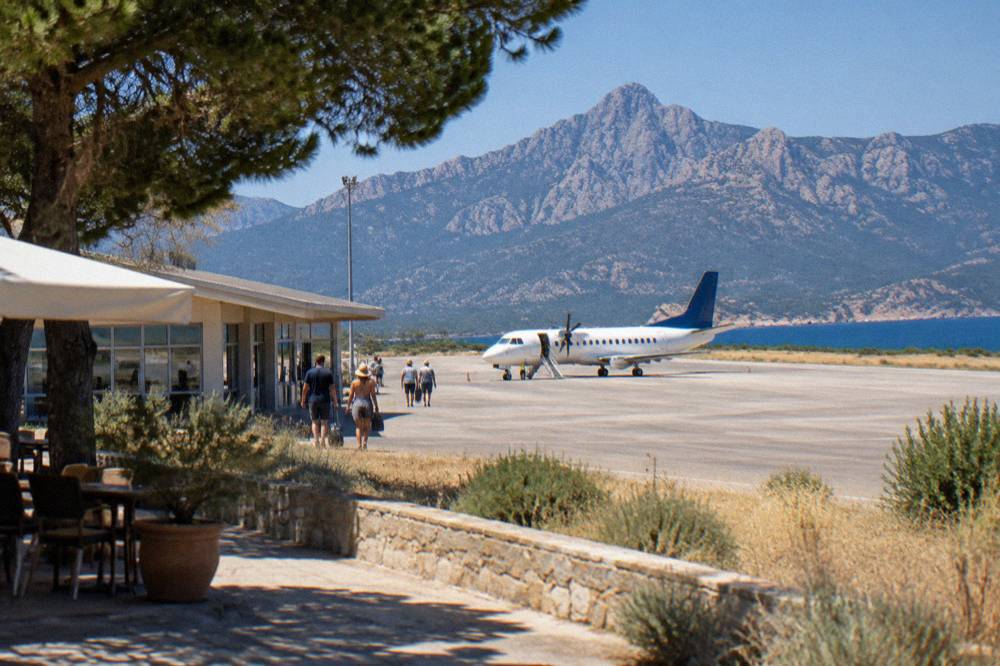
Calvi is also a ferry port, one of seven on the island alongside Ajaccio, Bastia, Bonifacio, L'Île-Rousse, Propriano and Porto-Vecchio, so a summer visit can combine flying in and sailing out. The short Italy links include Livorno to Bastia, reported at about 4 to 5 hours, and Savona to Bastia at about 6.5 hours; from Sardinia, the Santa Teresa Gallura to Bonifacio crossing takes about 50 to 60 minutes and a report of 9 October 2026 confirms Moby and Ichnusa Lines keep that route after Sardinia found no rival operator. The Corsica Sardinia ferry guide covers that link in detail.
| Ferry link to Corsica | Typical crossing time (reported range) |
|---|---|
| Marseille to Ajaccio or Bastia | about 12 to 13 hours |
| Toulon to Ajaccio or Bastia | about 10 to 13 hours |
| Nice to Bastia | about 7.5 to 10 hours |
| Savona to Bastia | about 6.5 hours |
| Livorno to Bastia | about 4 to 5 hours |
| Santa Teresa Gallura to Bonifacio | about 50 to 60 minutes |
How Do You Get From Calvi Airport To Calvi Town?
Calvi Sainte-Catherine sits at the edge of Calvi, the main town of the Balagne, and onward travel from the terminal runs by hire car, taxi or transfer, with the town, its citadel and its port all in the immediate area. No fare, timetable or journey time for the airport-to-town hop is fixed here, because none is published in the sources this site reports, so budget from the operator's own rates at the time of booking.
What the sources do say is broader and more useful. Inforoutes Corse publishes live road conditions and accessibility levels for the main mountain passes, which matters the moment you leave the coast road and climb into the Balagne interior. Corsica's roads are narrow and mountainous away from the main corridors, and the live map is the standing reference for cols and works. The driving in Corsica guide collects the rules and habits, and getting around Corsica compares car, train and bus options island-wide.
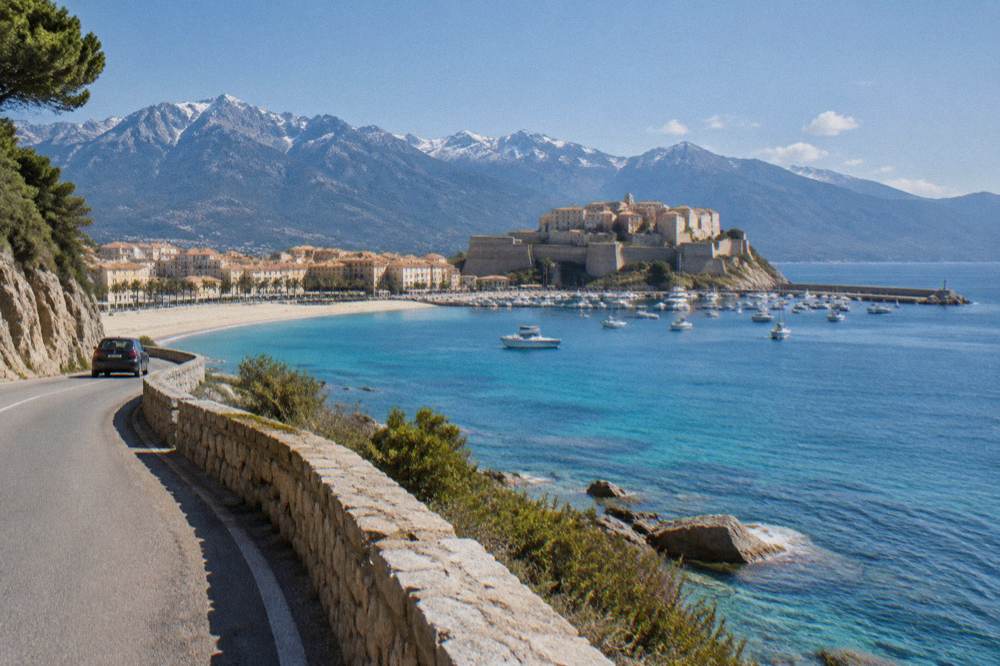
The train is the other reported option in the region. The Chemins de fer de la Corse, the island's rail network, is reported to run three lines: Ajaccio to Bastia via Corte, Ponte-Leccia to Calvi, and the Balagne coastal line between Calvi and L'Île-Rousse. The coastal line is the one that matters after landing at CLY, linking Calvi with L'Île-Rousse along the shore. Timetables are published seasonally by the operator, and exact journey times are not stated here because the sources do not fix them. The tour of the Corsican train is not the train; for the rail journey itself see the getting-around guide above.
| Chemins de fer de la Corse line | Route |
|---|---|
| Main line | Ajaccio to Bastia via Corte |
| Balagne branch | Ponte-Leccia to Calvi |
| Coastal line | Calvi to L'Île-Rousse |
Do You Need A Car If You Fly Into Calvi?
A hire car is the flexible choice for the Balagne and the interior, because the hilltop villages, the Scandola departure points and the Désert des Agriates all sit beyond easy walking or rail reach, but a stay focused on Calvi town, the beaches and the coastal train can be managed without one. Boat trips, the citadel and the port are all reachable on foot from the centre of Calvi.
The case for a car is the geography. The Balagne's old villages sit up in the hills, the road to them is narrow and winding, and the island's interior, Corte and the Restonica valley, is genuinely inland country where a vehicle or a guided tour is the practical answer. The Corsica car rental guide covers the hire process, and the island-wide context, including the four airports and the ferry ports, is in the Corsica airports overview.
The case against a car is the coast. Calvi itself holds its citadel, its port and its beaches, L'Île-Rousse is linked by the reported coastal rail line, and the sea supplies the rest: cruises to Scandola, sunset trips along the Revellata peninsula, and catamaran days in the Agriate. For a summer week based in town with two or three booked boat days, the car can stay unhired.
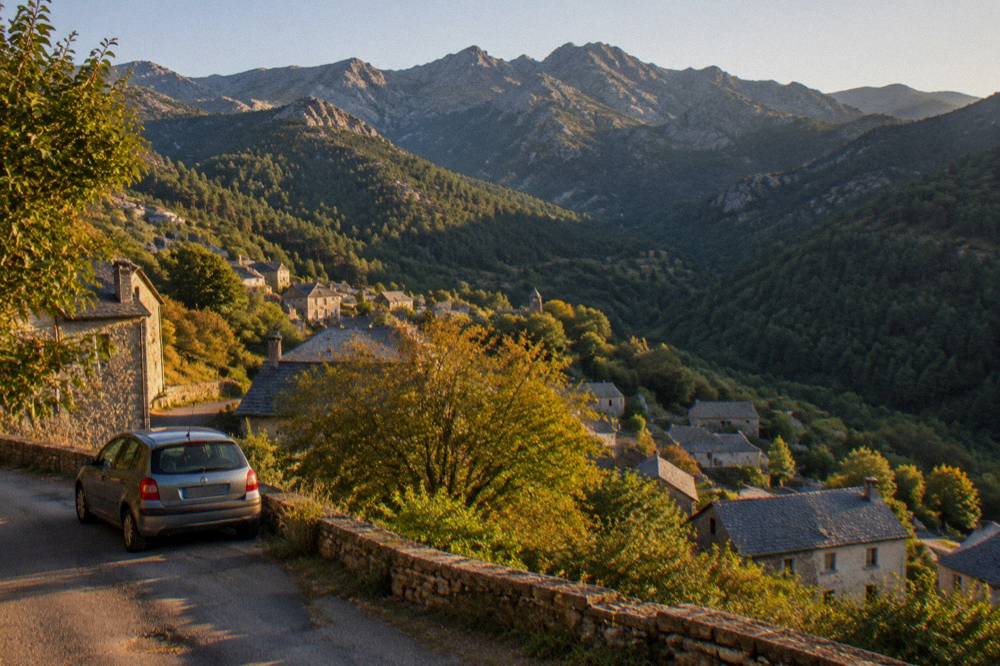
One middle path is a guided day trip. A small-group jeep or 4x4 tour into the Agriate, toward the beaches of Lotu and Saleccia, or a guided tour of the old hilltop villages, puts the mountain roads in the hands of a driver who knows them, and the tour token below prints the price, rating and duration from live data. The Calvi and the Balagne area guide maps the region's towns and beaches for planning either way.
What Can You Do Near Calvi Airport?
The citadel of Calvi, the town's port and beaches, the Revellata peninsula by boat, the coastal line to L'Île-Rousse and the hilltop villages of the Balagne interior are the draws within reach of CLY, with boat trips to Scandola and the Agriate desert as the headline sea days. The region mixes a sea-surrounded coastline with an inland hill country, and both are close.
In town, the citadel is the standing monument; check its fees and hours with the Calvi tourist office before a visit. The Calvi citadel guide describes the monument, and the area guide covers the beaches of the Balagne, which the island-wide Corsica beaches roundup also treats.
Boat trips run from Calvi to Scandola, a cruise covered in the Calvi to Girolata and Scandola day trip guide; sunset cruises head for the Revellata peninsula; snorkelling trips work the edge of the Revellata marine reserve; catamarans run aperitif and full-day trips into the Agriate from L'Île-Rousse. Scandola itself deserves the emphasis: it forms part of the UNESCO World Heritage property "Gulf of Porto: Calanche of Piana, Gulf of Girolata, Scandola Reserve", inscribed in 1983, and its land area is closed to the public, with visits by boat only, as reported by the reserve's managers.
| Calvi-area experience | What the verified listings cover |
|---|---|
| Boat trip to Scandola | Cruise from Calvi toward the UNESCO reserve |
| Sunset cruise to Revellata | Evening sailing along the peninsula |
| Snorkelling at Revellata | Boat ride with snorkelling at the marine reserve edge |
| Catamaran in the Agriate | Full-day and aperitif-sunset catamaran trips from L'Île-Rousse |
| Wine tasting | Tastings around Calvi and Île-Rousse |
| Hilltop villages tour | Small-group day trip into the Balagne interior |
Inland, the same departure points serve the hill villages and the high country. A guided tour of the old hilltop villages runs from Calvi as a small-group day trip, and 4x4 days reach the Asco valley. The interior of the island, Corte and the trails around it, is covered in the hiking in Corsica guide, and the grand walk of the island, the GR20, runs 180 km north to south in about 15 stages of 4 to 8.5 hours, with PNRC refuges guarded in 2026 from 16 May to 4 October, bunk nights at EUR 20 per person and bivouac pitches at EUR 12, booked online only. The full trail treatment is in the Corsica GR20 guide. Everything else covered here is indexed on Corsica Travel Guide.
The hilltop-villages day trip is the natural first inland excursion from CLY. It runs as a small-group island day trip from Calvi, and the listing prints its own price, rating and duration. For a taste of the same region with the sea still in view, the sunset cruise below sails the Revellata peninsula in the evening, and the inline link goes to the live listing for dates. Check availability for the villages trip before finalising a hire car, since the two cover much of the same ground.
Calvi Airport Or Another Corsican Airport: Which Serves Your Trip?
Fly into Calvi Sainte-Catherine for a Balagne-first trip built on beaches, boat trips and hill villages; fly into Bastia for Cap Corse, Saint-Florent and the northeast; fly into Ajaccio for the capital, the Sanguinaires and the southwest; and fly into Figari for Bonifacio, Porto-Vecchio and the far south. Each airport anchors a different corner of the island.
The decision follows the itinerary rather than the airline. A week split between Calvi, L'Île-Rousse and the Agriate belongs to CLY. A trip that pairs the Balagne with Bastia or Cap Corse can use either airport, since the reported rail lines and the coastal road link the two ends of the northeast, but Inforoutes Corse should be checked for pass conditions on any cross-mountain drive. The Corsica north itinerary and Corsica south itinerary guides lay out both halves of the island, and where to stay in Corsica matches bases to regions, with upscale options in luxury hotels in Corsica.
Sardinia adds a further option. The Bonifacio to Santa Teresa Gallura crossing of about 50 to 60 minutes makes a two-island trip workable, and the Corsica and Sardinia in one trip question is treated at length in its own guide. For that itinerary Figari or a ferry arrival serves better than CLY.
What Is The Weather Like In Calvi And The Balagne?
Corsica has a hot dry summer and a mild wet winter, with snow only on the high mountains, and the Météo-France 1991-2020 climate normals for Ajaccio show July averaging 28.6 °C highs with 8.6 mm of rain, and November carrying 111.8 mm. Calvi has no published station table in this site's sources, so the Ajaccio and Bastia normals stand as the island's coastal reference.
The Ajaccio figures give the west-coast pattern: rainfall bottoming out in summer, peaking in the October-to-November stretch, and sunshine hours per day running from 4.0 in December to 12.1 in July. Bastia, on the east side of the spine, shows the same shape with more rain overall, 816.9 mm across the year against Ajaccio's 635.0 mm, and November at 134.3 mm. The month-by-month detail, with the planning questions that follow from it, is in Corsica weather by month and best time to visit Corsica.
| Month | Ajaccio high °C | Ajaccio rain mm | Bastia high °C | Bastia rain mm |
|---|---|---|---|---|
| Jan | 14.0 | 54.1 | 13.8 | 67.3 |
| Feb | 14.2 | 48.1 | 13.9 | 63.5 |
| Mar | 16.0 | 50.4 | 15.8 | 63.7 |
| Apr | 18.5 | 53.1 | 18.3 | 71.6 |
| May | 22.1 | 49.8 | 22.4 | 53.7 |
| Jun | 25.9 | 25.9 | 26.4 | 38.8 |
| Jul | 28.6 | 8.6 | 29.4 | 13.8 |
| Aug | 29.2 | 15.8 | 29.8 | 21.1 |
| Sep | 26.1 | 57.8 | 26.0 | 74.5 |
| Oct | 22.8 | 85.7 | 22.0 | 126.5 |
| Nov | 18.3 | 111.8 | 17.7 | 134.3 |
| Dec | 15.1 | 73.9 | 14.8 | 88.1 |
One seasonal rule matters more than the averages for summer planning. From 15 June to 30 September it is forbidden to light a fire or smoke in forests, maquis and massifs across Corsica, and the fire-risk map is updated at 18:00 for the next day, with access to some massifs restricted from mid-June to mid-September on high-risk days. The UK FCDO notes a high wildfire risk in France from April to October. If a Balagne stay includes inland walking, the daily map is part of the routine.
What Practical Rules Apply Around Calvi And Corsica?
Emergency numbers in Corsica are 112 for the EU-wide line, 15 for medical, 17 for police, 18 for fire, 114 by SMS or app, and 196 for sea rescue, with mountain rescue reachable through PGHM Ajaccio on 04 95 24 24 00. Wild camping is banned across Corsica, restaurant service is included in menu prices by law, and the currency is the euro.
Those are the standing practicals this site's sources verify. On camping: wild camping is banned across the island including the GR20, with bivouac tolerated only in the marked areas at PNRC refuges, booked per person. On money: menus must state "prix service compris" with the service percentage, so an extra tip is optional rather than expected. On the sea: at sea, rescue is reached on VHF channel 16 or 196, and Haute-Corse beaches are supervised by volunteer firefighters roughly 1 July to 31 August, per local reporting, with Ajaccio running seven lifeguard posts from 1 July to the end of August 2026.
For families weighing the region, the Corsica with kids guide treats the practical questions island-wide, and the root page of the site, things to do in Corsica, indexes every region and activity. The US State Department lists France at Level 2, Exercise Increased Caution which applies nationwide.
Common Questions About Calvi Airport
What Is The Airport Code For Calvi?
The code is CLY, for Calvi Sainte-Catherine Airport, one of Corsica's four airports alongside Ajaccio Napoléon Bonaparte (AJA), Bastia Poretta (BIA) and Figari Sud Corse (FSC).
Which Airlines Fly To Calvi Sainte-Catherine?
Air Corsica, Air France, easyJet and Volotea are among the operators reported to serve Corsica's airports, with seasonal variation, so confirm the live route list with the operator before booking.
How Do I Get From Calvi Airport To Calvi Town?
Onward travel is by hire car, taxi or transfer, and no fare or timetable for the hop is fixed in this site's sources, so check rates at the time of booking. The reported Balagne coastal train links Calvi with L'Île-Rousse along the shore.
Do I Need A Car In The Balagne?
Not for a stay focused on Calvi town, its beaches and boat trips. A car or a guided day trip becomes useful for the hilltop villages, the interior and cross-island travel.
Can You Take A Train From Calvi?
The Chemins de fer de la Corse are reported to run a coastal line between Calvi and L'Île-Rousse, a branch from Ponte-Leccia to Calvi, and the main line from Ajaccio to Bastia via Corte. Timetables are seasonal and published by the operator.
Is Calvi Airport Open All Year?
CLY is a small seasonal airport and schedules change through the year, so treat any route as provisional until ticketed and check the operator's live timetable for your dates.
Calvi Sainte-Catherine is the quietest of Corsica's four gateways, and that is its whole appeal: one landing and you are already inside the Balagne, with the citadel, the beaches, the coastal train to L'Île-Rousse, the boat trips to Scandola and the hill villages of the interior all arranged around a single small airport.