Corsica Cost
Corsica costs what the facts say it costs: EUR admission prices at the island's museums and prehistoric sites, EUR 20 refuge bunks on the GR20, and a euro economy throughout. This guide sets out every fixed local price the official sources publish, so the budget can be built on real figures rather than guesses.
Corsica uses the euro, and its main fixed local costs are published: Maison Bonaparte charges EUR 10, Palais Fesch EUR 10, the Musée de la Corse EUR 5.50, Filitosa EUR 9, and a GR20 refuge bunk costs EUR 20 per person per night. Restaurant service is included by law, tipping is optional, and the big variables are the flight or ferry and the car.
Corsica, the French Mediterranean island of 8,722 km2 with more than 1,000 km of coastline, runs entirely on the euro, and a surprising share of what a visitor pays on the island is fixed and published. The national museum in Ajaccio charges EUR 10. A bunk in a guarded refuge on the GR20 costs EUR 20 per person per night, set by the Parc naturel régional de Corse. Restaurant menus must state "prix service compris" with the service percentage included, so a further tip is a choice, not an obligation. No official source publishes hotel rates, ferry fares or taxi prices, so this article leaves them out.
The honest way to budget Corsica is to separate the costs that are printed somewhere official from the costs that float. Admissions to the island's museums and prehistoric sites are printed, in euros, by the institutions themselves. Refuge rates on the long-distance trails are printed by the PNRC. Everything else, the room, the rental car, the crossing, the restaurant bill, moves with the season and the operator. This guide at Corsica Travel Guide works through the printed layer first, then explains where the floating layer sits and how to plan around it without inventing numbers.
What Does A Trip To Corsica Cost?
A Corsica trip splits into fixed local costs in euros and two or three large floating costs. The fixed layer is small and fully published: EUR 10 at Maison Bonaparte, EUR 10 at the Palais Fesch, EUR 5.50 at the Musée de la Corse in Corte, EUR 9 at Filitosa and EUR 20 a night for a GR20 refuge bunk. The floating layer, the flight or ferry, the room and the car, is not published as a single figure anywhere official and must be priced per traveller.
That split matters because the internet is full of invented Corsica averages. A page that tells you "Corsica costs X per day" without a source for each number is estimating, and island estimates drift badly between July and November. The published figures, by contrast, are stable: the PNRC's 2026 refuge tariffs are printed on its own GR20 page, and the museum prices below come from the museums' practical-information pages and the Ajaccio tourist office listing.
The floating costs deserve respect rather than guesswork. More than 8.5 million passengers, excluding cruise passengers, passed through Corsica's ports and airports in 2025 according to the ORTC and DREAL annual report, which gives a sense of the demand pressure on summer seats and berths. Planning pages such as how to reach Corsica by ferry and flights to Corsica cover the routes and operators in detail; the fare itself is only ever quoted at the moment of booking.
How Much Do Museums And Sights Cost In Corsica?
The headline admissions, all in euros, are: Maison Bonaparte EUR 10 full, Palais Fesch EUR 10 full with EUR 6 for over-65s and free entry up to 18, the Musée de la Corse and Corte citadel EUR 5.50 on one combined ticket, Filitosa EUR 9 adults with a EUR 28 family ticket, and the Escalier du Roi d'Aragon about EUR 5. Free and reduced bands exist at every state-run site, and EU residents under 26 get into Maison Bonaparte free.
These are the island's fixed cultural costs, and they are low by the standards of major European capitals. The detail is in the reduced tariffs, which the institutions publish themselves and which are worth knowing before arrival.
| Sight | Full price | Reduced / free |
|---|---|---|
| Maison Bonaparte, Ajaccio | EUR 10 | EUR 8 non-EU residents 18-25 and large families; free for EU residents under 26 |
| Palais Fesch, Ajaccio | EUR 10 | EUR 6 over-65s; free up to 18 |
| Musée de la Corse + Citadelle de Corte | EUR 5.50 | EUR 4 (no temporary show), EUR 3 over-65s and young people; one ticket covers both |
| Filitosa prehistoric site | EUR 9 adults | EUR 7 ages 6-17 and disabled; EUR 28 family (2 adults + 2 children); free under 6 |
| Escalier du Roi d'Aragon, Bonifacio | about EUR 5 | EUR 2 children 6-11; closed-toe flat shoes required |
Hours matter as much as prices. Maison Bonaparte is closed on Mondays and runs seasonally: 10:00 to 17:30 continuous from 1 July to 30 September, split morning and afternoon sessions the rest of the year. The Palais Fesch is listed daily 09:00 to 17:00 for 2026, closed Christmas, New Year and 1 November. In Corte, the museum and citadel run 10:00 to 19:00 daily from 1 May to 31 October, then 10:00 to 17:00 except Sundays, Mondays and holidays, with an annual closure from 31 December to 14 January. Filitosa opens 1 April to 2 November. A failed visit costs more than any admission ticket, so the Ajaccio city guide and the individual sight pages are worth a check before travelling.
Two things the sources do not license saying: the Bonifacio and Calvi citadels have no published standalone fee or hours available, and the Escalier du Roi d'Aragon's exact fee needs confirming before travel. Treat both with a confirm-before-going reflex rather than a printed promise.
The products above are the low end of paid sightseeing in Ajaccio, on the west coast and inland near Sagone: a town-and-coast bus loop, a boat trip from Calvi, and a skip-the-line admission at the A Cupulatta turtle park.
How Much Does Hiking The GR20 Cost?
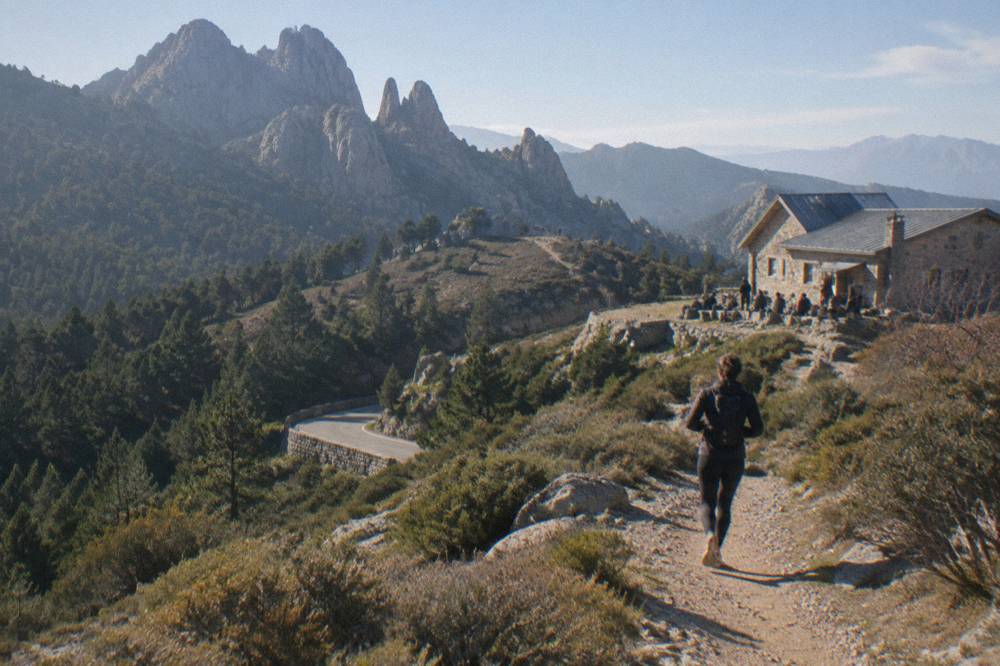
A night in a guarded PNRC refuge on the GR20 costs EUR 20 per person in a dormitory bunk, a bivouac pitch for your own tent is EUR 12 per person, and a rented tent is EUR 27 for one person or EUR 39 for two, per the PNRC's own 2026 tariff page. Booking is mandatory for every option, online only, and the 2026 guarded season runs from 16 May to 4 October.
Those four numbers are the entire fixed cost of walking the trail, which runs 180 km north to south in about fifteen stages of 4 to 8.5 hours. Meals at the refuges are paid in cash or cheque to the guardian on site, so walkers carry euros rather than rely on cards. Every PNRC rental tent sleeps two and comes with a 3 cm mat per person; bring your own sleeping bag. Dogs are not allowed inside refuges or rented tents.
| GR20 overnight option (PNRC 2026) | Price per person | Notes |
|---|---|---|
| Refuge bunk (bat-flanc) | EUR 20 | Dormitory, booking mandatory |
| Bivouac pitch, own tent | EUR 12 | Only in marked areas at refuges |
| Rented tent, 1 person | EUR 27 | Pitch plus tent, sleeps two, 3 cm mat |
| Rented tent, 2 persons | EUR 39 | Two bivouac pitches plus tent |
Two rules protect both the budget and the walker. Wild camping is banned across Corsica including the GR20; bivouac is tolerated only in the designated areas at the refuges, and every pitch must be reserved. And no GR20 departures are allowed from Calenzana after 11:00, under a municipal order tied to fire risk. From 15 June to 30 September it is forbidden to light a fire or smoke in forests, maquis and massifs, a rule the PNRC states plainly. Changes to a refuge reservation are possible up to 48 hours before the stage, subject to availability, and a full refund is possible up to two months ahead, which makes early booking low-risk. The full trail picture, including the other long routes in the table further down, sits in the GR20 guide.
What Does Food Cost In Corsica?
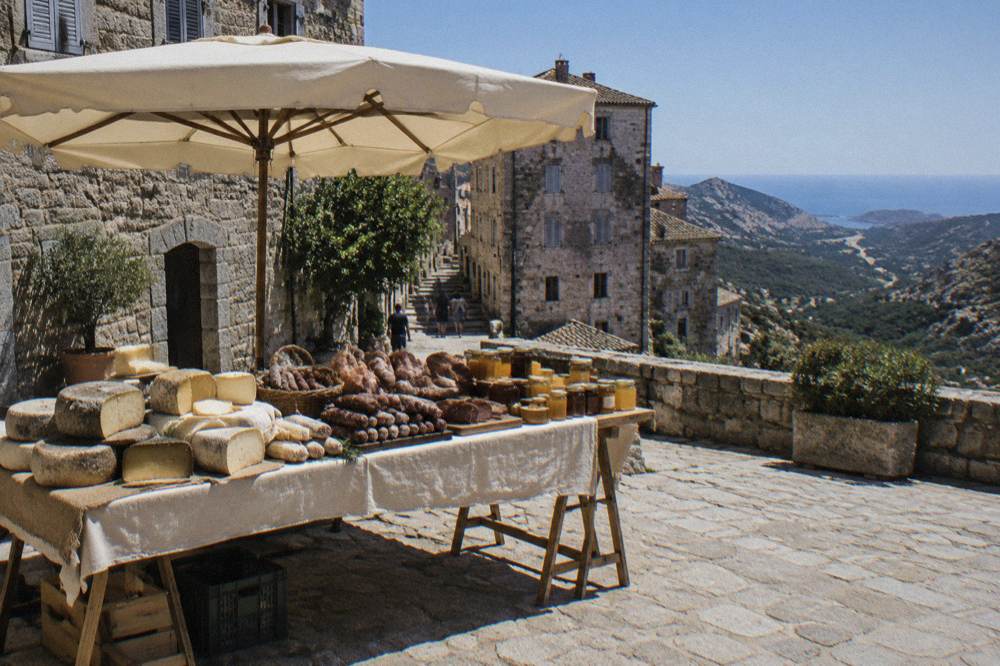
There is no published fixed price for a restaurant meal in Corsica. What is published is the legal structure of the bill: French menus must state "prix service compris" with the service percentage, per the DGCCRF, so service is already in the printed price and a further tip is optional. The island's flagship foods, brocciu, prisuttu, lonzu, coppa, chestnut flour, honey, olive oil and clémentines, all carry protected AOP or IGP status, which is a quality signal rather than a price list.
The protected-status layer is worth understanding because it explains why Corsican food costs what it does. Brocciu obtained its appellation d'origine in 1983. The three charcuterie cuts, prisuttu, lonzu and coppa, took AOC in 2012 and AOP in 2014, with the Nustrale pig breed recognised in 2006. Corsican honey and olive oil carry AOP designations, chestnut flour has been AOP since 2010, and the clémentine de Corse holds an IGP from 2007. These are legally protected production standards, and the certificates are why a market stall in Ajaccio or Corte prices its produce differently from a supermarket shelf.
Wine follows the same pattern. Corsican appellations include Patrimonio, Ajaccio, Vin de Corse with its named crus such as Calvi, Coteaux du Cap Corse, Figari, Porto-Vecchio and Sartène, plus Muscat du Cap Corse, reported by the island's tourism body. The main grapes are Nielluccio and Sciaccarellu for reds and Vermentinu for whites. A tasting room prices its own flights; the Corsican wine guide covers the appellations, and food-focused walking product like the Ajaccio tastings in the picks further down bundles several stops into one printed price.
For currency mechanics, the euro is the only money on the island, prices are posted with service included, and cards are accepted widely in towns.
Is Corsica Expensive Compared With Other Islands?
Against its Mediterranean neighbours, Corsica's published costs are mid-range and its floating costs are demand-driven. The fixed layer, EUR 5.50 to EUR 10 museum entries, EUR 9 at Filitosa, EUR 12 to EUR 39 GR20 overnight options, is unremarkable for a French region. What pushes total spend is the access bill: an island with 8.5 million-plus port and airport passengers in 2025 and a summer-peaked flight and ferry supply, plus the near-necessity of a car for the interior.
The comparison that usually gets made is with Sardinia, a short ferry hop away, and the honest answer is that no like-for-like price index appears in the source material. What can be said is structural. Corsica's population of 365,636, the provisional INSEE estimate for 1 January 2026, lives on an island whose mountain roads and dispersed sights make car rental and driving in Corsica near-universal planning items, and a car is a per-day cost that compounds. The train network, the Chemins de fer de la Corse lines from Ajaccio to Bastia via Corte, Ponte-Leccia to Calvi and the Balagne coastal line, offers a cheaper corridor for some routes, though its fares cannot be confirmed here.
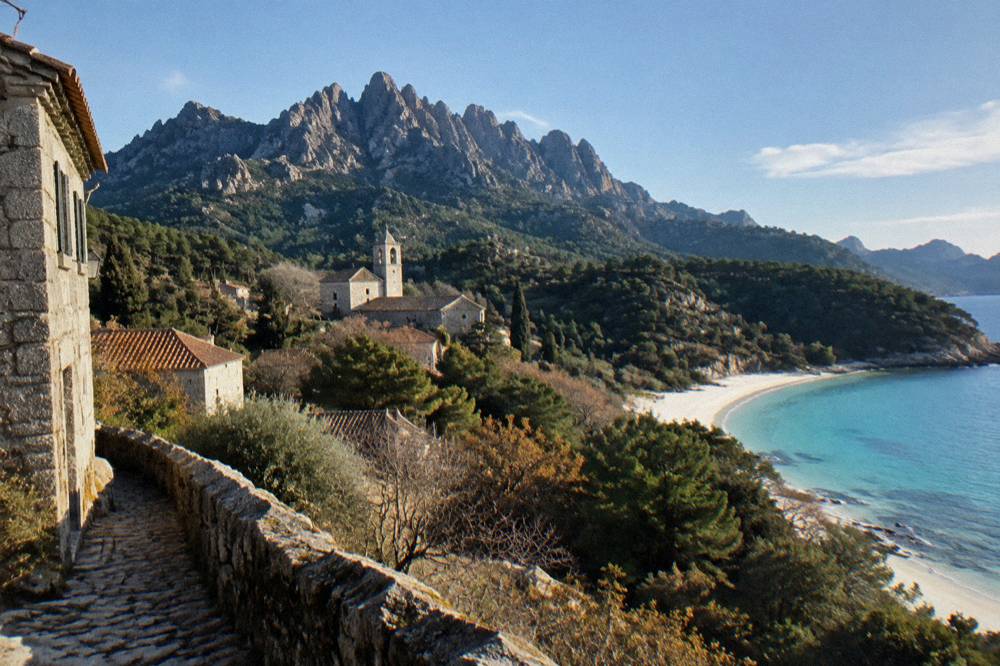
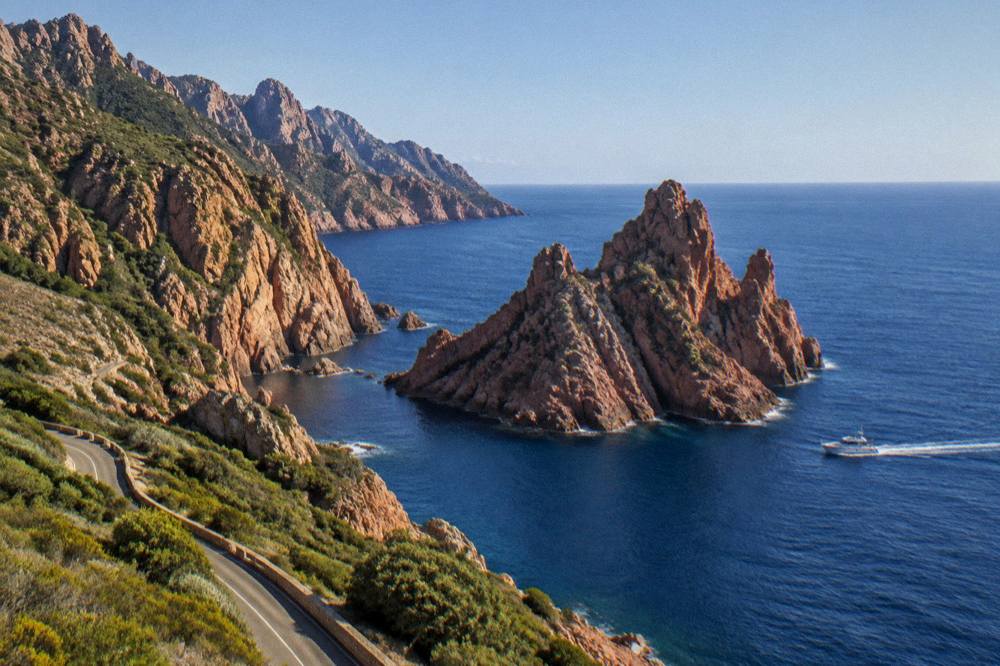
Free is not the same as worthless. The coast itself costs nothing: the beaches, the Calanques de Piana viewpoints, the Désert des Agriates and the towns of Ajaccio, Bastia and Bonifacio can be walked without a ticket. The free things to do in Corsica page and the beaches guide build whole days on this layer, and every euro not spent on a sight is a euro available for the boat trip or the dinner that defines the trip.
How Does The Season Change Corsica Costs?
Summer is the demand peak that moves every floating price, and the climate record explains the shape of it. July averages just 8.6 mm of rain at Ajaccio with 12 h 6 min of sunshine a day, Météo-France 1991-2020 station data, while November averages 111.8 mm. August carries the highest mean daily high at 29.2 C. Shoulder months trade lower demand for a real rise in rain, and the high mountains take snow in winter.
The table shows the Ajaccio station normals, the cleanest single dataset for planning when to spend money on the island.
| Month | High °C | Low °C | Rain mm | Sunshine h/day |
|---|---|---|---|---|
| Jan | 14.0 | 4.7 | 54.1 | 4.4 |
| Feb | 14.2 | 4.3 | 48.1 | 5.5 |
| Mar | 16.0 | 5.9 | 50.4 | 6.8 |
| Apr | 18.5 | 8.3 | 53.1 | 7.7 |
| May | 22.1 | 11.8 | 49.8 | 9.3 |
| Jun | 25.9 | 15.4 | 25.9 | 11.1 |
| Jul | 28.6 | 17.7 | 8.6 | 12.1 |
| Aug | 29.2 | 18.1 | 15.8 | 11.1 |
| Sep | 26.1 | 15.4 | 57.8 | 8.7 |
| Oct | 22.8 | 12.6 | 85.7 | 6.7 |
| Nov | 18.3 | 9.0 | 111.8 | 4.7 |
| Dec | 15.1 | 5.8 | 73.9 | 4.0 |
Bastia, on the east-facing coast, runs wetter on the same measure: 816.9 mm across the year against Ajaccio's 635.0 mm, with October and November carrying the heaviest totals at 126.5 mm and 134.3 mm respectively. The weather by month and best time to visit pages work through the planning logic; no single month is a fact.
Cost consequences follow the data. The GR20 guarded-refuge season, 16 May to 4 October in 2026, is itself a seasonal price structure: outside it, the EUR 20 bunk simply is not for sale. Filitosa's 1 April to 2 November season does the same for its EUR 9 ticket. And from mid-June to mid-September the daily fire-risk map, updated at 18:00 for the next day, can restrict access to some massifs, which can strand a paid mountain plan. Inforoutes Corse publishes live road conditions and pass accessibility, a habit worth forming before any mountain drive.
What About The Cheaper Ways To See The Island?
The cheapest published layer is walking: the coast, the towns and the Calanques de Piana viewpoints cost nothing to enter. Below that sit a handful of low-priced products, among them the Ajaccio open-top bus loop, the A Cupulatta turtle park admission near Vero, and short coastal boat trips, all of which print their own prices in their booking cards. The long-distance trails other than the GR20 run on the same refuge-and-village logic at no trail fee.
The PNRC brochure gives exact lengths for the island's other waymarked routes, and the multi-day maths on them is mostly accommodation, not tickets.
| Long-distance trail | Length | Days | Total climbing | End point |
|---|---|---|---|---|
| GR20 (Fra li Monti) | 180 km | about 15 stages | not published | Conca direction |
| Mare e Monti Nord | 121 km | 10 | 6,100 m | Cargèse |
| Mare a Mare Nord | 139 km (161 km with variant) | 8 to 12 | 5,900 m | Calvi direction |
| Mare a Mare Centre | 84 km | 7 (Ghisonaccia to Porticcio) | 3,900 m | Porticcio |
| Mare a Mare Sud | 73 km | 5 | 3,200 m | Propriano |
| Mare e Monti Sud | 66 km | 5 | 2,700 m | Propriano |
It can be checked here: Check availability. Inland near Sagone, the turtle park at A Cupulatta sells skip-the-line admission at one of the lowest product prices. The Corsica travel tips page collects more of this low-spend layer.
How Should A Corsica Budget Be Built?
Build it in three layers: a fixed layer from the published euro prices above, roughly the cost of the sights and refuge nights already enumerated; a transport layer covering the flight or ferry and, usually, a car, both priced only at the moment of booking; and a food-and-bed layer, which no official source publishes and which must be priced per traveller against the season table. Reserve refuge nights early, since booking is mandatory and quotas apply per refuge.
The booking rule is the one hard deadline in Corsica planning. GR20 nights, whether bunk, bivouac or rented tent, are reserved exclusively online through the PNRC's platform with card payment, and confirmation emails serve as receipts. Changes are possible up to 48 hours before a stage and full refunds up to two months out, so there is little cost to committing early and a real cost to leaving it, since per-refuge quotas close the cheapest beds first.
For accommodation overall, the choice of base does as much to the bill as any single decision: the where to stay, luxury hotels and villas and vacation rentals pages lay out the options by town and style. Security deposits, cleaning fees and seasonal minimum stays live in the listings, not in any island-wide price list, so the budget line for a bed is always a range the traveller sets themselves.
A few fixed practical costs round out the picture. None apply: entry to the beaches is free, no visitor eco-tax is published, and tipping is optional by law. The genuine extras are the paid boat trips, the museums above and the refuge network, all of which this page has already priced from source.
Which Costs Are Worth Paying In Corsica?
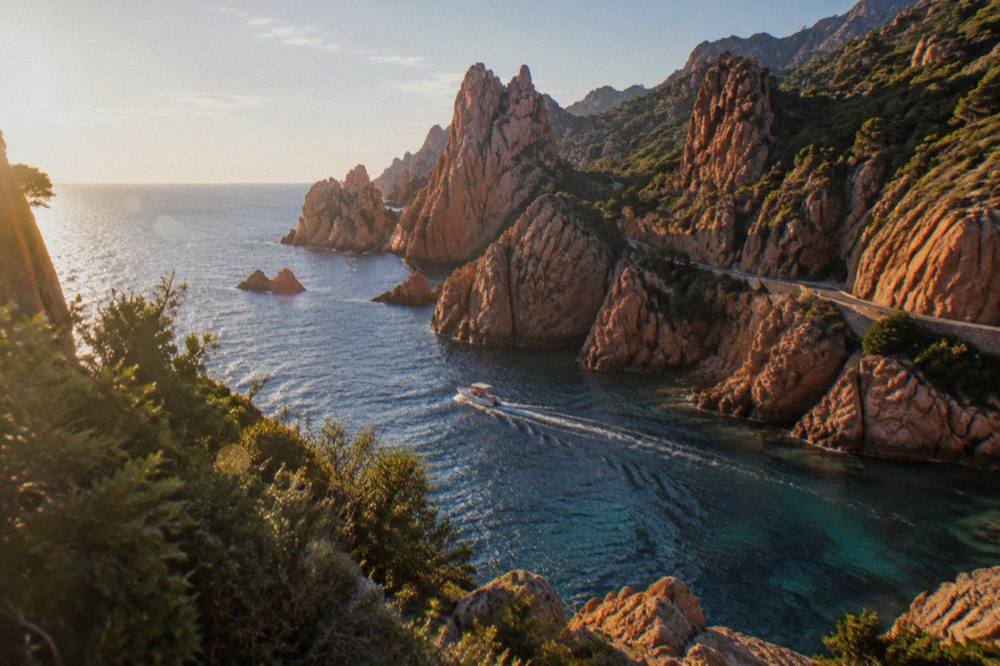
The boat is the island's signature paid experience: Scandola is accessible by boat only, its terrestrial area being closed to the public, and the UNESCO property "Gulf of Porto: Calanche of Piana, Gulf of Girolata, Scandola Reserve", inscribed in 1983, has no land alternative. Alongside it, the two fixed-history spends that reward the ticket are Filitosa at EUR 9 and the combined Corte museum-and-citadel ticket at EUR 5.50, both among the lowest entry prices on the island for the most substantial content.
The Scandola logic is not marketing. The reserve, created by ministerial order on 9 December 1975 as the first nature reserve in Corsica, spans 1,000 ha of sea and 919 ha of land with a 70 ha integral reserve, and the land part is closed: visits happen on the water, daytime anchoring is allowed outside the integral reserve and the Gargalu channel with anchors up at sunset, and no landing is permitted in the integral zone. Every euro of a Scandola cruise buys the only legal access there is. The Scandola boat tour and Scandola nature reserve pages cover the operators and rules in full.
History spends justify themselves on price alone. Maison Bonaparte at EUR 10, the Palais Fesch at EUR 10 and the Escalier du Roi d'Aragon, 189 steps cut into the Bonifacio cliff, at a reported EUR 5, sit at or below the price of a main course, and the Corte ticket covers two sites. Filitosa, open 1 April to 2 November, is the island's flagship prehistoric site at EUR 9. These are the numbers to build the fixed layer of any Corsica budget on, and they are the numbers this page stands behind.
Common Questions About Corsica Costs
Is Corsica Expensive?
No island-wide price index is available, but the published fixed costs are moderate: museum entries run EUR 5.50 to EUR 10, Filitosa is EUR 9, and GR20 refuge bunks are EUR 20 a night. The expenses that decide a Corsica budget are the crossing or flight, the room and, usually, a rental car, none of which has a published fixed price.
What Currency Is Used In Corsica?
The euro, EUR, throughout the island. Sight admissions and refuge tariffs are quoted in euros by the institutions themselves, and this page never converts them to dollars or pounds.
Do You Tip In Corsica?
Service is included by law: menus must state "prix service compris" with the service percentage, per the DGCCRF. A further tip is optional, never an expected percentage.
How Much Does The GR20 Cost?
The fixed PNRC 2026 rates are EUR 20 per person for a refuge bunk, EUR 12 for a bivouac pitch with your own tent, EUR 27 for a rented tent for one and EUR 39 for two, per person. Meals are paid in cash or cheque to the guardian, and booking is mandatory online for every option.
Are Museums In Corsica Free For Anyone?
EU residents under 26 enter Maison Bonaparte free, everyone up to 18 enters the Palais Fesch free, under-6s enter Filitosa free, and under-10s enter the Musée de la Corse free. Reduced bands at each site are listed in the admissions table above.
What Is The Cheapest Way To See Corsica?
Walking costs nothing: beaches, towns and the Calanques de Piana viewpoints are free to enter, and the long-distance trails carry no trail fee, only refuge nights. The cheapest paid products, whose prices print in their own cards, include the Ajaccio open-top bus loop and the A Cupulatta turtle park admission.
The fixed layer of a Corsica budget, every euro of it traceable to a published source, totals less than many travellers expect; the floating layer is where the island decides what the trip really costs, and the season table and the booking deadlines above are the two levers that keep it under control.