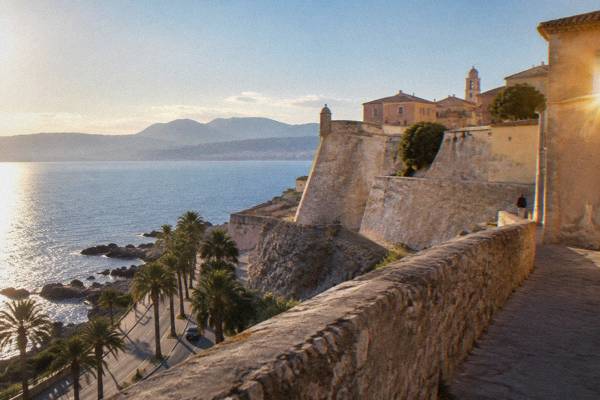
Corsica History
Corsica is a French Mediterranean island of 8,722 km2 with more than 1,000 km of coastline, and its history is unusually legible on the ground: prehistoric standing stones, a national museum in Napoleon's birthplace, a citadel museum in the old capital of Corte, and food traditions with their own appellation dates.
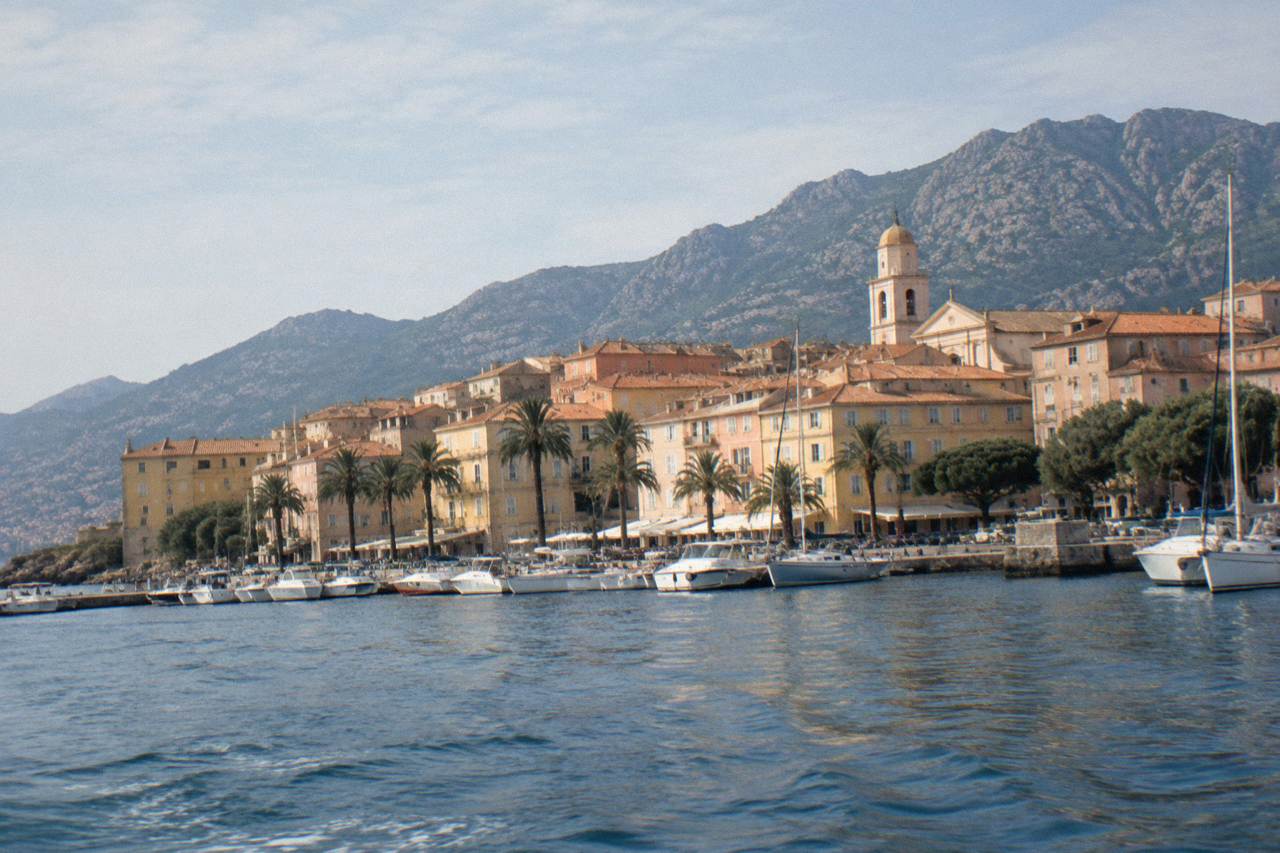
The essentials of Corsica's history are visitable in a week: Maison Bonaparte in Ajaccio (EUR 10, closed Mondays), the Palais Fesch, the Musée de la Corse in Corte, and the prehistoric site of Filitosa (EUR 9, open 1 April to 2 November).
Corsica covers 8,722 km2, making it the fourth-largest island in the Mediterranean, and its mountainous interior rises to Monte Cinto at 2,706 m while more than 1,000 km of coastline wraps around the whole landmass. The island is home to 365,636 residents according to the provisional INSEE estimate for 1 January 2026, with the capital Ajaccio at 76,320 and Bastia, the second town, at 46,867. For a history-minded traveller the island reads like an open archive: prehistoric monuments at Filitosa, a national museum in the house where Napoleon was born, a fine-arts collection in the Palais Fesch, and a citadel museum in Corte, the island's old capital, which sits inland. This page from Corsica Travel Guide sets out what each site costs and how to arrange a trip around it.
What Is The Story Of Corsica In Brief?
Corsica today is a single territorial authority with special status, the Collectivité de Corse, which replaced the former collectivity and the two departmental councils on 1 January 2018, and the island is administratively split between Corse-du-Sud and Haute-Corse. Ajaccio is the capital and Napoleon's birthplace, Bastia is the second town, and Corte, inland in the mountains, is the old capital. The island's past is also written in its landscape protection: the Parc naturel régional de Corse dates from 1972 and the Scandola reserve from 1975.
Those bare facts carry a lot of history. The Parc naturel régional de Corse, created in 1972, now covers 4,484 km2, including the Castagniccia and the big valleys that run down to the sea, with a western sea front running 80 km from Capu Rossu to Capu Cavallu. Its creation marked a turn in how the island manages its territory, pairing the mountainous interior with the coastline that defines so much of Corsican life.
The island's protected food and farming traditions carry dates that read like a historical timeline of their own. Brocciu obtained its appellation d'origine in 1983, with AOC/AOP recognition in 1998. The three charcuterie cuts, prisuttu, lonzu and coppa, received AOC status in 2012 and AOP status in 2014, and the Nustrale pig breed was recognised in 2006. The AOC for Corsican olive oil, "Huile d'olive de Corse, Oliu di Corsica", took effect in 2004.
| Corsica fact | Figure |
|---|---|
| Area | 8,722 km2 |
| Mediterranean rank | Fourth-largest island |
| Highest summit | Monte Cinto, 2,706 m |
| Coastline | More than 1,000 km |
| Communes | 360 |
| Population, 1 Jan 2026 | 365,636 |
| Regional park | PNRC, created 1972, 4,484 km2 |
For orientation before a visit, the Corsica map and regions overview helps place Corte, Ajaccio and Bastia against the island's terrain, and the guide to Ajaccio is useful for arrival planning.
Where Was Napoleon Born And What Can You Visit In Ajaccio?
Napoleon was born in Ajaccio, Corsica's capital, and the house is now the Musée national de la Maison Bonaparte on Rue Saint-Charles, open every day except Monday, with full-price entry at EUR 10, EUR 8 for non-EU residents aged 18 to 25 and large families, and free entry for EU residents under 26. The museum sits 200 m from the bus station and ferry terminal, and bus 8 runs from the airport.
The seasonal hours matter when planning. From 1 October to 31 March the museum opens 10:30 to 12:30 and 13:15 to 16:30; from 1 April to 30 June it opens 10:00 to 12:30 and 13:15 to 17:30; and from 1 July to 30 September it runs continuously 10:00 to 17:30. Last entry is 30 minutes before closing in every season.
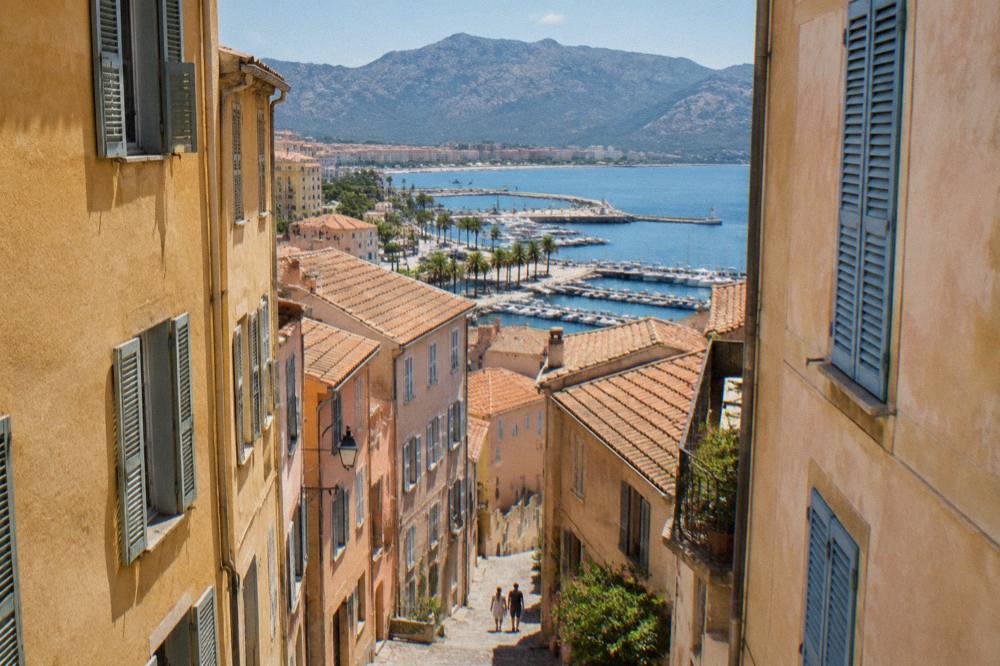
Ajaccio's history is not limited to the Bonaparte house. The Palais Fesch, the Musée des Beaux-Arts, is listed by the Ajaccio tourist office for 16 January to 31 December 2026 at EUR 10 full price, EUR 6 for over-65s and free up to 18, open daily 09:00 to 17:00 and closed on Christmas Day, New Year's Day and 1 November. The museum's own older price page dates from 2021, so the tourist-office listing is the current reference.
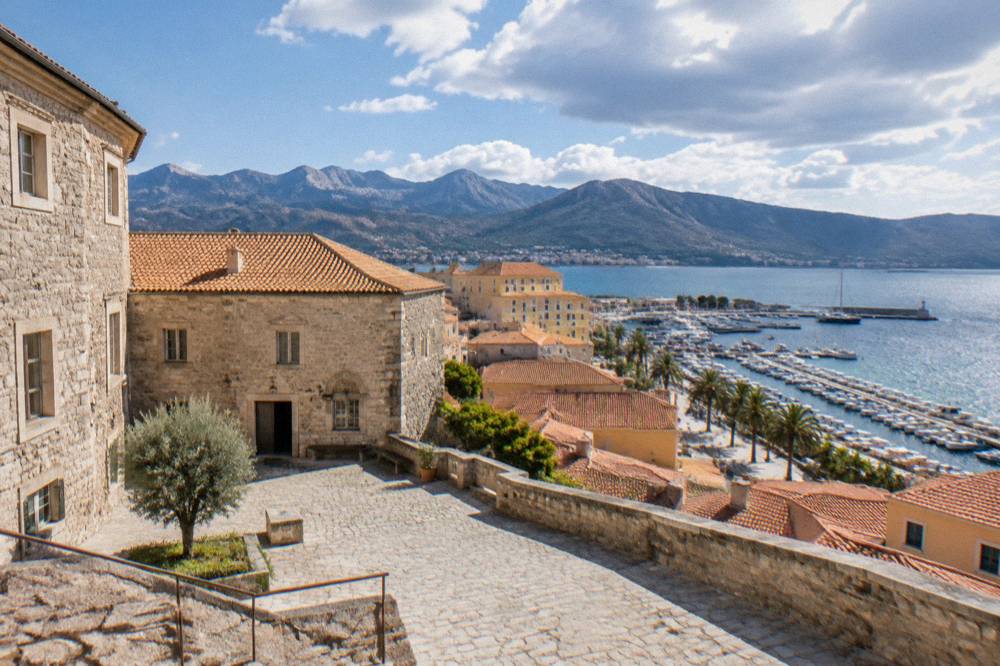
The best way to absorb the town's past is on foot with someone who knows it. The related tour on this site, A walk through the history of Ajaccio, from Genoa to Napoleon, is a small-group walk through the old streets, and Check availability on the operator's live listing before you travel.
Which Corsican Museums Tell The Island's Story Beyond Ajaccio?
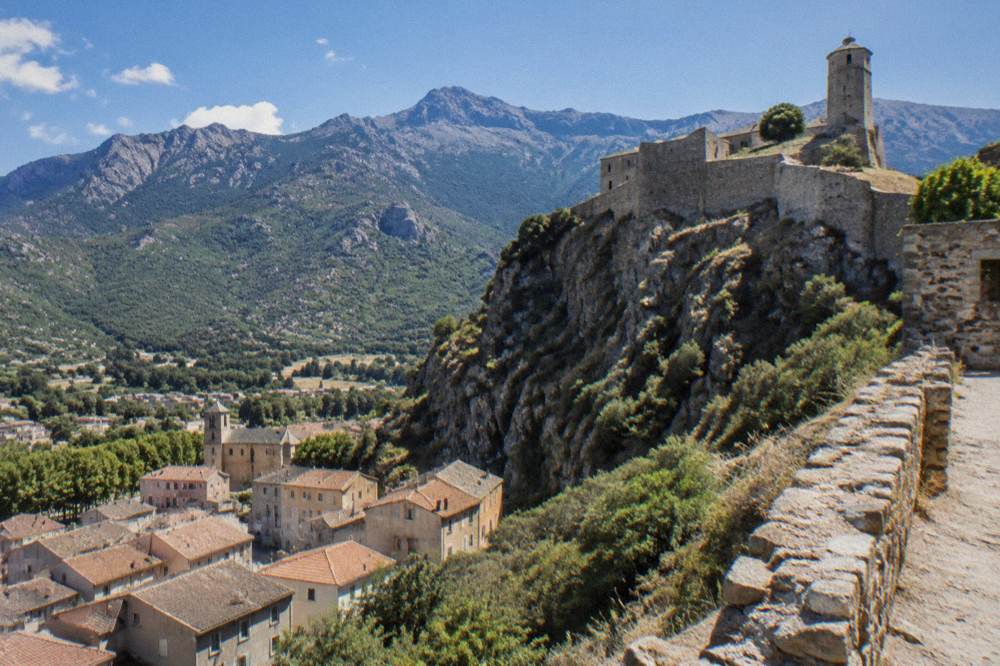
The Musée de la Corse sits inside the Citadelle de Corte, the island's old capital inland in the mountains, and charges EUR 5.50 full price, EUR 4 reduced without a temporary show and EUR 3 for over-65s and young people, with one ticket covering both the museum and the citadel.
From 1 May to 31 October it is open daily 10:00 to 19:00 except 1 May, and from 1 November to 30 April it opens 10:00 to 17:00 except Sundays, Mondays, public holidays and 24 December.
Corte is the natural second stop on any history-focused itinerary. Road times from the museum's own practical page give the sense of scale: 1 hour from Bastia, 1 hour 30 from Ajaccio, 1 hour 30 from Calvi, 2 hours from Porto-Vecchio, 2 hours 45 from Bonifacio and 2 hours 45 from Propriano. Citadel last access is 1 hour before the museum closes, and the site closes annually from 31 December to 14 January.
In Bastia, the Musée de Bastia in the Palais des Gouverneurs opens 10:00 to 18:30 in high season, and 09:00 to 12:00 and 14:00 to 17:00 in low season, closed Sundays and Mondays, per the museum's information page. The Bonifacio reservation site lists the Escalier du Roi d'Aragon, 189 steps cut down the cliff with a 180-degree view over the straits towards Sardinia, at about EUR 5 for an adult, with closed-toe flat shoes required and children receiving a small diploma at the top.
| Museum or site | Town | Full price | Key hours | Closed |
|---|---|---|---|---|
| Maison Bonaparte | Ajaccio | EUR 10 | 10:00 to 17:30 (1 Jul to 30 Sep) | Monday |
| Palais Fesch | Ajaccio | EUR 10 | Daily 09:00 to 17:00 | 25 Dec, 1 Jan, 1 Nov |
| Musée de la Corse and citadel | Corte | EUR 5.50 | 10:00 to 19:00 (1 May to 31 Oct) | 1 May; Sun and Mon in low season |
| Musée de Bastia | Bastia | Not stated on the page used | 10:00 to 18:30 high season | Sun and Mon in low season |
| Escalier du Roi d'Aragon | Bonifacio | About EUR 5 | Monthly hours vary | Varies by month |
For pairing a Corte visit with the island's mountain scenery, the Restonica valley guide covers the hiking country above the town, and the driving in Corsica guide explains how the mountain roads shape any itinerary.
What Prehistoric Sites Can You Visit In Corsica?
The prehistoric site of Filitosa, near Sollacaro, is open 1 April to 2 November from 09:00 to sunset, with entry at EUR 9 for adults aged 18 and over, EUR 7 reduced for ages 6 to 17 and disabled visitors, EUR 28 for a family of two adults and two children aged 6 to 17, and free entry under 6, and the site recommends allowing about 1 hour 30 for a visit. Its museum opens 09:00 to 19:00.
Filitosa is the island's flagship prehistoric monument and one of the few with a confirmed price and season in official listings. The site stands in the south of the island, within reach of Propriano and the Valinco, which makes it a practical pairing with Sartène and the southwest rather than a detour from Ajaccio or Bastia.
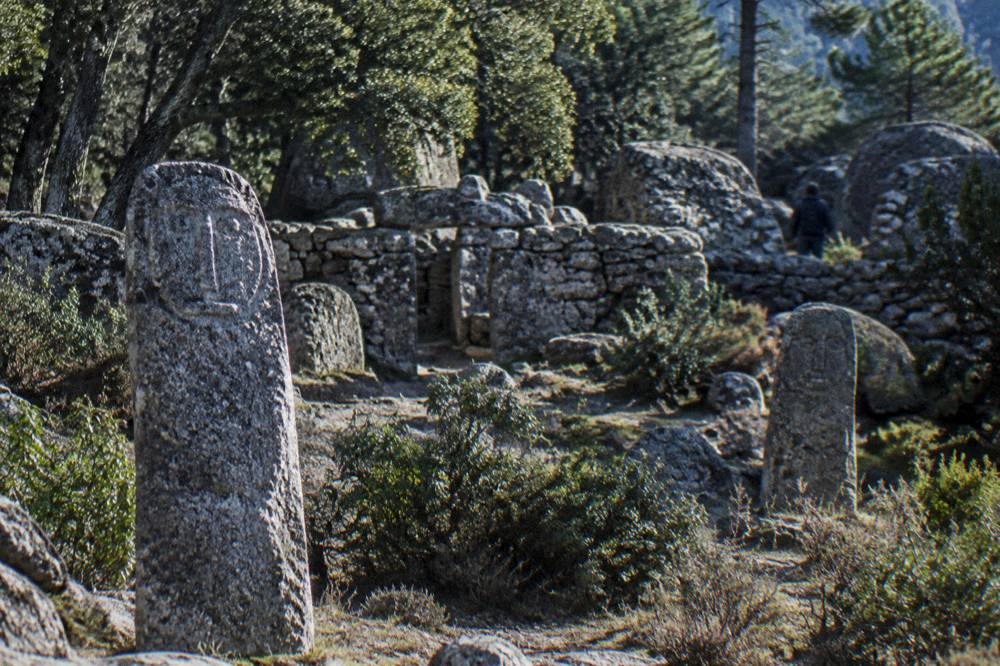
Other prehistoric sites on the island include Cucuruzzu and Capula near Levie and the alignements de Palaggiu near Sartène. Their hours and fees are not stated in the listing used for this page, so plan them by their location in the Alta Rocca and around Sartène rather than around fixed opening figures.
| Prehistoric or historic site | Area | Adult entry | Season |
|---|---|---|---|
| Filitosa | Sollacaro, Valinco | EUR 9 | 1 April to 2 November |
| Cucuruzzu and Capula | Levie, Alta Rocca | Not stated here | Not stated here |
| Alignements de Palaggiu | Near Sartène | Not stated here | Not stated here |
| Escalier du Roi d'Aragon | Bonifacio | About EUR 5 | Monthly hours |
How Does Corsica's Protected Landscape Carry Its History?
Corsica's landscape protection has its own documented history: the Parc naturel régional de Corse was created in 1972 and now spans 4,484 km2, Scandola became the first nature reserve in Corsica by ministerial order on 9 December 1975, and the UNESCO property "Gulf of Porto: Calanche of Piana, Gulf of Girolata, Scandola Reserve" was inscribed on the World Heritage list in 1983 covering 11,800 ha under natural criteria (vii), (viii) and (x).
The Scandola reserve covers 1,000 ha of sea, 919 ha of land and a 70 ha integral reserve, ranging from 100 m depth to 540 m altitude, on the commune of Osani, and is managed by the PNRC. The reserve's land area is closed to the public: visits are by boat only, with no landing in the integral reserve, daytime anchoring allowed outside the integral reserve and the Gargalu channel, anchors lifted at sunset, and no recreational line or spear fishing. The rest of the planning pages sit on Corsica Travel Guide.
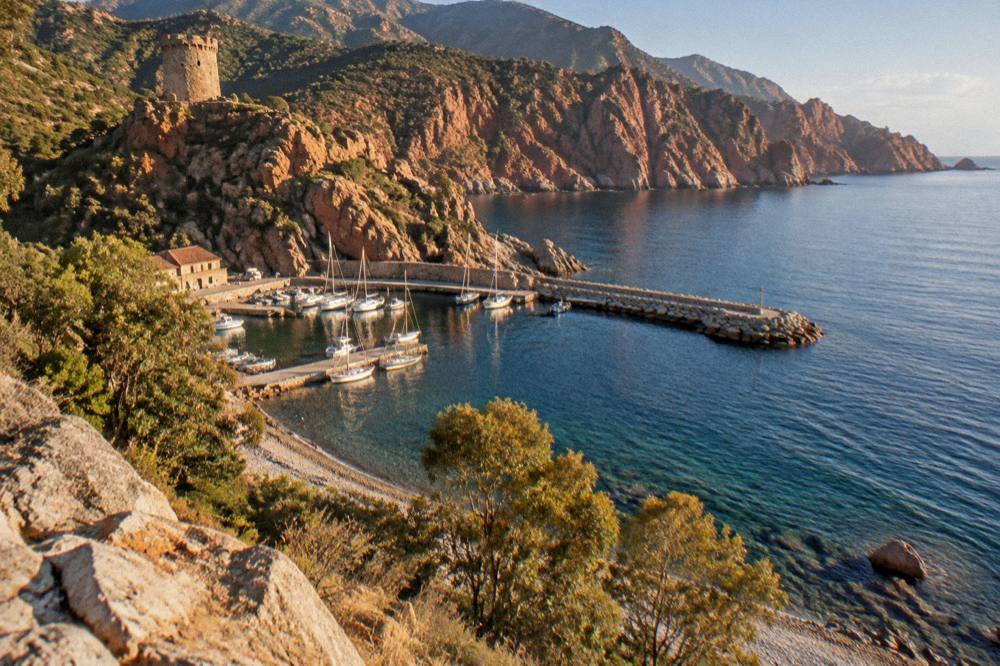
Scandola also played a part in saving the osprey in Corsica, a fact recorded by the Office de l'Environnement de la Corse fact sheet. A joint State and OEC steering committee on 28 April 2026 renewed the management approach with voluntary labelling of boat operators, a QR-code tracking trial for pleasure boats, more controls at sea and renewed osprey quiet zones, with quotas and licences to be consolidated in a regulatory framework being finalised.
The Bouches de Bonifacio Nature Reserve, managed by the OEC, contains the Îles Lavezzi at the island's southern tip, and the Désert des Agriates in the north preserves a stretch of coast where the beaches of Saleccia and Lotu are reached by boat shuttle from Saint-Florent, by 4x4 track from Casta, or on foot. These landscapes are living parts of the island's story rather than backdrops.
What Food Traditions Carry Corsica's Agricultural History?
Corsica's food history is documented through appellation dates: brocciu obtained its appellation d'origine in 1983 and AOC/AOP recognition in 1998; Corsican honey was classed AOC in 1998; the olive-oil AOC "Huile d'olive de Corse, Oliu di Corsica" took effect in 2004; chestnut flour was recognised AOP in 2010; and prisuttu, lonzu and coppa received AOC in 2012 and AOP in 2014, with the Nustrale pig breed recognised in 2006.
The dates trace how the island formalised its farming identity. The AOP "Farine de châtaigne corse, Farina castagnina corsa" grew from a defence body created in 2001, tying the Castagniccia's chestnut economy to a protected name. The clémentine de Corse obtained IGP status in 2007 and Label Rouge in 2014, and about 98% of metropolitan France's citrus area was in Corsica in CESEC data from the 2014 era, a share the island's growers built over generations.
| Corsican product | Recognition | Year |
|---|---|---|
| Brocciu | Appellation d'origine | 1983 |
| Corsican honey | AOC | 1998 |
| Olive oil, Oliu di Corsica | AOC effective | 2004 |
| Nustrale pig breed | Recognised | 2006 |
| Clémentine de Corse | IGP | 2007 |
| Chestnut flour, Farina castagnina corsa | AOP | 2010 |
| Prisuttu, lonzu, coppa | AOC | 2012 |
Corsican wine appellations include Patrimonio, Ajaccio, Vin de Corse with its named crus such as Calvi, Coteaux du Cap Corse, Figari, Porto-Vecchio and Sartène, and Muscat du Cap Corse, with Nielluccio and Sciaccarellu as the main red grapes and Vermentinu the main white. A tasting is the easiest way to read this part of the island's past, and the Corsican wine guide covers what a wine-focused day costs.
How Has Corsica Changed In Recent Decades?
Corsica's recent institutional history is short and clear: the Collectivité de Corse, a single territorial authority with special status, replaced the former territorial collectivity and the two departmental councils on 1 January 2018, while the island's population has grown every year since 2021, reaching a provisional 365,636 on 1 January 2026, with Corse-du-Sud at about 175,100 and Haute-Corse at about 190,500 residents.
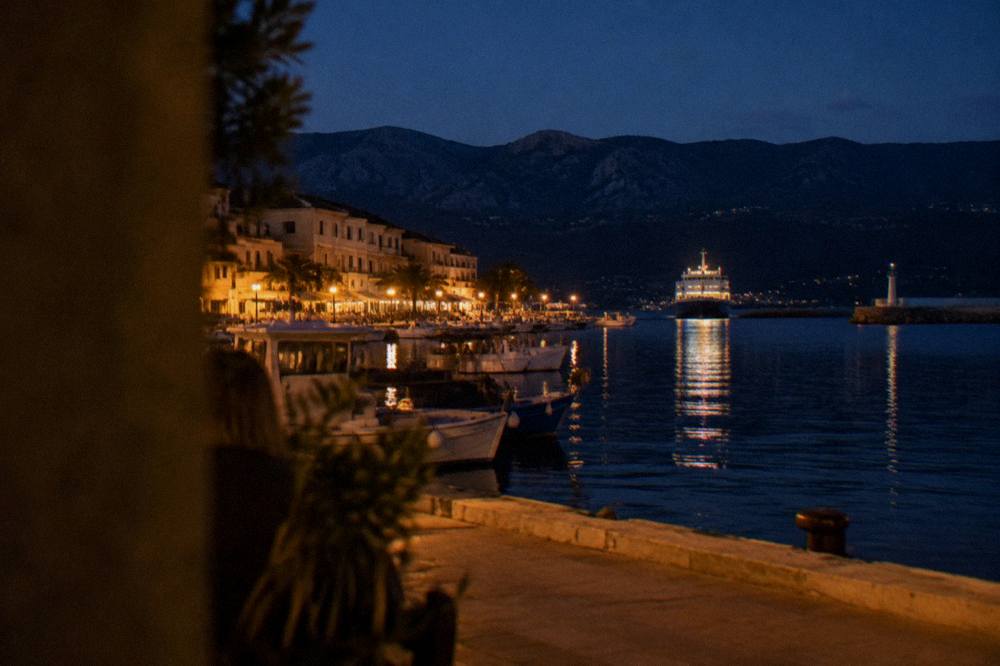
Transport tells the same story of an island modernising while keeping its character. Four airports serve the island, Ajaccio Napoléon Bonaparte (AJA), Bastia Poretta (BIA), Figari Sud Corse (FSC) and Calvi Sainte-Catherine (CLY), and ferry operators Corsica Linea, La Méridionale, Moby and Corsica Ferries connect the ports to Marseille, Toulon, Nice, Livorno, Savona, Genoa and Santa Teresa Gallura, with the short Santa Teresa Gallura to Bonifacio crossing taking about 50 to 60 minutes. More than 8.5 million passengers, excluding cruise passengers, passed through the island's ports and airports in 2025.
The Chemins de fer de la Corse still runs its historic lines, Ajaccio to Bastia via Corte, Ponte-Leccia to Calvi, and the Balagne coastal line between Calvi and L'Île-Rousse, and the Collectivité de Corse runs Corsican-language programmes including the Cartula di a lingua corsa and immersion schools. Language and rail are two threads of continuity in an island that has changed its institutions without erasing its character.
For arrival logistics, the ferry to Corsica guide and the flights to Corsica guide cover the routes, and getting around Corsica compares train, road and boat.
How Do You Plan A History-Focused Trip Around Corsica?
A practical history itinerary bases itself in Ajaccio for Maison Bonaparte and the Palais Fesch, Corte for the citadel and the Musée de la Corse, and Bonifacio for the Escalier du Roi d'Aragon, with Filitosa reachable on a southern loop, and it needs at least a week to avoid spending whole days on mountain roads, given drive times of 2 hours 45 from Bonifacio to Corte and 1 hour 30 from Ajaccio to Corte.
Timing matters as much as routing. Maison Bonaparte closes on Mondays and splits its day in two outside summer, so afternoon-only summer visits (10:00 to 17:30 from 1 July to 30 September) are simpler than winter visits. Filitosa runs only from 1 April to 2 November. The Météo-France 1991-2020 station normals for Ajaccio show July averaging 8.6 mm of rain and November 111.8 mm, so shoulder months suit walking-heavy history plans, and the best time to visit Corsica guide breaks the year down month by month.
| Base town | History sights on the spot | Day-trip links |
|---|---|---|
| Ajaccio | Maison Bonaparte, Palais Fesch | Îles Sanguinaires by boat |
| Corte | Citadelle, Musée de la Corse | Restonica valley |
| Bonifacio | Escalier du Roi d'Aragon, citadel and cliffs | Îles Lavezzi |
| Sartène area | Filitosa | Plage de Roccapina |
Guided days lift the experience where the history is hardest to read alone. A walking tour of Ajaccio's past, a half-day trip into Cap Corse and the Désert des Agriates from Saint-Florent, and a wine tasting around Calvi and Île-Rousse together cover the town, the coastal wilderness and the table. The full range of options is in the things to do in Corsica directory, and the where to stay in Corsica guide matches each base town to accommodation.
Common Questions About Corsica History And Napoleon
Where Was Napoleon Born?
Napoleon was born in Ajaccio, the capital of Corsica. The house is now the Musée national de la Maison Bonaparte on Rue Saint-Charles, open every day except Monday, with entry at EUR 10 full price, EUR 8 for non-EU residents aged 18 to 25 and large families, and free for EU residents under 26.
What Are Maison Bonaparte's Opening Hours?
From 1 October to 31 March the museum opens 10:30 to 12:30 and 13:15 to 16:30; from 1 April to 30 June, 10:00 to 12:30 and 13:15 to 17:30; and from 1 July to 30 September, 10:00 to 17:30. Last entry is 30 minutes before closing.
How Much Does The Palais Fesch Cost?
The Ajaccio tourist-office listing for 16 January to 31 December 2026 gives EUR 10 full price, EUR 6 for over-65s and free entry up to 18, with daily opening 09:00 to 17:00 and closure on Christmas Day, New Year's Day and 1 November.
What Is The Best Museum For Corsican History Outside Ajaccio?
The Musée de la Corse, inside the Citadelle de Corte, covers the island's culture and history at EUR 5.50 full price, with one ticket covering both museum and citadel. It opens 10:00 to 19:00 daily from 1 May to 31 October except 1 May, and 10:00 to 17:00 in low season except Sundays, Mondays, public holidays and 24 December.
Can You Visit Prehistoric Sites In Corsica?
Yes. Filitosa, near Sollacaro, is open 1 April to 2 November from 09:00 to sunset, at EUR 9 for adults, EUR 7 reduced and EUR 28 for a family of two adults and two children, free under 6. Allow about 1 hour 30 for the visit.
Is Corte Worth Visiting For History?
Corte is the old capital of Corsica and sits inland in the mountains. Its citadel houses the Musée de la Corse, and road times from the museum's own page are 1 hour from Bastia, 1 hour 30 from Ajaccio and 1 hour 30 from Calvi, which makes it a natural midpoint on an island itinerary.