Villas In Corsica
Corsica, the French Mediterranean island of 8,722 km2 with more than 1,000 km of coastline, is a villa destination built around distinct regions, from the beaches near Porto-Vecchio to the mountains above Corte. Here is how the villa question breaks down by area, budget and rules.
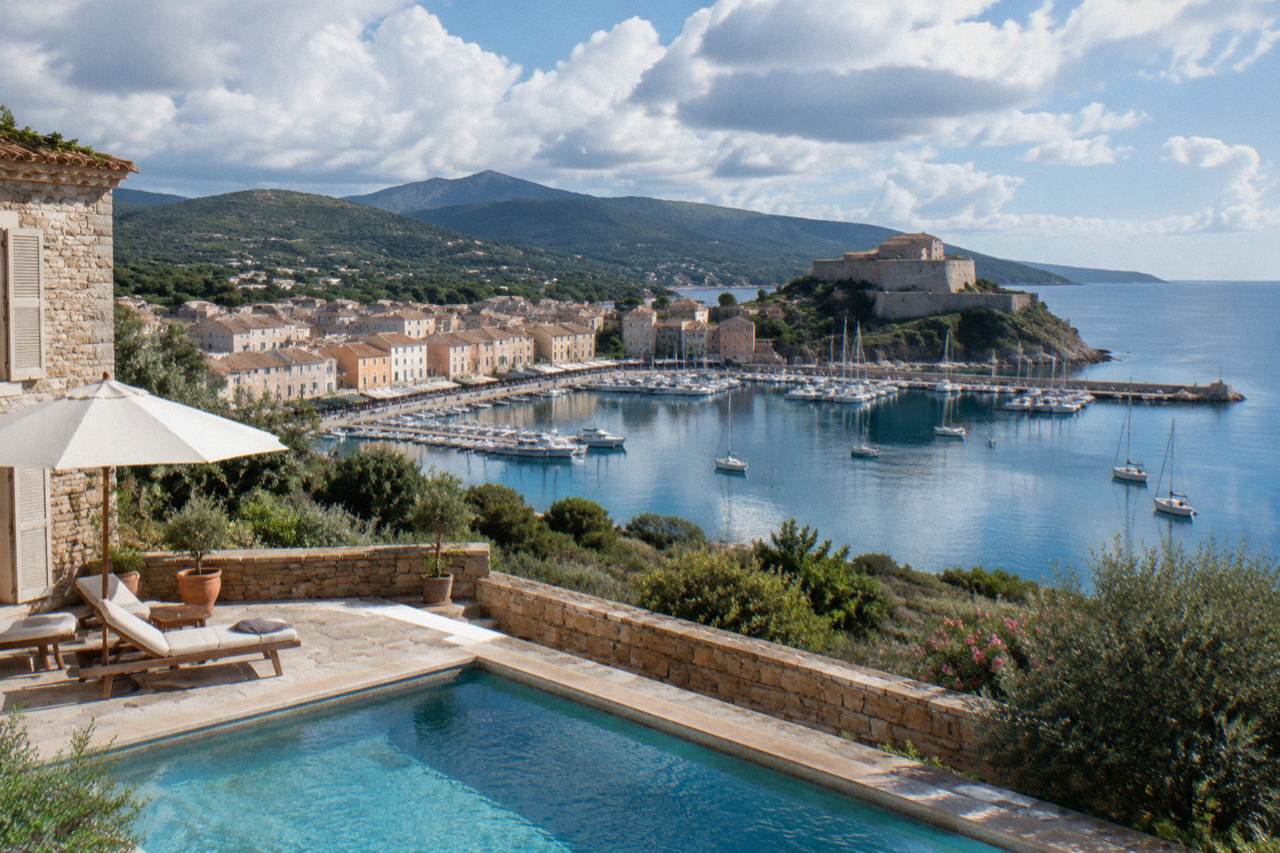
The strongest villa bases in Corsica are the Porto-Vecchio and Bonifacio coastline for beaches, Calvi and the Balagne for sand and villages, Ajaccio for town life, and Corte and the interior for mountain walking. Reaching them means one of four airports or a ferry, and a hire car is close to essential outside the towns.
Corsica is a French Mediterranean island of 8,722 km2, the fourth-largest in the Mediterranean, with more than 1,000 km of coastline and a mountainous interior that rises to Monte Cinto at 2,706 m. For a villa holiday that mix matters more than any single property: the same island holds the beach coasts of Porto-Vecchio and Bonifacio, the soft green of the Balagne around Calvi and L'Île-Rousse, the gulf city of Ajaccio, and the walking country inland at Corte. This page, part of the Corsica Travel Guide, sets out how to choose between those villa regions, what the licensed costs around a stay look like, how to reach each area, and which island rules shape a villa week.
Where Should You Rent A Villa In Corsica?
The main villa regions of Corsica are the southeast coast around Porto-Vecchio and Bonifacio, the Balagne coast around Calvi and L'Île-Rousse, the Ajaccio gulf in the west, the Saint-Florent and Cap Corse area in the north, and the interior around Corte, each with a different balance of beaches, walking and driving. The southeast pairs famous sand with the Bonifacio cliffs, while the Balagne adds hilltop villages to its beaches, and Corte sits inland among the island's high trails.
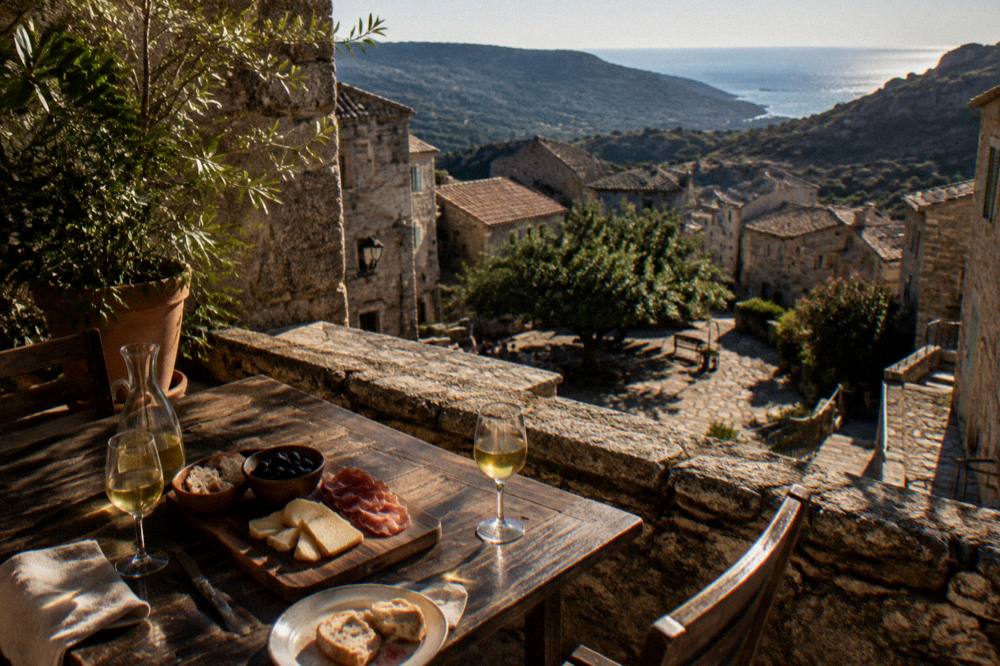
The southeast is the classic villa coast. Porto-Vecchio, a town of the Corse-du-Sud department, sits close to the beaches of Palombaggia, Santa Giulia and Rondinara, and Bonifacio's citadel and cliffs are within reach on the same coast. A villa here trades distance from the airport at Figari Sud Corse for immediate access to the island's headline beaches, and the Porto-Vecchio area guide covers the town itself in detail. Bonifacio also opens the Îles Lavezzi, which sit inside the Bouches de Bonifacio Nature Reserve managed by the OEC.
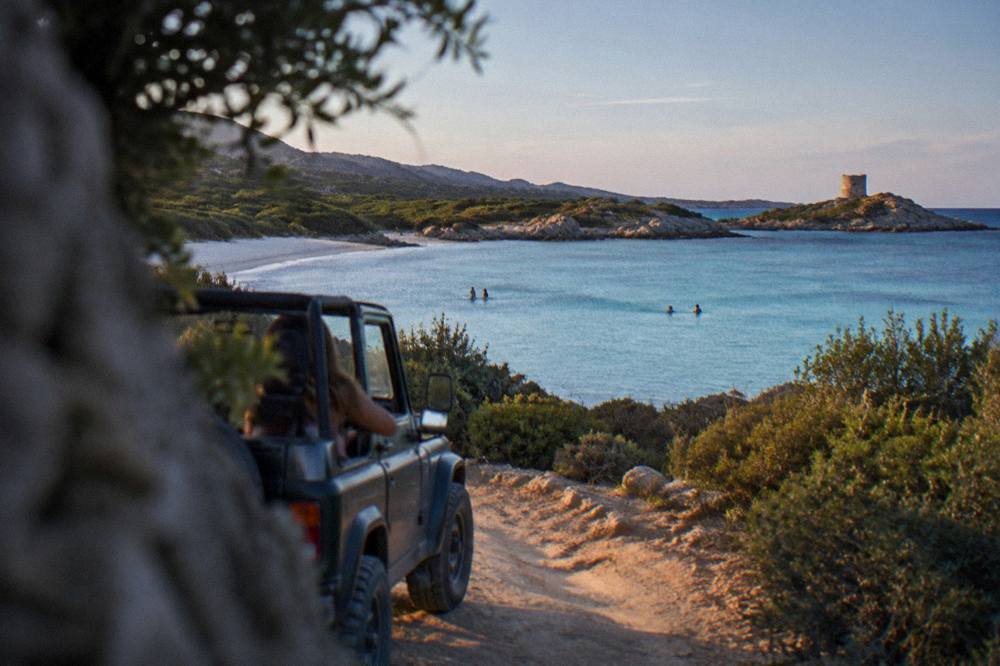
The Balagne, on the northwest coast, is the second strong choice. Calvi and L'Île-Rousse are the two coastal towns, and the region behind them carries the hilltop villages that give the Balagne its character. Villas here put the Désert des Agriates beaches, Saleccia and Lotu, within a boat shuttle or 4x4 trip, reached by shuttle from Saint-Florent, by track from Casta or on foot, as the visit-corsica listing describes.
Ajaccio, the island's capital with 76,320 residents per the INSEE figure published in August 2026, suits visitors who want town restaurants and the Maison Bonaparte and Palais Fesch museums alongside the Îles Sanguinaires by boat. Corte, the old capital, sits inland at the crossroads of the island's road network, with the road times from the museum's own practical page putting Bastia an hour away, Ajaccio an hour and a half, Calvi an hour and a half, Porto-Vecchio two hours, and Bonifacio or Propriano two hours and forty-five minutes.
| Villa region | Nearest airport | Character | Signature day out |
|---|---|---|---|
| Porto-Vecchio and Bonifacio | Figari Sud Corse (FSC) | Beach coast, cliffs, reserve islands | Bonifacio cliffs and Îles Lavezzi |
| Calvi and the Balagne | Calvi Sainte-Catherine (CLY) | Beach towns plus hilltop villages | Désert des Agriates, Saleccia and Lotu |
| Ajaccio gulf | Ajaccio Napoléon Bonaparte (AJA) | Capital city, museums, gulf boating | Îles Sanguinaires boat trip |
| Saint-Florent and Cap Corse | Bastia Poretta (BIA) | Harbour town, Cap Corse peninsula | Cap Corse and Agriates half-day trip |
| Corte and the interior | Bastia Poretta (BIA) | Inland mountains, walking country | Restonica valley and the citadel museum |
For a fuller comparison of hotel, villa and apartment options across these same regions, the where to stay in Corsica guide carries the detail, and the luxury hotels in Corsica guide covers the top end of the market.
What Should You Budget Around A Corsica Villa Stay?
Around a Corsican villa stay, the licensed local costs are the sight and museum entries, and the biggest published figures are EUR 10 at Maison Bonaparte and Palais Fesch, EUR 9 at Filitosa and EUR 5.50 at the Musée de la Corse in Corte, while GR20 refuge bunks run EUR 20 per person and bivouac pitches EUR 12. Villa nightly rates themselves are set by each owner or agency and are quoted per property, not per island price list.
Food shopping follows the island's protected produce, from brocciu to Corsican honey.
Villa rates go unquoted here, since none are licensed; the available sources instead give everything around the villa. The museum prices come from each institution's own practical page. Maison Bonaparte in Ajaccio charges EUR 10 full price, EUR 8 for non-EU residents aged 18 to 25 and large families, and is free for EU residents under 26. Palais Fesch, per the Ajaccio tourist office listing for 16 January to 31 December 2026, charges EUR 10 full, EUR 6 for over-65s, is free up to 18, and opens daily 09:00 to 17:00.
The food shops around a villa week carry the island's protected produce. Brocciu, the sheep's milk cheese, obtained its appellation d'origine in 1983 and its AOC in 1998, per the visit-corsica page on the cheese. The three charcuterie cuts, prisuttu, lonzu and coppa, took AOC in 2012 and AOP in 2014, with the Nustrale pig breed recognised in 2006, all per the Corsican Assembly's economic and social council document. Chestnut flour, olive oil and honey all carry their own AOP or AOC designations.
| Licensed local cost | Figure | Notes |
|---|---|---|
| Maison Bonaparte entry | EUR 10 full, EUR 8 reduced, free under 26 for EU residents | Closed Mondays |
| Palais Fesch entry | EUR 10 full, EUR 6 over 65, free up to 18 | Daily 09:00 to 17:00 |
| Musée de la Corse, Corte | EUR 5.50 full, EUR 4 and EUR 3 reduced | One ticket covers museum and citadel |
| Filitosa prehistoric site | EUR 9 adults, EUR 7 reduced, EUR 28 family | Open 1 April to 2 November |
| GR20 refuge bunk | EUR 20 per person | Booked online only |
| GR20 bivouac pitch | EUR 12 per person | Rented tents EUR 27 one, EUR 39 two |
The wider money picture, from airport transfers to restaurant expectations, sits in the Corsica cost and budget guide.
A villa week on the west coast also pairs naturally with the water. The Scandola and Piana semi-rigid boat day trip covers the Scandola Nature Reserve and the Calanques de Piana from Ajaccio or Porticcio, and it can be checked at a genuine decision moment once the villa region is fixed: Check availability.
How Do You Reach The Main Villa Areas Of Corsica?
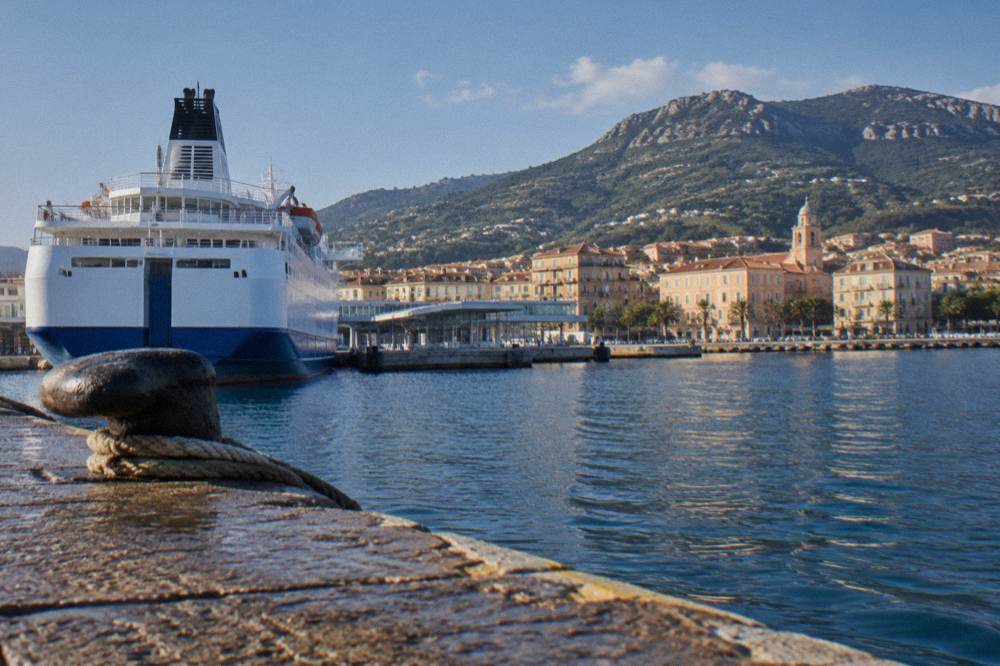
Corsica is reached by air through four airports, Ajaccio Napoléon Bonaparte, Bastia Poretta, Figari Sud Corse and Calvi Sainte-Catherine, or by ferry from Marseille, Toulon, Nice, Livorno, Genoa, Savona and Santa Teresa Gallura into seven ports, and more than 8.5 million passengers passed through the island's ports and airports in 2025 excluding cruise passengers. A hire car is the practical link between arrival and almost any villa outside the main towns.
The ferry map splits by coast. Corsica Linea sails Marseille to L'Île-Rousse, Bastia, Propriano and Ajaccio, and La Méridionale sails Marseille to Ajaccio and Marseille to Porto-Vecchio, per each operator's own site. Moby sails Livorno to Bastia, Genoa to Bastia and Santa Teresa Gallura to Bonifacio, and Corsica Ferries serves the island from Toulon, Nice, Livorno and Savona, per its route page. The short Sardinia link, Santa Teresa Gallura to Bonifacio, runs with Moby and Ichnusa Lines. Crossing times, quoted as ranges from the ferrygogo aggregator, run about 50 to 60 minutes on the Sardinia hop, about 4 to 5 hours from Livorno, about 6.5 hours from Savona, about 7.5 to 10 hours from Nice, and about 10 to 13 hours from Toulon and Marseille, with the Marseille sailings mostly overnight.
| Ferry route | Operator | Typical crossing (range, aggregator) |
|---|---|---|
| Marseille to Ajaccio, Bastia, Propriano, L'Île-Rousse | Corsica Linea | about 12 to 13 hours, mostly overnight |
| Marseille to Ajaccio, Porto-Vecchio | La Méridionale | about 12 to 13 hours, mostly overnight |
| Toulon and Nice to Corsican ports | Corsica Ferries | about 7.5 to 13 hours by route |
| Livorno to Bastia | Corsica Ferries, Moby | about 4 to 5 hours |
| Savona to Bastia | Corsica Ferries | about 6.5 hours |
| Genoa to Bastia | Moby | seasonal |
| Santa Teresa Gallura to Bonifacio | Moby, Ichnusa Lines | about 50 to 60 minutes |
Which airport serves which villa region comes down to geography: Ajaccio serves the west, Bastia the northeast and Corte, Figari the southeast beach coast, and Calvi the Balagne. The Corsica airports guide breaks each one down, the ferry to Corsica guide covers the sea routes, and the Corsica car rental guide handles the vehicle question, with more on the roads themselves in driving in Corsica.
The island's rail network, the Chemins de fer de la Corse, runs Ajaccio to Bastia via Corte, Ponte-Leccia to Calvi, and the Balagne coastal line between Calvi and L'Île-Rousse, and it can cover part of a villa transfer without a car for some Balagne bases. The wider options sit in the getting around Corsica guide.
What Can You Do Within Reach Of A Corsican Villa?
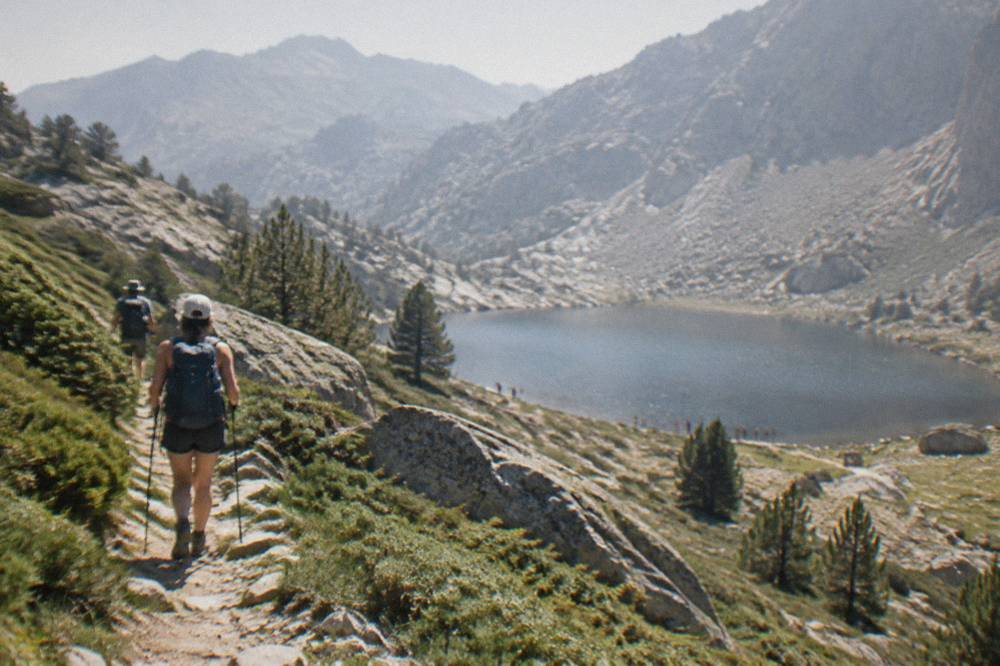
Within reach of any Corsican villa sit the island's protected coasts, the UNESCO Gulf of Porto with the Calanche of Piana, Gulf of Girolata and Scandola Reserve inscribed in 1983, the Bouches de Bonifacio reserve with the Îles Lavezzi, and the GR20, a 180 km trail of about 15 stages of 4 to 8.5 hours, plus shorter signed routes such as the Mare a Mare and Mare e Monti trails. Boat trips, 4x4 tours and food tours cover the same ground without the walking.
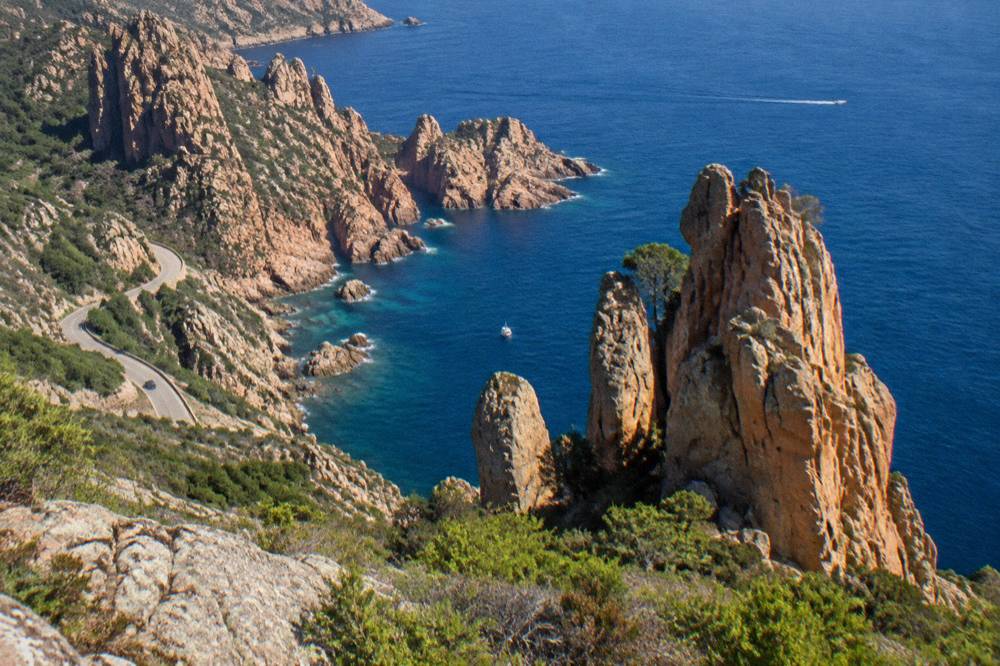
The UNESCO property is the west coast's anchor. Scandola, created by ministerial order on 9 December 1975 as the first nature reserve in Corsica, spans 1,000 ha of sea and 919 ha of land with a 70 ha integral reserve, and its land area is closed to the public, so visits are by boat only, with daytime anchoring allowed outside the integral reserve and no recreational line or spear fishing, per the OEC rules page. The reserve was key to saving the osprey in Corsica, the same page records. In April 2026 the State and the OEC renewed the management agreement and confirmed voluntary boat-operator labelling, a QR-code tracking trial for pleasure boats, more controls at sea and renewed osprey quiet zones, with quotas and licences to be consolidated in a regulatory framework being finalised, and no year attached to it.
The walking network is equally mapped and shorter than the GR20 for a villa week. The PNRC brochure gives Mare a Mare Centre at 84 km from Ghisonaccia to Porticcio, Mare a Mare Sud at 73 km ending in Propriano, Mare a Mare Nord at 139 km, or 161 km with the variant, and Mare e Monti Sud at 66 km, also ending in Propriano, while Mare e Monti Nord runs 121 km to Cargèse. The GR20 detail, refuge bookings and 2026 season sit in the Corsica GR20 guide and the wider hiking in Corsica guide.
| Long-distance trail | Length | Days per PNRC | Climb |
|---|---|---|---|
| GR20 | 180 km | about 15 stages of 4 to 8.5 h | not stated |
| Mare a Mare Nord | 139 km (161 km with variant) | 8 to 12 | 5,900 m |
| Mare a Mare Centre | 84 km | 7 (Ghisonaccia to Porticcio) | 3,900 m |
| Mare a Mare Sud | 73 km | 5 | 3,200 m |
| Mare e Monti Nord | 121 km | 10 | 6,100 m |
| Mare e Monti Sud | 66 km | 5 | 2,700 m |
The beaches are the third strand, and the Corsica beaches guide ranks the options by coast.
Which Island Rules Shape A Corsica Villa Holiday?
The rules that matter around a Corsican villa are the fire regime, which bans all fires and smoking in forests, maquis and massifs from 15 June to 30 September, the island-wide ban on wild camping, with bivouac only in marked areas at refuges, the ban on dogs inside GR20 refuges and rented tents, and the no-departure rule after 11:00 from Calenzana on the GR20.
At sea, emergency numbers are 112, 15, 17, 18, 114 and 196 for sea rescue, with the PGHM mountain rescue at Ajaccio on 04 95 24 24 00.
The fire rule is the one that touches villa guests most directly, because it covers barbecues and cigarettes anywhere in the scrub in high summer. The PNRC page adds that the fire-risk map is updated at 18:00 for the next day and that from mid-June to mid-September access to some massifs can be restricted, so a walking day planned from the villa should be checked against the prefecture-linked map the evening before. The UK FCDO notes a high wildfire risk in France from April to October, and the US State Department lists France at Level 2, Exercise Increased Caution.
Wild camping is banned across Corsica including the GR20, with bivouac only in the designated areas near PNRC refuges, per the PNRC and the municipal orders it cites. Refuge nights must be booked online in advance, and the 2026 rates are EUR 20 for a bunk, EUR 12 for a bivouac pitch with your own tent, EUR 27 for a rented tent for one and EUR 39 for two, with all rental tents sleeping two and coming with a 3 cm mat per person, bring your own sleeping bag. Meals are paid in cash or cheque to the guardian on site.
When Should You Plan A Corsica Villa Holiday?
Corsica's climate, per the Météo-France 1991-2020 station normals, is a hot dry summer and a mild wet winter, with Ajaccio averaging 29.2 °C daily highs in August against 8.6 mm of rain in July, and November carrying the heaviest monthly rain at 111.8 mm in Ajaccio and 134.3 mm in Bastia, while snow falls only on the high mountains. Villas are usually let weekly in the summer season, and the shoulder months carry more rain and fewer daylight hours.
The numbers behind that summary come straight from the station file. At Ajaccio, July averages 8.6 mm of rain and 12 h 6 min of sunshine per day, August averages 29.2 °C highs, and November averages 111.8 mm of rain. At Bastia the pattern is the same shape: November averages 134.3 mm and July 13.8 mm, with August highs averaging 29.8 C. October and November carry the most rain at both stations, and February carries the lowest mean daily lows, 4.3 °C at Ajaccio and 5.1 °C at Bastia.
| Month | Ajaccio high °C | Ajaccio rain mm | Bastia high °C | Bastia rain mm |
|---|---|---|---|---|
| Jan | 14.0 | 54.1 | 13.8 | 67.3 |
| Feb | 14.2 | 48.1 | 13.9 | 63.5 |
| Mar | 16.0 | 50.4 | 15.8 | 63.7 |
| Apr | 18.5 | 53.1 | 18.3 | 71.6 |
| May | 22.1 | 49.8 | 22.4 | 53.7 |
| Jun | 25.9 | 25.9 | 26.4 | 38.8 |
| Jul | 28.6 | 8.6 | 29.4 | 13.8 |
| Aug | 29.2 | 15.8 | 29.8 | 21.1 |
| Sep | 26.1 | 57.8 | 26.0 | 74.5 |
| Oct | 22.8 | 85.7 | 22.0 | 126.5 |
| Nov | 18.3 | 111.8 | 17.7 | 134.3 |
| Dec | 15.1 | 73.9 | 14.8 | 88.1 |
The month-by-month detail, including the sunshine columns, sits in the Corsica weather by month guide, with the seasonal trade-offs drawn together in the best time to visit Corsica.
Which Boat And Land Days Pair Best With Each Villa Region?
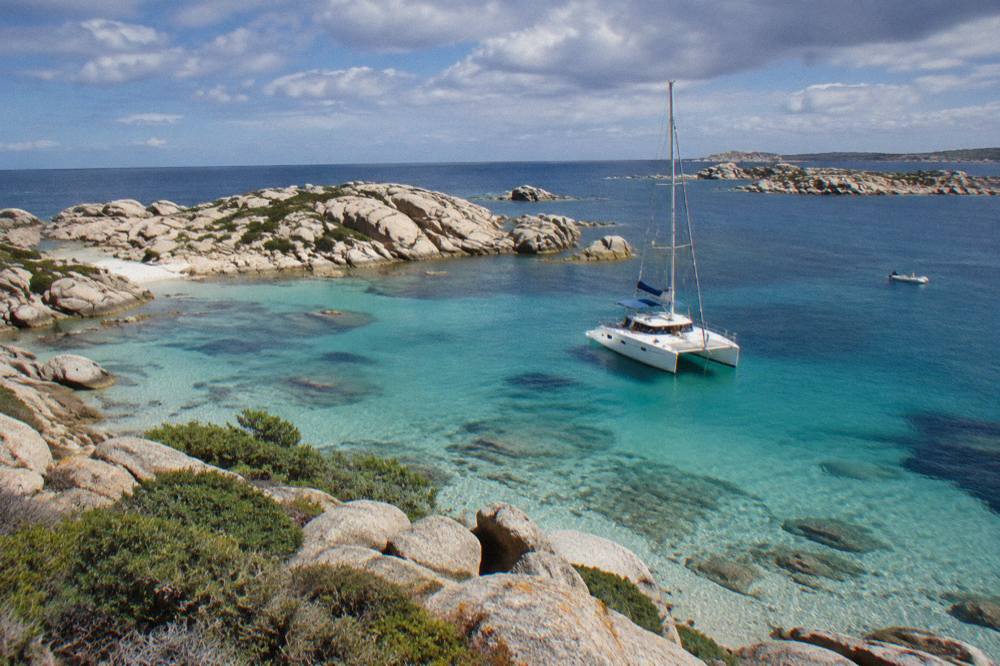
A west-coast villa pairs with the Scandola and Calanques de Piana cruises out of Porto, Sagone, Cargèse or Ajaccio, a southeast villa pairs with the Bonifacio cliffs and Îles Lavezzi trips, a Balagne villa pairs with the Agriates catamarans from L'Île-Rousse, and an Ajaccio villa pairs with the Îles Sanguinaires gulf cruises, while land days range from 4x4 tours of the Bavella needles and the Cuscionu plateau to the turtle park at A Cupulatta.
Each coast has its own waters, and the protected areas set the rules.
From the west, the semi-rigid Scandola and Piana day trip from Ajaccio or Porticcio gives the full reserve plus the red granite of the Calanche, and shorter Porto cruises with a Girolata stop or a swimming stop cover the same UNESCO water in less time. From the southeast, the Bonifacio cliff and Lavezzi cruises and the catamaran with snorkelling in the Lavezzi islands work straight from the marina, and the La Maddalena and Lavezzi day trip crosses toward Sardinia on a small-group boat. From L'Île-Rousse, catamaran excursions run into the Désert des Agriates, with aperitif sunset options and full-day versions both.
On land, the 4x4 tours out of Porto-Vecchio cover the Ospedale forest and the Aiguilles de Bavella, or the Cuscionu plateau and the Alta Rocca, and jeep tours from Calvi reach Lotu and Saleccia through the Agriates. A Cupulatta, the turtle park near Sagone, sells skip-the-line admission and makes an easy family half day from a west-coast villa. Ajaccio's own food tours, with tastings, suit a town base, and the walking-history option from Genoa to Napoleon rounds out a city day before the museums.
Common Questions About Villas In Corsica
Where Should You Rent A Villa In Corsica?
The main villa regions are the Porto-Vecchio and Bonifacio coast in the southeast, the Balagne around Calvi and L'Île-Rousse, the Ajaccio gulf, the Saint-Florent and Cap Corse area, and Corte inland. Each pairs a different set of beaches, walking and boat trips with its nearest airport.
Do You Need A Car For A Villa Holiday In Corsica?
For almost any villa outside the main towns, yes. The Chemins de fer de la Corse network covers Ajaccio to Bastia via Corte, Ponte-Leccia to Calvi and the Balagne coastal line, but the villa regions, beaches and trailheads sit on roads, and the practical detail is in the driving and car rental guides on this site.
Can You Have A Barbecue At A Corsican Villa In Summer?
Not in the wild. From 15 June to 30 September it is forbidden to light a fire or smoke in forests, maquis and massifs, per the PNRC. A fixed barbecue at a private property may be governed by local rules and the prefecture's daily fire-risk level, so check before lighting anything in high summer.
Which Airport Is Closest To The Porto-Vecchio And Bonifacio Villas?
Figari Sud Corse (FSC) serves the southeast coast, while Bastia Poretta (BIA) serves the north and Corte, Ajaccio Napoléon Bonaparte (AJA) the west, and Calvi Sainte-Catherine (CLY) the Balagne.
What Rules Apply To Boats Near A Corsican Villa Holiday?
Scandola's land area is closed to the public and visits are by boat only, with no landing in the integral reserve and no recreational line or spear fishing. The Îles Lavezzi sit inside the Bouches de Bonifacio Nature Reserve. Emergency number 196 covers sea rescue, with VHF channel 16 at sea.
Is November A Good Month For A Corsican Villa Stay?
November carries the heaviest monthly rain in the station normals, 111.8 mm at Ajaccio and 134.3 mm at Bastia, with daily highs averaging 18.3 °C and 17.7 °C respectively. The shoulder trade-off is rain against smaller crowds, and the weather-by-month guide carries the full table.