Corsica Yacht Charter
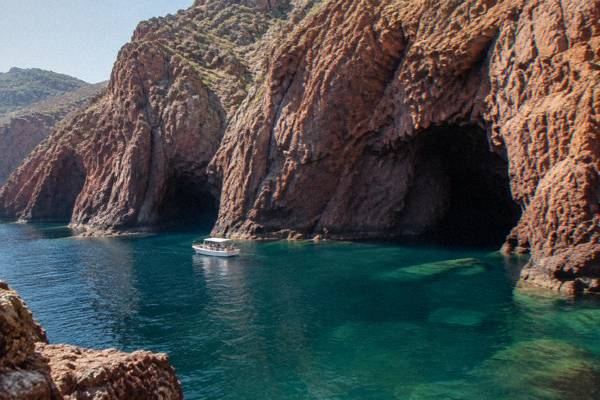
Corsica has more than 1,000 km of coastline, four ferry ports on the west and south sides alone, and a UNESCO-listed stretch of sea and rock between Porto, Girolata and Scandola, which makes it one of the most compact big-boat destinations in the western Mediterranean.
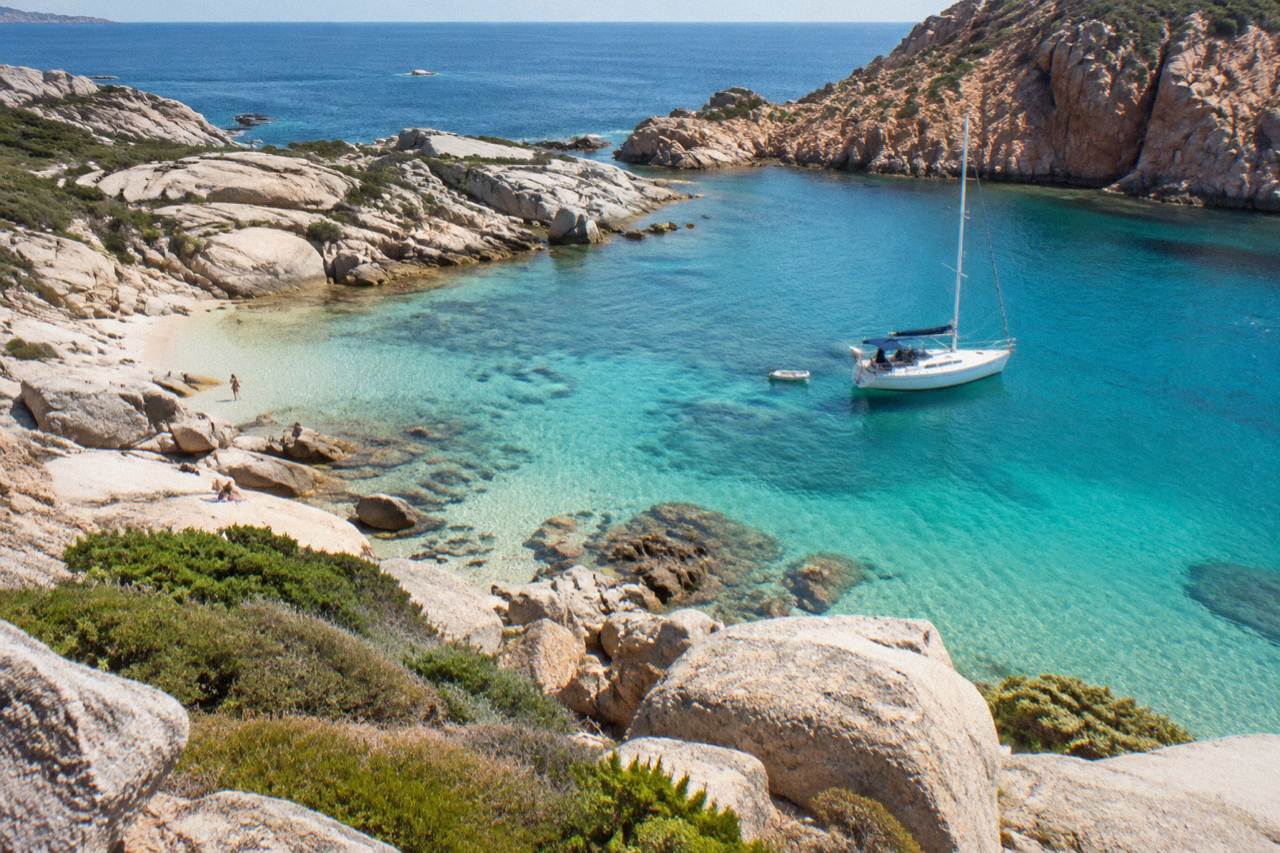
A Corsica yacht charter works around four main sailing areas: the Gulf of Ajaccio and the Îles Sanguinaires, the Golfe de Porto with the Scandola reserve, the Balagne coast between Calvi and L'Île-Rousse, and the deep-south anchorages of Bonifacio and the Îles Lavezzi. Scandola is visited by boat only, with anchoring rules and no landing in the integral reserve, so an itinerary needs planning around the reserves rather than through them.
Corsica is a French Mediterranean island with more than 1,000 km of coastline, a mountainous interior that rises to Monte Cinto at 2,706 m, and a compact set of ports that puts several very different sailing areas within a week's reach. The island covers 8,722 km2, is the fourth-largest in the Mediterranean, and its population of 365,636 (provisional INSEE estimate, 1 January 2026) is concentrated in a handful of coastal towns, leaving long stretches of the shore without a road. That combination, high granite cliffs, empty consides and short hops between harbours, is what draws charter crews here season after season, and it is why the planning questions on this page all come back to the reserves: the rules in Scandola and the Bouches de Bonifacio shape a Corsican itinerary more than the weather does.
What Does A Corsica Yacht Charter Actually Give You?
A Corsica yacht charter gives you access to about 1,090 km of coastline, reported in Collectivité de Corse documents as the figure excluding islets and estuaries, with four distinct sailing areas reachable in day sails, plus two protected reserves, Scandola and the Bouches de Bonifacio, that can only be properly seen from the water. Corsica is 8,722 km2 and fourth-largest among Mediterranean islands, so no passage between its main ports is an ocean crossing.
The island splits naturally into sailing areas. In the north, the Balagne coast runs between Calvi and L'Île-Rousse, with the Désert des Agriates and its beaches, Saleccia and Lotu, stretching east of Saint-Florent. In the west, the Gulf of Ajaccio opens onto the Îles Sanguinaires, and north of it the Golfe de Porto holds the Calanques de Piana, Girolata and the Scandola Nature Reserve, the stretch inscribed by UNESCO in 1983 as "Gulf of Porto: Calanche of Piana, Gulf of Girolata, Scandola Reserve", an 11,800 ha property under natural criteria (vii), (viii) and (x). In the south, Bonifacio sits on limestone cliffs above the strait to Sardinia, with the Îles Lavezzi inside the Bouches de Bonifacio Nature Reserve. On the east coast the shore is straighter, with Bastia and its old harbour in the north and Porto-Vecchio in the south.
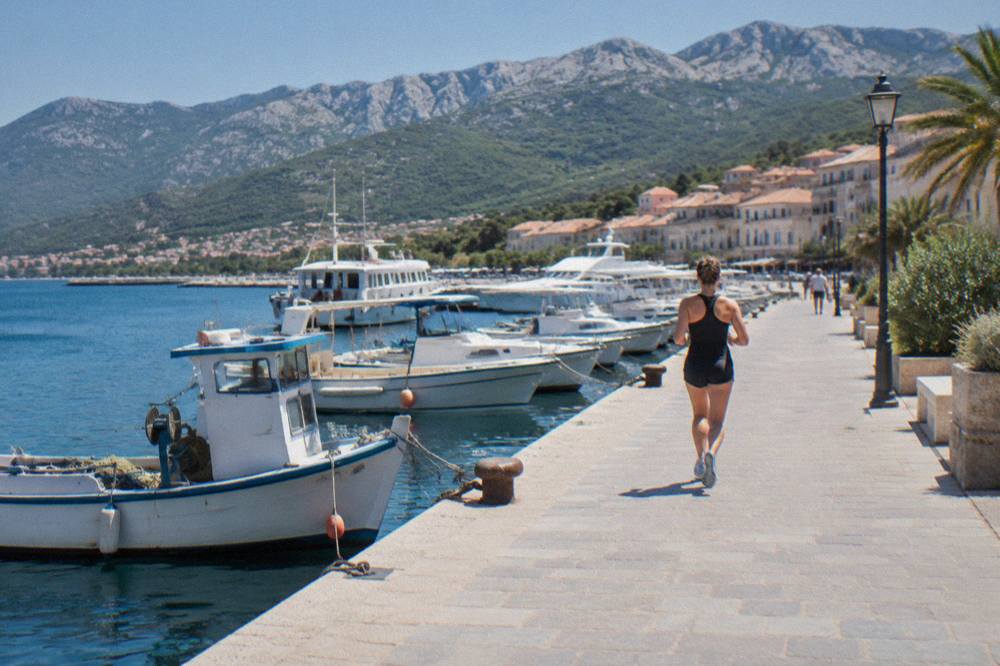
The Parc naturel régional de Corse, created in 1972 and now 4,484 km2, includes the big valleys that run down to the sea, and its western sea front runs 80 km from Capu Rossu to Capu Cavallu. That means a large slice of the wildest sailing water on the island sits inside a managed regional park, which matters for anchoring, and the two hard reserves inside it, Scandola and, further south, the Bouches de Bonifacio, carry their own rules. More than 8.5 million passengers, cruise passengers excluded, passed through Corsica's ports and airports in 2025 according to the ORTC and DREAL annual report published 30 May 2026, and a good share of that movement is summer traffic on the water.
Which Ports And Sailing Areas Should A Corsica Charter Start From?
The four practical charter bases are Ajaccio, with the Îles Sanguinaires on its doorstep, Calvi and L'Île-Rousse on the Balagne coast, Bonifacio for the Îles Lavezzi and Sardinia, and Porto-Vecchio for the southeast beaches, with Bastia and Saint-Florent as secondary starts for Cap Corse and the Désert des Agriates. Each pairs a ferry port with a distinct body of water.
Ajaccio is the capital and Napoleon's birthplace, home to 76,320 residents in the reference population in force from 1 January 2026, and its gulf is the most sheltered starting point on the west coast. From there the Îles Sanguinaires lie off the point, and the passage north to the Golfe de Porto, about 40 km as the crow flies, brings a crew to Piana, Girolata and Scandola in a single day's sail. Bastia, population 46,867, anchors the northeast: its old harbour is the arrival port for ferries from Livorno, and from Bastia a boat can work west along the Cap Corse peninsula or cross to Saint-Florent for the Agriates. Calvi holds its citadel over the harbour and opens onto the Revellata peninsula, and Bonifacio's harbour sits inside the inlet below the town's cliffs, the deepest natural harbour configuration on the south coast.
| Base | Water on the doorstep | Nearest reserve or protected area | Details For The Area |
|---|---|---|---|
| Ajaccio | Gulf of Ajaccio, Îles Sanguinaires | None in the gulf; Golfe de Porto one day north | Capital of Corsica, Napoleon's birthplace, 76,320 residents |
| Calvi | Balagne coast, Revellata peninsula | Revellata marine reserve edges the gulf | Citadel; Scandola reachable on a 4-hour boat tour from Calvi |
| L'Île-Rousse | Northern Balagne, entry to the Agriates | Désert des Agriates (Saleccia, Lotu) | Ferry port; catamaran excursions into the Agriates |
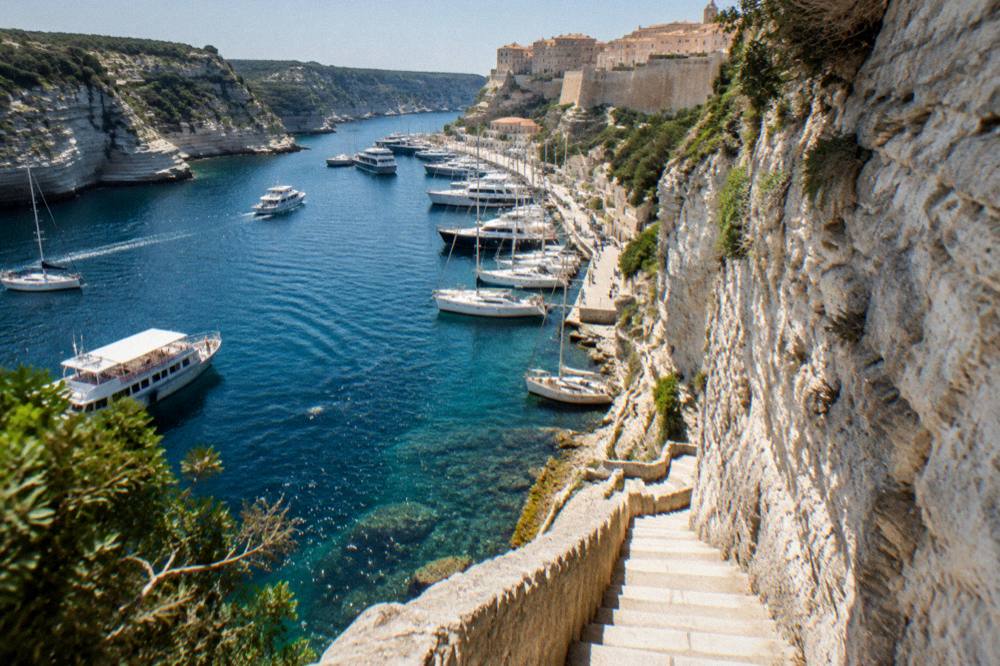
| Bonifacio | Cliffs, strait to Sardinia | Bouches de Bonifacio Nature Reserve, Îles Lavezzi | 189-step Escalier du Roi d'Aragon cut into the cliff |
| Porto-Vecchio | Golfe de Porto-Vecchio, southeast beaches | Cerbicale Islands reserve offshore | Old town above the gulf; 4x4 tours inland to Bavella |
| Bastia | Cap Corse approaches | None immediate | Old harbour; 46,867 residents, second town of Corsica |
Not every crew wants to skipper themselves, and the short-trip market around each base is deep. The site's own pick of small-boat days out is on the main things to do page, and for the Golfe de Porto specifically the short cruise to the Calanche de Piana, Calanche de Piana by boat, is the entry-level version of the passage most charter crews aim for. A crew can also Check availability for that trip without committing to a week's charter.
What Are The Rules For Boats In Scandola And The Bouches De Bonifacio?
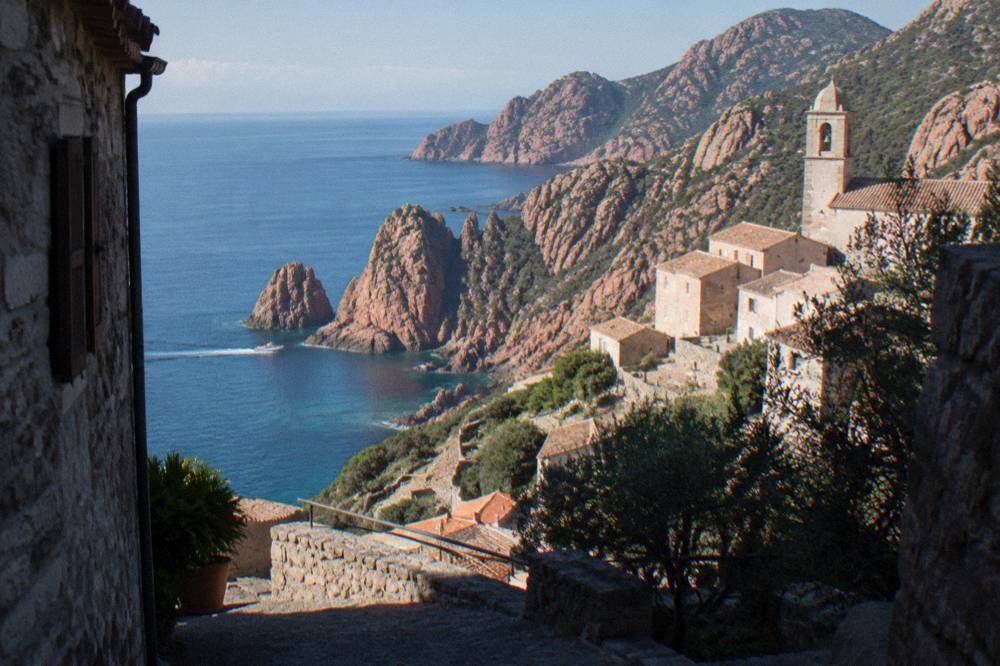
In Scandola, the land part of the reserve is closed to the public, visits are by boat only, landing is banned in the 70 ha integral reserve, anchoring is authorised in daytime outside the integral reserve and the Gargalu channel with anchors lifted at sunset, and recreational line fishing and spearfishing are prohibited, rules reported by the Office de l'Environnement de la Corse. The Bouches de Bonifacio reserve around the Îles Lavezzi is managed by the same office.
Scandola was the first nature reserve created in Corsica, by ministerial order of 9 December 1975, and covers 1,000 ha of sea and 919 ha of land on the commune of Osani, from 100 m depth to 540 m altitude, with 70 ha of integral reserve. The reserve is managed by the PNRC and was key to saving the osprey in Corsica. For a charter crew the practical points are the ones in the OEC rules: the terrestrial part is closed, so the itinerary is a water itinerary, and anchoring is a daytime activity that ends at sunset. Boats are asked to avoid the posidonia seagrass beds, and apnea diving is allowed but regulated, with commercial apnea prohibited.
| Rule in the reserves | What applies |
|---|---|
| Landing in Scandola | Banned in the 70 ha integral reserve; land area closed to the public |
| Anchoring in Scandola | Daytime only, outside the integral reserve and the Gargalu channel, anchors up at sunset |
| Fishing in Scandola | No recreational line fishing or spearfishing; professional fishing allowed under conditions |
| Diving in Scandola | Apnea allowed but regulated; commercial apnea prohibited |
| Seagrass | Avoid posidonia beds when anchoring |
| Îles Lavezzi | Inside the Bouches de Bonifacio Nature Reserve, managed by the OEC |
Management is being tightened. A State and OEC steering committee met on 28 April 2026, after the management agreement was renewed on 27 February 2026, and the announced measures include voluntary labelling of boat operators, a QR-code tracking trial for pleasure boats, more controls at sea and renewed osprey quiet zones. Quotas, licences and flow controls are to be consolidated in a regulatory framework being finalised, and no year has been given for it, so crews should confirm the current rules with the reserve authorities before a passage. The quiet zones exist for a breeding bird, and the OEC credits the reserve with the survival of the osprey in Corsica, which is why the anchoring map matters as much as the chart.
A day trip is the alternative to taking your own hull into the reserve. The licensed passenger boats out of Porto, Cargèse, Sagone, Ajaccio and Calvi run the Scandola and Calanques de Piana circuit continuously in season, and the reserve rules are part of their brief. The site has a full guide to Scandola nature reserve rules context in its safety pages, and a dedicated Scandola and Girolata boat trip planning page, plus the detailed Golfe de Porto area guide on the map section of the site.
How Do You Build A One-Week Charter Itinerary Around Corsica?
A one-week Corsica charter works best as a one-coast itinerary: Calvi to the Golfe de Porto and back for the reserves, or Bonifacio to Porto-Vecchio for the deep south, because the west coast combines long enough passages with the Scandola closure rules, while the south pairs the Bouches de Bonifacio with the beaches of Palombaggia and Santa Giulia inside short day sails.
A west-coast week from Calvi runs the Balagne coast, the Désert des Agriates to the east of Saint-Florent, and the Golfe de Porto. The beaches of the Agriates, Saleccia and Lotu, are reached by boat shuttle from Saint-Florent, by 4x4 track from Casta, or on foot, a pattern reported by the island's tourism body, so they are equally open to a charter yacht standing offshore. The Golfe de Porto section holds the Calanques de Piana and Girolata, the hamlet reachable from the sea, and Scandola itself, and it is the stretch that justifies the whole week. Girolata sits inside the UNESCO property, and the boat tours out of Porto, Cargèse and Sagone call there.
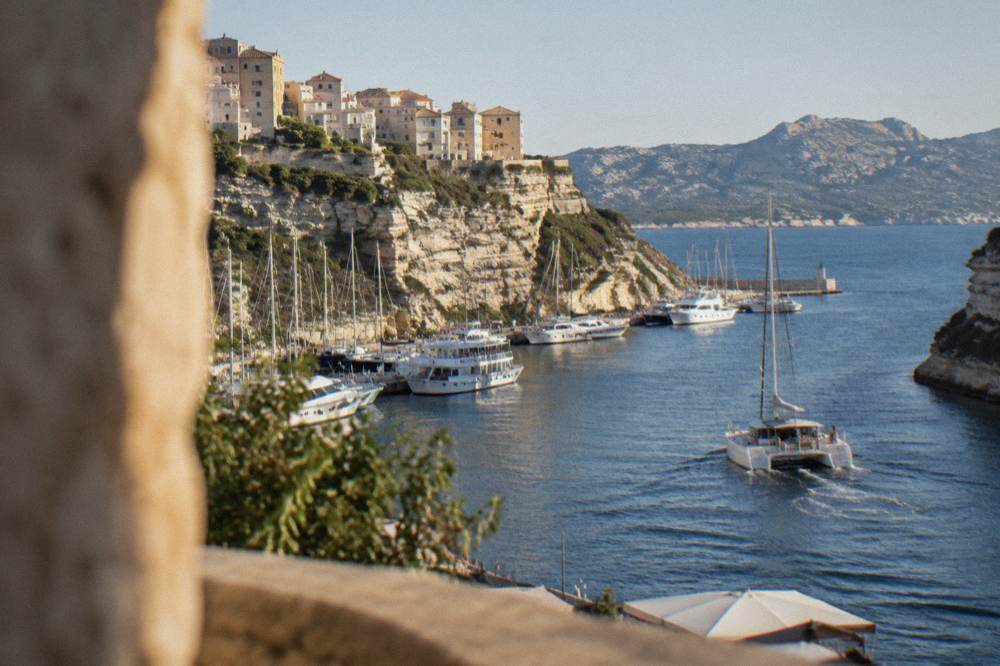
A south-coast week from Bonifacio or Porto-Vecchio keeps the water warmer in feel and the sailing shorter. The Îles Lavezzi lie in the strait, the Cerbicale Islands sit off Porto-Vecchio inside their own reserve, and the strait to Sardinia is about 50 to 60 minutes by ferry from Santa Teresa Gallura to Bonifacio, a crossing time reported by ferry aggregators and confirmed by the route's continuation under Moby and Ichnusa Lines. Charter crews should note that products departing from Sardinian ports, such as the La Maddalena trips, depart from Sardinia, not from a Corsican town, so they belong to the Sardinian side of a two-island plan, which the site covers in its Corsica and Sardinia ferry guide.
Inland days break up a week on the water. Corte, the old capital, sits inland at the centre of the island, with road times of one hour from Bastia, one and a half from Ajaccio and Calvi, two from Porto-Vecchio and two and three-quarters from Bonifacio and Propriano, figures given by the Musée de la Corse for its own visitors. The Restonica valley climbs from Corte, and the Aiguilles de Bavella stand above the southeast, all of it detailed in the site's hiking in Corsica guide for crews who want a day off the boat.
What Weather And Winds Should A Corsica Charter Plan Around?
Corsica has a hot dry summer and a mild wet winter, and the Météo-France 1991-2020 station normals show Ajaccio averaging 29.2 °C daily highs in August with 8.6 mm of rain in July, while Bastia averages 29.8 °C in August and 134.3 mm of rain in November, so the sailing season sits inside the dry months and the fire rules run from 15 June to 30 September.
The station data, measured at Ajaccio Campo dell'Oro and at Bastia over 1991-2020, gives the planning numbers. July at Ajaccio averages 28.6 °C highs, 17.7 °C lows and 8.6 mm of rain, on 12 h 6 min of sunshine a day; August averages 29.2 °C and 15.8 mm. Bastia is a fraction warmer by day, 29.4 °C in July and 29.8 °C in August, with 13.8 mm and 21.1 mm of rain. The rain arrives with autumn: October gives Ajaccio 85.7 mm and Bastia 126.5 mm, and November 111.8 mm and 134.3 mm. Snow falls only on the high mountains, which is visible from the water on clear days, when Monte Cinto's 2,706 m summit stands over the whole west coast. The wider set of guides lives on Corsica Travel Guide.
| Month | Ajaccio high °C | Ajaccio rain mm | Bastia high °C | Bastia rain mm |
|---|---|---|---|---|
| May | 22.1 | 49.8 | 22.4 | 53.7 |
| Jun | 25.9 | 25.9 | 26.4 | 38.8 |
| Jul | 28.6 | 8.6 | 29.4 | 13.8 |
| Aug | 29.2 | 15.8 | 29.8 | 21.1 |
| Sep | 26.1 | 57.8 | 26.0 | 74.5 |
| Oct | 22.8 | 85.7 | 22.0 | 126.5 |
Météo-France station data, 1991-2020 normals, Ajaccio Campo dell'Oro and Bastia.
The fire rules matter to sailors who go ashore. From 15 June to 30 September it is forbidden to light a fire or smoke in forests, maquis and massifs, and a daily colour map of massif access is updated at 18:00 for the next day, with some massifs able to close entirely on high-risk days. The UK FCDO notes a high wildfire risk in France from April to October. At sea, emergency numbers are 112 and, specifically for sea rescue, 196 via VHF channel 16, with 15 for medical, 17 for police, 18 for fire and 114 by SMS. Mountain rescue on land is the PGHM at Ajaccio, 04 95 24 24 00. The full picture is in the site's Corsica weather by month and best time to visit Corsica guides.
How Do Ferries And Flights Feed A Corsica Charter?
Ferries reach Corsica from Marseille, Toulon, Nice, Livorno, Savona, Genoa and Santa Teresa Gallura, with Corsica Linea sailing Marseille to Ajaccio, Bastia, Propriano and L'Île-Rousse, La Méridionale sailing Marseille to Ajaccio and Porto-Vecchio, Moby sailing Livorno, Genoa and Santa Teresa Gallura to Bastia and Bonifacio, and Corsica Ferries from Toulon and Nice and from Livorno and Savona to Bastia.
The crossing times, reported by ferry aggregators and to be confirmed with the operator, set the rhythm: Santa Teresa Gallura to Bonifacio about 50 to 60 minutes, Livorno to Bastia 4 to 5 hours, Savona to Bastia about 6.5 hours, Nice to Bastia 7.5 to 10 hours, Toulon routes about 10 to 13 hours and Marseille about 12 to 13 hours, mostly overnight. Moby and Ichnusa Lines keep the Santa Teresa to Bonifacio route after Sardinia found no rival operator, a report of 9 October 2026. For crews flying in, the island has four airports: Ajaccio Napoléon Bonaparte (AJA), Bastia Poretta (BIA), Figari Sud Corse (FSC) and Calvi Sainte-Catherine (CLY), covered in the site's Corsica airports and flights to Corsica guides, with the ferry to Corsica guide carrying the full sailing picture.
| Operator | And confirmed routes to Corsica | Typical crossing |
|---|---|---|
| Corsica Linea | Marseille to Ajaccio, Bastia, Propriano, L'Île-Rousse | About 12-13 h, mostly overnight |
| La Méridionale | Marseille to Ajaccio, Marseille to Porto-Vecchio | About 12-13 h, mostly overnight |
| Moby | Livorno to Bastia, Genoa to Bastia, Santa Teresa Gallura to Bonifacio | Livorno 4-5 h; Santa Teresa 50-60 min |
| Corsica Ferries | Toulon and Nice to Ajaccio, Bastia, L'Île-Rousse, Porto-Vecchio, Propriano; Livorno and Savona to Bastia | Toulon 10-13 h; Savona about 6.5 h |
The island's train network, the Chemins de fer de la Corse, runs Ajaccio to Bastia via Corte, Ponte-Leccia to Calvi, and the Balagne coastal line between Calvi and L'Île-Rousse, which is useful for repositioning a crew along the Balagne if the boat stays put. Road conditions, including the accessibility status of the main mountain passes, are published live by Inforoutes Corse, and the site's getting around Corsica guide covers the land side in full.
What Does Going Ashore Cost In Corsica?
Going ashore in Corsica costs EUR 9 at Filitosa, EUR 10 at Maison Bonaparte and the Palais Fesch, and EUR 5.50 at the Musée de la Corse in Corte where one ticket covers museum and citadel, while the Escalier du Roi d'Aragon in Bonifacio charges a reported fee of about EUR 5 for its 189 steps, all figures from the sites' own published rates.
Filitosa, the prehistoric site, is open 1 April to 2 November from 09:00 to sunset, with adults at EUR 9, reduced EUR 7 for ages 6 to 17 and disabled visitors, a family ticket at EUR 28 for two adults and two children, and free entry under 6. Maison Bonaparte in Ajaccio, on Rue Saint-Charles, 200 m from the bus station and ferry terminal, charges EUR 10 full, EUR 8 for non-EU residents aged 18 to 25 and large families, and is free for EU residents under 26; it is open every day except Monday, 10:00 to 17:30 from 1 July to 30 September. The Palais Fesch lists EUR 10 full, EUR 6 for over-65s and free up to 18, daily 09:00 to 17:00 for the 2026 period, closed Christmas, New Year and 1 November. In Corte the Musée de la Corse charges EUR 5.50 full, EUR 4 and EUR 3 reduced, one ticket covering museum and citadel, daily 10:00 to 19:00 from 1 May to 31 October. Tipping ashore follows French law: menus must state "prix service compris", and anything extra is optional.
| Site ashore | Full price | Key conditions |
|---|---|---|
| Filitosa | EUR 9 | 1 Apr to 2 Nov; reduced EUR 7; family EUR 28; free under 6 |
| Maison Bonaparte, Ajaccio | EUR 10 | Closed Monday; EUR 8 non-EU 18-25 and large families; free EU under 26 |
| Palais Fesch, Ajaccio | EUR 10 | EUR 6 over 65; free up to 18; daily 09:00-17:00; closed 25 Dec, 1 Jan, 1 Nov |
| Musée de la Corse, Corte | EUR 5.50 | One ticket covers museum and citadel; daily 10:00-19:00, 1 May to 31 Oct |
| Escalier du Roi d'Aragon, Bonifacio | About EUR 5 | 189 steps; closed-toe flat shoes required |
Can You Combine A Corsica Charter With Walking The Interior?
Yes, because the island's long trails are short enough to sample between sails: the Mare a Mare Centre runs 84 km from Ghisonaccia to Porticcio in about 7 days, Mare a Mare Sud is 73 km over 5 days ending in Propriano, and Mare e Monti Sud is 66 km over 5 days also ending in Propriano, all figures from the PNRC's own trail brochure, so a week split between boat and foot is a real plan.
The GR20 is the island's famous walk, 180 km north to south in about fifteen stages of 4 to 8.5 hours, with the PNRC's refuges guarded from 16 May to 4 October. Nights in the refuges must be booked online, at EUR 20 per person for a bunk, EUR 12 for a bivouac pitch, EUR 27 for a one-person rented tent and EUR 39 for a two-person tent, per person for the first two. Wild camping is banned across Corsica including the GR20, and dogs are not allowed in refuges or rented tents. For charter crews the shorter Mare a Mare and Mare e Monti routes are the realistic pick, since several end at Propriano and Porto-Vecchio, both ferry and charter ports. The site's Corsica GR20 guide carries the full refuge and booking detail.
| Trail | Length | Days | Climb | End point |
|---|---|---|---|---|
| GR20 | 180 km | About 15 stages | Not stated | Conca (south end of the range) |
| Mare a Mare Nord | 139 km (161 km with variant) | 8-12 | 5,900 m | Not stated |
| Mare a Mare Centre | 84 km | 6-7 | 3,900 m | Porticcio or Tavera |
| Mare a Mare Sud | 73 km | 5 | 3,200 m | Propriano |
| Mare e Monti Nord | 121 km | 10 | 6,100 m | Cargèse |
| Mare e Monti Sud | 66 km | 5 | 2,700 m | Propriano |
What Boat Trips Work If You Are Not Chartering A Yacht In Corsica?
If a full Corsica yacht charter is more boat than the trip needs, the same water is covered by a dense day-trip market: short Calanche de Piana cruises out of Porto, catamarans into the Îles Lavezzi from Bonifacio and Porto-Vecchio, snorkelling trips in the Gulf of Calvi, and full-day Scandola circuits from Ajaccio, all bookable against the reserve rules without a skipper or a licence.
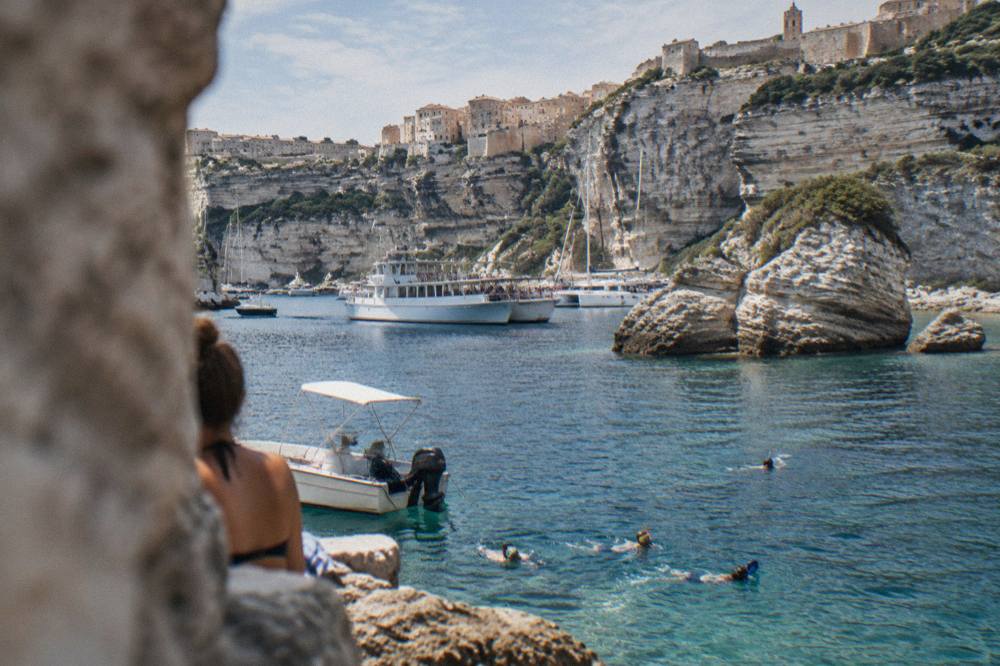
The trips divide by area. In the Golfe de Porto, the short cruises run the Calanques de Piana with Scandola circuits from Porto, Cargèse and Sagone, several with a stop at Girolata. Out of Bonifacio, the boats work the cliffs and the Îles Lavezzi, with catamarans offering snorkelling in the reserve's clear water. From Calvi the trips head for the Revellata peninsula and, on the longer days, toward Scandola itself. From Ajaccio the gulf and the Îles Sanguinaires fill the shorter slots, with aperitif and sunset versions. These are the products a charter crew can also use on a shore day, or that a land-based traveller uses instead of chartering at all.
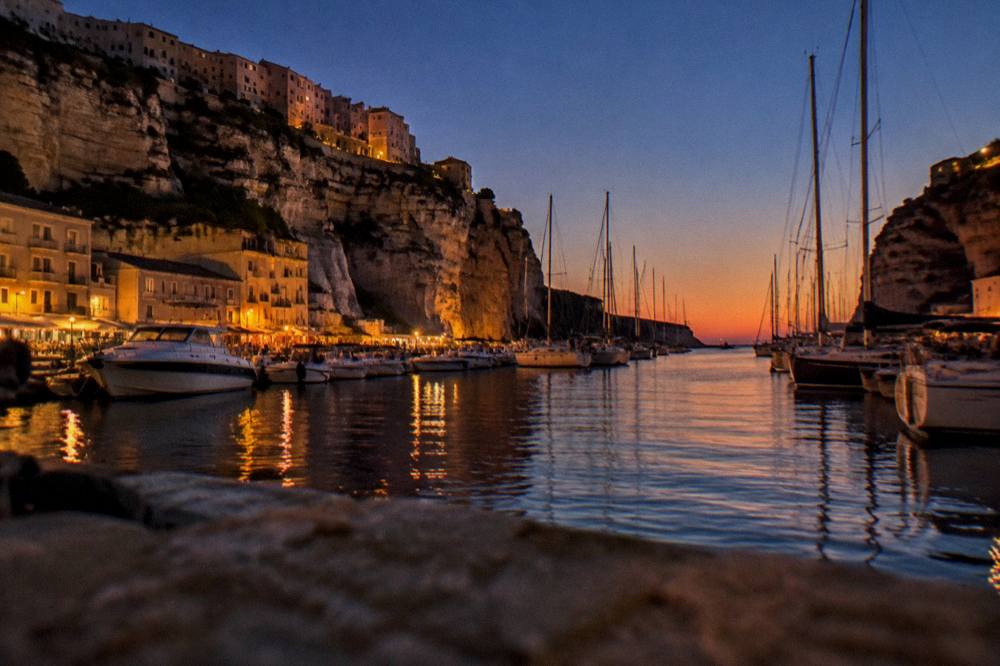
The planning order, then, is simple. Pick one coast, read the reserve rules before plotting the anchorages, keep the fire-season and emergency numbers in the passage plan, and use the day-trip market for the days the boat stays in harbour. Corsica rewards a slow circuit, and the reserves, which can only be seen from the water, are the reason the island remains a charter destination rather than just a ferry stop.
Common Questions About Corsica Yacht Charter
Can You Anchor Overnight In The Scandola Reserve?
No. Anchoring in Scandola is authorised in the daytime only, outside the integral reserve and the Gargalu channel, and anchors must be lifted at sunset. The reserve's land area is closed to the public and landing is banned in the 70 ha integral reserve, per the rules published by the Office de l'Environnement de la Corse.
Which Ports In Corsica Take Ferries?
Ajaccio, Bastia, Bonifacio, L'Île-Rousse, Propriano and Porto-Vecchio. Corsica Linea sails from Marseille to Ajaccio, Bastia, Propriano and L'Île-Rousse; La Méridionale sails Marseille to Ajaccio and Porto-Vecchio; Moby sails Livorno, Genoa and Santa Teresa Gallura to Bastia and Bonifacio; and Corsica Ferries serves the island from Toulon, Nice, Livorno and Savona.
Is A Licence Needed To Charter In Corsica?
France applies its own licence requirements to bareboat charter, and requirements vary by boat and operator; crews should confirm the current rules with the charter company before booking. No licence is needed to join a crewed day trip, and the skippered tours out of Porto, Calvi, Ajaccio and Bonifacio cover the same water.
What Is The Sea Rescue Number In Corsica?
196, reached by VHF channel 16 at sea. The general emergency number is 112, with 15 for medical, 17 for police, 18 for fire and 114 by SMS for deaf or speech-impaired callers. Mountain rescue on land is the PGHM at Ajaccio, 04 95 24 24 00.
Can You Sail From Corsica To Sardinia?
Yes, the strait between Bonifacio and Santa Teresa Gallura is the shortest crossing, about 50 to 60 minutes by ferry, reported by ferry aggregators. The Îles Lavezzi and the Cerbicale Islands sit in Corsican waters inside the Bouches de Bonifacio Nature Reserve, so the crossing passes through protected sea with its own navigation rules.
When Is The Sailing Season In Corsica?
The dry months carry the season. Ajaccio averages 8.6 mm of rain in July and 15.8 mm in August, on 12.1 and 11.1 hours of daily sunshine respectively, per Météo-France 1991-2020 station normals, and October and November carry the most rain, with November at 111.8 mm in Ajaccio and 134.3 mm in Bastia.