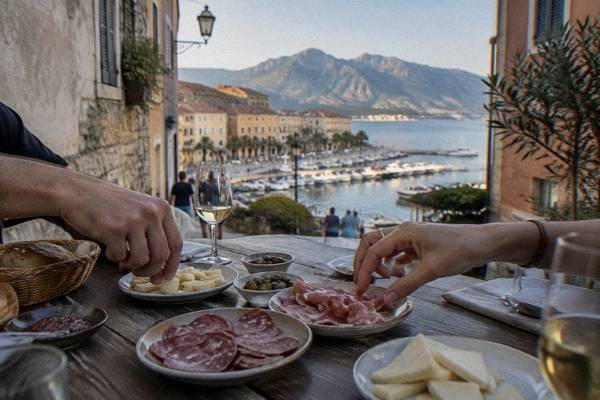
Corsican Culture
Corsica keeps its own language, its own hymn, its own cheeses and charcuterie under French and European protection, and a set of traditions the island's own institutions document and fund.
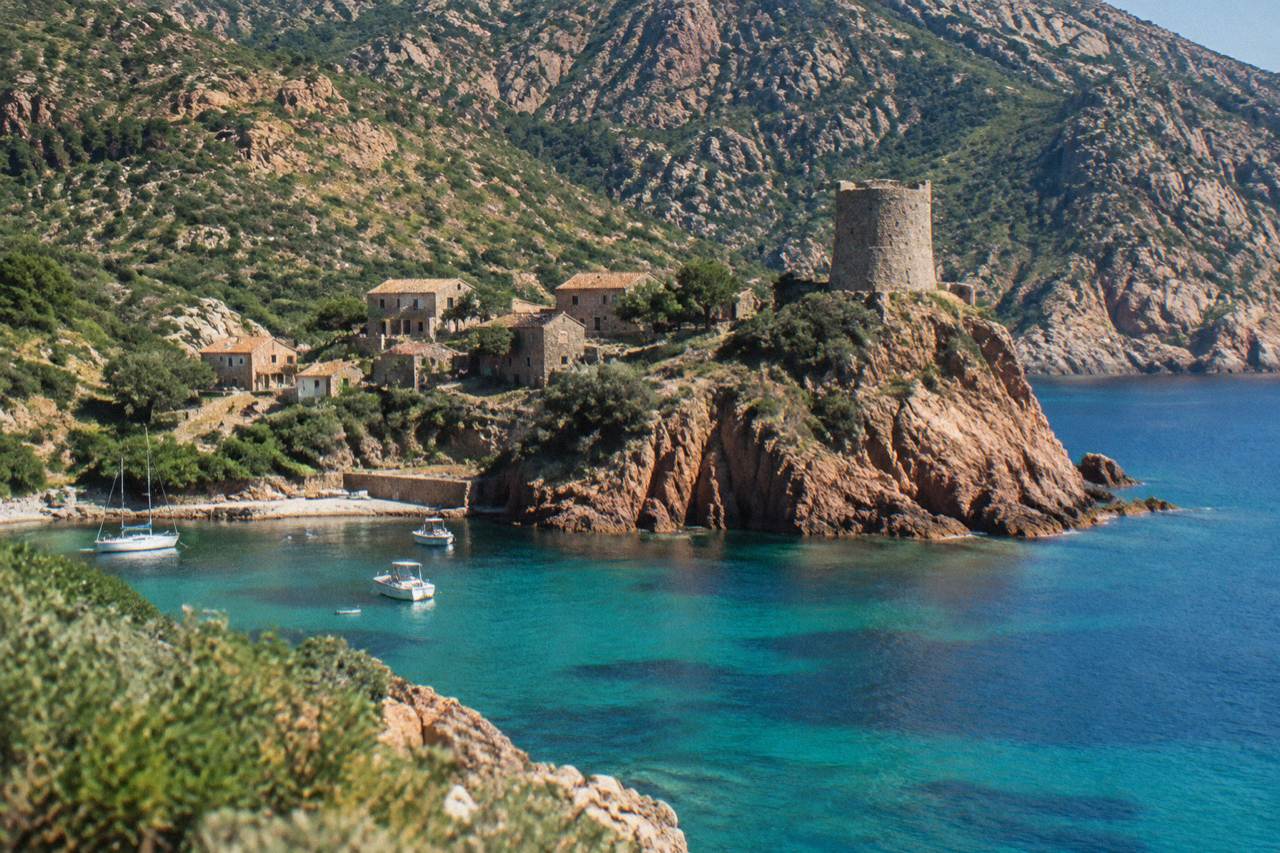
Corsican culture centres on the Corsican language, polyphonic song, protected foods such as brocciu, prisuttu, lonzu and coppa, and a strong identity inside the French Republic.
Corsica carries 365,636 residents (INSEE, 1 January 2026, provisional), covers 8,722 km2, and holds more than 1,000 km of coastline around a mountainous interior that rises to Monte Cinto at 2,706 m. Culture on this French Mediterranean island is not a museum piece. The Collectivité de Corse funds Corsican-language programmes, the Parc naturel régional de Corse maintains the walking routes that hold mountain communities together, and island producers hold national and European labels for their cheese, charcuterie, honey, oil, chestnut flour and wine. This guide gathers what the sources actually say about language, song, food, sights and traditions, with the figures attached.
The island splits into two departments for many administrative purposes, Corse-du-Sud with about 175,100 residents and Haute-Corse with about 190,500, per INSEE's 2026 estimates, while the Collectivité de Corse has operated as the single territorial authority with special status since 1 January 2018, replacing the earlier arrangement of a territorial collectivity alongside two departmental councils. Ajaccio, the capital, counts 76,320 residents and Bastia 46,867, figures INSEE published on 27 August 2026 as the reference populations in force from 1 January 2026. Those numbers frame everything cultural on the island: a small population, spread across 360 communes, that has kept a dense local life in each of them.
What Makes Corsican Culture Distinct From Mainland France?
Corsica keeps its own language, its own hymn and its own institutions inside the French Republic, and the Collectivité de Corse actively funds the language rather than leaving it to memory. The island has been a single territorial authority with special status since 1 January 2018, replacing the earlier arrangement of a territorial collectivity alongside two departmental councils.
The Corsican language sits at the centre of this. The Collectivité de Corse runs Corsican-language programmes including the Cartula di a lingua corsa and immersion schools, documented on its own language pages. The island's institutions publish in both French and Corsican, and place names appear in both forms, from Cargèse to the Aiguilles de Bavella. The number of daily speakers is not stated in the sources this site reports, and Corsican's legal status is not described as official or co-official here, because the primary documents do not state it.
The distinction runs through daily details as well as institutions. Signage, museum panels and tourism material on the island routinely carry Corsican forms alongside French ones, and the Collectivité's own documents use both. The regional natural park, created in 1972 and now 4,484 km2, administers a landscape that the island's cultural identity is inseparable from, a point developed further down this page. Even the emergency and administrative systems follow French national structures, with the euro as currency and the Europe/Paris timezone, while the cultural layer above them stays distinctly Corsican.
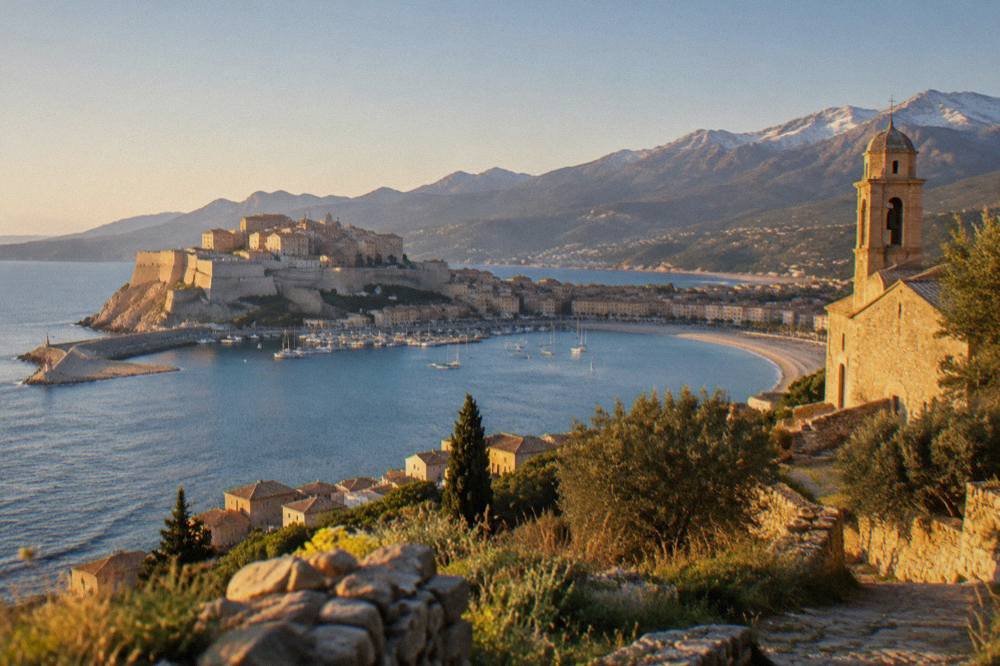
How Central Is The Corsican Language And Polyphonic Song?
Corsican polyphony is treated on the island as a living heritage practice, and the language it is sung in is the one the Collectivité de Corse teaches through immersion schools and the Cartula di a lingua corsa. The island's anthem, Dio vi Salvi Regina, is part of that same tradition, and the Collectivité's cultural pages present the two together as pillars of Corsican identity.
Polyphonic singing, paghjella in its group form, is the island's best-known musical tradition. The Maison du patrimoine in Furiani, under the Corsican Centre for Cultural Ethnography and Identity, holds the documentary record the island's institutions maintain on the practice. Sponsoring bodies fund choirs and festivals across the island's towns and villages, from the Balagne to the Alta Rocca, and the Centre's remit covers the ethnography of the whole island, not only its music.
The language itself is heard on the island's signs, in its food words and in its place names. Brocciu, figatellu, lonzu, coppa and prisuttu stay lowercase in Corsican on purpose, and the names of the long walking routes, Mare a Mare and Mare e Monti, carry the same pattern. Fiadone and canistrelli, the island's sweet things, follow it too. Anyone planning to read a menu, a trail marker or a village war memorial will meet the language within minutes of arriving, and the Collectivité's programmes are what keep it in schools rather than only on those surfaces.
Which Corsican Foods And Wines Carry Protected Labels?
Seven Corsican products carry AOC or AOP protection: brocciu, the three charcuterie cuts prisuttu, lonzu and coppa, chestnut flour (Farina castagnina corsa), Corsican honey (Mele di Corsica), Corsican olive oil (Oliu di Corsica) and the Clémentine de Corse under IGP. Corsican wine appellations include Patrimonio, Ajaccio, Vin de Corse with its named crus, and Muscat du Cap Corse.
The dates matter because they show how recent and deliberate the protection is. Brocciu took its appellation d'origine on 10 June 1983, per the visit-corsica.com pages, with AOC/AOP recognition in 1998 recorded by the island's CESEC. Prisuttu, lonzu and coppa received AOC in April 2012 and AOP in 2014, and the Nustrale pig behind them was recognised as a breed in 2006, per the same CESEC documents.
| Product | Protection | Year (per the official documents) |
|---|---|---|
| Brocciu | Appellation d'origine, then AOC/AOP | 1983, 1998 |
| Prisuttu, lonzu, coppa | AOC, then AOP | 2012, 2014 |
| Farina castagnina corsa (chestnut flour) | AOP | 2010 |
| Mele di Corsica (honey) | AOC/AOP | 1998 |
| Oliu di Corsica (olive oil) | AOC effective | 2004 |
| Clémentine de Corse | IGP, Label Rouge | 2007, 2014 |
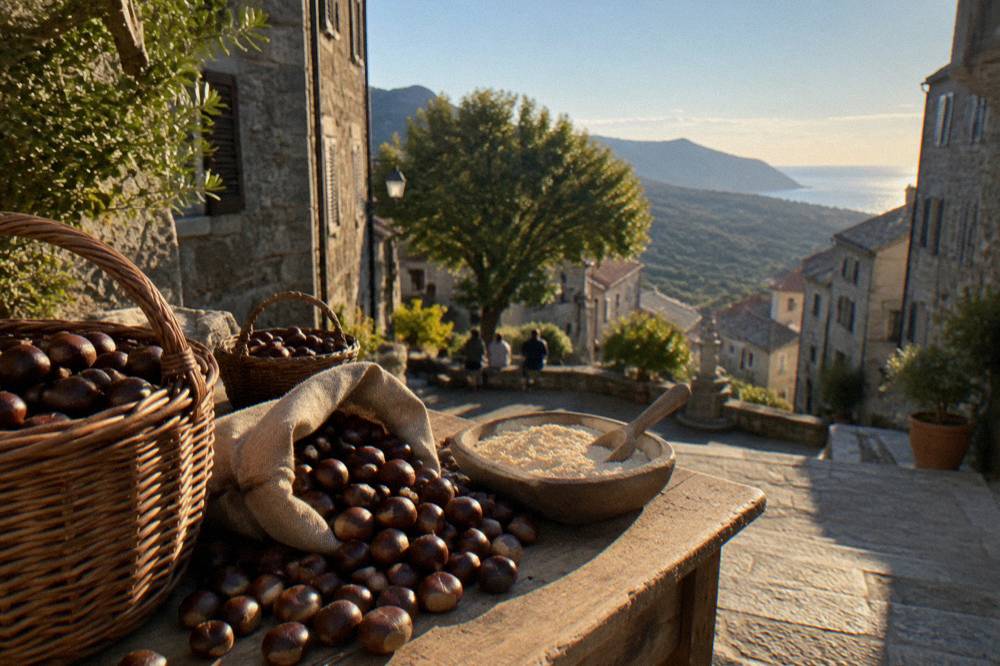
The wines carry their own structure. The appellations listed by the island's tourism and assembly sources are Patrimonio, Ajaccio, Vin de Corse (with named crus such as Calvi, Coteaux du Cap Corse, Figari, Porto-Vecchio and Sartène) and Muscat du Cap Corse. The main grape varieties given are Nielluccio and Sciaccarellu for reds and Vermentinu for whites. The total count of wine AOCs is not stated here, because no official source this site reports gives one.
Citrus has its own place in the island's protected produce. Corsica holds about 98% of metropolitan France's citrus area in CESEC data from the 2014 era, and the Clémentine de Corse took its IGP in 2007 with a Label Rouge in 2014, per the tourism body's pages. Honey, oil and chestnut flour round out a list that covers the island's two landscapes at once: the maquis and chestnut groves of the interior, and the groves and orchards of the coastal plains.
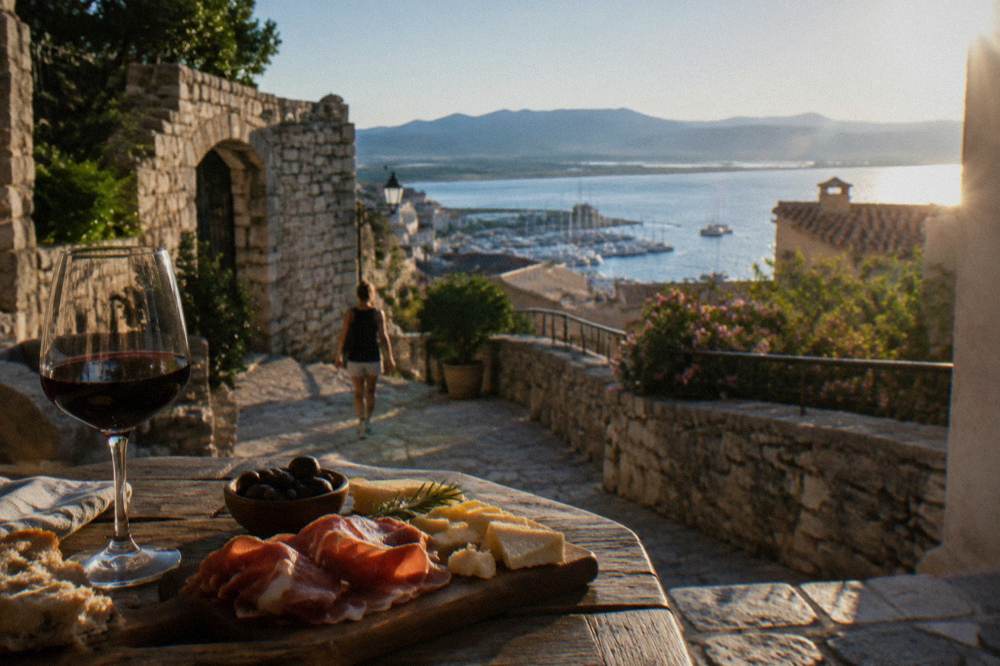
Chestnuts run deep in the island's economy and its calendar. The defence body for the AOP was created in 2001, and the flour's recognition in 2010 came after nearly a decade of that work, per the CESEC documents. Olive oil's AOC took effect in 2004. A fuller picture of what to eat is in the guide to Corsican food and what to eat, and the island's vineyards have their own page on Corsican wine.
Which Museums And Sights Explain Corsican Identity Best?
Maison Bonaparte in Ajaccio, the Palais Fesch, the Musée de la Corse in Corte and Filitosa are the four sites with published prices and hours in the sources, and each covers a different layer: the Napoleonic household, fine arts, island ethnography, and prehistory.
Maison Bonaparte is open every day except Monday, with EUR 10 full price, EUR 8 for non-EU residents aged 18 to 25 and large families, and free entry for EU residents under 26. From 1 July to 30 September it runs 10:00 to 17:30, and in the winter period from 1 October to 31 March it opens 10:30 to 12:30 and 13:15 to 16:30, per the museum's practical-information page. The house stands on Rue Saint-Charles, 200 m from Ajaccio's bus station and ferry terminal, with bus 8 from the airport, which the same page notes.
The Palais Fesch lists EUR 10 full, EUR 6 for over-65s and free up to 18, daily 09:00 to 17:00 for the 16 January to 31 December 2026 period, closed on Christmas, New Year and 1 November, per the Ajaccio tourist office listing. The Musée de Bastia in the Palais des Gouverneurs runs 10:00 to 18:30 in high season and 09:00 to 12:00 plus 14:00 to 17:00 in low season, closed Sundays and Mondays.
| Site | Full price | Hours (as listed) |
|---|---|---|
| Maison Bonaparte, Ajaccio | EUR 10 | Every day except Monday; 1 Jul to 30 Sep 10:00-17:30 |
| Palais Fesch, Ajaccio | EUR 10 | Daily 09:00-17:00; closed 25 Dec, 1 Jan, 1 Nov |
| Musée de la Corse, Corte | EUR 5.50 | 1 May to 31 Oct daily 10:00-19:00; one ticket covers museum and citadel |
| Filitosa | EUR 9 | 1 Apr to 2 Nov, 09:00 to sunset |
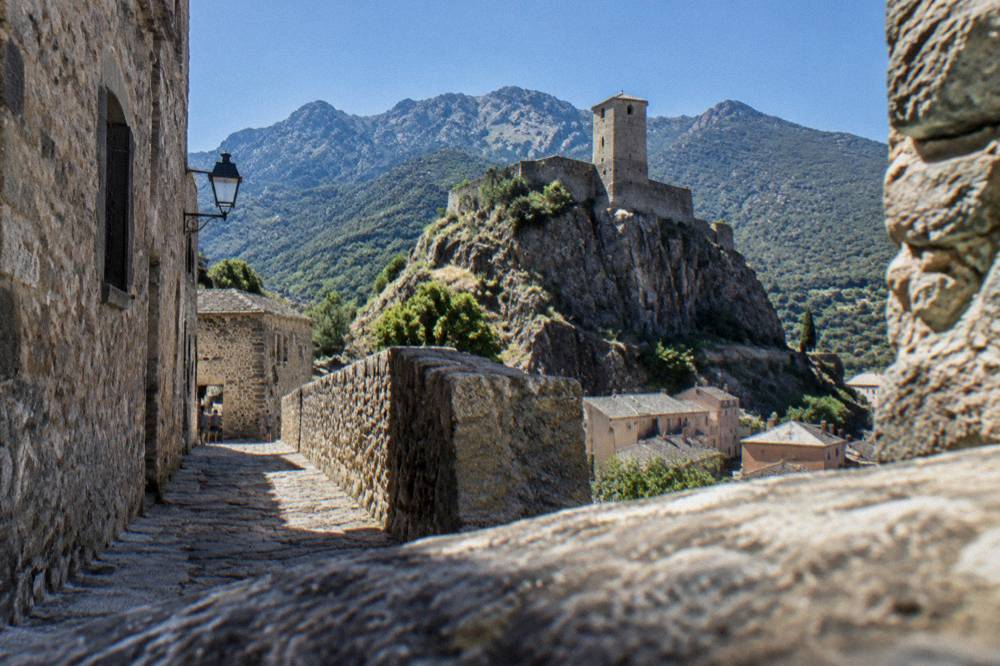
The Musée de la Corse sits inside the citadel of Corte, the island's old capital inland, and one ticket covers both museum and citadel, with citadel access closing one hour before the museum. Reduced tickets run EUR 4 without a temporary show and EUR 3 for over-65s and young people, and the whole site closes annually from 31 December to 14 January. Corte is a 1 hour drive from Bastia, 1 hour 30 from Ajaccio and Calvi, 2 hours from Porto-Vecchio and 2 hours 45 from Bonifacio and Propriano, per the museum's own practical page.
Filitosa, the prehistoric site near Sollacaro with its standing stones, is open 1 April to 2 November, 09:00 to sunset, with the museum 09:00 to 19:00 and about 1 hour 30 suggested for a visit. Reduced entry is EUR 7 for ages 6 to 17 and disabled visitors, a family ticket for two adults and two children is EUR 28, and under-6s enter free. At the far south, the Escalier du Roi d'Aragon in Bonifacio cuts 189 steps down the cliff with a 180-degree view of the cliffs towards Sardinia, and closed-toe flat shoes are required, per the reservation page. Ajaccio itself, as the capital and Napoleon's birthplace, has its own guide, and there is more in things to do in Corsica.
What Role Do Religion And Village Life Play?
Village churches, brotherhoods and processions remain the framework of Corsican village life, and the island's ethnographic record is kept by the Centre for Cultural Ethnography and Identity through the Maison du patrimoine in Furiani. The sources describe the institutions and the buildings; specific dates for 2026 ceremonies have not been announced on the official pages.
The parish church and the stone village around it are the visible core of almost every commune, 360 of them across the island. Holy Week processions are a documented tradition, and village patron-saint days are part of local calendars. Other pages covering the same trip are gathered on Corsica Travel Guide.
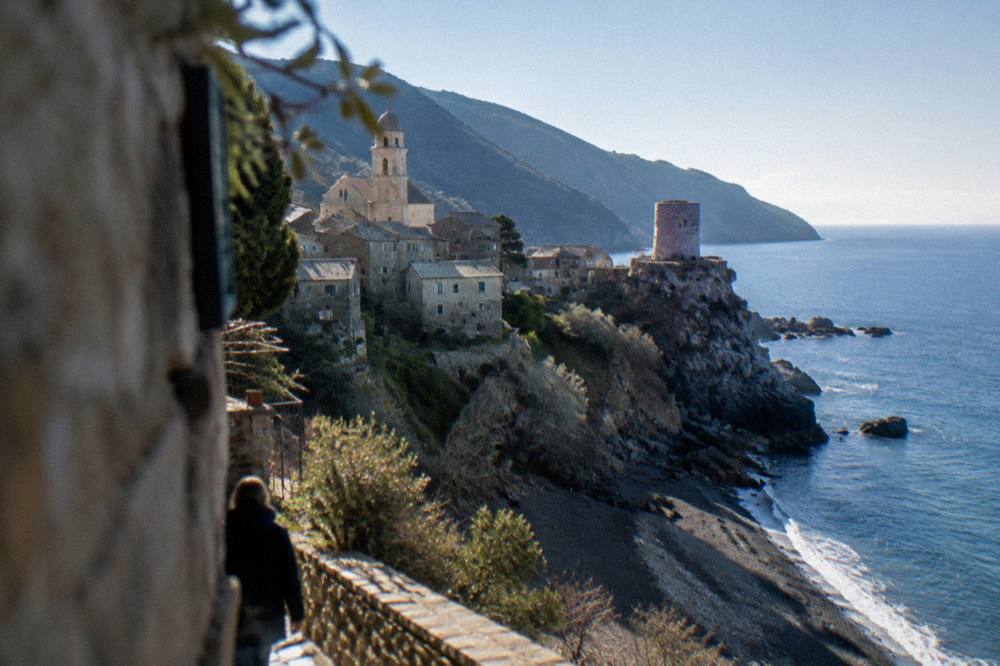
The interior villages hold the other half of this life. Corte and the Niolu sit inland, and the regional natural park created in 1972, now 4,484 km2, includes the Castagniccia and the big valleys that run down to the sea, with an 80 km sea front on the west coast from Capu Rossu to Capu Cavallu. The park is described in more detail in the guide to Corte and the interior. Village life follows the rhythms the land sets: the fire rule from 15 June to 30 September, which forbids lighting fires or smoking in forests, maquis and massifs, shapes summer evenings as much as any festival does, and the fire-risk map is updated at 18:00 each day for the next.
Which Festivals Fill The Corsican Year?
The Corsican year turns on food fairs in the interior, polyphonic song gatherings, religious processions and the Tour de Corse rally, but no 2026 dates for the major festivals have been announced on the official pages as of the searches behind this guide, so this page names the events and their towns rather than a calendar.
The named events in the sources are the Fiera di u Casgiu, a cheese fair; the Foire de la Châtaigne, the chestnut fair; Calvi on the Rocks; the Calvi jazz festival; the Nuits de la Guitare at Patrimonio; and the Tour de Corse, the island's round of the World Rally Championship. Each has a home: the coast at Calvi, Patrimonio near Saint-Florent in the north, and the chestnut country inland.
| Event | Home |
|---|---|
| Fiera di u Casgiu (cheese fair) | Venaco |
| Foire de la Châtaigne (chestnut fair) | Bocognano |
| Calvi on the Rocks | Calvi |
| Festival de Jazz de Calvi | Calvi |
| Nuits de la Guitare | Patrimonio |
| Tour de Corse (WRC) | Island-wide |
Polyphony has its own gatherings, and village patron-saint days fill the summer communes. The Assemblea di Corsica's cultural service and the Collectivité's pages list the programme for each season, which is where confirmed dates appear first. The food fairs are the ones most tied to the protected produce above: a cheese fair in the island that gave brocciu its 1983 appellation, and a chestnut fair in the region behind the Farina castagnina corsa AOP, with its defence body created in 2001.
Why Does The Landscape Shape Corsican Traditions?
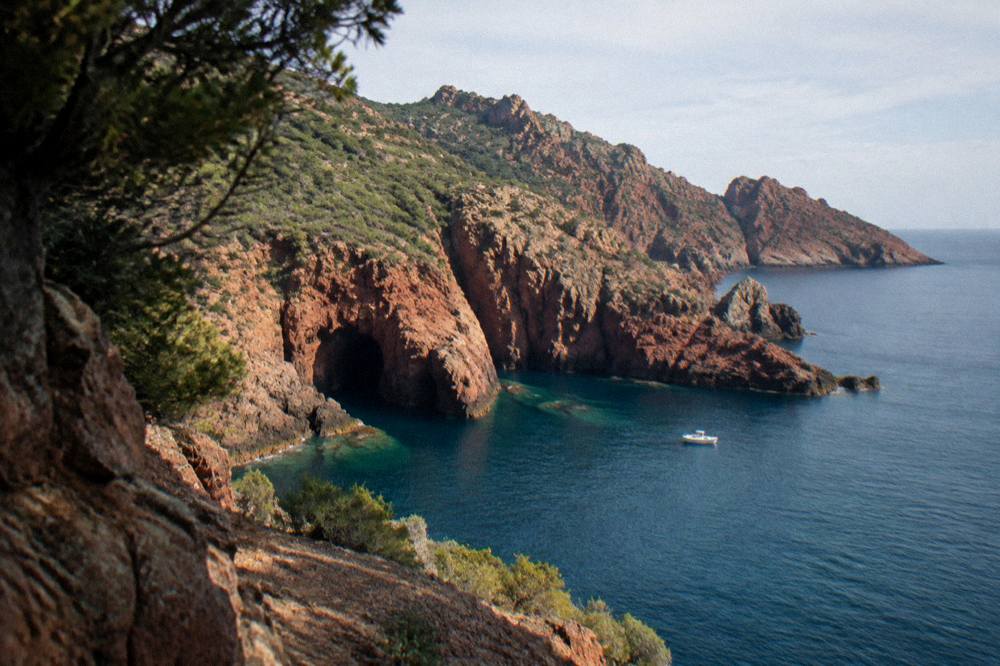
With Monte Cinto at 2,706 m, more than 1,000 km of coastline and a park covering 4,484 km2, Corsica's culture is shaped by the crossing of mountain and sea: shepherds' routes became the GR20 and Mare a Mare trails, and coastal coves became the boat culture of Scandola, Lavezzi and the Sanguinaires.
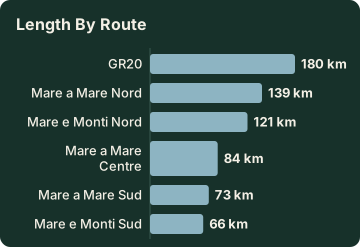
The GR20 runs 180 km north to south in about fifteen stages of 4 to 8.5 hours, with refuges guarded from 16 May to 4 October in 2026, bookings mandatory online, and a bunk at EUR 20 per person with a bivouac pitch at EUR 12. Wild camping is banned across the island, with bivouac allowed only in the marked areas at the refuges, per the PNRC page. Rented tents cost EUR 27 for one person and EUR 39 for two, all PNRC tents sleep two and come with a 3 cm mat per person, dogs are not allowed inside refuges or rented tents, and no departures are allowed from Calenzana after 11:00 under a municipal order tied to fire risk.
| Route | Length | Days (per the PNRC) |
|---|---|---|
| GR20 | 180 km | About 15 stages |
| Mare e Monti Nord | 121 km | 10 |
| Mare a Mare Nord | 139 km | 8 to 12 |
| Mare a Mare Centre | 84 km | 6 to 7 |
| Mare a Mare Sud | 73 km | 5 |
| Mare e Monti Sud | 66 km | 5 |
On the coast, the UNESCO property "Gulf of Porto: Calanche of Piana, Gulf of Girolata, Scandola Reserve", inscribed in 1983, is visited by boat only, and Scandola, the first nature reserve created in Corsica by the ministerial order of 9 December 1975, was central to saving the osprey on the island. The reserve covers 1,000 ha of sea, 919 ha of land and a 70 ha integral reserve, from 100 m depth to 540 m altitude, on the commune of Osani, managed by the PNRC. The Désert des Agriates beaches of Saleccia and Lotu are reached by boat shuttle from Saint-Florent, by 4x4 track from Casta, or on foot. The walking side is covered in the guides to hiking in Corsica and the GR20.
How Do You Experience Corsican Culture As A Visitor?
The practical route into Corsican culture is the museums with published prices, the food and wine with protected names, the boat trips to Scandola and Lavezzi, and the walking network the PNRC runs, and every one of those is reachable with a car, since the island's train network covers only part of it.
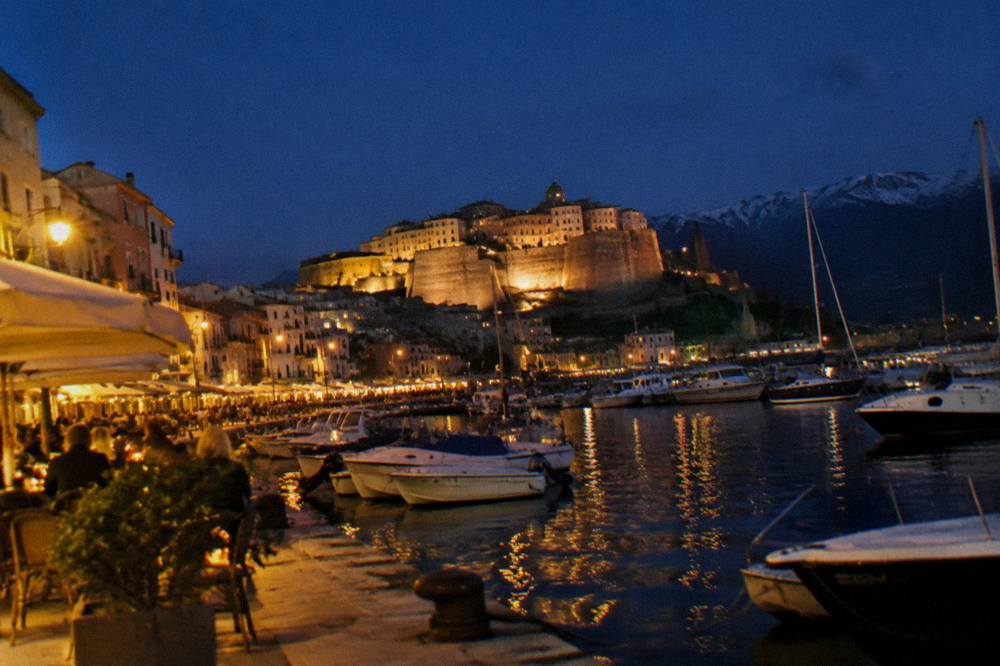
Ajaccio, the capital with 76,320 residents, holds Maison Bonaparte, the Palais Fesch and a food tradition that includes a local food tour with tastings, and the tourism office's listing for the Palais Fesch carries the current prices used in the table above. Bastia, the second town at 46,867, keeps its old harbour and its museum in the Palais des Gouverneurs. Corte, the old capital inland, is a 1 hour drive from Bastia and 1 hour 30 from Ajaccio, per the museum's own practical page.
Getting around is covered in detail in getting around Corsica and Corsica car rental, with timings and ferry routes on the ferry to Corsica page. The climate follows a hot dry summer and a mild wet winter, July averaging 8.6 mm of rain at Ajaccio and November 111.8 mm, always per the Météo-France station normals for 1991-2020, and the high mountains take the snow. For anyone building a trip around the cultural calendar rather than the beach calendar, the guide to the best time to visit Corsica works through the same figures month by month.
Common Questions About Corsican Culture
Is Corsican Culture More French Or Italian?
Corsica is a French island and has been governed as part of France under the Collectivité de Corse, a single territorial authority since 1 January 2018. Its language, food names and traditions are Corsican, documented by the island's own institutions rather than borrowed wholesale from either neighbour.
What Is The Famous Food In Corsica?
Brocciu, the cheese with an appellation d'origine from 10 June 1983, plus prisuttu, lonzu and coppa, which took AOC in 2012 and AOP in 2014, and chestnut flour under its own AOP recognised in 2010.
Do People Still Speak Corsican?
The Collectivité de Corse runs Corsican-language programmes including the Cartula di a lingua corsa and immersion schools. No speaker-count figure is available to this page.
What Music Is Corsica Known For?
Polyphonic song, with the island's hymn Dio vi Salvi Regina and the paghjella tradition, held in the record of the Maison du patrimoine in Furiani under the Corsican Centre for Cultural Ethnography and Identity.
Which Museums Cover Corsican History?
Maison Bonaparte (EUR 10, closed Monday), the Palais Fesch (EUR 10, daily 09:00-17:00), the Musée de la Corse in Corte (EUR 5.50, museum and citadel on one ticket) and Filitosa (EUR 9, open 1 April to 2 November).
Can You Hike Through The Culture Of The Interior?
Yes, the PNRC's long routes cross the shepherds' interior: the GR20 at 180 km in about fifteen stages, Mare a Mare Centre at 84 km, and Mare e Monti Nord at 121 km. Refuge bookings are online and mandatory, and a bunk costs EUR 20 per person in 2026.