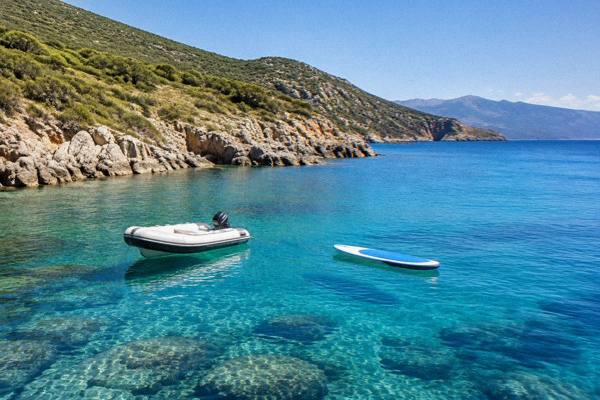
Nonza
Nonza is a village on Cap Corse, the peninsula that forms the northern tip of Corsica, and it belongs to a stretch of coast where the mountains drop straight into the sea. This guide covers where the village sits, how to reach it, what a visit costs compared with the island's main sights, and the boat trips and tours that pair well with time on the peninsula.
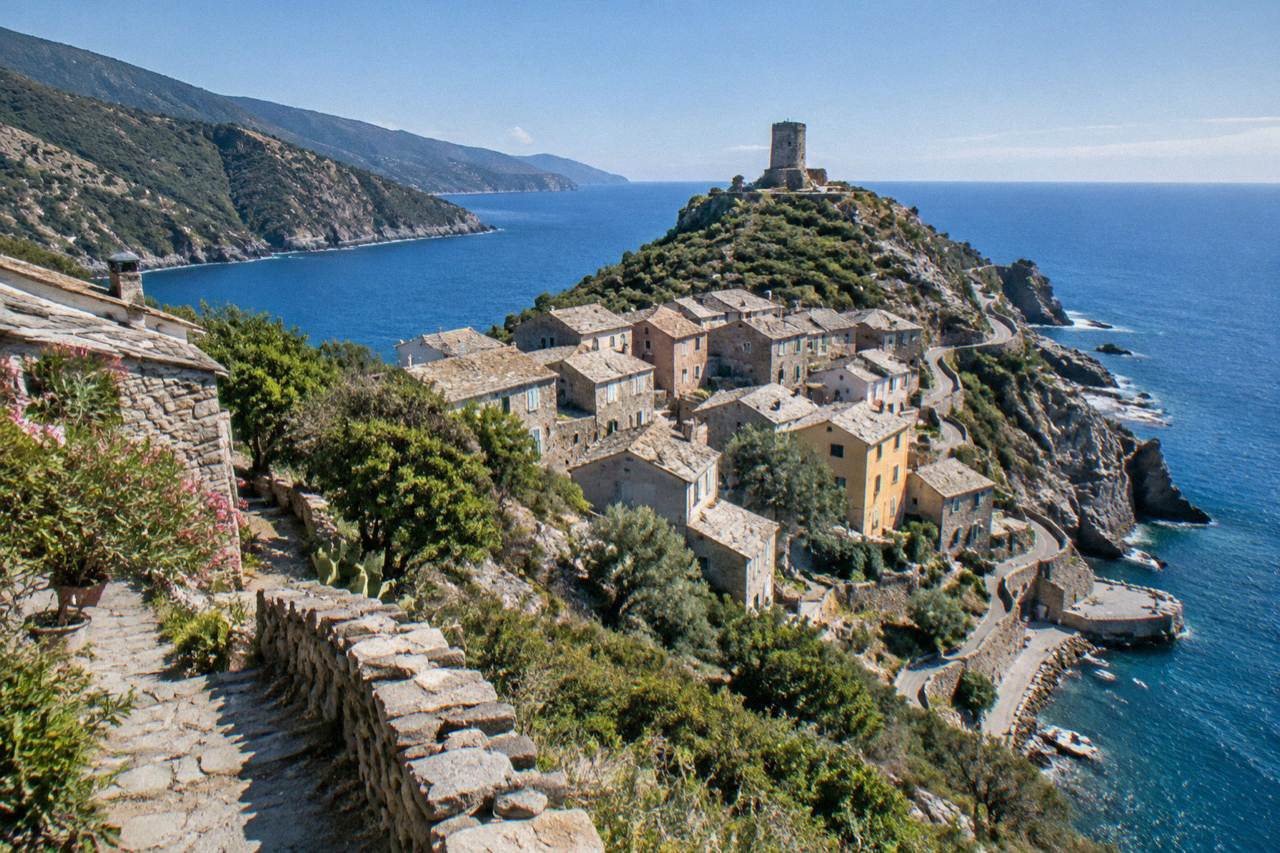
Nonza is a village on the west coast of Cap Corse in northern Corsica, reached by road from Bastia or Saint-Florent, with no entrance fee for the village itself. It pairs naturally with the Désert des Agriates beaches, the Patrimonio wine area and boat trips along the coast.
Nonza is a village on Cap Corse, the peninsula that runs out from the northern end of Corsica, on the French Mediterranean island's west-facing coast. Corsica itself covers 8,722 km2, is the fourth-largest island in the Mediterranean, and has more than 1,000 km of coastline, with a mountainous interior that rises to Monte Cinto at 2,706 m. Nonza sits on the sea side of that picture: the peninsula's west coast looks out over open water, and the village belongs to the network of small communes that runs up the Cap. This page gathers what the published sources say about the village, its setting, how to reach it, what the surrounding region offers, and how a visit fits into a wider Corsica trip, from the Désert des Agriates beaches to the boat cruises of the island's UNESCO-listed west coast.
The Cap Corse peninsula is served by road, by the port of Bastia and by Bastia Poretta airport (BIA), one of Corsica's four airports alongside Ajaccio Napoléon Bonaparte (AJA), Figari Sud Corse (FSC) and Calvi Sainte-Catherine (CLY). The Chemins de fer de Corse railway runs an Ajaccio to Bastia line via Corte and the Balagne coastal line between Calvi and L'Île-Rousse, so a train reaches the island's second town but not the peninsula itself. Everything on this page is written from published sources: the ferry operators' own route maps, the PNRC's hiking pages, Météo-France station normals and the museums' practical-information listings.
Where Is Nonza In Corsica?
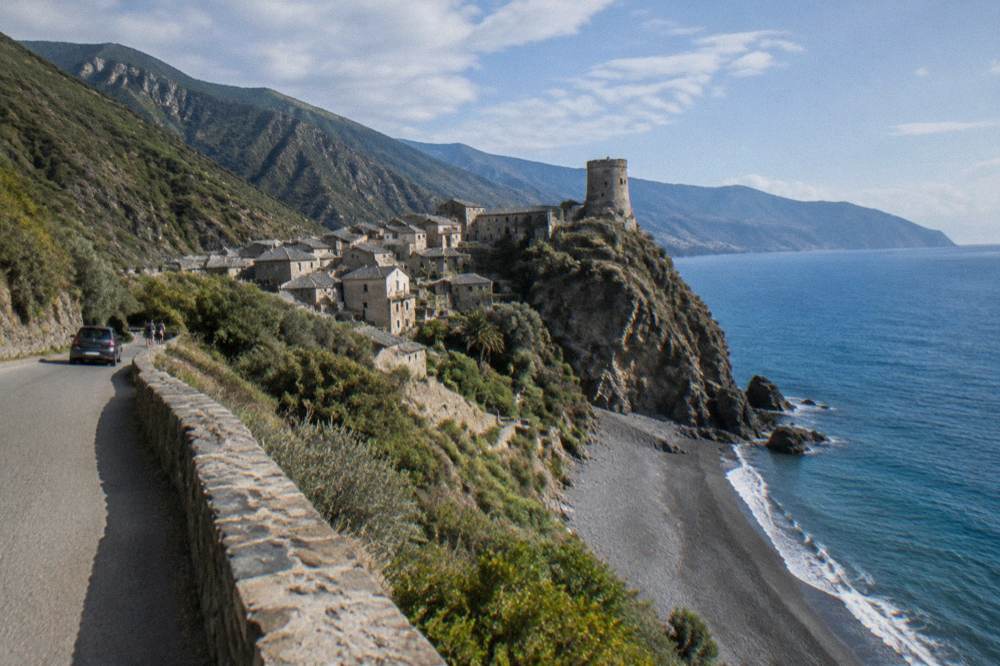
Nonza is a village on Cap Corse, the peninsula at the northern end of Corsica, set on the west coast where the island faces the open Mediterranean. The peninsula belongs to Haute-Corse, one of the island's two departments, and the nearest large town is Bastia, which had 46,867 residents at the 2023 census, on the peninsula's east side across the neck of land that joins the Cap to the rest of the island.
Haute-Corse counted about 190,500 residents in the 2026 INSEE estimates, against about 175,100 in Corse-du-Sud, and the two departments together form the Collectivité de Corse, the single territorial authority in place since 1 January 2018. Corsica's total population was 365,636 at 1 January 2026 in the provisional INSEE estimate, and the island has 360 communes, of which Nonza is one. The village shares its peninsula with Saint-Florent on the north shore of the neck, with the Patrimonio wine appellation at the base of the Cap, and with the Désert des Agriates, the protected coastal strip that runs west of Saint-Florent.
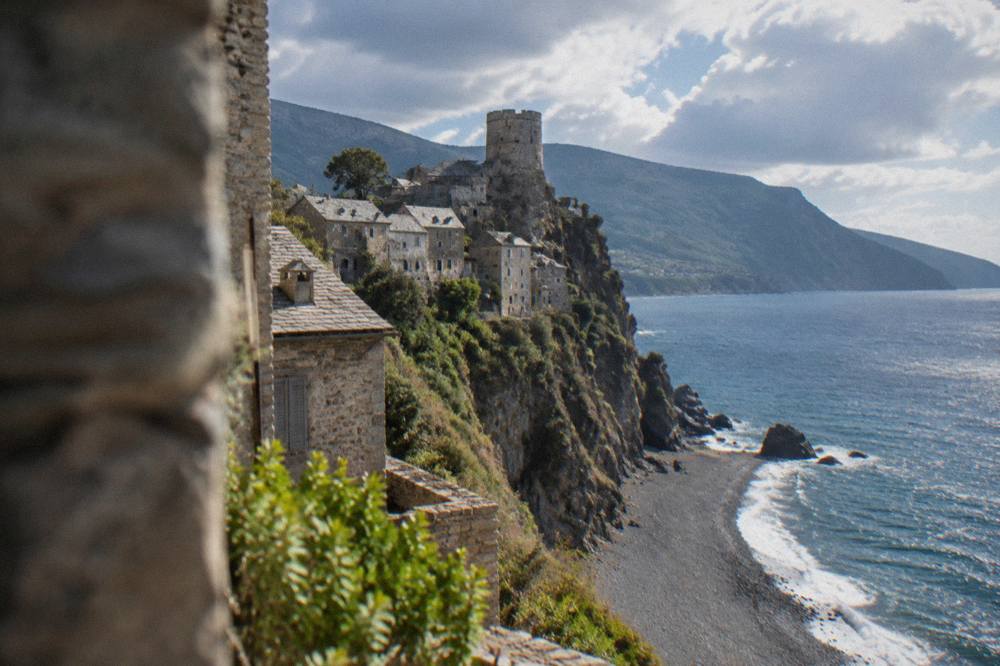
The geography matters for planning. Cap Corse is a peninsula of high ground and narrow roads, and Inforoutes Corse, the official road-information service, publishes live road conditions and accessibility levels for the main mountain passes, which is the standing reference for driving conditions across the island. The interior of Corsica, places like Corte and the high massifs, is the inland part of the island; Nonza and the whole Cap are coastal, hemmed by the sea on three sides. More than 8.5 million passengers, excluding cruise passengers, passed through Corsica's ports and airports in 2025 according to the ORTC and DREAL annual report, and a share of those arrivals head straight for the Cap's small villages each summer.
For readers building a first trip, the Corsica Travel Guide covers the whole island, and a wider look at the main sights sits on the things to do in Corsica page, while the protected landscapes nearest to the Cap are described in the Désert des Agriates overview pages for the beaches along this coast.
What Can You See In And Around Nonza?
The village itself is the sight: a clifftop settlement on Cap Corse's west coast, with the sea below and the peninsula's ridge road connecting it to the other villages of the Cap. There is no entrance fee for a Corsican village, and the published listings give no site fee for Nonza, so a visit costs the drive and nothing else. Around it lie the Désert des Agriates beaches, the Patrimonio appellation at the base of the peninsula, and Saint-Florent, the small port that serves the whole northwest corner.
The Désert des Agriates is the headline neighbour. The beaches of Saleccia and Lotu, inside the Agriates, are reached by boat shuttle from Saint-Florent, reported as running about April to October and weather permitting, by 4x4 track from Casta, or on foot, per the visit-corsica.com description. The shuttles are private operators, and the published sources give no fare, so confirm timings and prices with the operator before committing a day. The beaches themselves are covered in detail on the Saleccia beach guide and the Lotu beach guide.
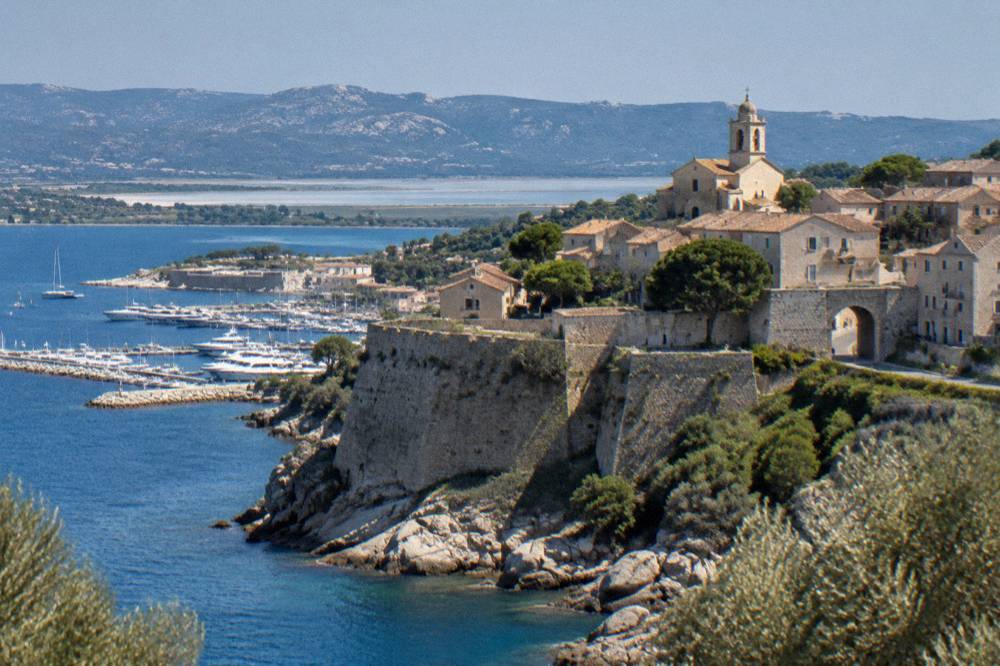
The Patrimonio appellation sits at the base of Cap Corse, reported by visit-corsica.com among Corsica's wine appellations alongside Ajaccio, Vin de Corse with its named crus, and Muscat du Cap Corse. The main red grapes grown on the island are Nielluccio and Sciaccarellu, with Vermentinu for whites, again per the tourism authority's pages. A wine stop between Bastia and the Cap fits naturally into the drive north.
Further afield, the same day-trip radius from Nonza reaches the old port quarter of Bastia, described in the Vieux-Port de Bastia guide, and the Musée de Bastia in the Palais des Gouverneurs, reported as open 10:00 to 18:30 in high season and 09:00 to 12:00 and 14:00 to 17:00 in low season, closed Sunday and Monday, with the advice to confirm before you go. On the island's west coast, a full day's drive away, sit the UNESCO-listed landscapes of the Golfe de Porto, the Calanques de Piana and the Scandola Nature Reserve, all best visited by boat.
The Cap also carries walking routes. The island's long-distance paths are the GR20 through the high mountains and the Mare a Mare and Mare e Monti trails, and the PNRC's own brochure lists Mare a Mare Nord at 139 km, or 161 km with the variant, over 8 to 12 days. Those routes cross the interior rather than the Cap's coastline, but shorter coastal walking on the peninsula is a matter of the terrain you can see from the village road, and Inforoutes Corse remains the reference for track conditions.
How Do You Get To Nonza And Cap Corse?
Nonza is reached by road on Cap Corse, driving north from Bastia, the peninsula's port and airport gateway, or west from Saint-Florent along the neck of the Cap. Bastia is served by year-round ferries from Marseille, Livorno, Savona and Genoa, and the published sources give no train line onto the peninsula, so a car, a shuttle or an organised tour is the practical answer once you are off the boat.
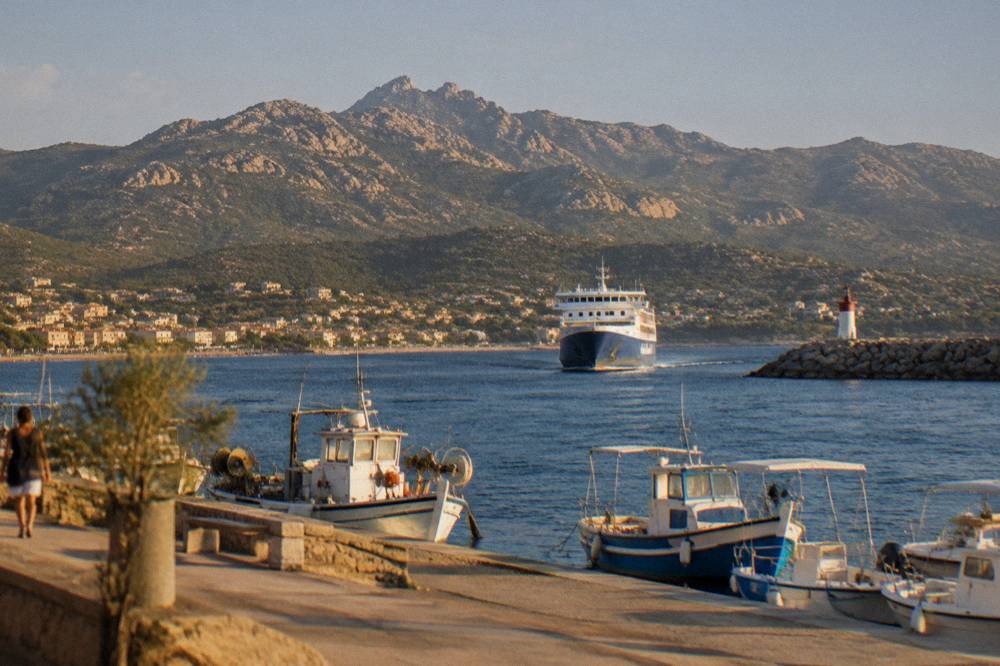
The ferry network is the backbone of access. Corsica Linea sails Marseille to L'Île-Rousse, Bastia, Propriano and Ajaccio; La Méridionale sails Marseille to Ajaccio and Marseille to Porto-Vecchio; Moby sails Livorno to Bastia, Genoa to Bastia and Santa Teresa Gallura to Bonifacio; and Corsica Ferries, per its route pages, sails from Toulon and Nice to Ajaccio, Bastia, L'Île-Rousse, Porto-Vecchio and Propriano, and from Livorno and Savona to Bastia. Reported crossing times run about 50 to 60 minutes for Santa Teresa to Bonifacio, about 4 to 5 hours for Livorno to Bastia, about 6.5 hours for Savona to Bastia, and about 10 to 13 hours for Toulon crossings, with Marseille crossings mostly overnight at about 12 to 13 hours.
| Mainland Or Island Port | Corsican Port | Operator | Crossing Time |
|---|---|---|---|
| Marseille | Bastia | Corsica Linea | about 12 to 13 hours, mostly overnight |
| Livorno | Bastia | Corsica Ferries, Moby | about 4 to 5 hours |
| Savona | Bastia | Corsica Ferries | about 6.5 hours |
| Genoa | Bastia | Moby | seasonal sailing |
| Santa Teresa Gallura | Bonifacio | Moby, Ichnusa Lines | about 50 to 60 minutes |
Flying in, Bastia Poretta (BIA) is the peninsula's airport, and Air Corsica, Air France, easyJet and Volotea are among the operators serving Corsica's four airports. The Chemins de fer de Corse network, reported by cf-corse.corsica, runs the Ajaccio to Bastia line via Corte, the Ponte-Leccia to Calvi line and the Balagne coastal line between Calvi and L'Île-Rousse, none of which reaches Cap Corse. Once on the road, Inforoutes Corse publishes live road status, and the standing advice for Corsica's mountain roads is simply to check it before a long drive, since the service carries accessibility levels for the main cols.
For travellers combining the Cap with the island's other coasts, the internal distances that matter are the road times to Corte, published by the Musée de la Corse: 1 hour from Bastia, 1 hour 30 from Ajaccio and from Calvi, 2 hours from Porto-Vecchio, and 2 hours 45 from Bonifacio and from Propriano. The published sources give no Cap Corse road times, so plan the drive north from Bastia with margin rather than a fixed figure.
What Does A Visit To The Nonza Area Cost?
The village itself costs nothing to enter, and the published listings give no site fee for Nonza, so the real budget items are the car, the boat shuttles and the paid sights elsewhere on the island: EUR 10 for Maison Bonaparte in Ajaccio, EUR 10 for the Palais Fesch, EUR 9 for the Filitosa prehistoric site and EUR 5.50 for the Musée de la Corse and citadel in Corte, all at the museums' own listed rates.
Those sight prices come straight from the institutions' practical pages. Maison Bonaparte, on Rue Saint-Charles in Ajaccio, charges EUR 10 full price, EUR 8 for non-EU residents aged 18 to 25 and for large families, and is free for EU residents under 26, open every day except Monday. The Palais Fesch, per the Ajaccio tourist office listing for 16 January to 31 December 2026, charges EUR 10 full, EUR 6 for over-65s and is free up to 18, open daily 09:00 to 17:00. Filitosa, open 1 April to 2 November, charges EUR 9 for adults, EUR 7 reduced, EUR 28 for a family of two adults and two children aged 6 to 17, free under 6. The Escalier du Roi d'Aragon in Bonifacio, 189 steps cut down the cliff, charges about EUR 5 for an adult, with closed-toe shoes required.
| Sight | Location | Full Price | Key Condition |
|---|---|---|---|
| Maison Bonaparte | Ajaccio | EUR 10 | closed Monday, free for EU residents under 26 |
| Palais Fesch | Ajaccio | EUR 10 | EUR 6 over 65, free up to 18, daily 09:00 to 17:00 |
| Filitosa | Sollacaro | EUR 9 | open 1 April to 2 November, family ticket EUR 28 |
| Musée de la Corse and citadel | Corte | EUR 5.50 | one ticket covers museum and citadel |
| Escalier du Roi d'Aragon | Bonifacio | about EUR 5 | 189 steps, closed-toe shoes required |
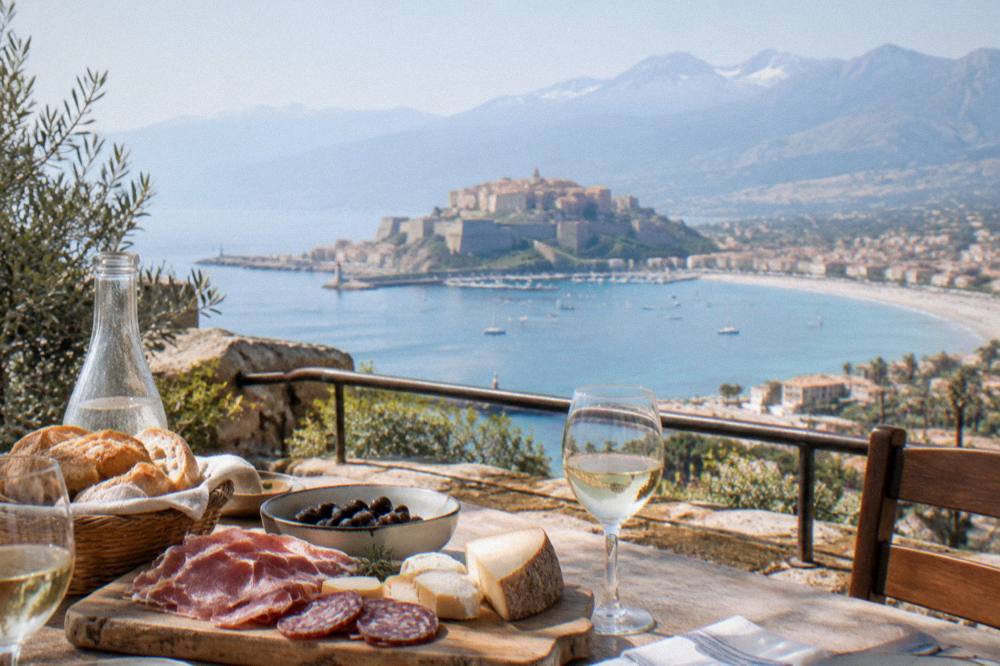
On the Cap itself, the paid items are the boat shuttles to the Agriates beaches, operated privately with no published fare in the sources, and food. Corsican restaurant menus must state "prix service compris" with the service percentage included, per the DGCCRF, so an extra tip is optional. Local produce carries its own protections: brocciu obtained its appellation d'origine in 1983, the charcuterie cuts prisuttu, lonzu and coppa took AOC in 2012 and AOP in 2014, chestnut flour is AOP, Corsican honey is AOP, olive oil has carried the Oliu di Corsica AOC since 2004, and the Clémentine de Corse holds an IGP. None of those labels needs a museum ticket; they sit in the village shops and markets of the Cap like everywhere else on the island.
What Is The Weather Like On Cap Corse And In Nonza?
Cap Corse shares Corsica's climate pattern: a hot, dry summer and a mild, wet winter, with snow only on the high mountains. The Météo-France 1991-2020 station normals for Bastia, the nearest listed station, show a July average daily high of 29.4 °C with 13.8 mm of rain, and a November average of 134.3 mm of rain, the highest monthly figure on that table, so the village's clifftop setting faces its roughest weather in late autumn.
The full Bastia normals put numbers on the pattern. August carries the highest mean daily high at 29.8 °C and July the lowest monthly rain total at 13.8 mm, while November's 134.3 mm and October's 126.5 mm carry the most rain, and February shows the lowest mean daily low at 5.1 C. Annual rainfall at the Bastia station totals 816.9 mm. At Ajaccio, on the island's other coast, the same normals show July at 28.6 °C and just 8.6 mm of rain, November at 111.8 mm and an annual total of 635.0 mm.
| Month | Bastia High °C | Bastia Low °C | Bastia Rain Mm | Ajaccio Rain Mm |
|---|---|---|---|---|
| Jan | 13.8 | 5.4 | 67.3 | 54.1 |
| Feb | 13.9 | 5.1 | 63.5 | 48.1 |
| Mar | 15.8 | 6.8 | 63.7 | 50.4 |
| Apr | 18.3 | 9.1 | 71.6 | 53.1 |
| May | 22.4 | 12.6 | 53.7 | 49.8 |
| Jun | 26.4 | 16.5 | 38.8 | 25.9 |
| Jul | 29.4 | 19.4 | 13.8 | 8.6 |
| Aug | 29.8 | 19.8 | 21.1 | 15.8 |
| Sep | 26.0 | 16.7 | 74.5 | 57.8 |
| Oct | 22.0 | 13.4 | 126.5 | 85.7 |
| Nov | 17.7 | 9.5 | 134.3 | 111.8 |
| Dec | 14.8 | 6.4 | 88.1 | 73.9 |
One seasonal rule matters more than the temperature on any walking day. From 15 June to 30 September it is forbidden to light a fire or smoke in forests, scrub and massifs across Corsica, and the prefecture-linked fire-risk map is updated at 18:00 for the next day, with access to some massifs restricted from mid-June to mid-September on high-risk days. The UK FCDO notes a high risk of wildfires in France from April to October. The US State Department lists France at Level 2, Exercise Increased Caution. Emergency numbers in France are 112, 15 for medical, 17 for police, 18 for fire, 114 by SMS or app, and 196 for sea rescue on VHF channel 16; mountain rescue in Corsica is the PGHM at Ajaccio, 04 95 24 24 00.
Which Boat Trips And Tours Pair Well With Nonza?
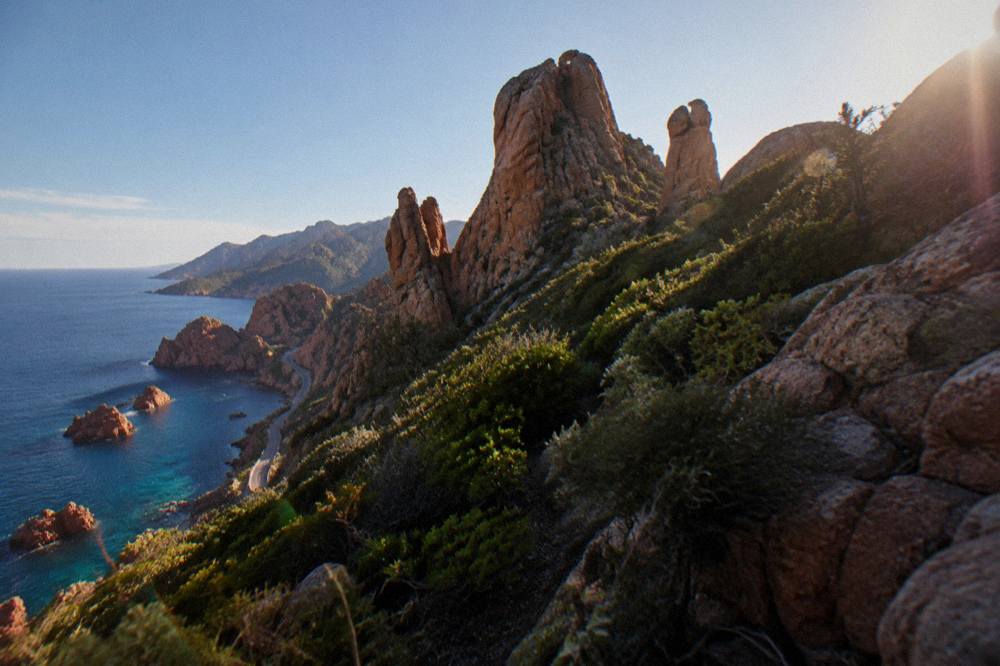
The natural pairings for a stay on Cap Corse are a half-day trip along the peninsula and the Agriates, a boat shuttle from Saint-Florent to Saleccia or Lotu, and, for a longer day west, a cruise to Scandola and the Calanques de Piana, the UNESCO-listed coast the island is known for. On Scandola itself the land area is closed to the public and visits are by boat only, so a tour is not a luxury there, it is the only access.
The UNESCO property is "Gulf of Porto: Calanche of Piana, Gulf of Girolata, Scandola Reserve", inscribed in 1983, covering 11,800 ha. Scandola, the first nature reserve created in Corsica by ministerial order of 9 December 1975, spans 1,000 ha of sea and 919 ha of land with a 70 ha integral reserve, and was key to saving the osprey in Corsica. Daytime anchoring is allowed outside the integral reserve and the Gargalu channel, with anchors lifted at sunset, and no landing is permitted in the integral reserve. A state and OEC steering committee of 28 April 2026 renewed the management agreement and confirmed measures including voluntary labelling of boat operators and a QR-code tracking trial for pleasure boats, with quotas and licences to be consolidated in a regulatory framework being finalised. The village of Girolata, stop on many of these cruises, has its own guide on the Girolata page.
Trips also run from Porto, Cargèse and Sagone, giving flexibility if your base moves during the trip. The Scandola boat tour guide compares the departure ports in detail.
Nearer the Cap, the options change character. The Agriates half-day trip covers Cap Corse and the desert coast, and the shuttles from Saint-Florent run to the beaches themselves, reported from about April to October, weather permitting. In Ajaccio, if the itinerary swings south, the Napoleon Cave complete package with a Corsican meal and the town's other offerings are covered in the Ajaccio city tour guide, and the Sanguinaires islands sit a short cruise from that port.
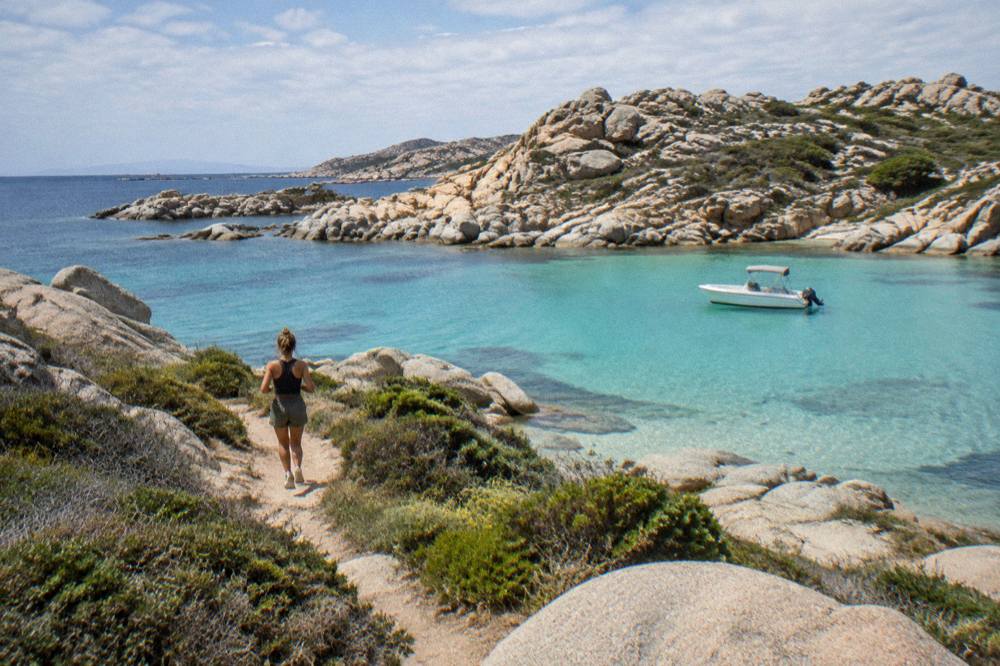
A practical sequencing note for a two-week trip: arrive through Bastia, spend the first nights on the Cap with Nonza as a base or a stop, take the Agriates shuttle day from Saint-Florent, then work south and west so the Scandola cruise, the Bonifacio cliffs and the southern beaches such as Palombaggia fall later in the route. The Corsica in 10 days and Corsica in 14 days itineraries cover the sequencing in full, and the Escalier du Roi d'Aragon makes a natural stop on the way south through Bonifacio.
Common Questions About Nonza
Where Is Nonza In Corsica?
Nonza is a village on Cap Corse, the peninsula at the northern end of Corsica, set on the west coast of the peninsula in Haute-Corse. The nearest large town is Bastia, on the east side of the peninsula's neck, with 46,867 residents at the 2023 census.
Is There An Entrance Fee For Nonza?
No. The published listings give no site fee for Nonza, and there is no entrance charge for a Corsican village. The paid items in the area are the private boat shuttles to the Agriates beaches, which carry no published fare in the sources, so confirm with the operator.
How Do You Get To Nonza?
By road on Cap Corse, driving north from Bastia or around from Saint-Florent. Bastia is reached by year-round ferries from Marseille, Livorno, Savona and Genoa, and by air via Bastia Poretta airport. The Chemins de fer de la Corse railway reaches Bastia but does not serve the peninsula.
Which Beaches Are Near Nonza?
The Désert des Agriates beaches, Saleccia and Lotu, sit on the coast west of Saint-Florent and are reached by boat shuttle from Saint-Florent, reported from about April to October and weather permitting, by 4x4 track from Casta, or on foot.
What Is The Weather Like In Nonza?
The Météo-France 1991-2020 normals for the Bastia station show the pattern for Cap Corse: a July average daily high of 29.4 °C with 13.8 mm of rain, and November carrying 134.3 mm of rain, the highest monthly figure on the table, with snow in Corsica falling only on the high mountains.
Can You Visit Scandola From Cap Corse?
Yes, as a long day trip. Scandola's land area is closed to the public and visits are by boat only, with trips departing from Ajaccio, Porto, Cargèse and Sagone. The site's Scandola boat tour guide compares the departure ports and operators.
Nonza rewards a slow pass: one village on a peninsula of them, with the Agriates to the west, Patrimonio at its base and Bastia's port at its neck, and the whole west-coast UNESCO spectacle a day's drive beyond that. Check Inforoutes Corse before the drive, book the shuttle and the Scandola cruise ahead in summer, and the Cap delivers the quiet end of a Corsica trip without a single ticket gate.