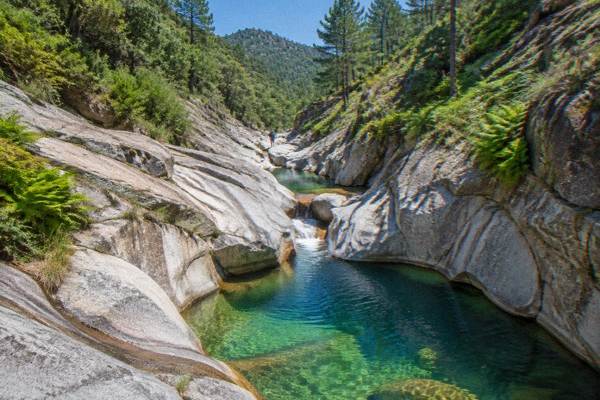
Corsica Canyoning
Corsica's mountainous interior, with Monte Cinto at 2,706 m and more than 1,000 km of coastline around it, gives the island a rare combination of sea and vertical rock. Canyoning sits exactly where the two meet: water-cut gorges in the massifs, a short drive from the coast.
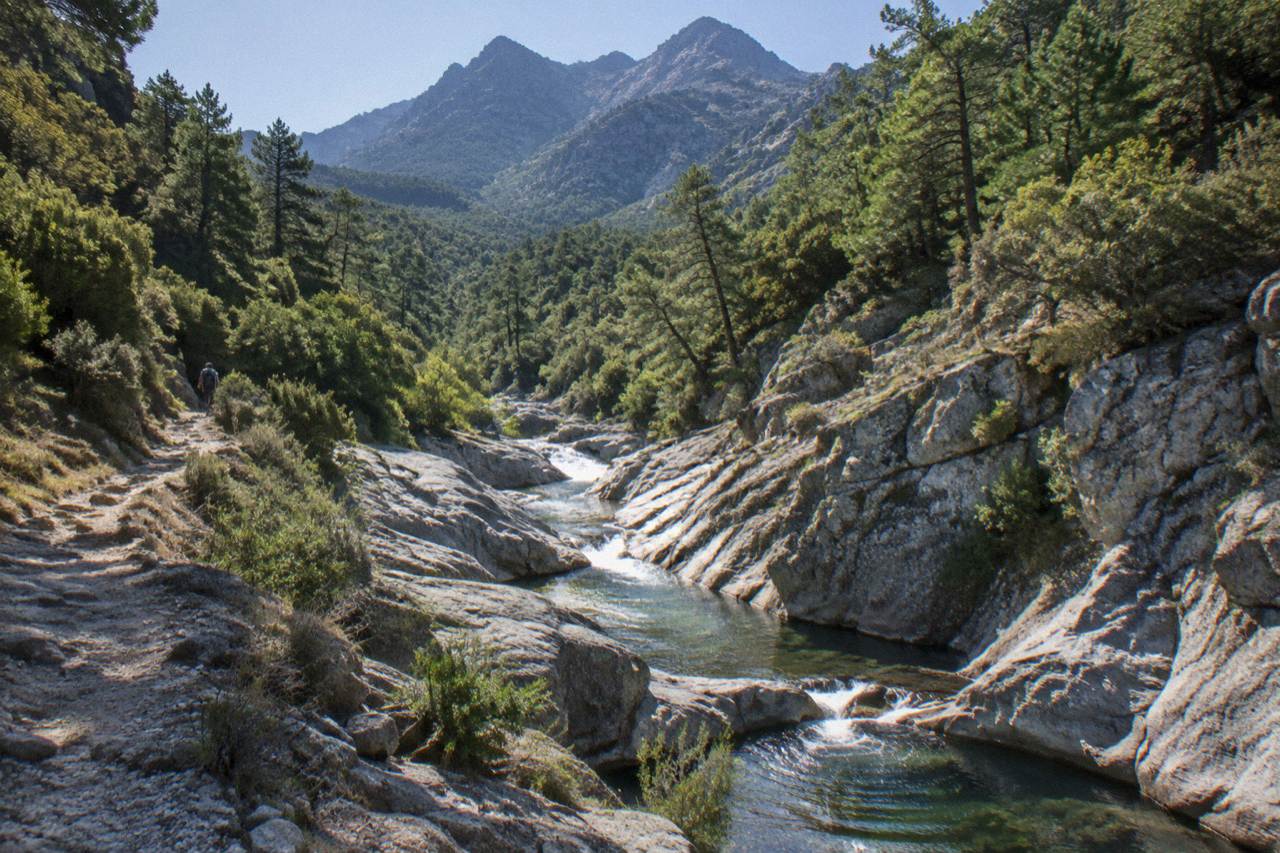
Canyoning in Corsica means guided descents of water-carved gorges such as the Richiusa at Bocognano and the Baracci canyon, run as bookable small-group trips, inside a fire-regulated mountain season that runs from spring to autumn.
Corsica is a sea-surrounded French Mediterranean island of 8,722 km2 with a mountainous interior that tops out at Monte Cinto at 2,706 m, and that combination is what makes its adventure offer unusual in the Mediterranean. Rainwater leaving those mountains has cut gorges into the granite, and several of them, above all the Richiusa at Bocognano and the Baracci canyon, are run as guided canyoning descents by operators based around Ajaccio and the interior. This page sets out what canyoning in Corsica involves, where the descents are, how the island's fire season shapes the calendar, what safety rules apply, and which other active days, from 4x4 tours of the Alta Rocca to e-bike rides, fill out an adventure trip.
What Is Canyoning In Corsica?
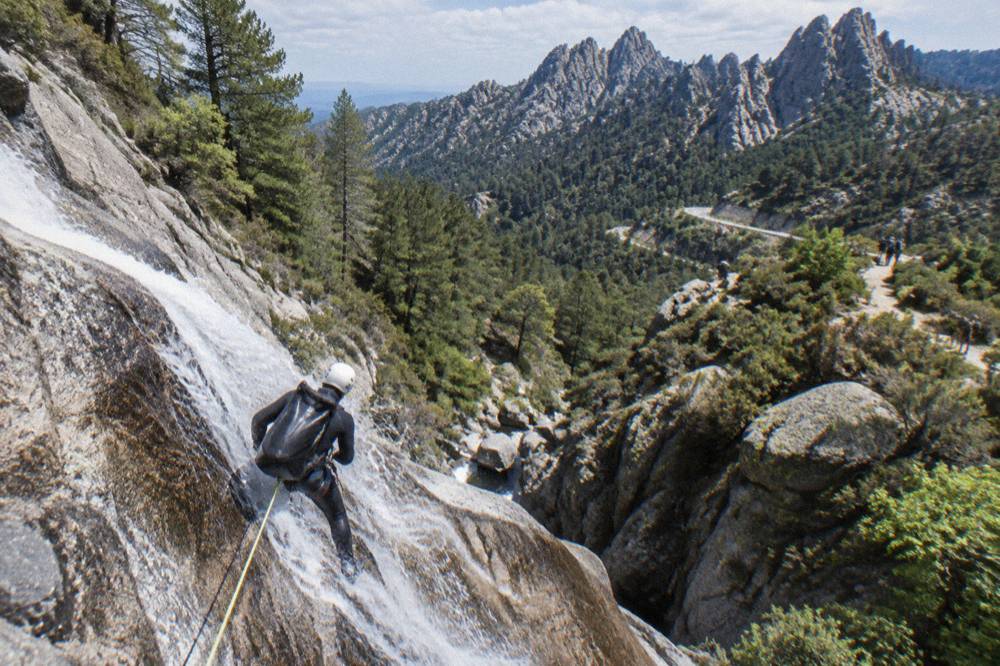
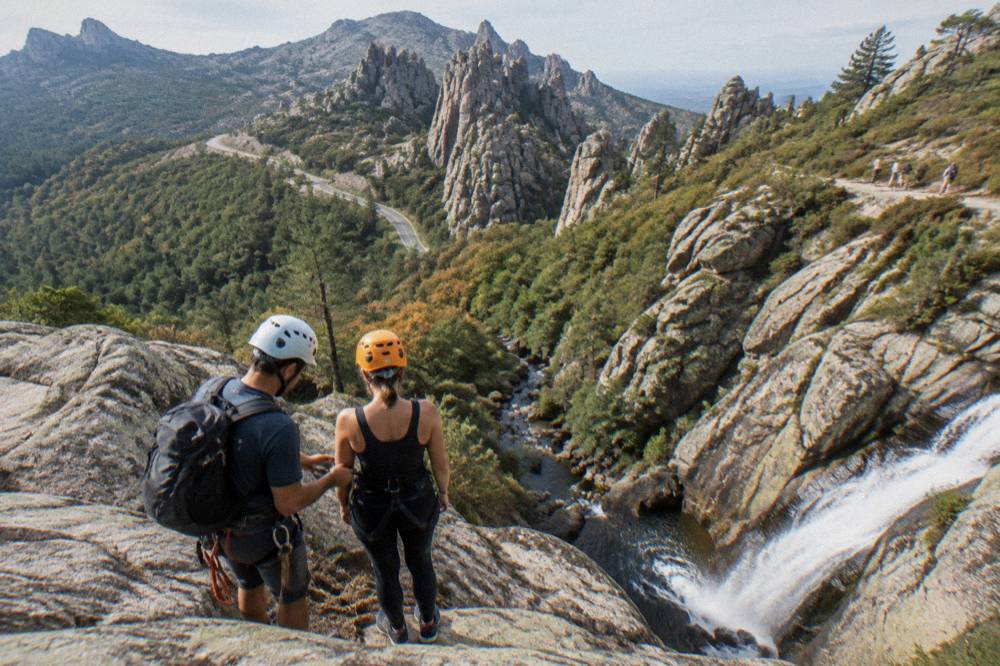
Canyoning in Corsica is the guided descent of a water-cut mountain gorge on foot, by rappel, by slide and by jump into pools, using ropes, wetsuits and helmets supplied by the operator, and on this island it is a summer-season activity built around gorges in the interior massifs rather than on the coast.
The principle is simple and the same everywhere the sport exists: a canyon is a vertical stream bed, and the descent uses whatever the gorge offers, downclimbs, rappels on fixed ropes, natural rock slides and jumps into deep pools. What changes from one island to another is the rock and the water. Corsica is largely granite, the same hard rock that forms the Calanques de Piana on the coast, and its gorges, the Richiusa, the Baracci, the Spelunca and the Restonica among them, are steep, shaded and cold even in July. That is why operators supply full wetsuits as standard.
The Richiusa canyon trips are the core: one listed as a small-group canyoning trip, another as an afternoon departure, both graded as instructor-led activity days rather than walks. The Baracci canyon trip is a second descent, and beyond canyoning the same "active days" category carries the e-bike ride to Capo di Feno near Ajaccio and a guided electric mountain bike ride on the Plateau du Coscione above Porto-Vecchio. In other words, canyoning in Corsica is not a fringe add-on: it sits inside a wider guided-adventure scene that also includes the GR20 and Corsica's long-distance hiking trails.
A word on what the sport demands of you. Operators grade their trips, and a first canyon does not require climbing experience: the guide rigs the ropes, checks the harness and goes first on every drop. Swimming confidence matters more than strength, because the pools are the exit routes. Reading the practical safety guidance for Corsica before booking is sensible for any active trip on the island.
Where Are The Main Canyoning Gorges In Corsica?
The main canyoning gorges sit inland of Ajaccio around Bocognano, on the island's main Ajaccio to Bastia axis via Corte. The Richiusa stream cuts a gorge there run as a half-day descent, while the Baracci canyon is a three-hour guided trip, placing both descents inside a day trip from Ajaccio.
The geography matters. Bocognano sits in the high interior, inland of Ajaccio, in the granite country below the main ridge of the island. The Richiusa stream cuts a gorge there that operators run as a half-day descent, and the road and rail axis through Corte puts it about a driver's morning from the coast. Road times to Corte from the major towns run as follows: one hour from Bastia, one hour thirty from Ajaccio and from Calvi, two hours from Porto-Vecchio and two hours forty-five from Bonifacio and Propriano. Those figures are for Corte itself, not Bocognano, but they show the scale of the island: no base is more than half a day from the interior.
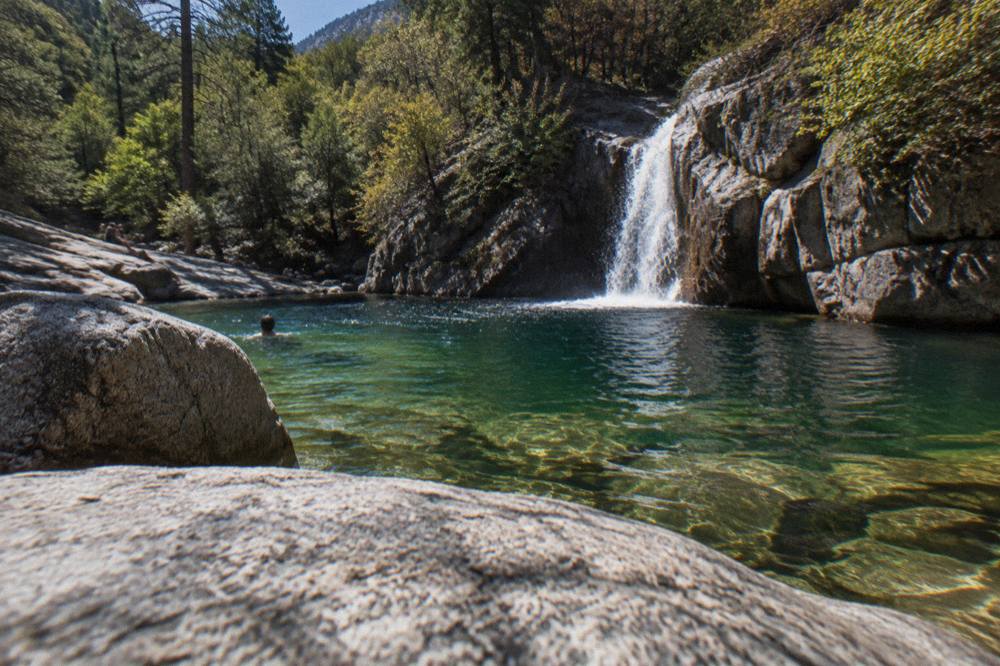
The Baracci canyon is the second listed descent, a three-hour guided trip. Beyond the two canyons with dedicated products, the same gorge country carries some of the island's best-known walking valleys, the Gorges de la Restonica above Corte and the Gorges de Spelunca between Evisa and Porto, described in the site's pages on the Restonica valley and Gorges de Spelunca. Those are walking gorges rather than kitted descents, but they show how much vertical, water-cut terrain the island holds: 2,706 m of relief between Monte Cinto and the sea, inside 8,722 km2.
For combining a canyon with a wider trip, the practical bases are Ajaccio for the Richiusa, and Corte for the Restonica and the island's hiking capital role as the old inland capital. The guide to Corte and the interior covers that side of the island in detail, and the overall regions overview explains how the interior massifs relate to the coastal towns.
When Can You Go Canyoning In Corsica?
The canyoning season in Corsica runs from late spring to early autumn, inside the same window as the guarded GR20 refuges, which the PNRC guards from 16 May to 4 October, because the gorges need warm air on the surface and enough water in the stream bed, and the fire-risk period from 15 June to 30 September, when smoking and fires are banned in forests, maquis and massifs, frames the summer rules that apply to every inland activity on the island.
Water temperature is the constraint nobody controls. A Corsican gorge in April is snowmelt cold even when the coast is warm, and the same Météo-France station data that shows Ajaccio averaging 22.1 °C daytime highs in May and 25.9 °C in June shows the nights at 11.8 °C and 15.4 °C respectively: the mountains stay cool, which is exactly why the wetsuit is not optional. The table below gives the Ajaccio station normals, 1991-2020, for the months that matter for planning an active trip.
| Month | Mean daily high °C | Mean daily low °C | Rain mm |
|---|---|---|---|
| Apr | 18.5 | 8.3 | 53.1 |
| May | 22.1 | 11.8 | 49.8 |
| Jun | 25.9 | 15.4 | 25.9 |
| Jul | 28.6 | 17.7 | 8.6 |
| Aug | 29.2 | 18.1 | 15.8 |
| Sep | 26.1 | 15.4 | 57.8 |
| Oct | 22.8 | 12.6 | 85.7 |
Source of the figures: Météo-France station data for Ajaccio (Campo dell'Oro), climate normals 1991-2020. July carries 8.6 mm of rain on average and September 57.8 mm, which is the planning signal: early summer is the settled window, September brings the first autumn rain and with it more water in the streams, and October, at 85.7 mm, is when the interior starts turning wet. The site's month-by-month breakdown carries the full Corsica weather tables.
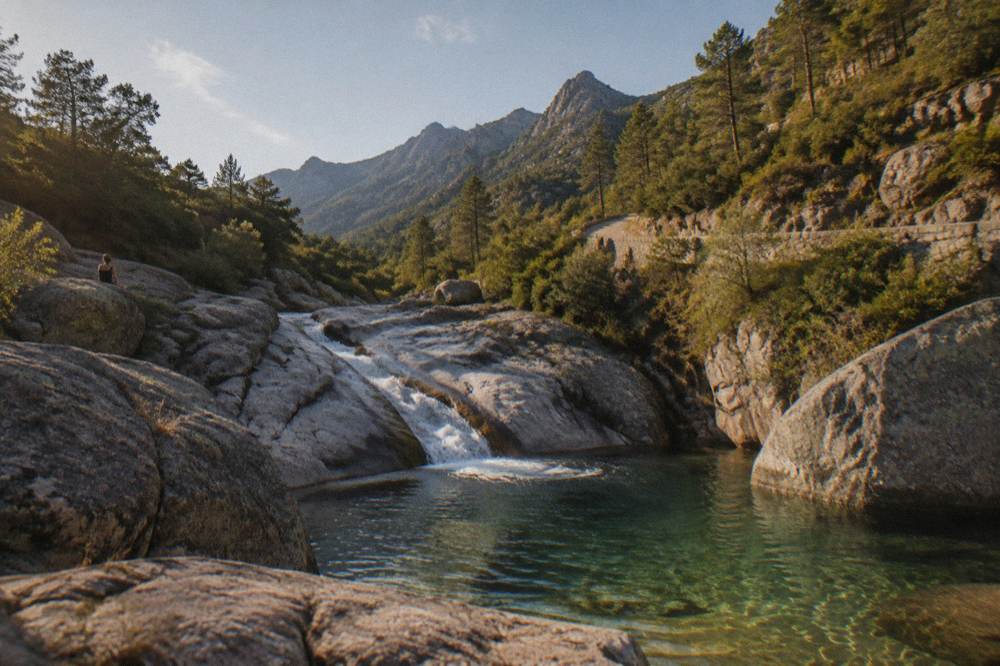
The fire rules deserve their own paragraph because they shape every summer day in the Corsican interior. From 15 June to 30 September it is forbidden to light a fire or smoke in forests, scrub and massifs, a rule published on the PNRC's own GR20 page, and the prefecture's colour map of massif access is updated at 18:00 each evening for the next day, with some massifs closing entirely on the severest days. The UK FCDO likewise notes a high wildfire risk in France from April to October. None of this stops a guided canyon descent, but it is why operators, and the island's own rules, treat the middle of the day carefully in high summer, and why the no-departures-after-11:00 rule exists for the GR20 start at Calenzana.
Is Canyoning In Corsica Safe For Beginners?
Yes, in the form sold on this island: the listed canyoning products are instructor-led or small-group guided descents in which the operator supplies the equipment, rigs the ropes and sets the route, and no prior climbing experience is asked for, though confident swimming is, and every trip runs under France's standard emergency framework, with 112 the EU-wide number, 15 for medical emergencies and 196 for sea rescue.
The honest answer has layers. The first layer is the guide: a canyon descent is not a solo activity, and the operator's control of the rope work is the safety system. The second layer is the mountain itself. Corsica's interior is serious terrain, the same massifs that carry the GR20, and its rescue structure reflects that: the PGHM, the high-mountain gendarmerie platoon at Ajaccio, answers on 04 95 24 24 00, with 17 and 112 the emergency routes. The third layer is weather: Météo-France issues mountain forecasts and storm vigilance for the island, and a gorge, by definition, is where flash water arrives, so operators cancel rather than run descents in storm conditions. The full index of guides sits on Corsica Travel Guide.
The wider safety picture on the island is calm. The US State Department lists France at Level 2, Exercise Increased Caution, a nationwide advisory rather than a Corsican one, reported on its own travel advisory page. Ajaccio ran seven lifeguard posts on its main beaches from 1 July to the end of August 2026, and Haute-Corse's supervised beaches are staffed by volunteer firefighters across roughly the same two months, so the coast and the interior each carry a seasonal safety apparatus. The emergency numbers below are the ones to save before any active day in Corsica.
| Number | Service |
|---|---|
| 112 | EU-wide emergency number |
| 15 | SAMU medical emergency |
| 17 | Police |
| 18 | Fire service |
| 114 | Emergency SMS and app relay |
| 196 | Sea rescue (VHF channel 16 at sea) |
| 04 95 24 24 00 | PGHM mountain rescue, Ajaccio |
For beginners choosing between trips, the own structure is a guide: the Richiusa product is listed as a small-group canyoning descent, the second Richiusa listing as a canyoning trip in the same category, and the Baracci trip likewise. None is sold as an expedition. If the aim is a first taste of vertical water with the option to stop at the top, the operator's own grading, printed with each departure, is the thing to read, and the general Corsica travel tips page carries the packing and planning basics that apply to any guided day in the mountains.
Which Other Adventure Activities Does Corsica Offer?
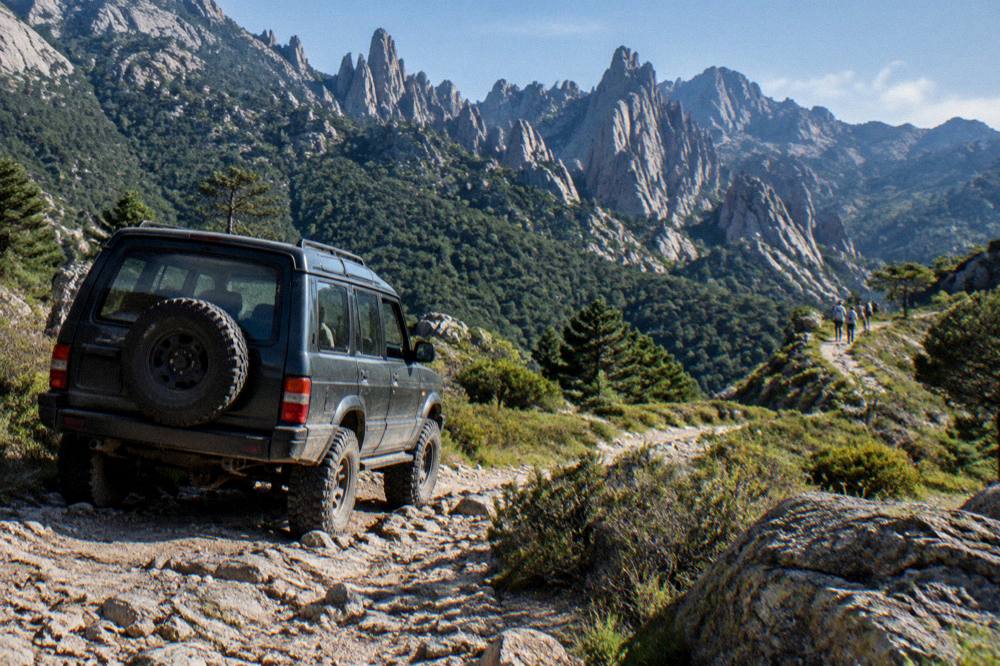
Beyond canyoning, Corsica runs 4x4 trips from Porto-Vecchio into the Ospedale forest, the Bavella needles and across the Cuscionu plateau into the Alta Rocca, plus long-distance trails ranging from the 180 km GR20 to the 66 km Mare e Monti Sud, with the Mare a Mare Centre covering 84 km over 6 to 7 days.
The pattern to notice is that almost every active product on the island is either on the water or in the mountains, sometimes both in one day. From Porto-Vecchio, the 4x4 products climb into the Ospedale forest and the Bavella needles and across the Cuscionu plateau into the Alta Rocca, the granite south where the prehistoric site of Filitosa also sits, open 1 April to 2 November at EUR 9 for adults, EUR 7 reduced and EUR 28 for a family of two adults and two children aged 6 to 17.
The long trails are the third strand. The trail lengths from the PNRC brochure are in the table below, and they show the scale of what walks beyond the GR20 look like.
| Trail | Length | Days (per PNRC) | Total climb |
|---|---|---|---|
| GR20 (Fra li Monti) | 180 km | about 15 stages | not stated |
| Mare e Monti Nord | 121 km | 10 | 6,100 m |
| Mare a Mare Nord | 139 km (161 km with variant) | 8 to 12 | 5,900 m |
| Mare a Mare Centre | 84 km | 6 to 7 | 3,900 m |
| Mare a Mare Sud | 73 km | 5 | 3,200 m |
| Mare e Monti Sud | 66 km | 5 | 2,700 m |
The full trail-by-trail detail, including refuge booking and the 2026 guarded season, sits in the site's GR20 guide. For families weighing how much adventure a Corsica trip can carry, the Corsica with kids guide and the overview of everything on the island put these active days in context against the beaches and towns.
How Do You Plan A Canyoning Trip To Corsica?
Plan a canyoning trip to Corsica by flying into Ajaccio or Bastia, the two airports closest to the Richiusa and Baracci canyons, or arriving by ferry from Marseille, Toulon, Nice or Italy, hiring a car because the canyon trailheads are inland and not walkable from the coast, and booking the guided descent itself for late May to September, when the operators run and the interior is warm enough for a wet gorge.
Getting there first. The island has four airports, Ajaccio Napoléon Bonaparte (AJA), Bastia Poretta (BIA), Figari Sud Corse (FSC) and Calvi Sainte-Catherine (CLY), covered in the site's Corsica airports guide, and the ferry ports at Ajaccio, Bastia, Bonifacio, L'Île-Rousse, Propriano and Porto-Vecchio are served by Corsica Linea and La Méridionale from Marseille, Corsica Ferries from Toulon, Nice, Livorno and Savona, and Moby from Livorno, Genoa and Santa Teresa Gallura. Crossings quoted as ranges run from about 50 to 60 minutes on the short Sardinia link up to about 12 to 13 hours overnight from Marseille.
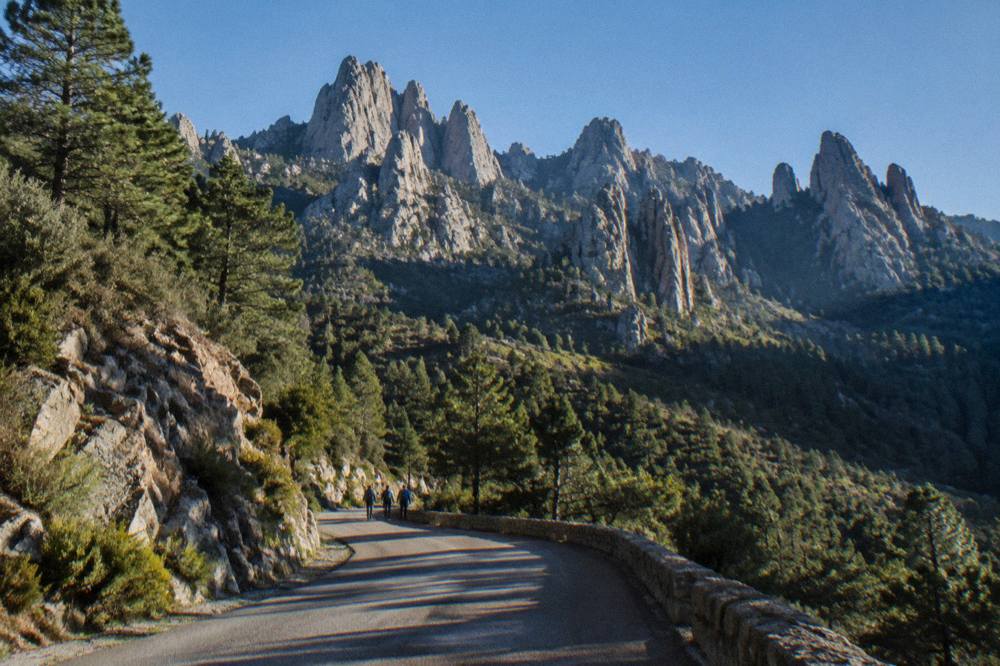
Getting around matters more than getting there. The canyon trailheads sit in the interior, and while the Chemins de fer de la Corse network links Ajaccio, Bastia via Corte, Ponte-Leccia, Calvi and L'Île-Rousse on the Balagne coastal line, a canyon start at a specific hour means a car for the freedom to reach Bocognano early. The Corsica car rental guide and the driving in Corsica guide cover the detail, including the point that Inforoutes Corse publishes live road conditions and pass accessibility levels, which matters for any drive into the mountains in autumn. Where to sleep is the third decision: Ajaccio for the two canyons on this page, Corte for a hiking-first trip, and the where to stay in Corsica guide sorts the bases by coast and interior.
What to bring is short, because the operator supplies the technical kit. A swimsuit, closed shoes that can get wet, a towel and a strap for glasses covers the standard list, plus water and sun protection for the walk in. Budget the local costs in euros: a canyon day is a bookable product whose price is shown with each departure, while the island's other costs, from the Filitosa entry at EUR 9 to the GR20 refuge bunk at EUR 20 per person, are set out in the Corsica cost and budget guide.
Which Canyoning Trip Should You Book In Corsica?
The choice comes down to logistics and appetite: the Richiusa listings, one a standard trip and one a small-group afternoon departure, and the Baracci are all filed under the Ajaccio area, and checking availability for the Richiusa trip shows live dates for the season before you book.
The choice between them is mostly logistics and appetite. The Richiusa listings, one as a standard canyoning trip and one as a small-group afternoon departure, are filed under the Ajaccio area, as is the Baracci. Whichever you pick, the booking itself is a quick job: the departure's own page carries the meeting point, what is supplied and the free-cancellation terms, and Check availability for the Richiusa trip shows live dates for the season.
If canyoning is one strand of a wider active week rather than the whole point of it, pair it with one of the interior days, the 4x4 tour of the Cuscionu plateau and Alta Rocca from Porto-Vecchio, or the day trip to the old hilltop villages from the Calvi side, both of which appear alongside the canyons in the picks below. A week that mixes one canyon descent, one mountain day and one day on the water, a boat trip into the Scandola reserve or a snorkelling excursion, is the shape of a balanced Corsica adventure, and it is exactly what the site's Corsica in one week itinerary sketches.
Common Questions About Canyoning In Corsica
Do I Need Experience To Go Canyoning In Corsica?
No. The canyoning products listed for Corsica are instructor-led or small-group guided descents in which the operator supplies wetsuits, helmets and harnesses and rigs all the ropes. Confident swimming is the real requirement, since the descent exits through pools.
Where Is The Richiusa Canyon?
The Richiusa canyon is at Bocognano, in the mountainous interior inland of Ajaccio, on the island's main Ajaccio to Bastia axis via Corte. Road times to Corte run one hour from Bastia and one hour thirty from Ajaccio, which places the canyon within a day trip of the capital.
What Is The Best Time Of Year For Canyoning In Corsica?
The guided season runs from late spring to early autumn, matching the GR20 refuge season from 16 May to 4 October. July averages 8.6 mm of rain at Ajaccio against September's 57.8 mm per the Météo-France 1991-2020 station normals, so early summer is the settled window and September the first month with noticeably more water in the streams.
Is Canyoning In Corsica Safe?
The trips are guided by instructors who set the routes and the rope work, and the island carries a full rescue structure, including the PGHM mountain rescue platoon at Ajaccio on 04 95 24 24 00 and the 112 EU emergency number. Operators cancel rather than run descents in storm conditions.
What Should I Bring On A Canyoning Trip?
A swimsuit, closed shoes that can get wet, a towel and a strap for glasses, plus water and sun protection for the approach walk. The technical kit, wetsuit, helmet and harness, comes with the guided trip.
Can I Combine Canyoning With Other Activities In Corsica?
Yes.
Canyoning in Corsica is the activity that best expresses what the island is: a mountain range with a sea around it, 2,706 m of granite dropping into the Mediterranean, and gorges in between that a guide can take you down on ropes and into cold green pools. Pick a base on the Ajaccio side, book the descent for the settled early-summer weeks, keep the fire-season rules in mind, and the rest of the adventure calendar, jeeps, bikes, boats and trails, will fill the days either side of it.